Your back does not get stiff all at once. It starts with a vague tightness after sitting too long, a restricted feeling when you reach overhead, or a dull ache that shows up between your shoulder blades by mid-afternoon. Left unaddressed, these small signals compound into persistent stiffness that limits how you move, sleep, and feel throughout the day.
Back stretching targets the entire posterior chain: the muscles, fascia, and connective tissue running from the base of your skull to your pelvis. The spine contains 33 vertebrae across three mobile regions (cervical, thoracic, lumbar), each with different movement characteristics and different responses to prolonged positioning. A good back stretching routine addresses all three.
Research supports what your body is already telling you. A randomized trial found that self-administered stretching exercises were as effective as motor control exercises for reducing pain and disability over 26 weeks, and an 8-month workplace stretching program significantly reduced workers’ pain in the posterior back, dorsal, and lumbar zones.12 Stretching your back is not just about feeling better in the moment. It creates measurable, lasting improvements.
Why Your Back Gets Tight
Sitting Is the Primary Driver
The modern spine spends most of its day in flexion. Sitting rounds the upper back, compresses the lumbar discs, and shortens the hip flexors, which then pull on the lower back. A 2024 study using infrared thermography found that just 30 minutes of continuous sitting produced significant increases in back muscle temperature (a marker of muscle overload), and the effect continued to build without movement breaks.3
The thoracic spine (upper and mid-back) is particularly vulnerable because its 12 vertebrae are attached to the rib cage, which provides stability but limits mobility. When these segments lose even a few degrees of movement each, the cumulative restriction is substantial.
Muscular Imbalances
Sitting tightens the hip flexors, weakens the glutes, and creates opposing tension patterns throughout the back. The erector spinae muscles work overtime to compensate for poor positioning, developing trigger points and chronic tension. Meanwhile, the deep stabilizers of the spine (multifidus, transversus abdominis) lose their reflexive activation.
Repetitive Loading
Whether it is training, manual work, or simply carrying children, repetitive one-directional loading creates asymmetries. One side tightens, rotation becomes uneven, and the back compensates in ways that produce stiffness and discomfort over time.
Back Stretches for the Upper Back
The upper back (thoracic spine) responds best to rotation and extension work, since flexion is already its default position from sitting.
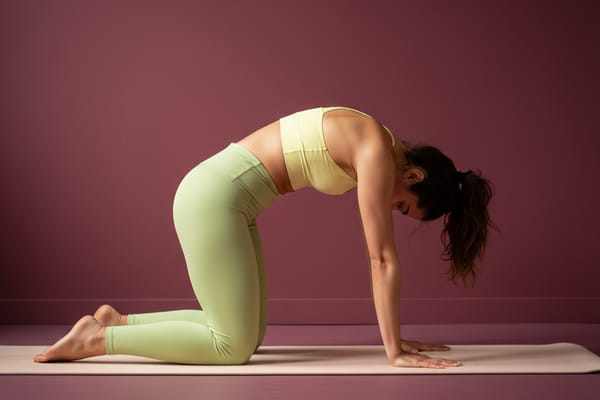
Cat-Cow
The single best stretch for overall spinal mobility. Cat-cow takes your back through flexion and extension rhythmically, improving segmental movement and blood flow throughout the entire spine.
How to do it:
- Start on hands and knees, wrists under shoulders, knees under hips
- Cow: Inhale, let your belly drop, lift your chest and tailbone
- Cat: Exhale, round your entire spine toward the ceiling, tuck your chin
- Move slowly and deliberately for 10 to 15 repetitions
Tip: Focus on moving each segment of your spine individually rather than just bending at the lower back. Think of rolling through each vertebra one at a time.
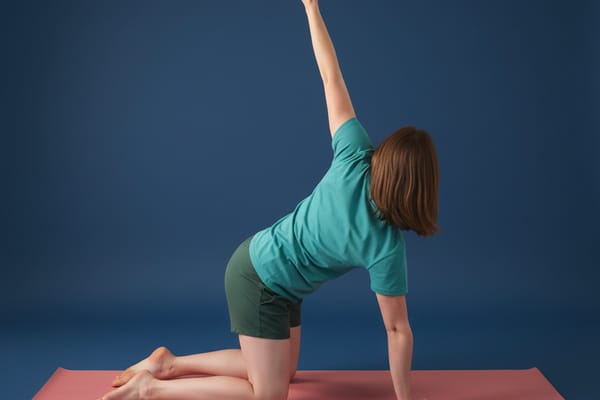
Thread the Needle
Thoracic rotation is the first type of movement lost to desk work. Thread the needle restores it directly.
How to do it:
- Start on hands and knees
- Slide your right arm underneath your left arm, lowering your right shoulder toward the floor
- Let your upper back rotate naturally. Keep your hips stacked over your knees
- Hold for 30 seconds, then switch sides
Why it works: The quadruped position stabilizes the lower back, which forces the rotation to come from the thoracic spine where you actually need it.
Bear Hug
A simple stretch that targets the rhomboids and mid-trapezius muscles between the shoulder blades. These muscles develop chronic tension from working overtime against rounded shoulders.

How to do it:
- Wrap your arms around yourself, reaching as far across your back as you can
- Tuck your chin slightly and round your upper back
- Pull gently with your hands to deepen the stretch
- Hold for 30 seconds
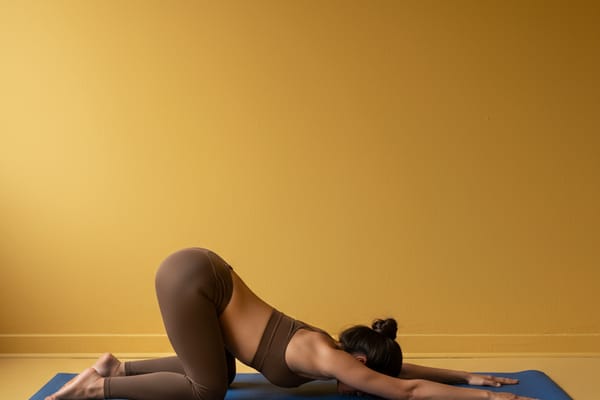
Puppy Pose
A hybrid between child’s pose and downward dog, puppy pose provides a deep stretch for the lats and thoracic extensors while gently extending the thoracic spine.
How to do it:
- Start on hands and knees
- Walk your hands forward while keeping your hips stacked over your knees
- Let your chest sink toward the floor
- Rest your forehead on the ground
- Hold for 30 to 60 seconds
Back Stretches for the Mid-Back
The mid-back (lower thoracic region) is the transition zone between the mobile upper back and the load-bearing lower back. Tightness here affects both regions.
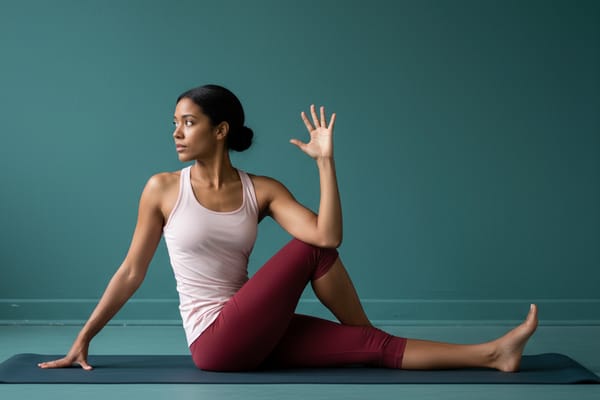
Seated Twist
Rotation through the mid-back decompresses the spine and releases tension in the obliques and erector spinae.
How to do it:
- Sit on the floor with your legs extended
- Bend your right knee and cross your right foot over your left leg
- Place your left elbow on the outside of your right knee
- Sit tall and rotate your torso to the right
- Hold for 30 seconds, then switch sides
Tip: The stretch should come from rotating through your mid-back, not from pushing harder with your arm. Think of lengthening your spine upward before rotating.
Spinal Twist (Supine)
The lying version removes gravity from the equation, allowing a deeper, more relaxed rotation. This is excellent for releasing tension after a long day.
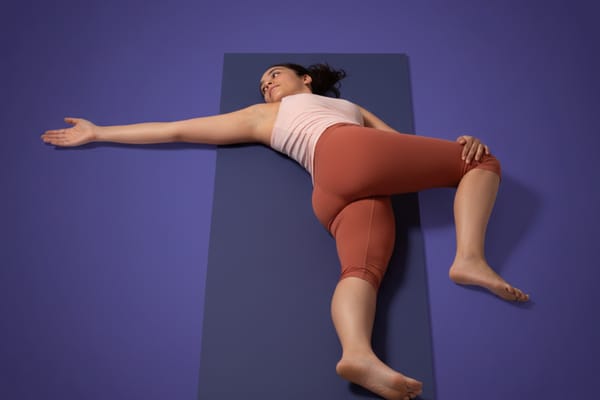
How to do it:
- Lie on your back with your arms extended to the sides
- Bring your knees to your chest, then let them fall to your left side
- Keep both shoulders on the ground
- Turn your head to the right if comfortable
- Hold for 45 to 60 seconds, then switch sides
Eagle Arms
This stretch targets the area between the shoulder blades and the posterior deltoids. It is particularly effective for people who feel tension in the mid-back after desk work.

How to do it:
- Extend your arms in front of you at shoulder height
- Cross your right arm under your left
- Bend your elbows and try to bring your palms together (or as close as possible)
- Lift your elbows slightly while keeping your shoulders down
- Hold for 30 seconds, then switch which arm is on top
Back Stretches for the Lower Back
The lower back (lumbar spine) requires a different approach. It is designed for stability, not mobility, so the goal is not to force range of motion but to release tension in the surrounding muscles (hip flexors, hamstrings, glutes) that pull on it.
Child’s Pose
The most accessible lower back stretch. Child’s pose gently flexes the lumbar spine while decompressing the discs and releasing the erector spinae.
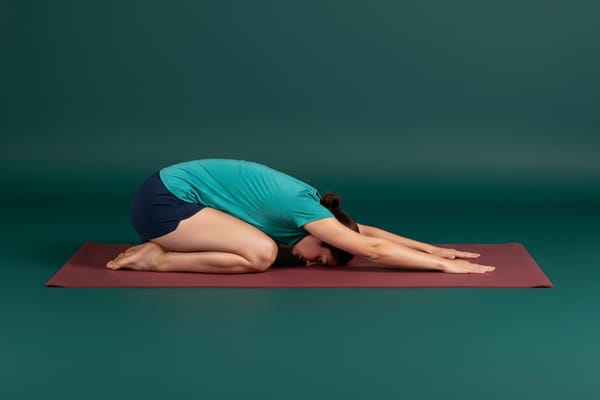
How to do it:
- Kneel on the floor with your big toes touching and knees spread wide
- Sit back onto your heels
- Walk your hands forward and lower your forehead to the ground
- Let your belly relax between your thighs
- Hold for 45 to 60 seconds
Adjustments: If your hips do not reach your heels, place a pillow or folded blanket between them.
Forward Fold
The standing forward fold stretches the entire posterior chain: hamstrings, glutes, and erector spinae from the lumbar through the thoracic region.
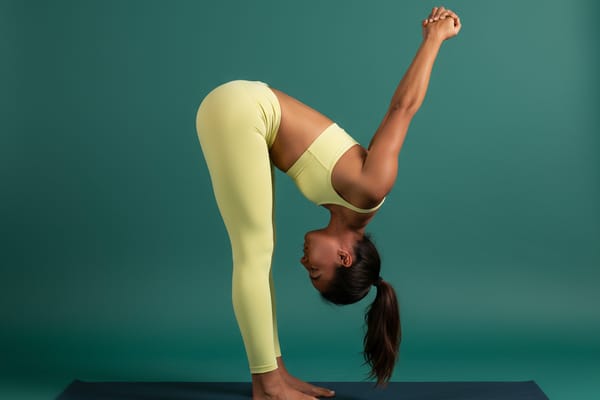
How to do it:
- Stand with your feet hip-width apart
- Hinge at your hips and fold forward
- Let your arms hang heavy toward the floor
- Bend your knees as much as you need to
- Let your head hang completely relaxed
- Hold for 30 to 45 seconds
Tip: Bent knees are not cheating. They allow the stretch to target the back muscles rather than the hamstrings. Straighten gradually as your flexibility improves.
Downward Dog
Downward dog combines spinal decompression with a stretch of the entire posterior chain. It is one of the most comprehensive back stretches available.
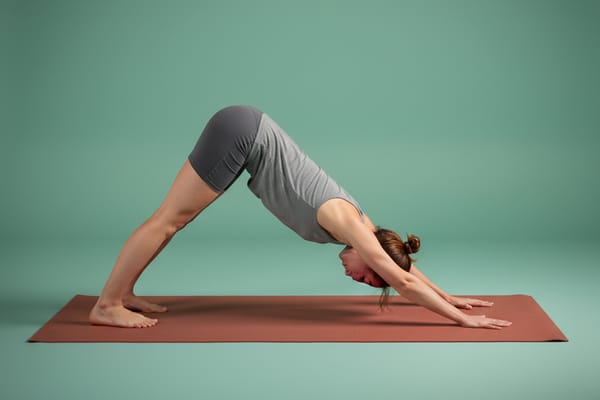
How to do it:
- Start on hands and knees
- Tuck your toes, lift your hips up and back
- Press your chest gently toward your thighs
- Keep a slight bend in your knees if needed
- Hold for 30 to 45 seconds
Rag Doll
A gentler version of forward fold with an element of upper back release. Holding opposite elbows adds weight that helps traction the spine.
How to do it:
- Stand with feet hip-width apart, knees bent generously
- Fold forward and grab opposite elbows
- Let the weight of your arms gently pull your spine long
- Sway gently side to side if it feels good
- Hold for 30 to 45 seconds
Full-Back Stretches
These stretches address the entire spine in a single movement.
Wall Dog
Wall dog provides the spinal decompression benefits of downward dog with more control. It is especially useful for people who find floor-based stretches uncomfortable.
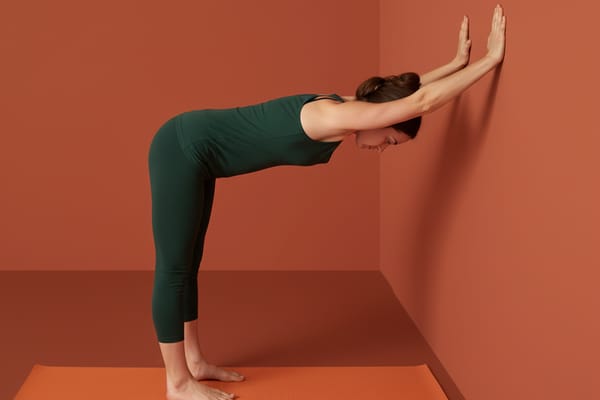
How to do it:
- Stand facing a wall at arm’s length
- Place your hands on the wall at hip height
- Walk your feet back while hinging at the hips until your torso is roughly parallel to the floor
- Press your chest gently toward the floor while keeping your arms straight
- Hold for 30 seconds
Bow Pose
An active backbend that stretches the entire front body while strengthening the back extensors. This is more advanced and should be done after warming up.
How to do it:
- Lie face down
- Bend your knees and reach back to grab your ankles
- Inhale and lift your chest and thighs off the floor simultaneously
- Hold for 15 to 20 seconds
- Release gently
Adjustments: If grabbing both ankles is too intense, try half bow (one side at a time).
What the Research Says About Back Stretching
The scientific evidence for back stretching is robust across multiple outcomes.
A landmark 2023 randomized trial compared self-administered stretching exercises to motor control exercises (the clinical gold standard) in 100 people with chronic low back pain.1 The results were striking: stretching was equally effective for pain, disability, fear avoidance, and flexibility at 8, 13, and 26 weeks. The between-group difference in pain was essentially zero at every time point. Given that motor control exercises are an established evidence-based treatment, finding that simple stretching matches their outcomes is significant.
A 2020 network meta-analysis in the British Journal of Sports Medicine analyzed 89 studies and 5,578 patients to determine which exercise types work best for chronic low back pain.4 Pilates had the highest probability of being the best intervention for pain, while stabilization exercises and resistance training ranked highest for physical function. The study reinforced that movement-based approaches outperform passive treatments.
For workplace-specific evidence, an 8-month study of office workers found that a stretching program (3 sessions per week, 15 minutes per session) significantly reduced pain perception in the posterior back, dorsal zone, and lumbar region.2 The control group showed no improvement over the same period. Research using infrared thermography has confirmed the mechanism: active breaks with stretching and mobility exercises prevent the progressive muscle overload that builds during sustained sitting.3
Yoga-based approaches have also shown strong evidence. A meta-analysis of 18 randomized controlled trials found that yoga significantly reduced back pain from 4 weeks through 7 months and improved functional disability for up to 12 months compared to non-exercise controls.5
Building Your Back Stretching Routine
Morning Wake-Up (5 minutes)
Start your day by reversing the stiffness from sleeping:
- Cat-cow: 10 slow reps
- Child’s pose: 45 seconds
- Thread the needle: 30 seconds each side
- Forward fold (knees bent): 30 seconds
Try the Lower Back Starter Stretches for a gentle guided version.
Desk Break (3 minutes)
Do this every 1 to 2 hours during seated work:
- Seated twist: 20 seconds each side
- Forward fold from standing: 30 seconds
- Wall dog: 30 seconds
Evening Unwind (10 to 15 minutes)
A thorough back stretching session to undo the day’s tension:
- Cat-cow: 10 reps (warm-up)
- Thread the needle: 30 seconds each side
- Puppy pose: 45 seconds
- Eagle arms: 30 seconds each side
- Seated twist: 30 seconds each side
- Downward dog: 30 seconds
- Forward fold: 30 seconds
- Spinal twist (lying): 60 seconds each side
- Child’s pose: 60 seconds
The Lower Back Relief Flow covers the lower back portion beautifully, while the Upper Body Flexibility Starter addresses the upper back and shoulders. For a posterior chain focus, the Backline Mobility Reset targets the entire back in a single session.
Progressive Weekly Schedule
Week 1 to 2: Morning wake-up routine daily + one evening session Week 3 to 4: Morning routine daily + two evening sessions Week 5+: Morning routine daily + three evening sessions
How Long Until You See Results
- Immediate: Reduced tension and improved comfort after your first session. Research shows measurable decreases in muscle temperature (strain indicator) after just one round of active stretching breaks.3
- 2 to 4 weeks: Noticeable improvements in range of motion and reduced daily stiffness
- 8 weeks: Significant changes in pain levels and functional ability. The randomized trial data shows stretching producing meaningful pain reduction at the 8-week mark.1
- 6 months: Long-term habit produces sustained improvements in back comfort and function
When Back Stretching Is Not Enough
Back stretching works well for muscular tension, postural stiffness, and general tightness. But certain conditions require more than stretching:
- Pain that radiates down the leg: This suggests nerve involvement (sciatica) and needs professional assessment. See our sciatica stretches guide for specific recommendations
- Pain that worsens with stretching: If forward bending increases your pain, you may have a disc issue that responds better to extension-based approaches
- Morning stiffness lasting more than 30 minutes: Prolonged morning stiffness can indicate inflammatory conditions
- Pain after trauma: Falls, car accidents, or sports impacts need imaging before starting a stretching program
- No improvement after 4 weeks: If consistent stretching produces no change, a physiotherapist can identify specific factors
For persistent lower back pain specifically, our lower back pain stretching guide covers the evidence for different types of back pain in detail.
Key Takeaways
- Address the whole spine: Upper, mid, and lower back stretches target different structures and respond to different approaches
- Stretching matches clinical exercise: Research shows self-administered stretching is as effective as motor control exercises for chronic back issues
- Movement breaks matter: Active stretching breaks during sitting prevent progressive muscle overload
- Consistency creates change: 15 minutes of stretching, 3 times per week, produced significant improvements in workplace studies
- Combine with your day: A 5-minute morning routine plus desk breaks and an evening session creates the consistency that produces results
Related Articles
- Lower Back Pain and Stretching: The Complete Guide
- Upper Back Stretches: Relieve Stiffness and Improve Posture
- Stretching for Desk Workers: The Complete Daily Plan
- The Best Cool Down Stretches After a Workout
- Sciatica Stretches and Exercises
References
Turci AM, Nogueira CG, Nogueira Carrer HC, Chaves TC. (2023). Self-administered stretching exercises are as effective as motor control exercises for people with chronic non-specific low back pain: a randomised trial. Journal of Physiotherapy, 69(2), 93-99. PubMed ↩︎ ↩︎ ↩︎
Macedo AC, Trindade CS, Brito AP, Socorro Dantas M. (2011). On the effects of a workplace fitness program upon pain perception: a case study encompassing office workers in a Portuguese context. Journal of Occupational Rehabilitation, 21(2), 228-233. PubMed ↩︎ ↩︎
Sortino M, Trovato B, Zanghi M, Roggio F, Musumeci G. (2024). Active Breaks Reduce Back Overload during Prolonged Sitting: Ergonomic Analysis with Infrared Thermography. Journal of Clinical Medicine, 13(11), 3178. PubMed ↩︎ ↩︎ ↩︎
Owen PJ, Miller CT, Mundell NL, et al. (2020). Which specific modes of exercise training are most effective for treating low back pain? Network meta-analysis. British Journal of Sports Medicine, 54(21), 1279-1287. PubMed ↩︎
Zhu F, Zhang M, Wang D, et al. (2020). Yoga compared to non-exercise or physical therapy exercise on pain, disability, and quality of life for patients with chronic low back pain: A systematic review and meta-analysis of randomized controlled trials. PLoS One, 15(9), e0238544. PubMed ↩︎
