Good dynamic warm up exercises include jumping jacks, leg swings, lateral leg swings, hip circles, walking knee hugs, dynamic quad pulls, hamstring scoops, lateral lunges, runner's lunge twists and arm circles. Do 5 to 10 minutes, starting with light cardio, then larger controlled movements, then faster drills that match your workout.
A dynamic warm-up prepares your body for work by moving it, not by holding still. You take your joints through controlled, gradually larger ranges of motion, your heart rate rises, and your muscles get warmer before the first hard rep or the first fast step.
This guide is the practical part. If you want the background on why moving stretches fit before exercise and long holds fit after, read static vs dynamic stretching. Here you get the exercises, the reps, and the order that keeps the whole warm-up to five to ten minutes.
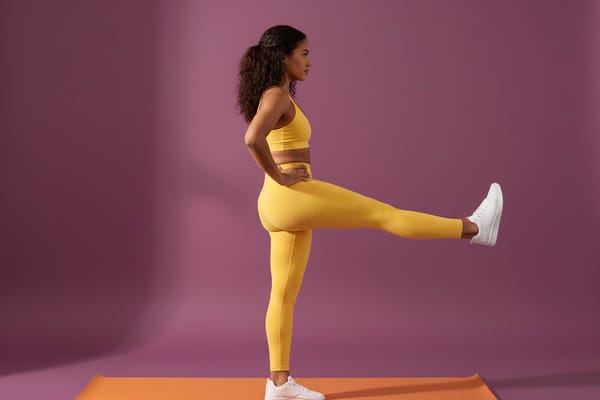
What a Good Dynamic Warm-Up Does
A warm-up does three things.
Raise body temperature. Light cardio for one to three minutes increases blood flow and makes muscles feel less stiff.
Increase range of motion with control. Large, smooth movements take the hips, shoulders and spine through the ranges you will use later.
Rehearse the movement. The last part of the warm-up should look like your workout, only easier. Runners do drills and strides. Lifters do lighter sets of the first exercise.
A review by Behm and Chaouachi recommended exactly this order: submaximal aerobic activity, then large-amplitude dynamic stretching, then sport-specific dynamic activities.1 A later review found that dynamic stretching tends to improve range of motion and can support force, power, sprint and jump performance, while very fast, bouncing (ballistic) stretching appears less useful than controlled movement.2
How to Use This List
- Do each exercise for 8 to 12 reps per side, or about 30 seconds.
- Start each movement small and make it bigger over the first few reps.
- Move with control. You should be able to stop at any point in the movement.
- You do not need all ten. Pick five or six that match your workout (see the sample routines below).
The 10 Best Dynamic Warm-Up Exercises
1. Jumping Jacks
What it does: Raises your heart rate and warms the calves, hips and shoulders.
How to do it:
- Stand with feet together and arms at your sides
- Jump your feet out to the sides as your arms rise overhead
- Jump back to the start and repeat at a steady pace
- Do 30 to 60 seconds
Cues: Land softly on the balls of your feet. Keep your knees slightly bent.
Easier: Step one foot out at a time instead of jumping. Harder: Do 60 seconds at a faster pace, or switch to high knees for the last 20 seconds.
2. Leg Swings (Front to Back)
What it does: Takes the hip into flexion and extension, warming the hamstrings, hip flexors and glutes.
How to do it:
- Stand next to a wall and hold it with one hand
- Shift your weight onto the leg nearest the wall, with a soft bend in that knee
- Swing the outside leg forward and back like a pendulum
- Start with small swings and let them grow over 4 to 5 reps
- Do 10 to 12 swings per leg
Cues: Keep your torso tall. The movement comes from the hip.
Common mistake: Kicking as high as possible from the first rep. Let the range build gradually.
Easier: Keep the swings at knee height. Harder: Let go of the wall to train balance.
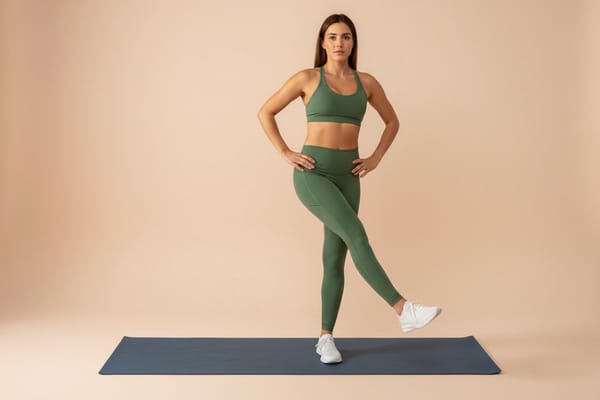
3. Lateral Leg Swings
What it does: Moves the hip side to side, warming the inner thigh (adductors) and outer hip.
How to do it:
- Face a wall and place both hands on it at chest height
- Shift your weight onto one leg
- Swing the other leg out to the side, then across the front of your standing leg
- Do 10 to 12 swings per leg
Cues: Keep your hips facing the wall. Let the leg move, not the pelvis.
Common mistake: Twisting the trunk to make the swing look bigger.
Easier: Make the swings smaller. Harder: Pause for one second at the outside of each swing.
4. Hip Circles
What it does: Moves the pelvis and lower back in all directions. A gentle start if your back feels stiff.
How to do it:
- Stand with feet hip-width apart and hands on your hips
- Draw slow, wide circles with your hips, as if you are tracing the inside of a bowl
- Do 6 to 8 circles in each direction
Easier: Make the circles smaller. Harder: Try the gate opener instead, which lifts one knee and opens it out to the side to warm the hip rotators.
5. Walking Knee Hugs
What it does: Warms the glutes and the back of the hip while you practice balance on one leg.
How to do it:
- Stand tall with feet hip-width apart
- Lift one knee and pull it toward your chest with both hands
- Hold for one second, then step forward and switch sides
- Do 8 per leg, walking forward or staying in place
Cues: Stand tall on the supporting leg and rise onto the ball of that foot if your balance allows.
Common mistake: Rounding the back to reach the knee. Bring the knee up to you instead.
Easier: Stay in place and touch a wall with one hand. Harder: Rise onto your toes with each hug.
6. Dynamic Quad Pulls
What it does: Warms the front of the thigh and the hip flexors. This is the moving version of the standing stretch in our quad stretches guide.
How to do it:
- Stand tall with feet hip-width apart
- Bend one knee and hold the ankle with the same-side hand
- Draw the heel toward your glute for one to two seconds
- Release, step forward, and switch legs
- Do 8 per leg
Cues: Keep your knees close together and squeeze the glute on the stretching side.
Common mistake: Arching the lower back. Keep your ribs down and your pelvis level.
Easier: Hold a wall for balance. Harder: Reach the opposite arm overhead during each pull.
7. Hamstring Scoops
What it does: Warms the hamstrings and calves with a light hip hinge. A good choice before running or deadlifts.
How to do it:
- Stand tall with hands on your hips
- Step one foot forward, place the heel down and lift the toes
- Hinge at the hips and sweep both hands down toward the front foot
- Return to standing and repeat
- Do 8 to 10 per leg
Cues: Keep your back long. Push your hips back rather than bending forward from the spine.
Common mistake: Locking the front knee. A small bend is fine.
Easier: Make the sweep shorter. Harder: Walk forward, alternating legs with every scoop. For more hamstring options, see hamstring stretches for runners.
8. Lateral Lunges
What it does: Warms the inner thighs, glutes and quads in a side-to-side direction, which matters for court and field sports.
How to do it:
- Stand with feet wide, about twice shoulder width
- Shift your weight to one side, bending that knee and pushing your hips back
- Keep the other leg straight with the foot flat on the floor
- Push back to the middle and repeat on the other side
- Do 6 to 8 per side
Cues: Keep the bent knee pointing in the same direction as the toes.
Common mistake: Letting the heel of the bent leg lift. Keep the whole foot down.
Easier: Shift only halfway down. Harder: Hold the low position for two seconds before you push back.
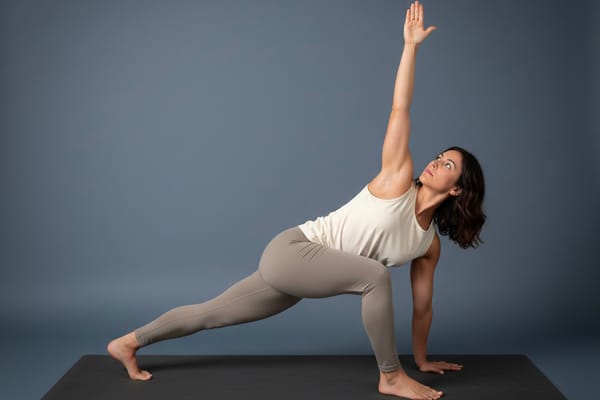
9. Runner’s Lunge Twist
What it does: Opens the hip flexors, inner thighs and upper back in one movement. It is the most complete single exercise on this list.
How to do it:
- Start in a plank with hands under your shoulders
- Step your right foot outside your right hand into a deep lunge
- Lift your right arm and rotate your chest toward the ceiling
- Bring the hand back down, step back to plank, and switch sides
- Do 5 per side
Cues: Keep the back leg straight and strong. Follow your top hand with your eyes.
Common mistake: Letting the hips drop toward the floor during the twist.
Easier: Lower the back knee to the floor. Harder: Add a short pause in the lunge before the twist.
10. Arm Circles
What it does: Warms the shoulders and upper back before upper-body training, swimming, throwing or racket sports.
How to do it:
- Stand tall and raise your arms straight out to the sides
- Draw small forward circles and let them grow over 10 seconds
- After 15 seconds, reverse the direction
- Do about 30 seconds in total
Cues: Keep your shoulders away from your ears and your elbows straight.
Common mistake: Arching the lower back as the circles get bigger. Tighten your stomach muscles lightly.
Easier: Bend the elbows and circle the shoulders only. Harder: Add arm swings across the chest afterward.
How to Build Your Warm-Up
Use the same three-part structure every time and change the exercises to match your session.
| Phase | Time | Purpose | Examples |
|---|---|---|---|
| 1. Raise | 1 to 3 minutes | Heart rate and temperature | Jumping jacks, easy jog, high knees |
| 2. Mobilize | 3 to 5 minutes | Range of motion with control | Leg swings, hip circles, lunges, twists |
| 3. Rehearse | 1 to 3 minutes | Practice the main movement | Strides, light sets, jumps, sport drills |
Before Running (about 6 minutes)
- Easy jog or jumping jacks: 1 minute
- Leg swings: 10 per leg
- Lateral leg swings: 10 per leg
- Walking knee hugs: 8 per leg
- Hamstring scoops: 8 per leg
- Runner’s lunge twist: 5 per side
- 2 to 4 short strides at a comfortable fast pace
If you want a timed version, follow the four-minute Pre-Run Quick Spark. Before a long run or race, the eight-minute Pre-Run Endurance Primer covers more ground.
Before Strength Training (about 6 minutes)
- Jumping jacks: 1 minute
- Hip circles: 6 per direction
- Lateral lunges: 6 per side
- Runner’s lunge twist: 5 per side
- Arm circles: 30 seconds
- Two light sets of your first exercise with an empty bar or bodyweight
For more, read stretching for weightlifters.
Before Team Sport (8 to 10 minutes)
Do the running routine, add lateral lunges and arm circles, and finish with short sprints and changes of direction. The Dynamic Warm-Up Ignite routine is a five-minute full-body version you can follow with a timer.
Where Static Stretching Fits
You do not have to remove static stretching completely. A systematic review found that the performance drop after static stretching was mostly linked to holds of 60 seconds or more per muscle group. Short holds had a much smaller effect, and dynamic stretching produced small improvements when done within minutes of activity.3 If one muscle always feels tight, a short hold of 15 to 30 seconds early in the warm-up is reasonable, as long as dynamic movement follows it.
Save longer holds for after your session or for a separate flexibility session. Our cool-down stretches guide has a routine for that.
Does a Warm-Up Prevent Injuries?
A structured warm-up can help, especially when it includes more than stretching. In a large trial with young female football players, teams that used a warm-up program built on strength, balance and movement control had a lower risk of injuries overall, overuse injuries and severe injuries over one season.4 The main outcome, lower-limb injuries, did not reach statistical significance, so the result is encouraging rather than final.
Common Warm-Up Mistakes
- Going too fast too soon. The first minute should feel easy. Speed comes at the end.
- Bouncing at the end of the range. Controlled movement is the goal, not a quick jerk at the end of each swing.
- Warming up the wrong body parts. Before a run, prioritize hips, hamstrings and calves. Before a bench press, prioritize shoulders and upper back.
- Making the warm-up a workout. If you feel tired afterward, it was too long or too hard.
Who Should Be Careful
Dynamic warm-ups are low risk for most people, but adjust them if any of these apply:
- Recent muscle strain or joint injury. Keep the range small and pain-free, and follow the plan from your physiotherapist.
- Hip or knee replacement. Ask your surgeon or physiotherapist which ranges are safe, especially for deep lunges and crossing the leg over the body.
- Balance problems. Do every standing exercise next to a wall or a stable chair.
- Pregnancy. Avoid jumping if it is uncomfortable, and reduce the depth of lunges as your balance changes.
See a healthcare professional if you feel sharp pain, pain that changes how you move, joint swelling, or numbness or tingling during a warm-up. Also seek advice if chest pain, unusual shortness of breath or dizziness appear during light exercise.
Frequently Asked Questions
How long should a dynamic warm-up be?
Five to ten minutes is enough for most workouts. Use one to three minutes of light cardio, three to five minutes of dynamic exercises, and one to three minutes of movements that match your workout. Longer, more intense sessions or cold weather may call for the longer end of that range.
Can I do a dynamic warm-up every day?
Yes. The exercises are low intensity and suit daily use, both before workouts and as a short morning movement break. In the morning, a few minutes of leg swings, hip circles and arm circles is a gentle way to start the day without equipment.
Should I still do static stretches before exercise?
You can, if they are short. Holds under 60 seconds per muscle have only a small effect on performance, especially when you add dynamic movements afterward. Keep long holds for after your workout or for a separate flexibility session, when performance in the next few minutes does not matter.
What is the difference between dynamic and ballistic stretching?
Dynamic stretching uses controlled movements that you can stop at any point, and the range grows gradually. Ballistic stretching uses fast bouncing at the end of the range. Research suggests that controlled dynamic stretching is more useful before exercise than ballistic stretching, and it also carries less risk of straining a muscle.
Key Takeaways
- Move, then stretch, then rehearse: Light cardio first, large controlled movements second, workout-specific drills last
- Five to ten minutes is enough: The warm-up should prepare you, not tire you
- Control beats speed: Grow the range gradually and avoid bouncing
- Match the warm-up to the workout: Hips and legs for running, shoulders and hips for lifting
Related Articles
- Static vs Dynamic Stretching
- Hamstring Stretches for Runners
- Cool-Down Stretches
- Stretching for Weightlifters
References
Behm DG, Chaouachi A. (2011). A review of the acute effects of static and dynamic stretching on performance. European Journal of Applied Physiology, 111(11), 2633-2651. PubMed ↩︎
Opplert J, Babault N. (2018). Acute Effects of Dynamic Stretching on Muscle Flexibility and Performance: An Analysis of the Current Literature. Sports Medicine, 48(2), 299-325. PubMed ↩︎
Behm DG, Blazevich AJ, Kay AD, McHugh M. (2016). Acute effects of muscle stretching on physical performance, range of motion, and injury incidence in healthy active individuals: a systematic review. Applied Physiology, Nutrition, and Metabolism, 41(1), 1-11. PubMed ↩︎
Soligard T, Myklebust G, Steffen K, et al. (2008). Comprehensive warm-up programme to prevent injuries in young female footballers: cluster randomised controlled trial. BMJ, 337, a2469. PubMed ↩︎
