Tight glutes are surprisingly common, yet most people do not realize how much tension they carry in this area. The gluteal muscles are the largest and most powerful muscle group in the body, responsible for hip extension, rotation, and pelvic stability. When they get tight, the consequences reach far beyond your backside.
Tight glutes contribute to lower back pain, hip stiffness, poor posture, and even sciatic-type symptoms when the piriformis (a deep gluteal muscle) compresses the sciatic nerve. Research confirms that targeted gluteal stretching significantly improves hip range of motion and posterior chain flexibility.1
This guide covers why your glutes get tight, which stretches are most effective, and how to build a routine that keeps them flexible and functional.
Why Your Glutes Get Tight
Prolonged Sitting
Sitting is the single biggest contributor to tight glutes. When you sit, the gluteus maximus stays in a lengthened but inactive position for hours. A 2021 study measuring muscle activity during different sitting postures found that gluteus maximus activation drops significantly in slump sitting compared to upright sitting.2 Over time, this chronic inactivity causes the muscles to stiffen and lose their ability to fire efficiently.
The irony is that sitting does not just shorten the hip flexors (the glutes’ opposing muscle group). It also leaves the glutes in a stretched but dormant state, creating a pattern where they become both stiff and weak simultaneously.
Gluteal Amnesia
“Gluteal amnesia” is the colloquial term for what researchers call altered gluteal activation patterns. After prolonged periods of inactivity, the nervous system essentially downgrades the priority of gluteal muscles in movement. Other muscles, particularly the hamstrings and lower back, compensate.
Research on sacroiliac joint dysfunction found that 66% of patients with SI joint problems had measurable gluteal weakness, and those individuals also had significantly shorter hamstrings.3 The body tightens surrounding muscles to compensate for glutes that are not doing their job.
Exercise Without Adequate Recovery
Athletes and gym-goers often develop tight glutes from intense training without proper stretching afterward. Heavy squats, deadlifts, running, and cycling all demand significant gluteal output. Without recovery stretching, the muscles remain in a state of elevated tension.
Poor Movement Patterns
Walking, running, or exercising with compensation patterns (like overusing the lower back during hip extension) places abnormal demands on the glutes. One side may work harder than the other, creating asymmetric tightness that can eventually lead to pain.
Signs Your Glutes Are Too Tight
Tight glutes do not always feel like “tightness in the butt.” The symptoms can be surprisingly varied:
- Lower back pain: Tight glutes pull on the pelvis and alter spinal mechanics. An RCT of 66 patients confirmed that hip muscle stretching (including the piriformis and gluteals) significantly improved lower back pain, disability, and quality of life.4
- Sciatic-type pain: When the piriformis tightens, it can compress the sciatic nerve, causing pain, tingling, or numbness down the leg
- Hip stiffness: Difficulty with deep squats, crossing legs, or rotating the hip inward or outward
- Knee pain: Tight glutes can alter how forces transmit through the hip to the knee
- Difficulty sitting comfortably: An aching or pressure sensation in the buttocks during prolonged sitting
The Best Glute Stretches
These stretches target all three gluteal muscles (gluteus maximus, medius, and minimus) plus the piriformis and other deep hip rotators. A 2024 study using ultrasound imaging confirmed that specific positions produce measurably greater stretch on the piriformis, with hip adduction being a key factor in stretch intensity.5
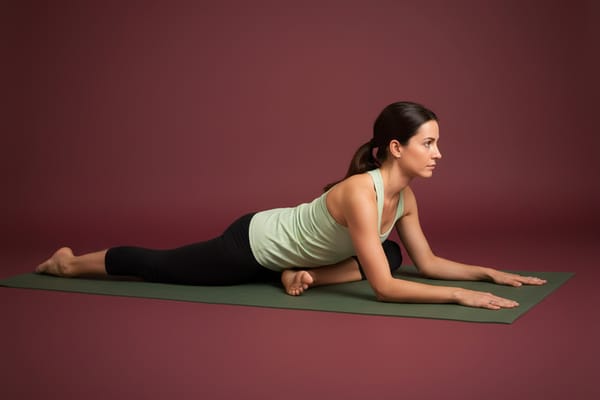
Pigeon Pose
Pigeon pose is arguably the most effective single stretch for the glutes. It targets the gluteus maximus and piriformis simultaneously while allowing gravity to deepen the stretch.
How to do it:
- Start on all fours
- Bring your right knee forward and place it behind your right wrist
- Slide your left leg back, keeping the hips square
- Walk your hands forward and lower your torso toward the floor
- Hold for 60-90 seconds, then switch sides
Adjustments: If this feels too intense, place a pillow or folded blanket under the hip of your bent leg. For a deeper stretch, bring the front shin more parallel to the front edge of your mat.
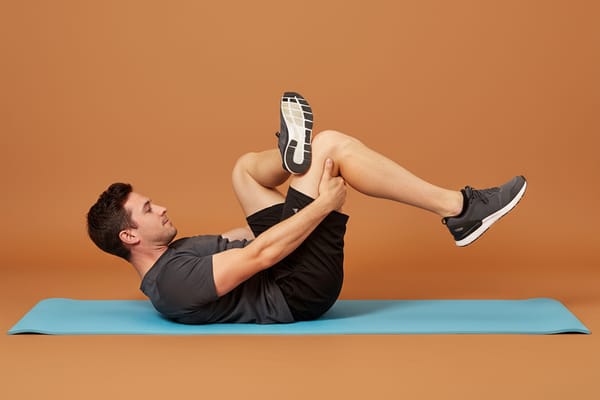
Lying Figure Four
This is a gentler alternative to pigeon pose that gives you more control over stretch intensity. It targets the same muscles with the added benefit of keeping your lower back supported.
How to do it:
- Lie on your back with both knees bent
- Cross your right ankle over your left knee
- Thread your hands behind your left thigh
- Pull your left thigh toward your chest
- Keep your right knee pressing gently away from your body
- Hold for 60 seconds each side
Tip: Flex the foot of the crossed leg to protect the knee joint. The closer you pull the supporting leg toward your chest, the deeper the stretch.
Seated Figure Four
A practical option for stretching at your desk or anywhere you have a chair.
How to do it:
- Sit upright in a chair with feet flat on the floor
- Cross your right ankle over your left knee
- Gently press down on the right knee
- Hinge forward from the hips (not the waist) while keeping your back straight
- Hold for 45-60 seconds each side
Double Pigeon (Fire Log Pose)
This intense stretch targets the deep external rotators of the hip and is excellent for the gluteus medius and piriformis.
How to do it:
- Sit on the floor with your left shin parallel to the front of your mat
- Stack your right shin directly on top of your left, ankle over knee
- Flex both feet to protect the knees
- Sit upright or fold forward for a deeper stretch
- Hold for 60-90 seconds each side
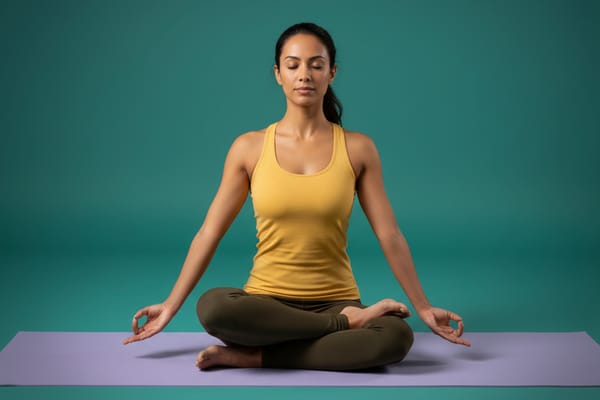
Adjustments: If stacking the shins is too intense, keep the bottom leg in a simple cross-legged position instead.
Happy Baby
This stretch targets the gluteus maximus and inner hip muscles while gently decompressing the lower back.
How to do it:
- Lie on your back
- Bring both knees toward your armpits
- Grab the outside edges of your feet
- Gently pull the knees down toward the floor beside your torso
- Rock gently side to side
- Hold for 60 seconds
Knee to Opposite Shoulder
This stretch specifically targets the piriformis and is one of the most commonly prescribed exercises for piriformis syndrome.
How to do it:
- Lie on your back with both legs extended
- Bend your right knee and place your foot flat on the floor
- Use your left hand to pull the right knee toward your left shoulder
- Hold for 30-45 seconds each side
Standing Figure Four
When floor stretching is not an option, this standing variation works well.
How to do it:
- Stand near a wall or chair for balance
- Cross your right ankle over your left knee
- Sit back into a single-leg squat position
- Keep your chest lifted and back straight
- Hold for 30-45 seconds each side
Spinal Twist
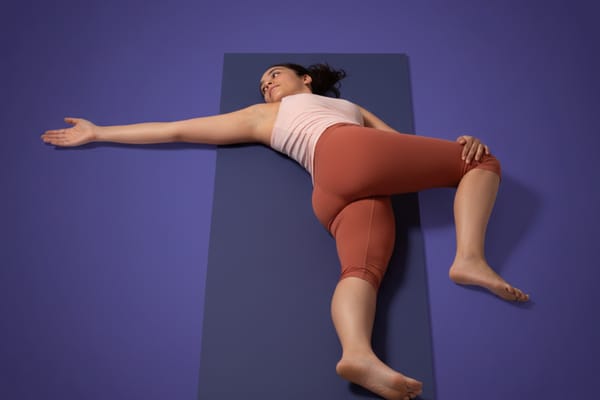
While primarily a spinal stretch, the twist position creates an effective stretch through the outer glutes and IT band region.
How to do it:
- Lie on your back with both knees bent
- Drop both knees to the right
- Extend your left arm out to the side
- Turn your head to look left
- Hold for 45-60 seconds each side
Building a Glute Stretching Routine
Quick Daily Routine (5 minutes)
For maintenance and preventing tightness from building up:
- Lying Figure Four: 60 seconds each side
- Knees to Chest: 30 seconds
- Spinal Twist: 45 seconds each side
Comprehensive Routine (12-15 minutes)
For addressing established tightness or after intense lower body training:
- Knees to Chest: 30 seconds (warm-up)
- Happy Baby: 60 seconds
- Lying Figure Four: 60 seconds each side
- Pigeon Pose: 90 seconds each side
- Double Pigeon: 60 seconds each side
- Spinal Twist: 45 seconds each side
For a guided version, try our Hip Flexibility Foundation or Deep Hip Release Session routines.
Post-Workout Routine (8 minutes)
After squats, deadlifts, running, or cycling:
- Standing Figure Four: 30 seconds each side
- Pigeon Pose: 60 seconds each side
- Happy Baby: 60 seconds
- Lying Figure Four: 45 seconds each side
- Knees to Chest: 30 seconds
How Long Until You See Results
A 2025 cross-over clinical trial demonstrated that a single session of static gluteal stretching significantly improved passive hip range of motion and posterior chain flexibility.1 So you will feel immediate, temporary improvements after each session.
For lasting changes, consistency matters more than intensity. Most people notice a meaningful reduction in chronic tightness within 2-4 weeks of daily stretching. Research on chronic stretching programs generally shows significant ROM improvements after 4-8 weeks of regular practice.
Stretching Alone May Not Be Enough
If your glute tightness stems from weakness and inactivity (which is common in desk workers), stretching alone will provide only temporary relief. You also need to strengthen and activate the glutes:
- Glute bridges: 3 sets of 12-15 reps
- Clamshells with band: 3 sets of 15 each side
- Single-leg glute bridges: 3 sets of 10 each side
Combining strengthening with stretching addresses both the tightness and the underlying weakness that perpetuates it.
When to See a Professional
Seek evaluation from a physical therapist if you experience:
- Sharp or shooting pain (especially down the leg) that does not improve with 2 weeks of gentle stretching
- Numbness, tingling, or weakness in the leg or foot
- Pain that worsens with stretching rather than improving
- Significant asymmetry between sides that persists despite consistent work
These symptoms may indicate piriformis syndrome, deep gluteal syndrome, or other conditions that benefit from professional assessment. A clinical trial on deep gluteal syndrome found that targeted stretching exercises significantly improved disability, but proper diagnosis is important to ensure you are addressing the right issue.6
Key Takeaways
- Sitting is the primary culprit: Prolonged sitting deactivates glutes and creates a cycle of weakness and tightness
- Tight glutes cause more than hip stiffness: Lower back pain, sciatic symptoms, and knee issues can all originate from tight glutes
- Pigeon pose and figure four are the most effective: These positions target the gluteus maximus and piriformis simultaneously
- Combine stretching with strengthening: Stretching alone provides temporary relief without addressing the underlying weakness
- Consistency wins: Daily 5-minute sessions produce better results than occasional longer sessions
- Results come quickly: Hip ROM improvements are measurable after a single session, with lasting changes within 2-4 weeks
Related Articles
- Back Stretches: Exercises for Upper, Mid, and Lower Back
- The Complete Hip Flexibility Guide
- Why Your Hip Flexors Are Always Tight
- Lower Back Pain and Stretching
- Piriformis Syndrome: Stretches, Exercises, and Recovery Guide
- Groin Stretches: The Complete Guide
References
Cotteret C, Almazan-Polo J, Guerineau F, Gonzalez de-la-Flor A. (2025). The effects of gluteal stretching on hip rotation range of motion and posterior chain flexibility in healthy subjects: a cross-over clinical trial. PeerJ, 13, e18523. PubMed ↩︎ ↩︎
Fujitani R, Jiroumaru T, Noguchi S, et al. (2021). Effect of low back pain on the muscles controlling the sitting posture. Journal of Physical Therapy Science, 33(3), 295-298. PubMed ↩︎
Massoud Arab A, Reza Nourbakhsh M, Mohammadifar A. (2011). The relationship between hamstring length and gluteal muscle strength in individuals with sacroiliac joint dysfunction. The Journal of Manual & Manipulative Therapy, 19(1), 5-10. PubMed ↩︎
Kim B, Yim J. (2020). Core stability and hip exercises improve physical function and activity in patients with non-specific low back pain: a randomized controlled trial. The Tohoku Journal of Experimental Medicine, 251(3), 193-206. PubMed ↩︎
Itsuda H, Yagi M, Yanase K, et al. (2024). Effective stretching positions of the piriformis muscle evaluated using shear wave elastography. Journal of Sport Rehabilitation, 33(4), 282-288. PubMed ↩︎
Shamsi M, Mirzaei M, Hopayian K. (2024). A controlled clinical trial investigating the effects of stretching and compression exercises on electromyography of calf muscles in chronic LBP patients with a deep gluteal syndrome. BMC Sports Science, Medicine & Rehabilitation, 16(1), 12. PubMed ↩︎
