The forward fold test is humbling. You reach for your toes, your hamstrings scream in protest, and your fingertips hover somewhere around your shins. Meanwhile, the person next to you casually places their palms flat on the floor.
Tight hamstrings are among the most common flexibility complaints. They affect athletes and desk workers alike, contribute to lower back discomfort, and frustrate anyone trying to improve their overall mobility.
The encouraging news: hamstring flexibility responds well to consistent stretching. A 2016 meta-analysis found that static stretching increased passive straight leg raise by an average of 12 degrees in healthy young adults.1 That is a meaningful improvement that most people can feel in daily life.
This guide covers everything you need to know about hamstring flexibility: why these muscles get tight, what stretches work best, how long improvements take, and how to build a practice that produces lasting results.
Why Hamstring Flexibility Matters
The hamstrings are three muscles on the back of your thigh: biceps femoris, semitendinosus, and semimembranosus. They originate at the ischial tuberosity (your “sit bones”) and attach below the knee. This positioning means they cross two joints, making them uniquely influential in lower body movement.
Limited hamstring flexibility affects:
Lower Back Health: Tight hamstrings restrict pelvic mobility. When you bend forward, if the hamstrings cannot lengthen adequately, the lumbar spine compensates by flexing excessively. Over time, this can contribute to disc problems and chronic back pain.
Athletic Performance: Short hamstrings limit stride length in running, reduce kicking power, and restrict squat depth. Athletes in virtually every sport benefit from adequate hamstring flexibility.
Daily Function: Rising from chairs, climbing stairs, putting on shoes, picking up objects from the floor. All these activities require hamstring length. Restrictions make everyday movements effortful or uncomfortable.
Injury Risk: Research has identified hamstring tightness as a risk factor for hamstring strains, particularly in sports involving sprinting and kicking. While the relationship is complex, adequate flexibility appears protective.
Posture: Chronically tight hamstrings pull the pelvis into posterior tilt, flattening the natural lumbar curve. This can contribute to a rounded lower back appearance and altered spinal mechanics.
Understanding Hamstring Anatomy
The hamstrings work as both hip extensors (pulling your leg backward) and knee flexors (bending your knee). This dual function explains why stretching them effectively requires attention to both joints.
The Three Muscles
Biceps Femoris: The outermost hamstring, with two heads (long and short). The long head crosses both the hip and knee; the short head only crosses the knee. This muscle is the most commonly strained hamstring.
Semitendinosus: Located on the inner back of the thigh, this muscle has a long tendon that wraps around to the front of the lower leg, joining with other tendons to form the “pes anserinus.”
Semimembranosus: The deepest and widest of the three hamstrings, also on the inner thigh. Its broader attachment makes it a powerful hip extensor.
The Sciatic Nerve Factor
The sciatic nerve runs directly beneath (and sometimes through) the hamstrings. When you stretch the hamstrings, you also tension the nerve. This neural component is why some people feel tingling or electrical sensations during hamstring stretches.
Research on “neurodynamic techniques” shows that stretching approaches which specifically address nerve mobility can enhance hamstring flexibility beyond what muscle stretching alone achieves. A 2025 systematic review found neurodynamic techniques “more effective than static stretching in the short term” for hamstring flexibility.2
This is why techniques like gentle nerve flossing can complement traditional hamstring stretching.
Why “Tight Hamstrings” May Not Be What They Seem
Sometimes what feels like tight hamstrings is actually neural tension, hip joint restriction, or even protective guarding from an unrelated issue. If your hamstrings feel chronically tight despite consistent stretching, consider:
- Neural involvement: The sensation may be nerve tension rather than muscle tightness
- Hip dysfunction: Limited hip flexion can masquerade as hamstring restriction
- Lower back issues: Nerve root irritation can cause protective hamstring tension
- Anterior pelvic tilt: This position pre-tensions the hamstrings, making them feel tight
If stretching consistently fails to improve your hamstring flexibility, consulting a physical therapist can help identify the actual restriction.
The Science of Hamstring Flexibility Improvement
What does research tell us about effectively improving hamstring flexibility?
Static Stretching Works
A 2016 systematic review and meta-analysis examined 19 studies on static stretching for hamstring flexibility.1 The results strongly supported static stretching:
- Passive straight leg raise improved by 12.04 degrees on average
- Passive knee extension improved by 8.58 degrees
- Active knee extension improved by 8.35 degrees
The researchers concluded that “static stretching was effective in increasing hamstring flexibility in healthy young adults.”
Duration and Frequency Matter
A 2023 meta-analysis comparing dynamic and static stretching on hamstring flexibility found that “multiple bouts of static stretching can significantly improve hamstring ROM compared to dynamic stretching” and that “the long-term effect of static stretching was better than dynamic stretching.”3
The classic 2005 systematic review in the Journal of Orthopaedic and Sports Physical Therapy noted that while methodology varied widely across studies, “hamstring stretching increases range of motion with a variety of techniques, positions, and durations.”4
The practical takeaway: static holds of 30-60 seconds, performed consistently over weeks, produce reliable improvements.
Comparison of Techniques
A randomized controlled trial comparing four hamstring stretching techniques over 8 weeks found that “the straight leg raise passive stretch group had the greatest improvement in hamstring length overall.”5
This supports the use of supine hamstring stretches where the leg is elevated and held, allowing gravity and relaxation to enhance the stretch.
PNF May Offer Advantages
Proprioceptive neuromuscular facilitation (PNF) techniques, which involve contracting the hamstrings before stretching them, often outperform static stretching in research. The contract-relax mechanism appears to:
- Reduce protective muscle tension through autogenic inhibition
- Cause temporary fatigue that decreases resistance to stretch
- Provide stronger sensory input that updates stretch tolerance
If progress with static stretching plateaus, adding PNF techniques can help break through.
The Best Stretches for Hamstring Flexibility
Based on research and practical effectiveness, these stretches form the foundation of hamstring flexibility work:
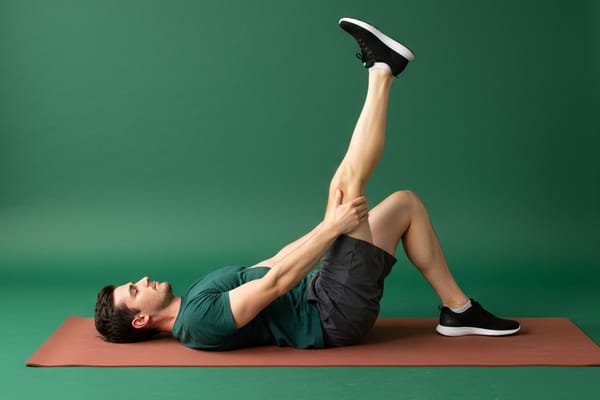
1. Supine Hamstring Stretch (Straight Leg Raise)
What it targets: All three hamstrings, sciatic nerve
Why it works: The supine position provides stable support and eliminates balance demands. The straight leg position maximizes hamstring lengthening. Research specifically supports this technique for hamstring flexibility gains.
Key technique points:
- Lie on your back with one leg extended on the floor
- Raise the stretching leg, keeping the knee straight (or nearly straight)
- Use a strap, towel, or your hands to hold the leg in position
- Keep the bottom leg pressed down to prevent hip rotation
- Hold for 30-60 seconds per side
Find this in: Our Hamstring Deep Dive Lab includes supine stretches with extended holds.
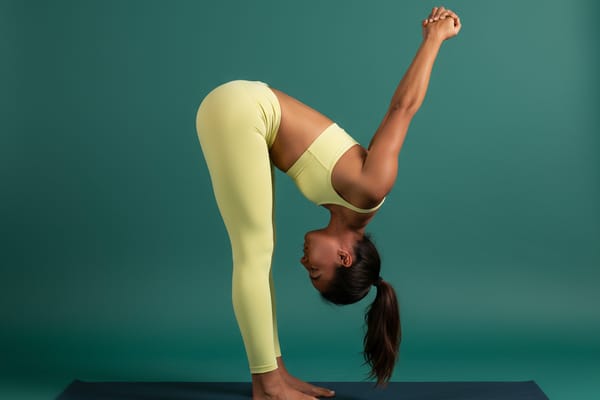
2. Standing Forward Fold
What it targets: Hamstrings bilaterally, lower back
Why it works: The standing position allows gravity to assist the stretch. Folding forward with straight legs creates significant hamstring lengthening.
Key technique points:
- Stand with feet hip-width apart or slightly narrower
- Hinge at the hips, keeping the spine long as you fold
- Let the hands hang toward the floor (they do not need to touch)
- Keep a micro-bend in the knees if needed to protect the lower back
- Relax the head and neck
Variation: For a more intense stretch, straighten the legs completely and pull the torso toward the thighs.
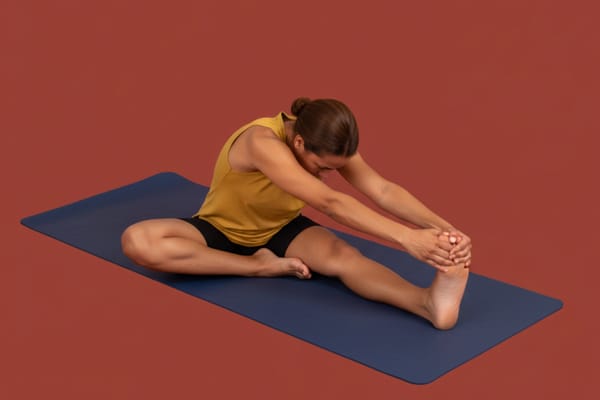
3. Seated Forward Fold
What it targets: Hamstrings, calves, lower back
Why it works: The seated position eliminates balance demands and allows for prolonged holds. Reaching toward the feet with straight legs stretches the entire posterior chain.
Key technique points:
- Sit with legs extended straight in front of you
- Flex the feet (pull toes toward shins)
- Hinge forward from the hips, reaching toward the feet
- Lead with the chest rather than rounding the back excessively
- Hold wherever you feel a strong but tolerable stretch
Find this in: The Lower Body Flexibility Builder incorporates seated forward folds with proper progression.
4. Half Split (Runner’s Stretch)
What it targets: Hamstrings, calf of the front leg
Why it works: The half-kneeling position isolates one leg at a time and allows for fine-tuned adjustment of stretch intensity.
Key technique points:
- From a low lunge, shift your weight back and straighten the front leg
- Keep the front foot flexed (toes pointing up)
- Hinge forward at the hips to increase the stretch
- Use blocks under your hands if needed for support
- Square your hips rather than letting them rotate
Find this in: This appears in our Front Split Progressive Flow as a foundational position.
5. Pyramid Pose (Intense Side Stretch)
What it targets: Hamstrings of front leg, calf
Why it works: The standing split-stance position with both legs straight creates an intense hamstring stretch while also challenging balance.
Key technique points:
- Stand with one foot forward and one back, about 3 feet apart
- Both feet point forward (or back foot slightly angled)
- Keep both legs straight
- Fold forward over the front leg
- Hands can rest on the floor, blocks, or the front shin
6. Supine Figure Four Variation
What it targets: Hamstrings, glutes, external rotators
Why it works: This position combines elements of hamstring and hip stretching. By pulling the uncrossed leg toward the chest while the other leg rests in figure-four position, you get a compound stretch.
Key technique points:
- Lie on your back, cross one ankle over the opposite knee
- Pull the uncrossed leg toward your chest
- For more hamstring emphasis, straighten the bottom leg while keeping the other crossed
7. Wide-Legged Forward Fold
What it targets: Hamstrings, inner thighs (adductors)
Why it works: The wide stance adds an adductor stretch to the hamstring lengthening. This is particularly useful for people whose hamstring tightness combines with adductor restriction.
Key technique points:
- Stand with feet wide apart, toes pointing forward or slightly outward
- Fold forward at the hips, reaching toward the floor
- You can rest hands on the floor, on a block, or grab the ankles
- Keep the legs straight and engaged
8. Doorway Hamstring Stretch
What it targets: Hamstrings, especially useful for passive long holds
Why it works: Using a doorway provides support that allows you to hold the stretch for extended periods without fatigue.
Key technique points:
- Lie on your back in a doorway
- Place one leg up the door frame (or wall) with the knee straight
- The other leg extends through the doorway, flat on the floor
- Scoot closer to the wall for more intensity
- This position allows for very long holds (2-5 minutes)
Building Your Hamstring Flexibility Practice
Beginner Phase (Weeks 1-4)
Start conservatively to allow neural adaptation without overwhelming the tissues.
Recommended approach:
- Practice 5-10 minutes daily
- Focus on supine hamstring stretch, standing forward fold, and half split
- Hold each stretch for 30-45 seconds
- Stay at intensities where you can breathe normally and relax into the stretch
Intermediate Phase (Weeks 5-12)
Increase duration and add variety as your nervous system adapts.
Recommended approach:
- Practice 10-15 minutes, 4-6 times per week
- Extend holds to 45-60 seconds
- Add pyramid pose, wide-legged fold, and doorway stretches
- Begin experimenting with PNF techniques (contract for 5 seconds, then relax deeper)
Advanced Phase (Week 13+)
For those seeking significant flexibility or working toward goals like full splits:
Recommended approach:
- Practice 15-20 minutes, 5-6 times per week
- Use longer holds (60-90 seconds) for stubborn areas
- Incorporate multiple rounds of PNF
- Add dynamic hamstring work (leg swings, active flexibility drills)
Our Hamstring Deep Dive Lab provides appropriate challenge for advanced practitioners.
Common Mistakes and How to Avoid Them
Mistake 1: Rounding the Lower Back Excessively
When reaching for the toes, many people round the spine rather than hinging at the hips. This shifts the stretch to the lower back and reduces hamstring lengthening.
Fix: Focus on tilting the pelvis forward (anterior tilt) and reaching with the chest. Think about bringing your belly button toward your thighs, not your head toward your knees.
Mistake 2: Locking the Knees Aggressively
Hyperextending the knees puts excessive stress on the joint capsule and ligaments. The stretch should be felt in the muscle belly, not behind the knee.
Fix: Keep a micro-bend in the knees, or focus on lifting the kneecaps by engaging the quadriceps without pushing into hyperextension.
Mistake 3: Bouncing
Ballistic (bouncing) stretching activates the stretch reflex, causing the hamstrings to contract rather than relax. This can also cause microtears in the muscle.
Fix: Use slow, sustained holds. Move into the stretch gradually and stay there.
Mistake 4: Holding the Breath
Breath-holding activates the sympathetic nervous system and increases muscle tension. This counteracts the relaxation needed for effective stretching.
Fix: Breathe slowly and deeply throughout the stretch. Some practitioners find exhaling as they move deeper into the stretch helps release tension.
Mistake 5: Stretching Cold
Hamstring strains can occur during stretching if the tissue is cold and unprepared. Starting with intense stretches risks injury.
Fix: Warm up with 5 minutes of light activity before stretching. Even walking or gentle leg swings increase tissue temperature and blood flow.
Mistake 6: Inconsistent Practice
Sporadic stretching produces only temporary effects. The nervous system requires consistent exposure to build lasting tolerance.
Fix: Short daily sessions work better than occasional long sessions. Even 5 minutes daily produces better results than 30 minutes once a week.
Mistake 7: Ignoring Nerve Tension
If stretching produces tingling, burning, or electrical sensations, you may be tensioning the sciatic nerve rather than the muscle. Pushing through nerve tension can cause irritation.
Fix: If you experience nerve symptoms, back off the intensity. Consider neural gliding exercises or consult a physical therapist.
Frequently Asked Questions
How long does it take to touch your toes?
This depends on your starting point, genetics, and consistency. Research shows measurable improvements within 4-8 weeks of consistent practice. However, touching your toes (or achieving any specific goal) may take weeks to months depending on how far you need to progress.
Be patient and track your progress rather than fixating on a single goal position.
Why are my hamstrings tight in the morning?
Overnight, several factors contribute to morning stiffness:
- Reduced blood flow and tissue temperature during sleep
- Accumulation of fluid in joint spaces
- Nervous system downregulation during sleep affects muscle tone
Light movement and gentle stretching in the morning quickly restores flexibility. Our Post-Run Builder routine works well as a morning mobility practice.
Can you stretch hamstrings every day?
Yes. Daily hamstring stretching is safe and effective for most people. Research supports frequency for building flexibility. However, if you are doing very intense or prolonged stretching (such as working toward splits), you may benefit from recovery days.
Why do my hamstrings feel tighter after stretching?
This sometimes occurs due to:
- The nervous system tightening up in response to perceived threat
- Overstretching that causes mild inflammation and protective guarding
- Poor stretch technique that did not actually address the restriction
If this happens consistently, reduce intensity and duration. Stretching should feel productive, not damaging.
Is it better to stretch before or after exercise?
For hamstring flexibility development, post-exercise stretching is generally more effective. Muscles are warm and pliable after activity, allowing for deeper, safer stretches.
Pre-exercise, use dynamic stretches (leg swings, walking lunges) rather than long static holds, which can temporarily reduce power output.
My hamstrings are always tight no matter what. Why?
Several possibilities:
- Neural tension: The sciatic nerve may be the limiting factor, not the muscles
- Structural issues: Hip joint or spine problems can create persistent hamstring guarding
- Postural patterns: Anterior pelvic tilt pre-tensions the hamstrings
- Inconsistency: You may not be stretching frequently enough for lasting adaptation
- Technique issues: You may be stretching the lower back rather than the hamstrings
If consistent, proper stretching fails to produce improvement, consult a healthcare provider to rule out underlying issues.
The Role of Strength Training
Interestingly, strengthening the hamstrings through their full range of motion may also improve flexibility. Exercises like Romanian deadlifts and Nordic curls load the hamstrings in lengthened positions, which can stimulate adaptations that increase usable range of motion.
A balanced approach includes both stretching and strengthening. The combination often produces better results than either approach alone.
Creating a Sustainable Practice
Long-term hamstring flexibility requires consistent practice over months and years. Here are strategies for sustainability:
Integrate stretching into existing routines: Stretch while watching television, after workouts, or as a wind-down before bed.
Track progress: Measure your forward fold reach (fingertips to floor distance) monthly. Seeing improvement reinforces motivation.
Address contributing factors: If you sit for work, take movement breaks. If you run, include hamstring work in your recovery routine.
Be realistic about timelines: Substantial flexibility gains take months. Quick fixes do not exist.
Key Takeaways
- Hamstring flexibility affects the entire posterior chain: Lower back, pelvis, and knees all benefit from adequate hamstring length
- Static stretching works: Research confirms 8-12 degree improvements with consistent practice
- Hold for 30-60 seconds: This duration optimizes the balance between effectiveness and practicality
- Address both muscles and nerves: The sciatic nerve influences hamstring flexibility; nerve tension may explain stubborn restrictions
- Consistency is essential: Daily or near-daily practice produces better results than sporadic sessions
Related Articles
- Why Stretching Actually Works: The Science of Flexibility
- Hamstring Stretches for Runners
- Front Split Progression: A Realistic Timeline
References
Medeiros DM, Cini A, Sbruzzi G, Lima CS. (2016). Influence of static stretching on hamstring flexibility in healthy young adults: Systematic review and meta-analysis. Physiotherapy Theory and Practice, 32(6), 438-445. PubMed ↩︎ ↩︎
Li X, Zhou J, Wu X, et al. (2025). Immediate and short-term effects of neurodynamic techniques on hamstring flexibility: A systematic review with meta-analysis. Physiotherapy, 126, 101520. PubMed ↩︎
Wang Y, Chen Y, Yang Y, et al. (2023). Dynamic and static stretching on hamstring flexibility and stiffness: A systematic review and meta-analysis. Heliyon, 9(8), e18795. PubMed ↩︎
Decoster LC, Cleland J, Altieri C, Russell P. (2005). The effects of hamstring stretching on range of motion: a systematic literature review. Journal of Orthopaedic and Sports Physical Therapy, 35(6), 377-387. PubMed ↩︎
Fasen JM, O’Connor AM, Schwartz SL, et al. (2009). A randomized controlled trial of hamstring stretching: comparison of four techniques. Journal of Strength and Conditioning Research, 23(2), 660-667. PubMed ↩︎
