Runners have a complicated relationship with their hamstrings. These muscles work hard during every stride, often become tight and uncomfortable, and are among the most commonly strained muscles in running.
Understanding why running creates hamstring tightness and how to address it effectively helps you run more comfortably and reduce injury risk.
Why Runners Get Tight Hamstrings
The Running Gait
During running, hamstrings work both to extend the hip (pushing you forward) and to control knee extension as the leg swings forward. This eccentric (lengthening under load) demand is particularly challenging for the muscles.
Research shows that hamstring strains often occur during the late swing phase of running, when the muscle is lengthening rapidly while also contracting to slow the leg. Maintaining adequate flexibility and eccentric strength helps the hamstrings handle this demand.
Limited Hip Extension
Running involves repeated hip flexion without full extension. Unlike walking, where the hip moves through a larger range, running keeps the hips in a relatively flexed position. This can contribute to adaptive shortening of both hip flexors and hamstrings.
Cumulative Load
High training volume accumulates tension in the hamstrings. Without adequate recovery and stretching, this tension builds over time, creating chronic tightness.
The Best Stretches for Runners
1. Standing Hamstring Stretch
Why it works for runners: Can be done anywhere, including immediately after a run.
How to do it:
- Place one heel on a low surface (curb, step, bench)
- Keep both legs straight
- Hinge forward at the hips until you feel a stretch
- Hold 30-45 seconds per side
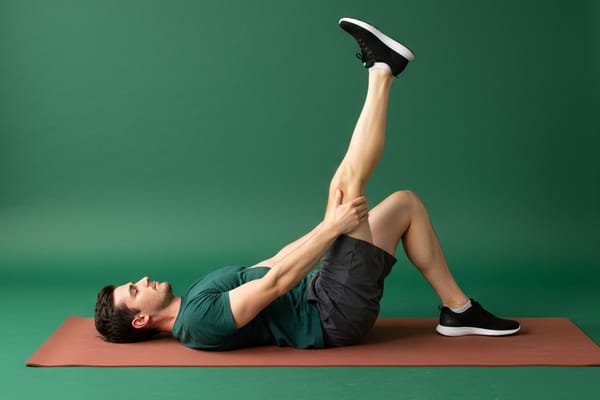
2. Supine Hamstring Stretch
Why it works for runners: Provides support and allows for longer holds and greater relaxation.
How to do it:
- Lie on your back
- Raise one leg, keeping it straight
- Use a strap or towel around the foot
- Hold 45-60 seconds per side
Find this in: Our Post-Run Builder includes this stretch with extended holds.
3. Half Split (Runner’s Stretch)
Why it works for runners: Specifically designed for runners, addressing hamstrings and hip flexors together.
How to do it:
- From a low lunge, shift weight back and straighten the front leg
- Flex the front foot (toes toward ceiling)
- Hinge forward at the hips
- Hold 45-60 seconds per side
4. Downward Dog
Why it works for runners: Stretches hamstrings while also addressing calves and shoulders, all of which tighten during running.
How to do it:
- Form an inverted V with hands and feet on the floor
- Press heels toward the ground
- Keep spine long
- Hold 30-45 seconds, or alternate pressing one heel then the other
5. Forward Fold
Why it works for runners: Stretches both hamstrings simultaneously with a relaxing forward bend.
How to do it:
- Stand with feet hip-width apart
- Fold forward from the hips
- Let arms hang or hold opposite elbows
- Keep knees straight (or micro-bent if needed)
- Hold 30-60 seconds
When to Stretch
Before Running
Not recommended: Long static hamstring stretches before running.
Instead: Use dynamic leg swings to prepare the hamstrings without potentially impairing performance.
Dynamic warmup sequence:
- Easy walking or jogging (5 minutes)
- Leg swings forward/back (10 per leg)
- Leg swings side to side (10 per leg)
- Walking lunges with reach (10 per leg)
- High knees and butt kicks (30 seconds each)
After Running
Ideal time: Post-run is the best time for static hamstring stretching. Muscles are warm and pliable, and there is no subsequent performance concern.
Post-run routine:
- Easy walking cool-down (5 minutes)
- Standing hamstring stretch (45 seconds per side)
- Half split (45 seconds per side)
- Hip flexor stretch (45 seconds per side)
- Forward fold (60 seconds)
Our Post-Run Reset provides a time-efficient version of this routine.
Separate Flexibility Sessions
For runners with significant hamstring tightness, dedicated stretching sessions (separate from running) can accelerate improvement. Schedule these on easy days or rest days.
The Hamstring Deep Dive Lab provides an intensive routine for those prioritizing hamstring flexibility.
Preventing Hamstring Strains
Stretching is one component of hamstring health for runners. Other important factors:
Eccentric Strengthening
Nordic hamstring curls and Romanian deadlifts strengthen the hamstrings through lengthening contractions, building their capacity to handle running demands.1
Gradual Training Progression
Rapid increases in mileage or intensity stress hamstrings beyond their capacity. Follow the 10% rule for weekly mileage increases.
Adequate Recovery
Hamstrings need time to recover from training stress. Include easy days and rest days in your program.
Address Hip Flexor Tightness
Tight hip flexors can inhibit glute function, causing hamstrings to overwork. Include hip flexor stretches in your routine.
Common Questions
Should I stretch if my hamstrings are sore from running?
Gentle stretching can help with delayed onset muscle soreness (DOMS). Avoid aggressive stretching that causes pain.
How often should runners stretch hamstrings?
After every run is ideal. At minimum, 3-4 times per week maintains adequate flexibility.
Can stretching cure hamstring tightness from running?
Stretching helps, but if you continue high-volume running, some tightness is normal. The goal is management, not complete elimination.
My hamstrings feel tight during running. What should I do?
Stop and gently stretch, then continue at a reduced pace. Persistent mid-run tightness may indicate inadequate warmup, overtraining, or other issues worth addressing.
Key Takeaways
- Running creates hamstring demand: Eccentric loading during each stride challenges these muscles
- Post-run stretching is most effective: Muscles are warm, and there is no performance concern
- Dynamic warmup before running: Leg swings prepare hamstrings without static hold downsides
- Strengthening complements stretching: Eccentric exercises build capacity to handle running demands
- Consistency matters: Regular post-run stretching prevents accumulation of tightness
Related Articles
- IT Band Stretches: How to Relieve Tightness
- The Complete Hamstring Flexibility Guide
- Static vs Dynamic Stretching: When to Use Each
- Why Stretching Actually Works
