Happy baby pose is a reclined stretch where you lie on your back, draw your knees toward your armpits and hold the outer edges of your feet with your shins vertical. It stretches the inner thighs, glutes and hamstrings and lets the lower back relax. Hold it for 30 to 90 seconds while breathing slowly.
Happy baby pose looks simple. You lie on your back, hold your feet, and let your knees sink toward the floor beside your ribs. Yet many people struggle with it at first. The tailbone lifts off the mat, the shoulders creep up, or the hands cannot reach the feet at all.
The pose gets its name from the way babies lie on their backs and play with their toes. In yoga it is often called Ananda Balasana. It is one of the few stretches that opens the inner thighs, the glutes and the hamstrings at the same time while your spine rests fully on the floor. That makes it a good choice at the end of a workout, before bed, or on days when your lower back feels stiff and you want something gentle.
This guide explains what happy baby pose stretches, how to set it up step by step, the mistakes that stop it from working, and how to make it easier or harder.
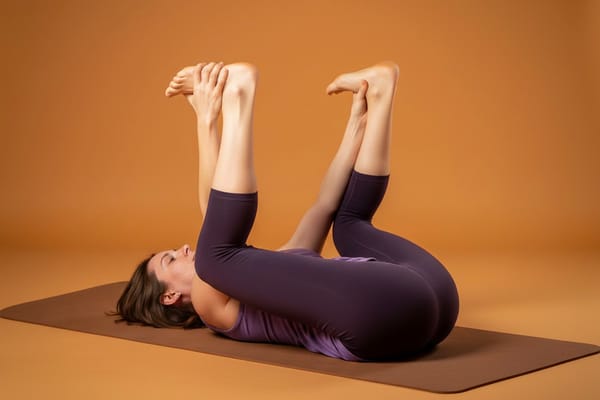
What Happy Baby Pose Stretches
Happy baby is a deep hip flexion position with the thighs turned out and spread apart. That combination puts several muscle groups on stretch at once.
Inner thighs (adductors): As your knees widen and move toward the floor, the adductor muscles along the inside of your thighs lengthen. This is the main stretch most people feel.
Glutes: Deep hip flexion lengthens the gluteus maximus. If your glutes are tight from running or long periods of sitting, you will feel this in the back of the hips.
Hamstrings: The more you straighten your knees while holding your feet, the more the hamstrings work. With bent knees the hamstring stretch stays mild.
Lower back: The lower back is not stretched hard here, but the position lets the muscles beside the spine relax. Gravity and the weight of your legs gently round the lumbar spine toward the floor.
Because your back is supported the whole time, happy baby is easier to relax into than standing or seated hip stretches. You do not need to balance or hold your torso up, so the muscles you want to stretch can let go.
How to Do Happy Baby Pose
Step-by-Step Setup
- Lie on your back on a mat or a carpeted floor. Bend your knees and place your feet flat on the floor.
- Draw one knee toward your chest, then the other, so both knees are bent above your torso.
- Open your knees wider than your hips. Move them toward your armpits, not toward the center of your chest.
- Turn the soles of your feet up toward the ceiling. Your shins should be close to vertical, with your ankles stacked over your knees.
- Hold the outer edges of your feet with your hands. Hook your fingers around the outside of each foot, or hold the big toes if that is easier.
- Gently pull your feet down so your knees move toward the floor beside your ribs. At the same time, press your feet up into your hands to create a light resistance.
- Let your tailbone, lower back and shoulders rest on the floor. Keep the back of your neck long.
Breathing and Cues
Breathe slowly through your nose. On each exhale, let your knees sink a little more toward the floor and let your tailbone move down toward the mat.
Useful cues while you hold:
- Think of your shins as table legs: straight up and down, not angled in or out.
- Keep your shoulders wide and away from your ears.
- Relax your jaw and the muscles of your face.
- Imagine your lower back getting heavier with each breath.
How Long to Hold
Hold happy baby for 30 to 90 seconds. If you are using it to relax at the end of a session, longer holds of 1 to 2 minutes work well. Come out slowly by releasing your feet, bringing your knees together and placing your feet back on the floor.
For lasting flexibility gains, total weekly time matters more than one long hold. A review of long-term stretching studies found that static stretching on at least 5 days per week, for a total of at least 5 minutes per week for a given muscle group, was linked to better range of motion gains.1 Two or three holds of happy baby per session, most days of the week, fits within that.
Common Mistakes
Lifting the Tailbone
This is the most common problem. When you pull hard on your feet, your pelvis rolls up and your tailbone lifts off the floor. The stretch moves away from the hips and into the lower back.
Fix: Pull less. Let your knees stay higher if needed, and focus on keeping the tailbone heavy on the mat. You can also place a folded towel under your sacrum for feedback.
Pulling the Knees Toward the Chest Instead of the Armpits
If your knees come together in front of your chest, you get a hug-the-knees position, not happy baby. The inner thigh stretch disappears.
Fix: Widen your knees until they are outside your ribs. Your thighs should form a wide V.
Lifting the Head and Shoulders
Reaching for your feet often pulls the head and shoulders off the floor. This puts strain on the neck and keeps the abdominal muscles working.
Fix: Hold your ankles, calves or a strap instead of your feet. Your head should rest on the floor without effort.
Rocking Too Hard
Gentle rocking from side to side is fine and can massage the lower back. Large, fast movements can strain the hips or roll you onto your side.
Fix: Keep any rocking small and slow, a few centimeters each way.
Forcing the Knees to the Floor
Very few people can bring their knees all the way to the floor. Forcing it can irritate the front of the hip or the groin.
Fix: Stop at a strong but comfortable stretch. Range improves over weeks, not in one session.
Easier Variations
Half Happy Baby
Keep one foot on the floor with the knee bent. Bring the other knee toward the armpit and hold that foot. This halves the load on your hips and makes it easier to keep the pelvis down. Hold 30 to 60 seconds per side.
Strap or Towel Version
Loop a strap or towel around the soles of both feet and hold the ends. This is useful if you cannot reach your feet without lifting your head. Shorten the strap over time as your hips open.
Hands Behind the Thighs
Hold the backs of your thighs instead of your feet. This turns the pose into a gentler version that still opens the hips but asks much less of the hamstrings and adductors.
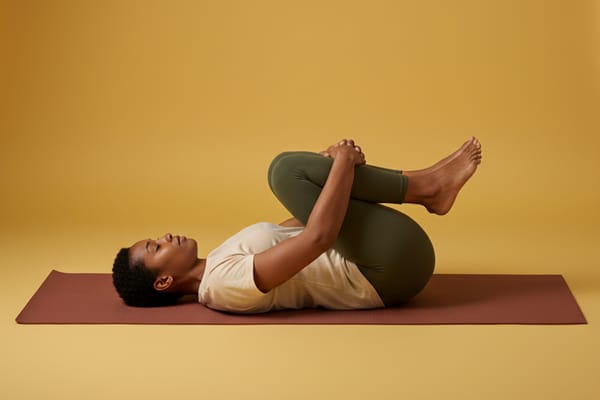
Knees to Chest
If happy baby is still too intense, start with knees to chest. Hug both knees in, keeping them closer together. It stretches the glutes and lower back and prepares you for the wider position.
Harder Variations
Straighter Legs
Once your knees reach comfortably toward the floor, slowly straighten your knees while holding your feet. This increases the hamstring stretch a lot. Keep your tailbone down and stop before your back rounds up.
Longer Holds With Contract-Relax
Press your feet up into your hands for 5 seconds at about 20 to 30 percent effort, then relax and let your knees move a little further down on the exhale. Repeat three times. This is a simple form of contract-relax stretching that many people find helps them settle deeper.
Dynamic Happy Baby
Rock slowly from one side to the other, letting one knee move toward the floor and then the other. This turns the pose into a mobility drill that works well in a warm-up for squats.
Happy Baby Pose for Lower Back Relief
Many people use happy baby when their lower back feels tight. The position takes pressure off the spine because you are lying down and the weight of your legs rounds the lower back gently.
It is worth being honest about what research shows. A Cochrane review of 21 trials found that yoga programs, compared with no exercise, led to small improvements in back-related function and pain in adults with chronic non-specific low back pain. The improvements were judged clinically unimportant on average, and yoga worked about as well as other back-focused exercise.2 The same review found more adverse events with yoga than with no exercise, mostly increased back pain.
So happy baby is a reasonable part of a back care routine, not a treatment on its own. It pairs well with walking, core work and other gentle stretches. Our lower back pain stretching guide covers a wider set of options, and the Happy Back Gentle Start routine is a calm place to begin.
Where Happy Baby Fits in a Routine
Happy baby works best near the end of a session, when your muscles are warm. A few options:
After a run or leg workout: Pair happy baby with a hamstring stretch and a figure four stretch for the glutes. See our glute stretches guide for more ideas.
Before bed: Hold it for 1 to 2 minutes with slow breathing. Reclined, low-effort stretches like this one fit well into an evening wind-down. Our article on stretching for better sleep explains how to build that habit.
For hip mobility days: Combine it with the reclined butterfly, pigeon pose and the 90/90 stretch. The hip flexibility guide shows how these fit together.
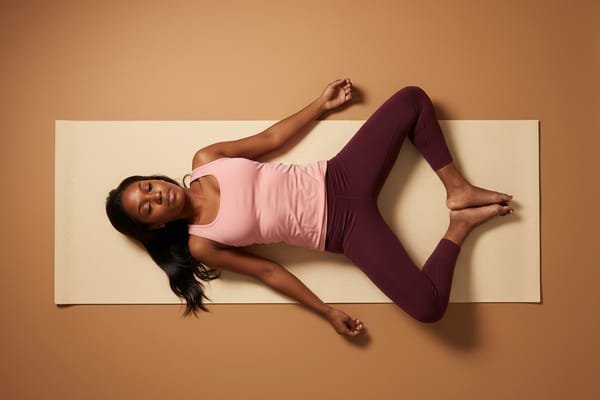
Sample 5-Minute Sequence
- Knees to chest: 45 seconds
- Reclined butterfly: 60 seconds
- Half happy baby: 30 seconds per side
- Full happy baby: 60 to 90 seconds
- Knees to chest with gentle rocking: 30 seconds
If you want a guided version, try the Happy Back Recovery routine, which includes reclined stretches like this one at a calm pace.
Who Should Be Careful
Happy baby is gentle for most people, but some situations need extra care.
Hip problems: If you have femoroacetabular impingement, a labral tear, or a recent hip replacement, deep hip flexion can pinch the front of the hip. Many hip replacement protocols restrict deep flexion for weeks or months after surgery. Follow the instructions from your surgeon or physical therapist.
Knee pain: Holding the feet with bent knees is usually fine, but if you feel pain inside the knee, hold behind the thighs instead.
Pregnancy: Lying flat on your back for long periods can be uncomfortable later in pregnancy. Use short holds, prop your head and shoulders on a cushion, or choose a side-lying or seated alternative. Ask your midwife or doctor what suits you.
Acute back pain: If your back pain is new and severe, wait until it settles a little before stretching into deep positions.
When to See a Professional
Stop and get checked by a doctor or physical therapist if you notice:
- Sharp or pinching pain in the front of the hip or groin
- Pain that travels down the leg, numbness or tingling
- Back pain together with fever, unexplained weight loss, or problems controlling your bladder or bowels
- Pain that gets worse over several weeks despite gentle stretching
Key Takeaways
- Happy baby stretches the inner thighs, glutes and hamstrings while your back rests on the floor
- Knees go toward the armpits, shins stay vertical, and the tailbone stays down
- Hold 30 to 90 seconds, and stretch most days of the week for lasting change
- Use a strap, half happy baby, or knees to chest if you cannot reach your feet comfortably
- It is a helpful part of a back care routine, not a cure for back pain on its own
Frequently Asked Questions
What is happy baby pose good for?
Happy baby pose stretches the inner thighs, glutes and hamstrings and lets the lower back relax on the floor. Many people use it to ease stiffness after sitting, running or lifting, or as a calm stretch before bed. It also improves the deep hip flexion you need for squatting and for sitting cross-legged on the floor.
How long should I hold happy baby pose?
Hold happy baby pose for 30 to 90 seconds. Beginners can start with 30 seconds and build up over a few weeks. For relaxation before bed, holding for 1 to 2 minutes with slow breathing works well. Repeating the pose two or three times in a session, on most days, matters more than one very long hold.
Why does my tailbone lift in happy baby pose?
Your tailbone lifts when you pull your feet down further than your hips can go. The pelvis rolls up to make up the difference. Pull less, let your knees stay higher, and focus on keeping your tailbone heavy on the floor. A strap or holding behind your thighs also helps the pelvis stay down.
Is happy baby pose good for lower back pain?
It can help some people feel less stiff because the lower back rests on the floor and rounds gently. Research on yoga for chronic low back pain shows small average benefits, similar to other exercise. Use it as one part of a routine that also includes walking and strengthening. See a professional if pain spreads down the leg.
Related Articles
- Lower Back Pain Stretching: What Works
- The Complete Hip Flexibility Guide
- Glute Stretches
- Groin Stretches
- Stretching for Better Sleep
References
Thomas E, Bianco A, Paoli A, Palma A. (2018). The Relation Between Stretching Typology and Stretching Duration: The Effects on Range of Motion. International Journal of Sports Medicine, 39(4), 243-254. PubMed ↩︎
Wieland LS, Skoetz N, Pilkington K, Harbin S, Vempati R, Berman BM. (2022). Yoga for chronic non-specific low back pain. Cochrane Database of Systematic Reviews, 11(11), CD010671. PubMed ↩︎
