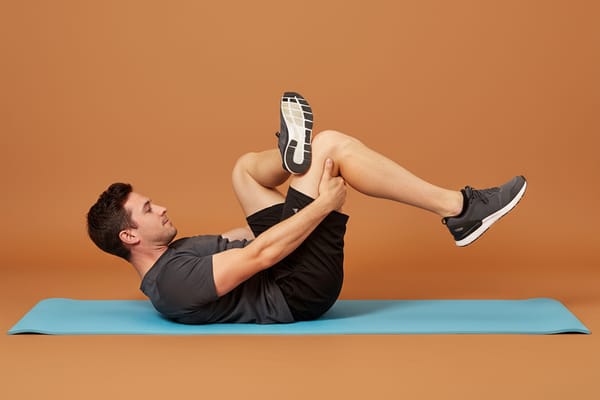
The most useful hip external rotation stretch is the lying figure four: on your back, cross one ankle over the opposite knee and pull the bottom thigh toward your chest. Seated figure four, pigeon, double pigeon and the 90/90 position also stretch the deep rotators. Hold each for 30 to 60 seconds per side.
Deep in the back of each hip, under the large glute muscles, sits a group of small muscles that turn your thigh outward. They are called the hip external rotators. You use them every time you step, turn or get out of a car, and they often feel tight after long hours of sitting, running or cycling.
When people search for a hip external rotation stretch, they usually want to stretch these muscles: the piriformis and its neighbors. This guide shows you how. You will find step-by-step instructions for seven stretches, how long to hold them, the mistakes that make them less effective, and a short routine to follow.
The Hip External Rotators
Six small muscles, often called the “deep six,” run from the pelvis and sacrum to the top of the thigh bone:
- Piriformis: The best known, running from the sacrum to the top of the femur
- Superior and inferior gemellus: Two small muscles above and below the obturator internus
- Obturator internus and obturator externus: Deep muscles that start around the opening in the pelvis
- Quadratus femoris: A short, flat muscle at the bottom of the group
The gluteus maximus, the back part of the gluteus medius, and the sartorius also help turn the hip outward. That is why most of the stretches below also stretch the glutes.
Why the Stretch Position Matters
The rotators do not stretch in the same way in every position. A cadaver study measured how much the short external rotators lengthened in four common stretch positions. All four lengthened the muscles. The piriformis and superior gemellus lengthened most when the hip was bent to 90 degrees and moved across the body. The obturator internus and inferior gemellus lengthened most when the hip was straight and turned inward. Turning the hip outward with the hip and knee bent to 90 degrees was the third most effective position.1
In practice, this means there is no single perfect stretch. A mix of figure four, pigeon and cross-body positions reaches the whole group better than any one of them alone.
Signs Your Hip Rotators Are Tight
- One knee stays higher than the other when you sit cross-legged or in a butterfly position
- You feel a pull deep in the buttock when you cross one ankle over the other knee
- Your feet turn out noticeably when you stand or walk
- The back of your hip feels stiff after sitting, driving or a long run
None of these mean something is wrong. They simply show where to focus.
7 Hip External Rotation Stretches
Start with the first two if you are new to stretching or have stiff knees. Move to pigeon and double pigeon when the figure four feels easy.
1. Lying Figure Four
What it targets: Piriformis, deep rotators, glutes
This is the safest place to start because the floor supports your back and you control the depth with your hands.
How to do it:
- Lie on your back with both knees bent and feet flat
- Cross your right ankle over your left thigh, just above the knee
- Lift your left foot off the floor
- Hold the back of your left thigh with both hands and pull it gently toward your chest
- Hold for 30 to 60 seconds, then switch sides
Cues: Flex the top foot (pull the toes toward the shin) to protect the knee. Keep your head and shoulders relaxed on the floor.
Common mistake: Lifting the tailbone off the floor to pull the leg closer. Keep the pelvis heavy.
Easier: Keep the bottom foot on the floor and press the top knee gently away from you. Harder: Pull the bottom thigh further toward your chest, or loop a strap around it if you cannot reach.
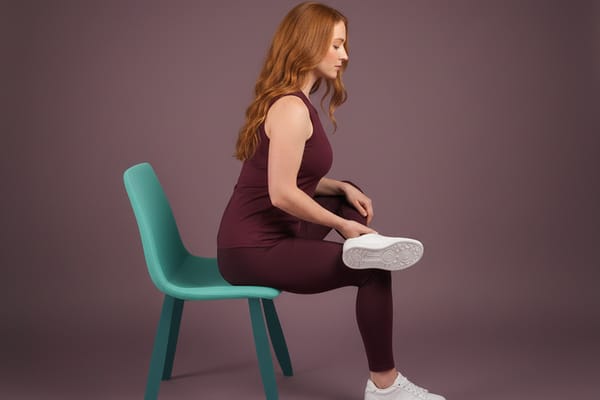
2. Seated Figure Four
What it targets: Piriformis, glutes, outer hip
The same stretch in a chair. It is useful at work, on a plane, or any time you cannot lie down.
How to do it:
- Sit near the front of a chair with both feet flat
- Cross your right ankle over your left knee
- Sit tall, then hinge forward from your hips with a long back
- Stop when you feel a stretch in the right buttock
- Hold for 30 to 60 seconds, then switch sides
Cues: Lead with your chest, not your head. The forward lean should come from the hips.
Common mistake: Rounding the back. This feels like a stretch but moves the pull into the spine instead of the hip.
Easier: Stay upright and press the top knee down lightly with your hand. Harder: Lean further forward until your chest is close to the shin.
3. Pigeon Pose
What it targets: Deep rotators and glutes of the front leg, hip flexors of the back leg
Pigeon combines external rotation with body weight, so it gives a stronger stretch than the figure four. Our pigeon pose guide covers it in full. Here are the essentials.
How to do it:
- Start on your hands and knees
- Bring your right knee forward behind your right wrist
- Angle the right shin toward your left hip
- Slide your left leg straight back
- Square your hips toward the floor, then lower your chest onto your forearms or hands
- Hold for 45 to 90 seconds per side
Cues: Keep the front foot flexed. Place a pillow or block under the right hip if it does not reach the floor.
Common mistake: Letting the body fall to the side of the front leg. Keep your weight centered so the hips stay level.
Easier: Bring the front heel closer to your groin, or do the figure four instead. Harder: Move the front shin closer to parallel with the front of your mat.
4. Double Pigeon (Fire Log)
What it targets: Deep rotators, glutes, outer hip on both legs
Double pigeon stacks one shin on top of the other. It is one of the strongest external rotation stretches you can do, so approach it slowly.
How to do it:
- Sit tall with legs extended
- Bend your left knee and place the shin on the floor in front of you, parallel to the front edge of the mat
- Bend your right knee and stack your right shin on top, with the right ankle over the left knee
- Flex both feet
- Sit tall, or hinge forward with a long back
- Hold for 30 to 60 seconds, then switch which leg is on top
Cues: If the top knee floats high in the air, place a cushion under it so the leg can relax.
Common mistake: Forcing the top knee down with your hands. That stress goes into the knee, not the hip.
Easier: Sit cross-legged with one shin in front of the other instead of stacked. Harder: Walk your hands forward and lower your chest toward your shins.
5. The 90/90 Position
What it targets: External rotation on the front leg, internal rotation on the back leg
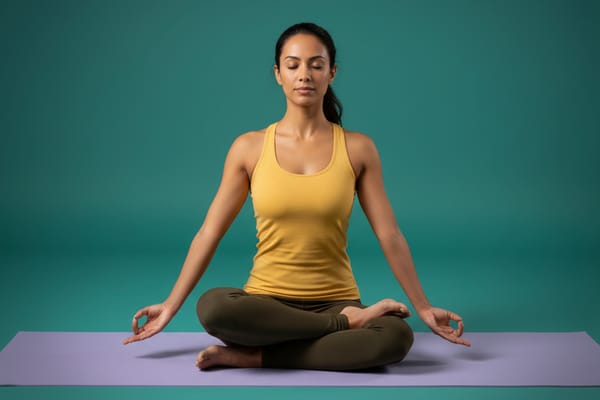
In the 90/90, both knees are bent to right angles, with one leg in front of you and one to the side. The front hip is in external rotation, so leaning forward over the front shin stretches its rotators. The back hip works on internal rotation at the same time.
How to do it (short version):
- Sit with both knees bent at 90 degrees, front shin across your body, back shin out to the side
- Sit tall and turn your chest to face the front shin
- Hinge forward over the front shin with a long back
- Hold for 30 to 60 seconds, then switch sides
The 90/90 has many variations, including hip switches and leaning versions. For the full breakdown, read our 90/90 hip stretch guide or follow the Hip Opening 90-90 Flow.
6. Butterfly
What it targets: Inner thighs and hip rotators
The butterfly places both hips in external rotation and pulls the knees apart. It stretches the inner thighs more than the deep rotators, but it is a good measure of how freely your hips turn outward.
How to do it:
- Sit tall and bring the soles of your feet together
- Hold your feet or ankles and let the knees fall out to the sides
- Rest your elbows on your inner thighs and press down very lightly
- Hold for 30 to 60 seconds
Cues: Sit on a folded towel if your lower back rounds.
Common mistake: Bouncing the knees up and down. Let them settle instead.
Easier: Move your feet further from your body. Harder: Bring your heels closer and hinge forward from the hips.
7. Standing Hip Opener (Active)
What it targets: Hip rotators and glutes, with balance
The stretches above are passive. This one makes you turn the hip outward with your own muscles, which helps you use the range you gain.
How to do it:
- Stand tall with feet hip-width apart, near a wall if you need support
- Lift your right foot and hold it with your left hand in front of your body
- Let the right knee turn outward, so the sole of the foot faces up
- Lower the foot and switch sides
- Do 8 to 10 per side
Cues: Keep your torso upright and your standing knee slightly bent.
Common mistake: Bending forward to reach the foot. Bring the foot up toward your hand instead.
Easier: Lift the knee only and turn it outward without holding the foot. Harder: Hold each rep for three seconds.
How Long and How Often
- Hold time: 30 to 60 seconds per side for most stretches, 45 to 90 seconds for pigeon
- Repetitions: 1 to 2 rounds per side
- Frequency: Daily is safe for most people. Three to five sessions per week also works well
- Intensity: A moderate pull that you can breathe through. Never sharp pain
Stretching increases range of motion right away, but a systematic review found that this short-term effect typically lasts less than 30 minutes.2 Lasting change needs regular practice over several weeks. If you are short on time, two minutes every day will do more than one long session per week.
A 6-Minute Hip Rotator Routine
- Standing hip opener: 8 per side (warm-up)
- Lying figure four: 45 seconds per side
- Seated figure four or 90/90: 45 seconds per side
- Pigeon pose: 60 seconds per side
- Butterfly: 45 seconds
If you prefer a guided timer, the Hip Opening Rotators routine uses hip circles, 90/90, pigeon and figure four in six minutes.
Do Not Forget Internal Rotation and Strength
External rotation is only half of hip rotation. Many people with tight rotators are also limited in internal rotation, which is turning the thigh inward. A systematic review found that, of all hip movements, reduced internal rotation was the one most often linked to nonspecific low back pain, although the quality of evidence was very low.3 The 90/90 is helpful here because the back leg trains internal rotation while the front leg stretches.
Strength matters too. Flexibility that you cannot control does not last. Pair your stretching with exercises such as side-lying leg raises and single-leg balance work. The Hip Stability Builder routine alternates hip stretches with this type of activation work. For a wider view of the whole hip, see our hip flexibility guide.
Who Should Be Careful
Hip rotator stretches are safe for most people, but take extra care if any of these apply:
- Hip replacement. Deep hip bending combined with crossing or rotating the leg can be restricted after surgery. Follow your surgeon’s guidance before trying figure four or pigeon.
- Knee pain. Pigeon and double pigeon can strain the knee if the hip is stiff. Use the lying figure four and keep the foot flexed.
- Pinching at the front of the hip. A pinch in the groin during deep hip bending can point to a joint problem. Reduce the depth and get it checked if it continues.
- Pregnancy. Hormonal changes make joints more lax. Use gentle depth and supported positions.
See a doctor or physiotherapist if you have pain that travels down the leg, numbness or tingling in the leg or foot, buttock pain that does not change after a few weeks of regular stretching, or pain after a fall or impact. Pain that travels down the leg may involve the sciatic nerve. Our piriformis syndrome guide explains this in more detail.
Frequently Asked Questions
What muscles does a hip external rotation stretch target?
It targets the deep six external rotators: piriformis, superior and inferior gemellus, obturator internus, obturator externus and quadratus femoris. Most of these stretches also reach the gluteus maximus and the back of the gluteus medius. That is why figure four and pigeon are often described as glute or piriformis stretches as well.
Is figure four or pigeon better?
Both stretch the same area. The figure four is easier to control and gentler on the knee, so it suits beginners and anyone with knee pain. Pigeon uses body weight and gives a stronger stretch once your hips allow it. Many people use the figure four on busy days and pigeon when they have more time.
Why is one hip tighter than the other?
Small differences between sides are normal. They often come from habits, such as always crossing the same leg, standing with weight on one side, or sports that turn one direction more. Spend a little more time on the tighter side, but keep stretching both. If the difference is large and painful, have it assessed.
Can I stretch my hip rotators every day?
Yes. Daily stretching at a moderate intensity is safe for most people and helps the gains last. Keep the pull comfortable and avoid sharp pain. If your hip feels sore the next day, reduce the hold time or intensity and add a rest day before increasing again.
Key Takeaways
- The rotators sit deep under the glutes: Figure four and pigeon reach them better than most general hip stretches
- Use more than one position: Different rotator muscles lengthen most in different positions
- Start with the figure four: Move to pigeon and double pigeon when it feels easy
- Hold 30 to 60 seconds and repeat often: Short daily sessions beat occasional long ones
- Balance it out: Train internal rotation and hip strength alongside your stretching
Related Articles
- Pigeon Pose: The Complete Guide
- Piriformis Syndrome: Stretches, Exercises, and Recovery Guide
- The Best Glute Stretches
- The Complete Hip Flexibility Guide
References
McGovern RP, Kivlan BR, Martin RL. (2017). Length change of the short external rotators of the hip in common stretch positions: a cadaveric study. International Journal of Sports Physical Therapy, 12(7), 1068-1077. PubMed ↩︎
Behm DG, Blazevich AJ, Kay AD, McHugh M. (2016). Acute effects of muscle stretching on physical performance, range of motion, and injury incidence in healthy active individuals: a systematic review. Applied Physiology, Nutrition, and Metabolism, 41(1), 1-11. PubMed ↩︎
Avman MA, Osmotherly PG, Snodgrass S, Rivett DA. (2019). Is there an association between hip range of motion and nonspecific low back pain? A systematic review. Musculoskeletal Science & Practice, 42, 38-51. PubMed ↩︎
