Tight hips affect nearly everyone who sits for work, drives regularly, or simply lives a modern lifestyle. The discomfort ranges from mild stiffness when standing up to chronic lower back pain, limited athletic performance, and difficulty with basic movements like squatting or climbing stairs.
The good news: hip flexibility responds well to consistent, targeted stretching. Research confirms that even a few weeks of dedicated practice can produce measurable improvements in range of motion. The key is understanding which structures need attention and how to address them effectively.
This guide covers everything you need to know about hip flexibility: the anatomy involved, why hips get tight, the most effective stretches, and how to build a progressive practice that produces lasting results. Every recommendation is grounded in peer-reviewed research, giving you confidence that your time on the mat is well spent.
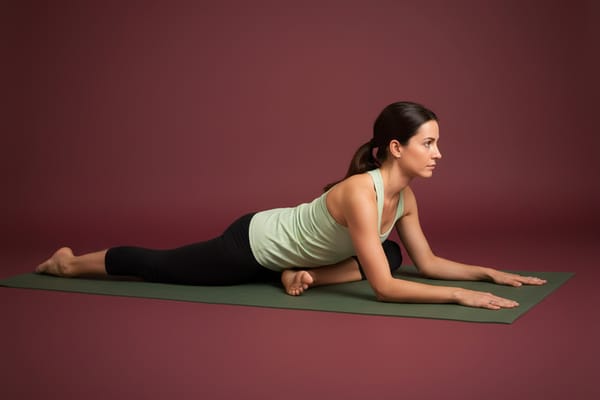
Why Hip Flexibility Matters
The hip joint is the largest weight-bearing joint in the human body. It connects your torso to your legs and influences nearly every movement you make, from walking and running to bending, twisting, and jumping. When hip mobility is restricted, the effects ripple throughout your entire kinetic chain.
Research published in the Journal of Orthopaedic and Sports Physical Therapy has documented clear connections between hip flexibility deficits and:
- Lower back pain: Limited hip extension forces the lumbar spine to compensate during walking and standing, increasing stress on spinal structures
- Knee problems: Restricted hip rotation can alter movement patterns in ways that stress the knee joint
- Reduced athletic performance: Tight hips limit stride length, jumping ability, and rotational power
- Poor posture: Shortened hip flexors pull the pelvis into anterior tilt, contributing to excessive lumbar curve
A 2020 study published in Musculoskeletal Science and Practice found that “prolonged sitting and physical inactivity are associated with limited hip extension.”1 The researchers noted that Americans sit an average of 9.5 hours per day, and this sedentary lifestyle contributes to reduced range of motion in the hip flexors.
The practical implication is clear: if you sit for work, your hips need dedicated attention.
Understanding Hip Anatomy
The hip is a ball-and-socket joint, allowing movement in multiple planes. The femoral head (the “ball” at the top of your thigh bone) sits in the acetabulum (the “socket” in your pelvis). This structure enables flexion, extension, abduction, adduction, and internal and external rotation.
Multiple muscle groups cross the hip joint, each influencing different movements:
The Hip Flexors
The hip flexors lift your thigh toward your torso. The primary muscles include:
Iliopsoas: Actually two muscles (iliacus and psoas major) that merge before attaching to the femur. The psoas originates from the lumbar spine, which is why tight hip flexors can contribute to lower back issues. This muscle is particularly affected by prolonged sitting because it remains in a shortened position for hours at a time.
Rectus Femoris: Part of the quadriceps group, this muscle crosses both the hip and knee joints. It flexes the hip and extends the knee. Because of its dual function, rectus femoris tightness can affect both hip extension and knee flexion.
Tensor Fasciae Latae (TFL): Located on the outer hip, the TFL assists with hip flexion, abduction, and internal rotation. It connects to the iliotibial band (IT band), which runs down the outside of the thigh.
The Hip Extensors
The hip extensors drive movement in the opposite direction, pushing your leg behind you:
Gluteus Maximus: The largest muscle in your body, responsible for powerful hip extension. Weak or inhibited glutes often accompany tight hip flexors, a pattern sometimes called “lower crossed syndrome.”
Hamstrings: The biceps femoris, semitendinosus, and semimembranosus cross both the hip and knee. They extend the hip and flex the knee.
The Rotators
Deep muscles control rotation at the hip:
External Rotators: A group of six small muscles (piriformis, obturator internus and externus, gemellus superior and inferior, and quadratus femoris) rotate the thigh outward. The piriformis is particularly notable because the sciatic nerve runs near or through it in many people.
Internal Rotators: The TFL, anterior gluteus medius, and gluteus minimus rotate the thigh inward.
The Adductors and Abductors
Adductors: Five muscles on the inner thigh (adductor longus, brevis, and magnus, plus gracilis and pectineus) pull the leg toward the midline.
Abductors: The gluteus medius and minimus, along with the TFL, move the leg away from the midline.
Why This Anatomy Matters
Understanding which muscles affect hip movement helps you target your stretching effectively. Many people focus exclusively on hip flexor stretches when their restrictions actually involve the adductors, external rotators, or rectus femoris. A comprehensive hip flexibility practice addresses all these structures.
Common Causes of Tight Hips
Prolonged Sitting
The most common cause of hip tightness in modern life is extended sitting. When you sit, your hip flexors remain in a shortened position. Over hours, days, and years, this sustained shortening contributes to reduced range of motion.
Research confirms this relationship. A 2020 cross-sectional study found that “prolonged sitting and physical inactivity are associated with limited hip extension.” The study documented that sitting typically involves hip flexion at approximately 90 degrees, “potentially resulting in sustained shortening of the anterior hip musculature throughout the day.”
The iliopsoas is particularly affected because it connects the lumbar spine to the femur. When chronically shortened, it can pull the pelvis into anterior tilt and create compression in the lower back.
Training Imbalances
Athletes and regular exercisers often develop hip tightness through imbalanced training. Activities that emphasize hip flexion without adequate extension work (like cycling, running, or heavy squatting without hip extension stretches) can contribute to shortened anterior hip muscles.
Runners commonly experience tight hip flexors because the running gait involves repeated hip flexion with limited extension range. The hip never fully extends during running the way it does during walking or sprinting.
Compensation Patterns
When one area of the body lacks mobility, adjacent areas often compensate. Limited ankle dorsiflexion can cause the hips to work harder during squatting movements. Thoracic spine stiffness can transfer rotational demands to the hips and lower back.
Similarly, weakness in the glutes can lead to overreliance on hip flexors and hamstrings, contributing to tension in these muscles.
Previous Injury
Hip injuries, lower back problems, and lower extremity issues can all lead to protective muscle guarding that persists long after the original injury heals. This residual tension restricts range of motion and can feel like structural tightness even though the underlying cause is neuromuscular.
Natural Variation
Some hip tightness reflects individual anatomy. Hip socket depth, femoral neck angle, and bony structure vary significantly between individuals. These factors set natural limits on range of motion that stretching cannot change.
This is why comparisons to others are less useful than tracking your own progress. Someone with shallow hip sockets may achieve ranges of motion that are anatomically impossible for someone with deeper sockets, regardless of stretching consistency.
The Science of Hip Flexibility Improvement
How does the hip actually become more flexible? Research points to several mechanisms:
Neural Adaptation
A 2021 systematic review and meta-analysis in Healthcare found that stretching interventions improved hip range of motion, with “a minimum of five weeks of intervention, and two weekly sessions” being sufficient to produce changes.2 Much of this improvement comes from neural adaptation rather than structural changes in muscle length.
The nervous system learns to tolerate greater stretch without triggering protective reflexes. This “stretch tolerance” adaptation explains why consistency matters more than intensity for flexibility development.
Muscle and Connective Tissue Changes
Over longer timeframes, stretching may influence the mechanical properties of muscle and connective tissue. Research on hip flexor stretching specifically has shown that static stretching can increase passive range of motion, though the mechanisms are still being clarified.
A randomized clinical trial comparing passive versus active stretching of hip flexor muscles found that both approaches were “equally effective for increasing range of motion, presumably due to increased flexibility of tight hip flexor muscles.”
Optimal Stretch Duration
Research on hip flexor stretching suggests specific durations for best results. A 2021 systematic review and meta-analysis examining the influence of hip flexor stretching on performance parameters found interesting duration effects.3
“Isolated hip flexor stretching of up to 120 seconds has no effect or even a positive impact on performance-related parameters.” However, longer durations (270-480 seconds) showed a “significant impairment in performance.”
For practical purposes, this suggests that hip flexor stretches of 30-120 seconds are appropriate for most people. Our Hip Flexibility Builder routine uses 45-60 second holds based on this research.
PNF Advantage
A 2017 study published in the Journal of Sport Rehabilitation compared PNF versus static stretching for increasing hip flexion range of motion.4 The results showed that “both stretching protocols were successful in significantly improving hip ROM,” but PNF techniques may offer advantages for some individuals.
Incorporating contract-relax techniques into hip stretching can enhance effectiveness, particularly for stubborn restrictions.
The Best Stretches for Hip Flexibility
Based on anatomy and research, these stretches effectively target the key structures limiting hip mobility:
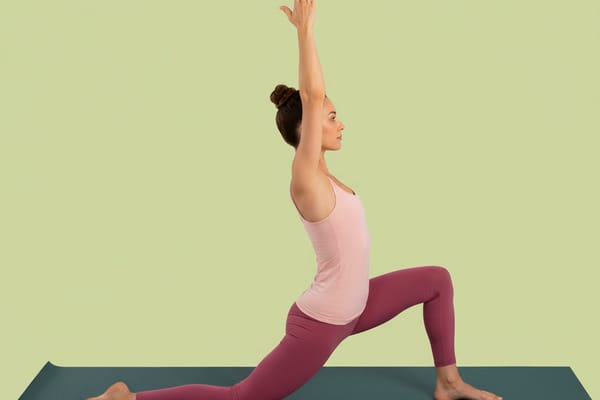
1. Half-Kneeling Hip Flexor Stretch (Low Lunge)
What it targets: Iliopsoas, rectus femoris
Why it works: The half-kneeling position places the back leg’s hip in extension while the front leg provides stable support. This directly lengthens the primary hip flexors.
Key technique points:
- Keep your pelvis tucked under (posterior pelvic tilt) to prevent lumbar extension
- The stretch should be felt in the front of the back leg’s hip, not the lower back
- Squeeze the glute of the back leg to deepen the stretch through reciprocal inhibition
Find this in: Our Hip Flexibility Foundation routine includes this as a core stretch with proper cueing for pelvic position.
2. Pigeon Pose
What it targets: External rotators (piriformis, deep six), glutes, hip capsule
Why it works: The front leg position combines hip flexion with external rotation, targeting muscles that standard hip flexor stretches miss.
Key technique points:
- Keep hips square rather than letting the back hip lift or roll
- The front shin angle can vary based on your anatomy; start with a smaller angle
- Support yourself with hands or a block if needed to maintain proper position
Find this in: Our Hip Flexibility Expansion routine includes an extended pigeon sequence.
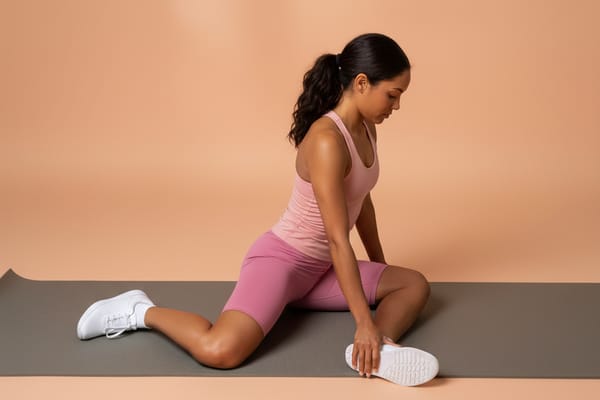
3. 90/90 Stretch
What it targets: External and internal rotators, hip capsule mobility
Why it works: This position simultaneously stretches external rotation on the front leg and internal rotation on the back leg, addressing both movement patterns.
Key technique points:
- Both legs form approximately 90-degree angles at hip and knee
- Keep the spine neutral rather than rounding forward
- If you cannot sit upright, elevate your hips on a cushion or block
Find this in: The Hip Immersion Lab routine includes 90/90 progressions with extended holds.
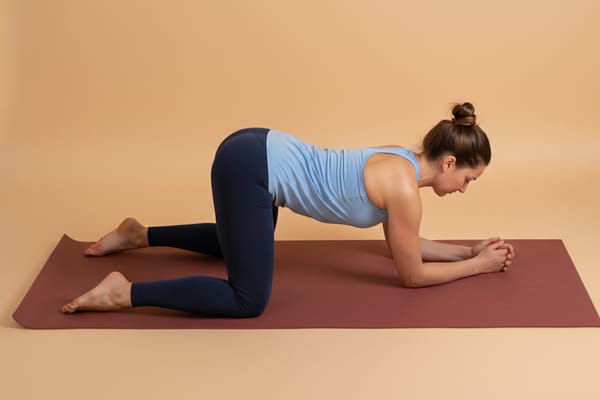
4. Frog Stretch
What it targets: Adductors, hip abduction range
Why it works: The wide knee position stretches the inner thigh muscles that often restrict hip mobility, particularly in movements like squatting.
Key technique points:
- Start with knees closer together and gradually work wider
- Keep feet aligned with knees, not turned out excessively
- Rock forward and back gently to explore different ranges
5. Supine Figure Four
What it targets: Piriformis, external rotators
Why it works: The supine position provides stable support while the figure-four leg position externally rotates the hip and stretches the deep rotators.
Key technique points:
- Pull the uncrossed leg toward your chest to increase the stretch
- Keep the crossed ankle flexed to protect the knee
- Relax the hip of the crossed leg away from you
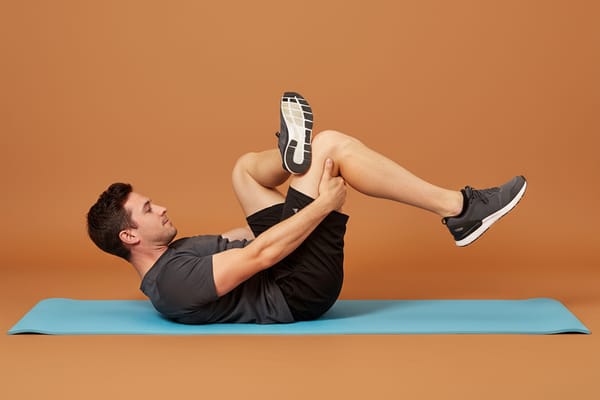
6. Standing Quad Stretch with Hip Extension
What it targets: Rectus femoris, quadriceps
Why it works: By pulling the heel toward the glute while keeping the hip in slight extension, this stretch specifically targets the rectus femoris, which crosses both joints.
Key technique points:
- Keep knees together; do not let the stretching knee drift forward
- Maintain a slight posterior pelvic tilt
- Hold onto something for balance if needed
7. Lizard Pose
What it targets: Hip flexors, adductors, hip capsule
Why it works: This deep lunge variation combines hip extension on the back leg with hip flexion and external rotation on the front leg.
Key technique points:
- Both hands (or forearms) inside the front foot
- Let the front knee track over or slightly outside the foot
- The back leg can rest on the floor or remain lifted for more intensity
8. Butterfly Stretch (Bound Angle)
What it targets: Adductors, hip external rotation
Why it works: The seated position with soles of feet together stretches the inner thighs while the knees drop outward improves external rotation.
Key technique points:
- Sit on a cushion if your hips are very tight
- Hinge forward from the hips rather than rounding the spine
- Use gentle pressure on the thighs with elbows if appropriate
Building Your Hip Flexibility Practice
Beginner Phase (Weeks 1-4)
If you are starting with significant hip tightness, begin conservatively. The goal is consistent practice, not maximum intensity.
Recommended approach:
- Practice 5-10 minutes daily or every other day
- Focus on 3-4 stretches held for 30-45 seconds each
- Prioritize the half-kneeling hip flexor stretch, supine figure four, and butterfly
Our Hip Flexibility Foundation routine is specifically designed for this phase. It introduces key positions with appropriate progressions.
Intermediate Phase (Weeks 5-12)
As your nervous system adapts to the stretches, increase duration and add variety.
Recommended approach:
- Practice 10-15 minutes, 4-5 times per week
- Extend holds to 45-60 seconds
- Add pigeon pose, 90/90, and frog stretch
- Begin exploring PNF techniques (contract-relax)
The Hip Flexibility Builder routine provides appropriate progressions for this phase.
Advanced Phase (Week 13+)
For dedicated practitioners seeking deeper ranges:
Recommended approach:
- Practice 15-20 minutes, 4-6 times per week
- Use longer holds (60-90 seconds) for stubborn areas
- Include active mobility drills alongside passive stretching
- Address all planes of hip movement: flexion, extension, abduction, adduction, internal and external rotation
The Hip Immersion Lab routine provides extended holds and comprehensive coverage for advanced work.
Common Mistakes and How to Avoid Them
Mistake 1: Ignoring Pelvic Position
Many people arch their lower back during hip flexor stretches, which reduces the stretch on the target muscles and can strain the lumbar spine. The solution is to maintain a posterior pelvic tilt (tucking the tailbone under) during any stretch targeting the hip flexors.
Mistake 2: Forcing Depth Too Quickly
Hip structures need time to adapt. Forcing deeper positions before the tissues are ready can cause muscle strains, joint irritation, or protective guarding that actually reduces flexibility.
Progress gradually over weeks and months. If a position causes sharp pain, back off.
Mistake 3: Only Stretching Hip Flexors
While hip flexors often need attention, they are not the only structures limiting hip mobility. The external rotators, adductors, and even the glutes can all restrict range of motion. A comprehensive practice addresses all these areas.
Mistake 4: Stretching Cold
Starting intense stretches without a warmup increases injury risk and may reduce effectiveness. A few minutes of light activity (walking, gentle movement) increases tissue temperature and blood flow, preparing the body for deeper work.
Mistake 5: Inconsistent Practice
Sporadic stretching produces only temporary effects. Research consistently shows that consistent practice over weeks is necessary for lasting improvements. Short daily sessions outperform occasional long sessions.
Mistake 6: Neglecting Internal Rotation
Internal rotation is often the forgotten dimension of hip mobility. Many people focus on external rotation (think pigeon pose) while ignoring internal rotation work. Limited internal rotation can contribute to hip impingement and restrict movement quality.
Include stretches and drills that specifically target internal rotation, like modified 90/90 positions or prone internal rotation stretches.
Mistake 7: Holding Breath
Breath-holding during stretching activates the sympathetic nervous system and increases muscle tension. Slow, relaxed breathing helps the nervous system down-regulate protective responses, enhancing the effectiveness of stretching.
Frequently Asked Questions
How long does it take to improve hip flexibility?
Most people notice measurable changes within 2-4 weeks of consistent practice. Research indicates that 5+ weeks of regular stretching produces significant range of motion improvements. However, substantial changes (like achieving a full split) can take months to years depending on your starting point and goals.
Should I stretch my hips every day?
Daily stretching is safe and effective for most people. Research shows that frequency helps build neural adaptation. However, if you are doing intense stretching (long holds, aggressive positions), every other day may be sufficient to allow tissue recovery.
Can hip stretching help lower back pain?
Research supports this connection. A 2021 study in the Journal of Physical Therapy Science found that “static stretch of hip flexors can be used as an effective exercise program in participants with non-specific low back pain and limited hip extension.”
However, not all back pain responds to hip stretching. If your pain is severe, persistent, or accompanied by neurological symptoms, consult a healthcare provider.
Why are my hips tight even though I stretch?
Several possibilities:
- Inconsistent practice (stretching effects are temporary without regular reinforcement)
- Missing key structures (you may be stretching one area while the restriction is elsewhere)
- The tightness is actually weakness or instability that stretching will not address
- Neural factors are keeping muscles guarded for protective reasons
- Anatomical factors limit your range regardless of stretching
Is yoga enough for hip flexibility?
Many yoga practices include effective hip stretches. However, yoga classes vary widely, and some may not provide sufficient duration or specificity for hip flexibility development. Supplementing yoga with dedicated hip stretching can accelerate progress.
Do I need to warm up before stretching my hips?
Yes. Light activity before stretching increases tissue temperature, blood flow, and pliability. This reduces injury risk and may enhance stretching effectiveness. A few minutes of walking or gentle movement is sufficient.
Creating a Sustainable Practice
Lasting hip flexibility requires consistent practice over time. Here are strategies for making your practice sustainable:
Start small: A 5-minute daily routine is better than a 30-minute routine you abandon after a week.
Attach to existing habits: Stretch while watching TV, after your morning coffee, or before bed. Linking new behaviors to established routines increases consistency.
Track progress: Measure your range of motion periodically. Seeing improvement reinforces motivation.
Address underlying causes: If prolonged sitting contributes to your hip tightness, consider standing breaks, a standing desk, or movement snacks throughout the day. Stretching alone cannot fully counteract 8+ hours of sitting.
Be patient: Hip structures adapt slowly. Expect gradual progress over months rather than dramatic changes in weeks.
Key Takeaways
- Hip flexibility affects more than your hips: Limited mobility contributes to lower back pain, knee problems, and reduced performance
- Prolonged sitting is the primary culprit: Modern lifestyles keep hip flexors shortened for hours daily
- Multiple structures need attention: Hip flexors, external rotators, adductors, and internal rotators all influence mobility
- Consistency beats intensity: Regular short sessions outperform sporadic long sessions
- Progress takes time: Expect 5+ weeks for meaningful changes, months for substantial improvements
Related Articles
- Quad Stretches: The Complete Guide
- IT Band Stretches: How to Relieve Tightness
- Why Your Hip Flexors Are Always Tight
- Pigeon Pose: The Complete Guide
- Front Split Progression: A Realistic Timeline
- Groin Stretches: The Complete Guide
References
Roach SM, San Juan JG, Suprak DN, Lyda M. (2020). Prolonged sitting and physical inactivity are associated with limited hip extension: A cross-sectional study. Musculoskeletal Science and Practice, 51, 102282. PubMed ↩︎
Afonso J, Ramirez-Campillo R, Moscao J, et al. (2021). Strength Training versus Stretching for Improving Range of Motion: A Systematic Review and Meta-Analysis. Healthcare, 9(4), 427. PubMed ↩︎
Paradisis GP, Pappas PT, Theodorou AS, et al. (2021). The Influence of Stretching the Hip Flexor Muscles on Performance Parameters. A Systematic Review with Meta-Analysis. International Journal of Environmental Research and Public Health, 18(4), 1936. PubMed ↩︎
Winters MV, Blake CG, Trost JS, et al. (2017). The Effectiveness of PNF Versus Static Stretching on Increasing Hip-Flexion Range of Motion. Journal of Sport Rehabilitation, 26(1), 89-93. PubMed ↩︎
