The iliotibial band, or IT band, is one of the most commonly problematic structures for runners, cyclists, and anyone who spends long hours on their feet. When this thick band of connective tissue becomes tight or irritated, it can cause sharp pain on the outside of the knee, discomfort along the outer thigh, and even affect your gait.
The frustrating part: the IT band itself does not stretch like a muscle. But the muscles that attach to it and influence its tension absolutely do. Understanding this distinction is key to actually getting relief.
This guide covers what the IT band is, why it gets tight, and the most effective stretches and techniques to reduce tension and prevent injury.
What Is the IT Band?
The iliotibial band is a thick strip of fascia (connective tissue) that runs along the outside of your thigh from the hip to just below the knee. Unlike muscles, fascia has very limited elasticity, which is why traditional stretching does not actually lengthen the IT band itself.
What you can influence is the tension in the muscles that attach to the IT band:
Tensor Fasciae Latae (TFL): A small but influential muscle at the front of the hip that attaches directly to the IT band. When tight, it increases tension throughout the entire band.
Gluteus Maximus: The largest glute muscle also attaches to the IT band. Weakness or tightness here affects IT band mechanics.
Vastus Lateralis: The outer quadriceps muscle runs beneath the IT band and can contribute to friction when tight.
A 2019 cadaveric study published in the Journal of Anatomy confirmed that the IT band functions as a “spring” during locomotion, storing and releasing elastic energy.1 This means it is constantly under load during activities like running and walking.
Symptoms of IT Band Tightness
IT band syndrome (ITBS) is one of the most common causes of lateral knee pain in runners and cyclists. Common symptoms include:
- Sharp or burning pain on the outside of the knee
- Pain that worsens during activity, especially running downhill
- Discomfort along the outer thigh or hip
- A snapping sensation at the hip or knee
- Pain that starts after a specific distance or time of running
Research published in the Clinical Journal of Sport Medicine found that IT band syndrome accounts for approximately 12% of all running-related injuries.2 The condition typically develops from repetitive friction as the band slides over the lateral femoral epicondyle (the bony prominence on the outside of the knee).
How Do I Stretch My IT Band?
Here is the key insight: you cannot directly stretch the IT band because it is not a muscle. What you can do is:
- Stretch the muscles that attach to it (TFL, glutes, hip rotators)
- Use foam rolling to reduce adhesions and improve tissue quality
- Strengthen supporting muscles to reduce the load on the IT band
A systematic review in the British Journal of Sports Medicine found that hip strengthening exercises, particularly for the hip abductors, were effective for treating IT band syndrome.3
Best IT Band Stretches
These stretches target the muscles that influence IT band tension:
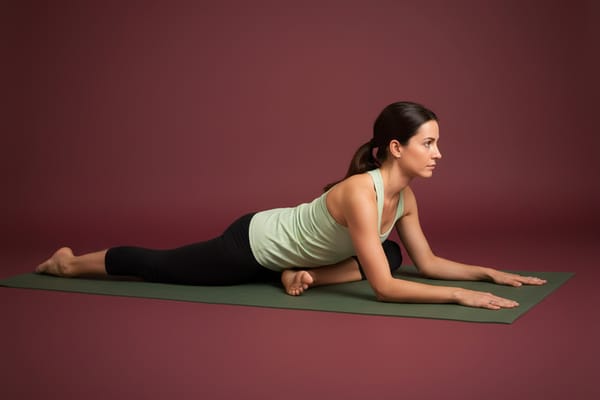
1. Pigeon Pose
What it targets: Piriformis, external hip rotators, glutes
Pigeon pose is one of the most effective stretches for releasing tension in the muscles that influence the IT band. The position externally rotates the hip while stretching the deep rotators and glute muscles.
How to do it:
- From hands and knees, bring one knee forward behind the same-side wrist
- Angle the shin toward the opposite hip (the angle depends on your flexibility)
- Slide the back leg straight behind you and square your hips
- Lower your torso over the front leg for a deeper stretch
Find this in: Our Hip Flexibility Expansion routine includes an extended pigeon sequence.
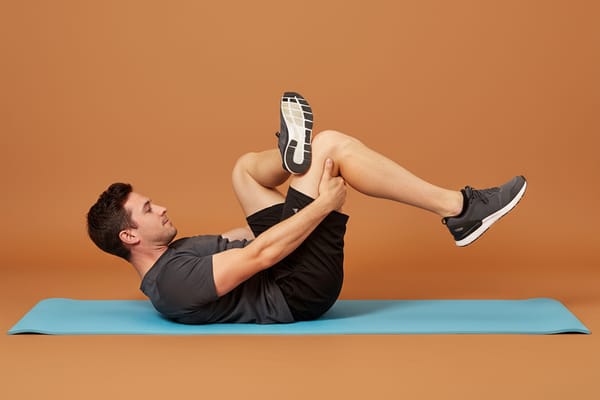
2. Lying Figure Four (Supine Piriformis Stretch)
What it targets: Piriformis, deep hip rotators, glutes
This is a gentler, more accessible alternative to pigeon pose that effectively targets the same muscle groups.
How to do it:
- Lie on your back with knees bent and feet flat
- Cross one ankle over the opposite thigh just above the knee
- Lift the bottom leg and clasp hands behind the thigh
- Gently pull the legs toward your chest until you feel a stretch in the outer hip
Key tip: Relax your head and shoulders on the floor and keep your lower back pressing gently into the mat.
3. Standing IT Band Stretch (Cross-Body Stretch)
What it targets: TFL, outer hip, IT band area
This classic stretch creates lateral tension through the outer hip and thigh.
How to do it:
- Stand with your right side near a wall for balance
- Cross your right leg behind your left
- Lean your right hip toward the wall while reaching your right arm overhead and to the left
- Hold for 30-45 seconds and switch sides
Key tip: Push your hip out to the side rather than just leaning your upper body.
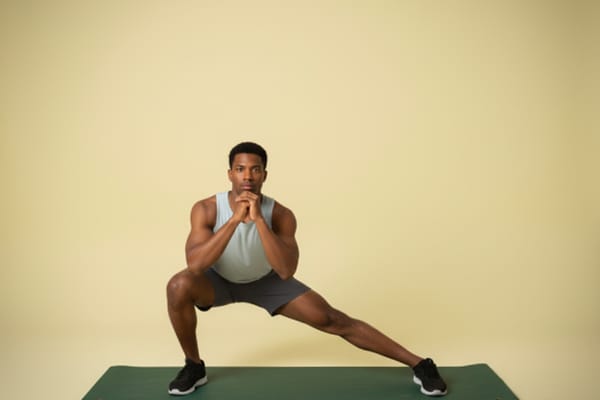
4. Lateral Lunge
What it targets: Adductors, TFL, outer hip
While primarily an adductor stretch, the lateral lunge also creates beneficial tension through the outer hip structures.
How to do it:
- Stand with feet wide apart
- Bend one knee and shift your weight to that side
- Keep the opposite leg straight with foot flat
- Sink down until you feel a stretch in both the inner and outer thigh
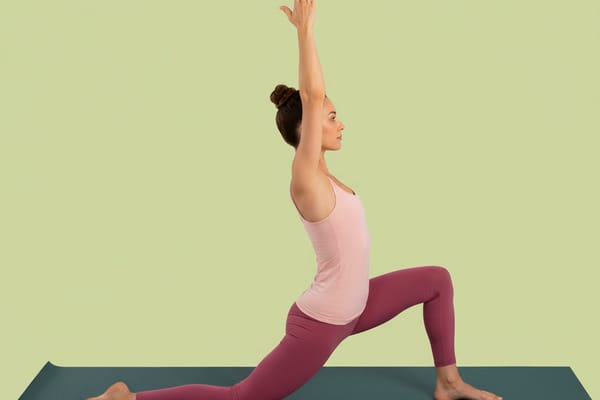
5. TFL Stretch (Modified Hip Flexor Stretch)
What it targets: Tensor fasciae latae, hip flexors
The TFL attaches directly to the IT band, so releasing it can reduce overall band tension.
How to do it:
- Start in a half-kneeling position (one knee down)
- Tuck your pelvis under slightly
- Shift your hips forward while keeping your torso upright
- Add a slight lateral lean away from the back leg
- You should feel the stretch in the front and outside of the back hip
Foam Rolling for IT Band Relief
While the IT band itself has limited stretch capacity, foam rolling can help reduce adhesions and improve tissue quality in the surrounding muscles. A 2019 study in the Journal of Bodywork and Movement Therapies found that foam rolling the lateral thigh increased hip range of motion and reduced perceived tightness.4
How to foam roll the IT band area:
- Lie on your side with the foam roller under your outer thigh
- Support yourself with your forearm and opposite foot
- Roll slowly from just below the hip to just above the knee
- When you find a tender spot, pause for 20-30 seconds
- Spend 1-2 minutes per side
Important: Foam rolling directly on the IT band can be extremely uncomfortable. Focus more on the muscles surrounding it (TFL, vastus lateralis, glutes) rather than grinding directly on the band itself.
IT Band Stretches for Runners
Runners are particularly susceptible to IT band issues due to the repetitive nature of the gait cycle. A study in the Journal of Orthopaedic & Sports Physical Therapy found that runners with IT band syndrome often had weakness in hip abduction and external rotation.5
For runners, prioritize:
- Pre-run: Dynamic stretches like leg swings and lateral lunges to warm up the hip
- Post-run: Static stretches (pigeon, figure four) held for 30-60 seconds
- Strength work: Hip abductor and glute strengthening exercises
- Foam rolling: 2-3 times per week on the lateral thigh and glutes
Our Hamstring Stretches for Runners article covers complementary stretches for the posterior chain.
Preventing IT Band Syndrome
Prevention is more effective than treatment. Research points to several key strategies:
Address Hip Weakness
A 2020 systematic review found that “hip strengthening, particularly of the hip abductors and external rotators, is effective for the treatment and prevention of ITBS.”6 Exercises like clamshells, side-lying leg raises, and single-leg bridges target these muscles.
Avoid Sudden Training Increases
IT band syndrome often develops when runners increase mileage too quickly. The general guideline is to increase weekly volume by no more than 10%.
Check Your Running Form
Excessive hip adduction (knees collapsing inward) and internal rotation during running increases IT band strain. Working with a running coach or physical therapist can help identify form issues.
Include Variety
Cross-training reduces repetitive stress on the IT band. Swimming, cycling, and strength training give the band a break while maintaining fitness.
Stretch Consistently
Regular stretching of the hip rotators, glutes, and hip flexors keeps tension manageable. Our Hip Flexibility Foundation routine provides a structured approach.
When to See a Professional
See a physical therapist or sports medicine physician if:
- Pain persists despite 2-3 weeks of self-treatment
- You cannot complete your normal activities without pain
- Pain is severe or came on suddenly
- You notice swelling or bruising around the knee or hip
- Home stretching and foam rolling provide no relief
IT band syndrome can sometimes be confused with other conditions like lateral meniscus injuries, hip bursitis, or referred pain from the lumbar spine. A professional can provide an accurate diagnosis.
Frequently Asked Questions
How long does it take to fix a tight IT band?
Most people see improvement within 2-4 weeks of consistent stretching, foam rolling, and hip strengthening. More severe cases may take 6-8 weeks or longer.
Should I run through IT band pain?
Running through significant IT band pain typically makes the condition worse. Rest or reduce your mileage until the pain improves, then gradually return to your normal volume.
Can sitting cause IT band tightness?
Yes. Prolonged sitting shortens the hip flexors (including the TFL) and weakens the glutes, both of which can contribute to IT band tension.
How often should I stretch my IT band?
Daily stretching of the hip muscles that influence the IT band is safe and beneficial. Foam rolling can be done 3-4 times per week.
Is it better to foam roll before or after running?
Both can be beneficial, but foam rolling before running may help warm up the tissue, while post-run rolling helps with recovery. A 2015 study found that foam rolling before exercise did not impair performance.7
Key Takeaways
- The IT band itself does not stretch like a muscle, but the muscles attached to it do
- Focus on the TFL, glutes, and hip rotators for effective relief
- Foam rolling helps reduce adhesions and improve tissue quality
- Hip strengthening is crucial for both treatment and prevention
- Consistency matters more than intensity for long-term improvement
Related Articles
References
Eng CM, Arnold AS, Lieberman DE, Biewener AA. (2019). The capacity of the human iliotibial band to store elastic energy during running. Journal of Biomechanics, 26, 109631. PubMed ↩︎
Taunton JE, Ryan MB, Clement DB, et al. (2002). A retrospective case-control analysis of 2002 running injuries. British Journal of Sports Medicine, 36(2), 95-101. PubMed ↩︎
Louw M, Deary C. (2014). The biomechanical variables involved in the aetiology of iliotibial band syndrome in distance runners - A systematic review of the literature. Physical Therapy in Sport, 15(1), 64-75. PubMed ↩︎
Cheatham SW, Kolber MJ, Cain M, Lee M. (2015). The effects of self-myofascial release using a foam roll or roller massager on joint range of motion, muscle recovery, and performance: a systematic review. International Journal of Sports Physical Therapy, 10(6), 827-838. PubMed ↩︎
Fredericson M, Cookingham CL, Chaudhari AM, et al. (2000). Hip abductor weakness in distance runners with iliotibial band syndrome. Clinical Journal of Sport Medicine, 10(3), 169-175. PubMed ↩︎
Binnie F, Selfe J. (2020). The effectiveness of hip strengthening exercises for treating iliotibial band syndrome: a systematic review. Physical Therapy Reviews, 25(3), 151-162. PubMed ↩︎
MacDonald GZ, Penney MD, Mullaley ME, et al. (2013). An acute bout of self-myofascial release increases range of motion without a subsequent decrease in muscle activation or force. Journal of Strength and Conditioning Research, 27(3), 812-821. PubMed ↩︎
