The standard stretching advice says hold for 30 seconds. This guidance is not wrong, but it is incomplete. A growing body of research suggests that significantly longer holds, in the range of 2-5 minutes, create different and often superior changes in flexibility.
Long-hold stretching, sometimes called yin-style stretching, targets tissues that brief stretches do not adequately address. Understanding the science behind this approach reveals why extended holds can transform stubborn flexibility limitations.
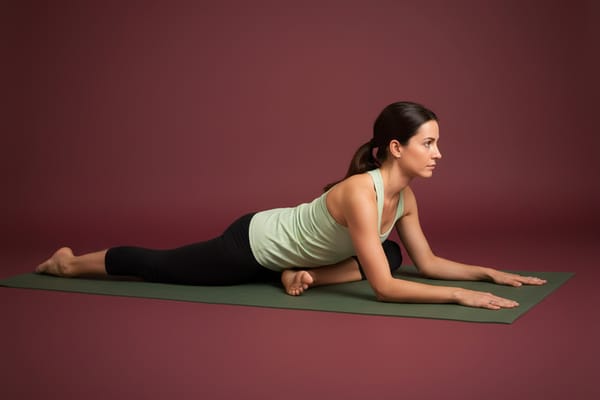
What Is Long-Hold Stretching?
Long-hold stretching involves maintaining static stretch positions for extended durations, typically 2-5 minutes per position. Unlike traditional stretching with 30-60 second holds, long-hold approaches emphasize:
- Extended time under stretch (2-5+ minutes)
- Moderate intensity (50-70% of maximum)
- Relaxation rather than effort
- Targeting connective tissue, not just muscle
This approach has roots in yin yoga, which emerged in the late 20th century as a complement to more active yoga styles. The practice targets the body’s connective tissue, particularly around the hips, pelvis, and spine.
The Two-Target Theory
Understanding why long holds work requires understanding what is being stretched.
Muscles: Fast Responders
Muscles respond relatively quickly to stretching. Within seconds, sensory receptors (muscle spindles) detect the stretch and initially resist. With maintained stretch, the muscle relaxes through a process called stress relaxation.
Most of the flexibility change from brief stretches (under 60 seconds) comes from this muscular response. The muscle temporarily allows more length, but returns to baseline relatively quickly.
Connective Tissue: Slow Responders
Fascia, tendons, ligaments, and joint capsules behave differently. These collagen-rich tissues are more viscous and respond slowly to loading.
Research by Schleip and colleagues in the Journal of Bodywork and Movement Therapies demonstrated that connective tissue requires sustained loading to deform.1 Brief stretches do not load these tissues long enough to create significant change.
Long-hold stretching keeps these tissues under load long enough to stimulate remodeling. Over time, this creates lasting structural changes that brief stretches cannot achieve.
The Science of Connective Tissue Remodeling
Connective tissue responds to mechanical loading through a process called mechanotransduction.
Mechanical Loading
When you stretch connective tissue, you create mechanical stress. This stress is detected by fibroblasts, the cells responsible for producing and maintaining connective tissue.
Fibroblasts respond to sustained mechanical loading by altering their behavior. They increase production of collagen and other matrix components, and they orient these fibers along the lines of stress.
Time Under Tension Matters
Research shows that collagen synthesis increases in response to sustained loading, but this response takes time to develop. Brief loading periods do not trigger the full cascade of cellular responses.
A 2018 review in the Scandinavian Journal of Medicine & Science in Sports found that longer stretch durations produced greater changes in tissue stiffness than shorter durations, even when total stretch time was equivalent.2
The Creep Response
Connective tissue exhibits a property called creep: when under constant load, it slowly lengthens over time. This creep response is more pronounced with longer loading durations.
A study in Clinical Biomechanics demonstrated that sustained stretching produces creep in ligaments and tendons that is not seen with brief stretches. This creep represents actual tissue lengthening, not just increased tolerance.
Neurological Adaptations in Long Holds
Beyond tissue changes, extended holds create significant neurological effects.
Decreased Stretch Reflex Sensitivity
The muscle spindles that trigger protective contraction adapt during sustained stretching. Their sensitivity decreases over the stretch duration, allowing greater range of motion.
Research shows that this adaptation is more complete with longer holds. Brief stretches may not allow enough time for full spindle adaptation.
Increased Stretch Tolerance
Much of flexibility improvement comes from increased tolerance to stretch sensation. Long holds systematically expose the nervous system to the stretch position, teaching it that the position is safe.
A study in Physical Therapy demonstrated that stretch tolerance improvements are duration-dependent.3 Longer holds produced greater tolerance increases than shorter holds.
Parasympathetic Activation
Extended, relaxed stretching activates the parasympathetic nervous system. This relaxation response reduces overall muscle tension and creates a neurological environment conducive to flexibility gains.
Research on yoga practices, which often involve extended holds, shows consistent parasympathetic activation and reduced cortisol levels.
Research on Optimal Stretch Duration
Several studies have examined how stretch duration affects outcomes.
The 30-Second Standard
The often-cited 30-second recommendation comes from research showing that 30-second holds produce similar immediate flexibility gains to 60-second holds in most studies. This led to the reasonable conclusion that 30 seconds is sufficient.
However, these studies typically measured immediate changes, not long-term adaptations. They also primarily assessed muscle flexibility, not connective tissue changes.
Evidence for Longer Holds
More recent research supports longer durations:
A 2018 study in the International Journal of Sports Medicine compared different stretch durations and found that longer holds produced significantly greater flexibility gains over the study period.4
Research on myofascial release techniques, which involve sustained pressure for extended periods, demonstrates tissue changes that do not occur with brief interventions.
A study in the Journal of Sport Rehabilitation found that stretch durations of 60 seconds or more produced greater hamstring flexibility improvements than shorter durations.
The Cumulative Time Factor
Research also suggests that total time in stretch matters. Whether achieved through longer holds or multiple shorter holds, accumulating 5+ minutes per muscle group per day produces superior results to shorter total times.
Practical Long-Hold Protocols
Apply the science with these evidence-based approaches.
The 2-Minute Minimum
For connective tissue targeting, hold each stretch for a minimum of 2 minutes. This duration allows:
- Complete muscle relaxation
- Initial connective tissue creep
- Neurological adaptation
- Parasympathetic activation
Shorter holds may warm up the area and create temporary change, but 2+ minutes is needed for the deeper tissue effects.
The 5-Minute Deep Work
For stubborn areas or significant flexibility goals, extend holds to 5 minutes or more. This extended duration:
- Maximizes connective tissue creep
- Allows multiple phases of tissue release
- Creates profound neurological adaptation
- Targets the deepest fascial layers
Intensity Management
Long holds require moderate intensity. If you try to hold a maximum stretch for 5 minutes, you will likely:
- Tense up protectively
- Fatigue supporting muscles
- Create a stress response that opposes flexibility gains
Instead, enter the stretch at 50-70% intensity. This allows:
- Sustained relaxation
- Progressive deepening as tissue releases
- A meditative rather than effortful experience
Breathing Emphasis
Continuous, slow breathing is essential during long holds. Each exhale is an opportunity to release slightly deeper into the stretch. Common patterns include:
- 4-count inhale, 6-count exhale
- Natural breathing with attention on exhale release
- Occasional deeper breaths to assess for tension and release
Best Stretches for Long Holds
Not all stretches are suitable for extended holding. Good long-hold stretches:
- Are fully supported (no muscular effort to hold position)
- Allow complete relaxation
- Are comfortable enough to maintain
- Target connective tissue-rich areas
Ideal Long-Hold Positions
Pigeon Pose Variations
- Targets hip external rotators and hip flexors
- Can be modified with props for support
- 3-5 minutes per side
Saddle Pose
- Targets quadriceps and hip flexors
- Use bolsters and blankets for support
- 3-5 minutes
Supported Fish
- Targets chest, anterior shoulders
- Use blocks or bolster for support
- 3-5 minutes
Supported Forward Fold
- Targets hamstrings, lower back
- Rest torso on blocks or bolster
- 3-5 minutes
Supported Child’s Pose
- Targets spine, hips
- Use bolster under torso
- 3-5 minutes or longer
Reclined Butterfly
- Targets hip adductors
- Support knees with blocks
- 3-5 minutes
Our Hip Long Hold Series and Deep Relaxation Retreat routines incorporate these positions.

Positions to Avoid for Long Holds
Some stretches are unsuitable for extended holding:
- Positions requiring muscular effort to maintain
- Positions that stress joints or ligaments
- Positions that compress nerves (causing numbness)
- Any position causing pain
Integrating Long Holds Into Your Practice
Balance long-hold work with other stretching approaches.
Weekly Structure
3-4 times per week: Traditional stretching with 30-60 second holds 2-3 times per week: Long-hold session focusing on 2-5 minute holds Daily: Brief maintenance stretching
Session Structure
Warm-up (5 minutes): Light movement or dynamic stretching Long holds (20-30 minutes): 4-6 positions held 3-5 minutes each Integration (5 minutes): Gentle movement to transition out
Progression
Week 1-2: Hold positions for 2 minutes. Focus on relaxation. Week 3-4: Extend to 3 minutes. Begin noticing tissue release patterns. Week 5-8: Progress to 4-5 minutes for key positions. Ongoing: Maintain 3-5 minute holds, deepening rather than lengthening.
What to Expect During Long Holds
Long-hold stretching creates distinct experiences different from brief stretching.
The Initial Phase (0-60 seconds)
- Muscle spindles activate and then adapt
- Muscle tension decreases
- Position becomes more comfortable
The Middle Phase (60-120 seconds)
- Connective tissue begins to creep
- You may feel the stretch quality change
- Position may feel deeper without actively pushing
The Deep Phase (120+ seconds)
- Connective tissue continues to lengthen
- New layers of sensation may emerge
- Mind often becomes quieter
- Time sense may shift
Release and Rebound
When exiting long holds:
- Move slowly; tissues have reorganized
- You may feel unusual sensations as you move
- Full range may not immediately available
- Rest briefly before the next position
Common Mistakes in Long-Hold Practice
Entering Too Deep: Starting at maximum intensity makes relaxation impossible. Enter gently; let depth develop.
Clock-Watching: Constantly checking time creates tension. Set a timer and forget it.
Fighting Discomfort: Moderate discomfort is acceptable; pain is not. Distinguish between stretch sensation and distress.
Skipping Support: Props (blankets, bolsters, blocks) allow complete relaxation. Use them liberally.
Rushing Transitions: Emerging abruptly from long holds can strain newly lengthened tissues. Exit slowly.
Expecting Immediate Results: Long-hold flexibility develops over weeks, not sessions. Patience is essential.
Who Benefits Most From Long Holds?
While everyone can benefit from long-hold stretching, certain populations see particular advantages:
Those with fascia-dominant restrictions: Some flexibility limitations are primarily fascial rather than muscular. Long holds specifically address this tissue.
Experienced practitioners who have plateaued: If traditional stretching has stopped producing gains, long holds provide a new stimulus.
Those seeking meditative practice: Long holds naturally support mindfulness and parasympathetic activation.
Hypermobile individuals: Long holds can be performed at moderate intensity, reducing the risk of overstretching that affects hypermobile people.
Older adults: Connective tissue becomes stiffer with age. Long holds specifically address this age-related change.
Key Takeaways
- Two tissues, two timelines: Muscles respond quickly; connective tissue needs 2+ minutes of sustained loading
- Moderate intensity is essential: Long holds should be relaxed, not effortful
- Connective tissue remodels: Sustained loading creates lasting structural change through cellular responses
- The nervous system adapts: Extended holds teach tolerance and reduce protective tension
- Use supported positions: Props allow the complete relaxation long holds require
- Be patient: Connective tissue changes develop over weeks, not sessions
Related Articles
References
Schleip R, Müller DG. (2013). Training principles for fascial connective tissues: Scientific foundation and suggested practical applications. Journal of Bodywork and Movement Therapies, 17(1), 103-115. PubMed ↩︎
Freitas SR, Mendes B, Le Sant G, et al. (2018). Can chronic stretching change the muscle-tendon mechanical properties? A review. Scandinavian Journal of Medicine & Science in Sports, 28(3), 794-806. PubMed ↩︎
Weppler CH, Magnusson SP. (2010). Increasing muscle extensibility: A matter of increasing length or modifying sensation? Physical Therapy, 90(3), 438-449. PubMed ↩︎
Thomas E, Bianco A, Paoli A, Palma A. (2018). The relation between stretching typology and stretching duration: The effects on range of motion. International Journal of Sports Medicine, 39(4), 243-254. PubMed ↩︎
