Lower back pain is extraordinarily common. Estimates suggest 80% of adults experience it at some point, and it ranks among the leading causes of disability worldwide. For many people, the first instinct when the back aches is to stretch.
But does stretching actually help lower back pain? The answer is nuanced: stretching can be highly effective for certain types of back pain, minimally helpful for others, and potentially counterproductive in some situations.
This guide examines what research tells us about stretching for lower back pain, identifies which approaches show the most promise, and provides a framework for deciding when stretching is appropriate and when professional evaluation is needed.
What Research Says About Stretching and Back Pain
The relationship between stretching and back pain relief has been studied extensively. The evidence supports stretching as one component of an effective approach, though it is rarely sufficient on its own.
The Overall Picture
A landmark 2020 systematic review and network meta-analysis published in the British Journal of Sports Medicine compared various exercise interventions for low back pain.1 The researchers found that stretching exercise was “significantly more effective than usual exercise” for pain relief, with a standardized mean difference of -0.71.
To put that in perspective, this places stretching among effective interventions, though stabilization and strengthening exercises ranked higher for pure pain relief.
The key insight: stretching works, but combining it with strengthening and movement typically produces better outcomes.
Hamstring Stretching Specifically
A 2024 meta-analysis in the Journal of Orthopaedic Science examined hamstring stretching for lower back pain specifically.2 The results showed that “hamstring stretching resulted in lower pain scores” across different categories of low back pain and improved function as measured by the Oswestry Disability Index.
This finding makes anatomical sense. Tight hamstrings restrict pelvic mobility, forcing the lumbar spine to compensate during forward bending. By improving hamstring flexibility, you reduce the demands placed on the lower back.
Neural Stretching
A 2019 systematic review examined “slump stretching,” a technique that tensions the nervous system through specific positioning.3 The researchers found “very low to moderate quality of evidence that slump stretching may have positive effects on pain in people with low back pain.”
Interestingly, the review noted that “patients with nonradicular LBP may benefit most from slump stretching compared with other types of LBP.” This suggests that different back pain presentations may respond to different stretching approaches.
Prevention
A 2017 meta-analysis in the American Journal of Epidemiology found that “exercise reduces the risk of LBP and associated disability.”4 The researchers concluded that “a combination of strengthening with either stretching or aerobic exercises performed 2-3 times per week can reasonably be recommended for prevention of LBP in the general population.”
The practical implication: even if you do not currently have back pain, regular stretching (combined with strengthening) may help prevent it.
Understanding Lower Back Pain Types
Not all back pain is the same. Understanding the type of pain you experience helps determine whether stretching is likely to help.
Mechanical Low Back Pain
This is the most common type, accounting for the vast majority of back pain cases. It results from strain, sprain, or dysfunction in the structures of the spine (muscles, ligaments, discs, facet joints) without nerve involvement.
Characteristics:
- Pain is localized to the lower back (does not radiate down the leg)
- Pain often worsens with certain movements or positions
- Pain may improve with rest or position changes
- No numbness, tingling, or weakness in the legs
Stretching potential: High. Mechanical low back pain often responds well to stretching, particularly when muscle tension or mobility restrictions contribute to the problem.
Radicular Pain (Sciatica)
This involves irritation or compression of nerve roots, causing pain that radiates down the leg along the nerve pathway.
Characteristics:
- Pain travels down the buttock and leg (often past the knee)
- May include numbness, tingling, or pins-and-needles sensations
- May include weakness in specific muscles
- Often worse with sitting or forward bending
Stretching potential: Moderate, but requires caution. Some stretches (like neural flossing) may help, while aggressive hamstring or forward fold stretches can worsen nerve irritation.
Inflammatory Conditions
Conditions like ankylosing spondylitis involve inflammation of spinal structures.
Characteristics:
- Morning stiffness lasting more than 30 minutes
- Pain that improves with movement
- Symptoms develop gradually, often before age 40
- Family history of inflammatory conditions
Stretching potential: Moderate. Gentle mobility work often helps, but aggressive stretching may irritate inflamed tissues.
When Stretching Is Not Appropriate
Certain “red flag” symptoms indicate conditions where stretching should be avoided pending medical evaluation:
- Severe or progressive neurological deficits (weakness, incontinence)
- History of cancer with new back pain
- Fever with back pain
- Pain that wakes you from sleep
- Unexplained weight loss
- Recent significant trauma
- Pain that does not improve in any position
If you experience these symptoms, seek medical evaluation before beginning a stretching program.
The Most Effective Stretches for Lower Back Pain
Based on research and clinical experience, these stretches address the most common contributors to mechanical low back pain. For a broader collection of stretches targeting the entire back (upper, mid, and lower), see our complete back stretches guide.
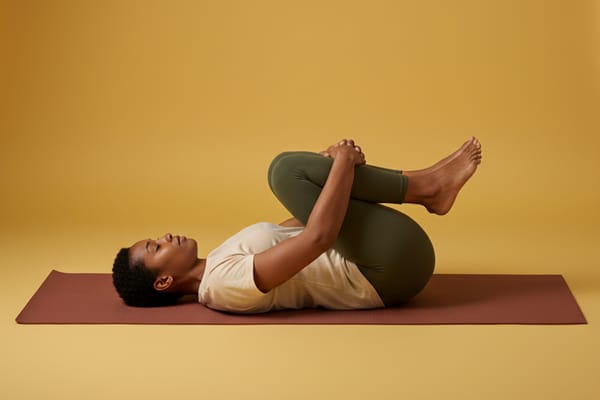
1. Knee-to-Chest Stretch
What it targets: Lower back muscles, gluteals, mild lumbar flexion
Why it works: This gentle stretch reduces tension in the lower back and creates space in the lumbar spine. It is generally well-tolerated even during acute pain episodes.
How to do it:
- Lie on your back with knees bent, feet flat on the floor
- Pull one knee toward your chest, holding behind the thigh or at the shin
- Keep the opposite foot on the floor or extend that leg straight
- Hold for 20-30 seconds, then switch sides
- You can also pull both knees to chest simultaneously
Find this in: Our Lower Back Relief Flow begins with this accessible stretch.
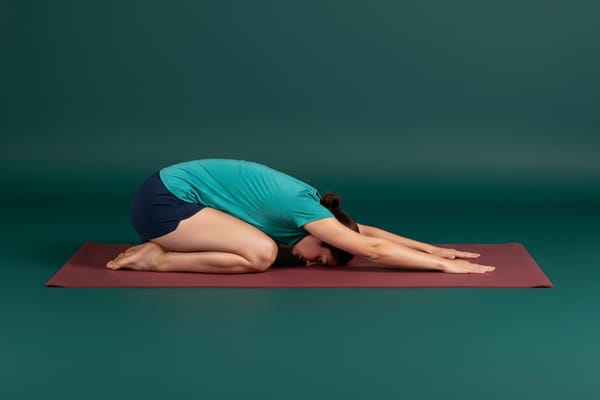
2. Child’s Pose
What it targets: Lower back, lats, hips
Why it works: This restorative position gently stretches the back while providing comfortable support. The flexed position opens the spaces between vertebrae.
How to do it:
- Kneel on the floor, then sit back on your heels
- Fold forward, extending your arms in front of you on the floor
- Rest your forehead on the floor (or a pillow if needed)
- Allow your belly to rest on your thighs
- Hold for 30-60 seconds or longer
Variation: For a side stretch, walk both hands to one side while keeping hips centered.
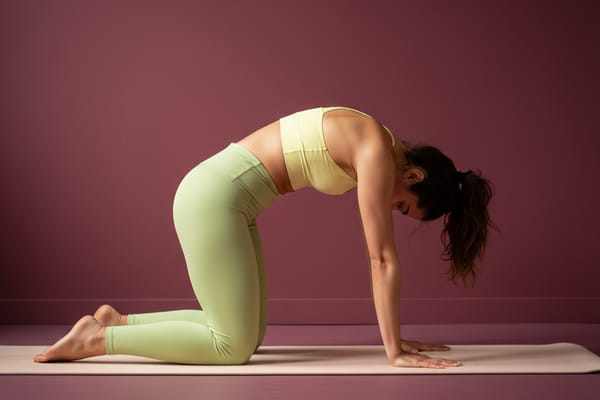
3. Cat-Cow Stretch
What it targets: Spinal mobility, back muscles
Why it works: This dynamic stretch moves the spine through flexion and extension, promoting mobility and reducing stiffness. The movement helps distribute fluid in the spinal discs.
How to do it:
- Start on hands and knees (tabletop position)
- Cow: Inhale, drop your belly toward the floor, lift your head and tailbone
- Cat: Exhale, round your spine toward the ceiling, tuck chin and tailbone
- Move slowly between positions, coordinating with breath
- Repeat 10-15 times
Find this in: The Lower Back Builder Flow incorporates cat-cow as a warmup.
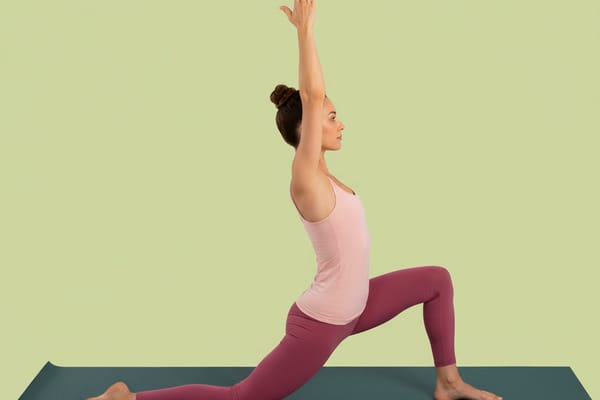
4. Hip Flexor Stretch
What it targets: Iliopsoas, rectus femoris
Why it works: Tight hip flexors pull the pelvis into anterior tilt, increasing lumbar curve and compressing the lower back. Releasing hip flexor tension allows the pelvis to neutralize.
How to do it:
- Kneel on one knee with the other foot forward (half-kneeling position)
- Tuck your pelvis under (posterior tilt) to flatten the lower back
- Lean gently forward while maintaining the pelvic tuck
- You should feel the stretch in the front of the kneeling leg’s hip
- Hold for 30-45 seconds per side
Key point: The pelvic tuck is essential. Without it, this stretch can actually increase lower back compression.
5. Piriformis Stretch
What it targets: Piriformis, deep hip rotators
Why it works: The piriformis muscle runs close to (or around) the sciatic nerve. When tight, it can contribute to back and buttock pain, and may irritate the nerve.
How to do it:
- Lie on your back with knees bent
- Cross one ankle over the opposite knee
- Pull the uncrossed leg toward your chest
- You should feel the stretch in the outer hip/buttock of the crossed leg
- Hold for 30-45 seconds per side
6. Supine Twist
What it targets: Spinal rotation, obliques, lower back
Why it works: This gentle rotational stretch addresses muscles that often tighten with back pain. The supine position provides support and allows relaxation into the stretch.
How to do it:
- Lie on your back with arms extended to the sides
- Bend both knees, feet flat on the floor
- Let both knees fall to one side while keeping shoulders on the floor
- Turn your head in the opposite direction if comfortable
- Hold for 30-60 seconds, then switch sides
Caution: If this position causes shooting pain down the leg, skip it.
7. Hamstring Stretch
What it targets: Hamstrings
Why it works: As noted in the research above, hamstring stretching specifically has been shown to reduce pain in lower back pain patients. Improving hamstring length reduces compensatory demands on the lumbar spine.
How to do it:
- Lie on your back with one leg extended
- Raise the other leg, keeping the knee straight (or slightly bent)
- Use a strap or towel around the foot to hold the position
- Keep the stretching leg’s hip down (do not let it hike up)
- Hold for 30-45 seconds per side
Find this in: Our Lower Back Support Circuit includes hamstring work specifically for back pain relief.
8. Pelvic Tilts
What it targets: Core activation, lumbar mobility
Why it works: This subtle movement restores awareness and control of pelvic positioning, which is often disrupted with back pain. It also provides gentle lumbar mobilization.
How to do it:
- Lie on your back with knees bent, feet flat on the floor
- Flatten your lower back against the floor by tilting your pelvis backward
- Then arch your lower back away from the floor by tilting your pelvis forward
- Move slowly between these positions
- Repeat 10-15 times
Building a Lower Back Stretching Practice
Acute Phase (First 1-2 Weeks of Pain)
When pain is fresh and intense, less is more. Aggressive stretching can irritate inflamed tissues.
Recommended approach:
- Focus on gentle, supported positions: knee-to-chest, child’s pose, cat-cow
- Hold positions only as long as comfortable
- Avoid any stretch that increases pain
- Practice multiple short sessions (5 minutes, 3-4 times daily) rather than one long session
- Combine with walking, which research supports for acute back pain
Subacute Phase (Weeks 2-6)
As pain decreases, gradually introduce more stretches and longer holds.
Recommended approach:
- Add hip flexor stretch, piriformis stretch, and supine twist
- Extend holds to 30-45 seconds
- Practice 10-15 minutes, 1-2 times daily
- Begin incorporating gentle strengthening exercises
Chronic Phase (Ongoing Management)
For persistent or recurrent back pain, a comprehensive approach is essential.
Recommended approach:
- Full stretching routine including all positions above
- Combine with core strengthening and general fitness
- Practice 15-20 minutes, 4-6 times weekly
- Consider our Lower Back Immersion for comprehensive coverage
Common Mistakes and How to Avoid Them
Mistake 1: Stretching Through Sharp Pain
Stretching should create a pulling or tension sensation, not sharp or shooting pain. If a stretch hurts, you are either doing it incorrectly or it is not appropriate for your condition.
Fix: Back off immediately if you experience sharp pain. Modify the position or skip that stretch entirely.
Mistake 2: Focusing Only on the Back
Lower back pain often originates from or is perpetuated by restrictions elsewhere, particularly the hips and hamstrings. Stretching only the back muscles misses these contributors.
Fix: Include hip flexor, hamstring, and piriformis stretches in your routine.
Mistake 3: Neglecting Strengthening
Stretching alone is rarely sufficient for long-term back pain management. Research consistently shows that combining stretching with strengthening produces better outcomes.
Fix: Include core exercises like planks, bird-dogs, and bridges alongside your stretching routine.
Mistake 4: Overdoing Forward Folds
For some types of back pain (particularly disc-related issues), repeated forward bending can worsen symptoms. If forward folds increase your pain, they are not appropriate for your condition.
Fix: If forward bending hurts, focus on hip stretches and positions that keep the spine neutral.
Mistake 5: Expecting Immediate Results
Chronic back pain develops over months or years. It will not resolve in a single stretching session.
Fix: Commit to consistent practice over weeks and months. Track progress in terms of function and pain levels, not just flexibility.
Mistake 6: Ignoring Posture and Movement Habits
If you stretch for 15 minutes then sit with poor posture for 8 hours, the stretching cannot overcome the positional stress.
Fix: Address contributing factors: workstation ergonomics, movement breaks, sleeping position.
When to Seek Professional Help
Stretching is appropriate self-care for many types of back pain, but some situations warrant professional evaluation:
- Pain persists beyond 4-6 weeks despite consistent stretching
- Pain is severe and significantly limits daily activities
- Numbness, tingling, or weakness develops in the legs
- Bowel or bladder function changes
- Pain wakes you from sleep
- You have had multiple recurrent episodes
- Pain follows a significant injury
A physical therapist can assess your specific situation, identify contributing factors, and prescribe targeted exercises. For persistent back pain, this individualized approach often produces better results than generic stretching programs.
Frequently Asked Questions
How often should I stretch for back pain?
For acute pain, multiple short sessions (5 minutes, 3-4 times daily) often work better than one long session. For chronic or preventive purposes, 15-20 minutes, 4-6 times weekly is reasonable.
Are there stretches I should avoid?
This depends on your specific condition. Generally, avoid any stretch that increases your pain. For disc-related issues, aggressive forward bending may be counterproductive. For facet-related issues, extension stretches may worsen symptoms.
Can stretching make back pain worse?
Yes, if done inappropriately. Stretching through pain, overdoing intensity, or choosing stretches wrong for your condition can all exacerbate problems.
How long before I see improvement?
Acute pain often improves within 2-4 weeks with appropriate care (including stretching). Chronic pain may take longer, often months of consistent practice.
Should I stretch when my back hurts or wait until it feels better?
Gentle stretching (like knee-to-chest or child’s pose) is often appropriate even during acute episodes. Avoid aggressive or intense stretching when pain is high. Movement generally helps, but it should be gentle.
Is yoga good for back pain?
Research supports yoga for chronic low back pain. The 2018 Lancet meta-analysis found yoga among the effective exercise interventions. However, some yoga poses may not be appropriate for all back conditions. Modify or skip poses that increase pain.
The Role of Core Strength
While this guide focuses on stretching, core strengthening deserves mention. Research consistently shows that stabilization and core exercises are among the most effective interventions for back pain.
A strong core supports the spine, reduces load on passive structures, and provides stability during movement. The most effective approach for back pain combines flexibility work with core strengthening.
Key exercises to consider:
- Planks (front and side)
- Bird-dog
- Dead bug
- Bridges
- Pallof press
Our Lower Back Support Circuit integrates both stretching and stabilization work.
Key Takeaways
- Stretching helps, but is usually not sufficient alone: Research supports combining stretching with strengthening for best results
- Hamstring stretching specifically benefits back pain: Multiple studies confirm the connection between hamstring flexibility and back pain relief
- Not all back pain responds to the same stretches: Match your approach to your condition; avoid stretches that increase pain
- Consistency matters more than intensity: Regular gentle practice outperforms occasional aggressive stretching
- Seek professional help when needed: Persistent or severe symptoms warrant evaluation
Related Articles
- Back Stretches: Exercises for Upper, Mid, and Lower Back
- Why Your Hip Flexors Are Always Tight
- Stretching for Desk Workers: The Complete Guide
- The Complete Hip Flexibility Guide
References
Owen PJ, Miller CT, Mundell NL, et al. (2020). Which specific modes of exercise training are most effective for treating low back pain? Network meta-analysis. British Journal of Sports Medicine, 54(21), 1279-1287. PubMed ↩︎
Almeida GP, Carvalho AP, Melo BP, et al. (2024). The effects of hamstring stretching exercises on pain intensity and function in low back pain patients: A systematic review with meta-analysis of randomized controlled trials. Journal of Orthopaedic Science. PubMed ↩︎
Anwar S, Ahmed A, Iftikhar A, et al. (2019). Effectiveness of Slump Stretching on Low Back Pain: A Systematic Review and Meta-analysis. Journal of Manipulative and Physiological Therapeutics, 42(4), 278-285. PubMed ↩︎
Shiri R, Coggon D, Falah-Hassani K. (2017). Exercise for the Prevention of Low Back Pain: Systematic Review and Meta-Analysis of Controlled Trials. American Journal of Epidemiology, 187(5), 1093-1101. PubMed ↩︎
