Effective lower body stretches include the kneeling hip flexor lunge, side lunge, leaning 90/90, wall calf stretch, kneeling shin stretch and toe squat. Add quad, hamstring and glute stretches for full coverage. Hold each for 30 to 60 seconds per side and repeat most days of the week for lasting gains.
Your lower body carries you through every step, stair and squat. It also spends hours folded in a chair. That combination leaves some muscles short and others stiff, and the effects spread. Tight hip flexors change how your pelvis sits. Stiff calves change how your knees travel over your feet. Stiff toes change how you push off when you walk.
Most people stretch the same three areas: the quads, the hamstrings and the glutes. Those matter, and this site has a full guide for each. This guide covers the rest of the lower body, the areas that get skipped: the hip flexors, the inner thighs, hip rotation, the calves, the shins and the feet. Together with the three main guides, it gives you a complete lower body plan.
The Lower Body, Zone by Zone
Think of the lower body as six zones. Each one needs its own position.
- Front of the hip: the hip flexors, mainly the iliopsoas. Sitting keeps them in a shortened position for hours.
- Inner thigh: the adductors. They control side-to-side movement and get stiff when you rarely move sideways.
- Hip rotators: the deep muscles that turn the thigh in and out. Limited rotation often shows up as a stiff, “blocked” hip.
- Calves: the gastrocnemius and the soleus. They control how far your shin can move forward over your foot.
- Shins and feet: the muscles on the front of the shin and the small muscles of the foot and toes.
- Front, back and seat of the thigh: the quads, hamstrings and glutes. See the quad stretches guide, the hamstring flexibility guide and the glute stretches guide for these.
You do not need to stretch every zone every day. A short check helps you decide where to start. Can you kneel in a lunge without your lower back arching? Can you push your knee past your toes while the heel stays down? Can you sit on your heels with your toes tucked under? If any of these is hard, start there.
Ground Rules for Lower Body Stretching
Warm up first. Two or three minutes of walking, leg swings or bodyweight squats makes the first stretches more comfortable.
Keep the pelvis in control. Most lower body stretches fail because the pelvis tips or rotates to avoid the stretch. Each stretch below includes a cue for the pelvis.
Use the right type of stretch at the right time. A systematic review found that static stretching right before activity caused small, short-term drops in performance, mostly when holds were 60 seconds or longer per muscle group. Dynamic stretching caused small improvements when done within minutes of activity.1 Before a run or game, use leg swings and walking lunges. Save the longer static holds for after activity or a separate session.
Be consistent. A review of long-term stretching studies found that range of motion gains were linked to weekly frequency and total weekly time, with at least five days a week recommended.2
The Best Lower Body Stretches
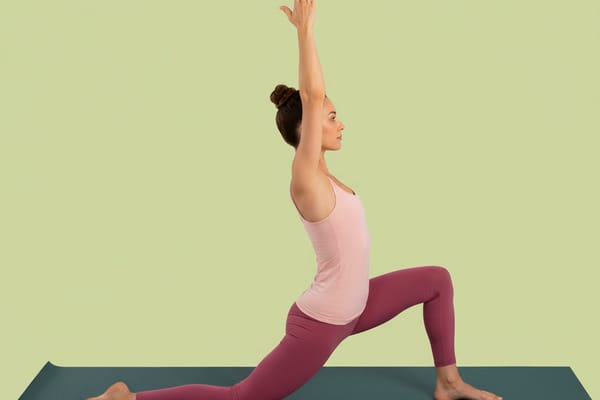
1. Kneeling Hip Flexor Lunge
What it targets: Hip flexors (iliopsoas), front of the hip, upper quad
How to do it:
- Kneel on your right knee with a cushion under it
- Step your left foot forward so the left knee is above the left ankle
- Tuck your tailbone slightly under and squeeze your right glute
- Shift your hips forward a little, keeping your torso tall
- Raise both arms overhead to add the side of the body
- Hold for 45 to 60 seconds, then switch sides
Key cues: The tailbone tuck matters more than how far you move forward. With the pelvis tucked, you will feel the stretch after only a few centimeters of movement.
Common mistake: Arching the lower back and pushing the hips far forward. This moves the stretch into the lower back and away from the hip flexors.
Easier: Keep your hands on your front thigh and move forward less.
Harder: Reach the right arm up and lean gently to the left to stretch the psoas and the side body together.
For more about why this area tightens, read why your hip flexors are always tight.
2. Side Lunge
What it targets: Inner thigh (adductors), groin, inner hamstrings
How to do it:
- Stand with your feet wide apart, toes pointing forward
- Shift your weight to the right and bend the right knee
- Keep the left leg straight and lower your hips until you feel a stretch along the inner left thigh
- Put your hands on the floor or on a chair for balance
- Hold for 30 to 60 seconds, then shift to the other side
Key cues: Keep the bent knee pointing in the same direction as the toes. Keep your chest lifted and your back long.
Common mistake: Letting the bent knee fall inward. This loads the knee instead of stretching the inner thigh.
Easier: Stay higher and hold a chair or wall.
Harder: Turn the toes of the straight leg up toward the ceiling with the heel on the floor. This adds the inner hamstrings.
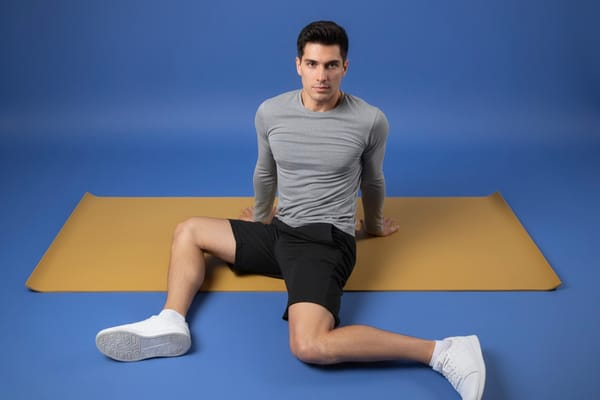
3. Leaning 90/90
What it targets: Hip rotation in both hips, glutes, inner hip
This stretch works on two hips at once. The front leg is turned out, which stretches the outer hip. The back leg is turned in, which works on internal rotation, a range many people lose without noticing.
How to do it:
- Sit on the floor with your knees bent and feet flat, wider than your hips
- Let both knees fall to the right
- Adjust your legs so both knees are bent at about 90 degrees
- Place your hands on the floor behind you and lean back slightly
- Keep both sitting bones as close to the floor as you can
- Hold for 45 to 60 seconds, then switch sides
Key cues: Keep your spine long and your chest open. Breathe into the hips and let the knees settle toward the floor.
Common mistake: Collapsing the chest and rounding the back to reach the floor. Lean back on your hands instead.
Easier: Sit on a folded blanket or cushion.
Harder: Lift your hands from the floor and sit tall, or lean your chest forward over the front shin.
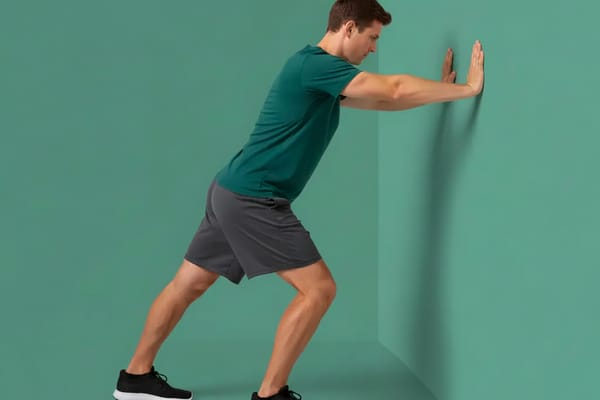
4. Wall Calf Stretch
What it targets: Calves (gastrocnemius), Achilles tendon, ankle
A meta-analysis of randomized trials found that static calf stretching produced a small but statistically significant increase in ankle dorsiflexion, which is the ability to bring the shin forward over the foot.3 The gain was about 2 to 3 degrees on average. That is modest, which is a good reason to stretch the calves regularly and not just once in a while.
How to do it:
- Stand facing a wall, an arm’s length away, with your hands on the wall at shoulder height
- Step your right foot back, toes pointing straight forward
- Bend your front knee and keep the back leg straight
- Lean your hips toward the wall until you feel a stretch in the right calf
- Hold for 30 to 60 seconds, then switch sides
Key cues: Press the back heel firmly into the floor. Keep the back foot pointing straight forward, not turned out.
Common mistake: Letting the back heel lift or the foot turn out. Both reduce the stretch on the calf.
Easier: Walk the back foot closer to the wall.
Harder: Bend the back knee slightly while keeping the heel down. This shifts the stretch lower, into the soleus. The calf stretches and ankle mobility guide covers more options.
5. Kneeling Shin Stretch
What it targets: Front of the shin, top of the foot, ankle
The front of the shin works hard during walking and running, but rarely gets stretched.
How to do it:
- Kneel with your knees hip-width apart and the tops of your feet flat on the floor
- Step your right foot forward and place it flat on the floor
- Sit back onto your left heel
- Place your hands on the floor behind you, fingers pointing toward your feet
- Lean back gently until you feel a stretch along the front of the left shin and ankle
- Hold for 30 to 45 seconds, then switch sides
Key cues: Keep your chest lifted and lean back slowly. The foot should point straight back, not out to the side.
Common mistake: Leaning back too far, too fast. The top of the ankle can feel sharp if you rush.
Easier: Stay upright and place a folded towel under the ankle.
Harder: Lift the knee of the kneeling leg a few centimeters off the floor while you lean back.
6. Toe Squat
What it targets: Toes, sole of the foot, plantar fascia
How to do it:
- Kneel with the tops of your feet on the floor
- Tuck your toes under so you are standing on the balls of your feet
- Sit back slowly onto your heels
- Rest your hands on your thighs and sit tall
- Hold for 20 to 45 seconds, then untuck the toes and rest
Key cues: Spread the weight across all five toes. Check that the little toes are tucked under too, not folded sideways.
Common mistake: Dropping all your weight onto the heels at once. Sit back gradually.
Easier: Place your hands on the floor in front of you to take weight off the feet.
Harder: Increase the hold time by 10 seconds each week, up to about 60 seconds.
Adding the Quads, Hamstrings and Glutes
For full lower body coverage, add one stretch from each of the three main guides to the routine below. A standing or kneeling quad stretch, a supine hamstring stretch with a strap, and a lying figure four for the glutes work well together and take about three minutes. Each guide explains the setup, common mistakes and progressions in detail.
A Seven-Minute Lower Body Routine
- Leg swings: 10 forward and back, 10 side to side per leg
- Kneeling hip flexor lunge: 45 seconds per side
- Side lunge: 30 seconds per side
- Leaning 90/90: 45 seconds per side
- Wall calf stretch: 30 seconds per side
- Kneeling shin stretch: 30 seconds per side
- Toe squat: 30 seconds
If you prefer to follow a timer, the Lower Body Flexibility Foundation is a five-minute beginner routine for the hips, quads and glutes. The Lower Body Flexibility Builder adds deeper lunges, kneeling quads and pigeon, and the Lower Body Flexibility Immersion adds 90/90 work and longer holds.
How Long Until You Notice a Difference
You will usually feel looser right after a session, but that short-term change fades. Lasting change in the hips and calves typically takes several weeks of regular practice. Pick one simple test, such as the knee-to-wall distance for your ankle or how upright you can sit in the 90/90, and recheck it every two weeks. If the number does not change after six weeks of consistent work, change something: hold longer, add strength work through the full range, or ask a professional to check the area.
Who Should Be Careful
Lower body stretches are safe for most people, but take extra care in these cases.
- Hip replacement: Some hip positions, such as deep rotation in the 90/90, may be restricted after surgery. Follow your surgeon’s guidance.
- Groin strain or hernia: Avoid deep side lunges and wide-leg positions until the area is assessed.
- Achilles tendon pain: Stretching an irritated Achilles tendon can make it worse. Tendon pain usually needs a loading program, not more stretching.
- Knee problems: If kneeling hurts, use thick padding or switch to standing versions.
- Pregnancy: Hormonal changes increase joint laxity. Stay well short of your end range.
- Pain that travels down the leg: Burning, tingling or numbness can come from a nerve. Do not stretch into those sensations.
See a physiotherapist or doctor if pain lasts longer than two weeks, gets worse with stretching, or comes with swelling, weakness or numbness. Seek urgent care for sudden calf pain with swelling, warmth or redness, as this can be a sign of a blood clot.
Frequently Asked Questions
How often should I do lower body stretches?
Five or more sessions per week works well for most people. Each session can be short, around seven to fifteen minutes. Research on long-term stretching suggests that weekly frequency and total weekly time matter more than one long session, so short, regular sessions are a better plan than one long weekend session.
Should I stretch my legs before running?
Before running, use dynamic moves such as leg swings, walking lunges and butt kicks. Long static holds right before activity can slightly reduce performance for a short time. Keep static holds under about 30 seconds if you use them before a run, and do the longer holds from this guide afterward.
Why do my legs still feel tight even though I stretch?
Tightness is not always a short muscle. Fatigue, low strength in a muscle’s lengthened range, or an irritated nerve can all feel like tightness. Check that you are stretching often enough, then add strength work through full range, such as deep split squats and calf raises from a step.
Is it better to stretch my lower body in the morning or evening?
Both work. Many people feel stiffer in the morning, so a few gentle moves can make the first hour easier. Evening sessions are often more comfortable because the muscles are warmer, which makes it easier to hold positions for longer. The best time is the time you can repeat most days.
Related Articles
References
Behm DG, Blazevich AJ, Kay AD, McHugh M. (2016). Acute effects of muscle stretching on physical performance, range of motion, and injury incidence in healthy active individuals: a systematic review. Applied Physiology, Nutrition, and Metabolism, 41(1), 1-11. PubMed ↩︎
Thomas E, Bianco A, Paoli A, Palma A. (2018). The Relation Between Stretching Typology and Stretching Duration: The Effects on Range of Motion. International Journal of Sports Medicine, 39(4), 243-254. PubMed ↩︎
Radford JA, Burns J, Buchbinder R, Landorf KB, Cook C. (2006). Does stretching increase ankle dorsiflexion range of motion? A systematic review. British Journal of Sports Medicine, 40(10), 870-875. PubMed ↩︎
