That stabbing pain in your heel when you take your first steps in the morning. If you know it, you’re not alone. Plantar fasciitis affects roughly 10% of the population at some point in their lives, making it one of the most common causes of heel pain.1 It accounts for about one million doctor visits per year in the United States alone.
The good news: stretching is one of the most well-supported treatments for plantar fasciitis. Unlike many conditions where evidence for stretching is mixed, the research here is fairly clear. Targeted stretches that address the plantar fascia, the Achilles tendon, and the calf muscles can significantly reduce pain and speed recovery.
This guide covers what the research says, which stretches work best, how to structure a morning routine that tackles that first-step pain, and how to build a progressive recovery practice from the acute phase through long-term prevention.

What Is Plantar Fasciitis?
The plantar fascia is a thick band of connective tissue that runs along the bottom of your foot, connecting the heel bone (calcaneus) to the base of the toes. It acts like a bowstring, supporting the arch and absorbing shock during walking and running.
Plantar fasciitis develops when this tissue becomes irritated and inflamed, usually at the point where it attaches to the heel bone. Despite the “-itis” suffix suggesting pure inflammation, research has shown that the condition often involves degenerative changes in the tissue (sometimes called plantar fasciosis). This distinction matters because it means recovery involves not just reducing inflammation but also restoring tissue health.
Who Gets It?
Several factors increase the risk:
- Runners and high-impact athletes: Repetitive stress on the plantar fascia is a primary driver
- People with standing jobs: Prolonged time on your feet, especially on hard surfaces
- Tight calves and Achilles tendons: This is a big one. Limited ankle dorsiflexion places extra strain on the plantar fascia with every step
- Flat feet or very high arches: Both alter how force is distributed across the foot
- Overweight individuals: Increased load on the plantar fascia
- Age 40-60: The tissue naturally becomes less flexible over time
- Sudden increases in activity: Ramping up training volume too quickly
Understanding these risk factors is useful because many of them are addressable through stretching and targeted mobility work, particularly calf tightness and limited ankle mobility.
What Research Says About Stretching for Plantar Fasciitis
The evidence for stretching as a plantar fasciitis treatment is stronger than for many musculoskeletal conditions. Here are the key findings:
Plantar Fascia-Specific Stretching
A randomized controlled trial published in the Journal of Bone and Joint Surgery compared plantar fascia-specific stretching to standard Achilles tendon stretching in 101 patients with chronic plantar fasciitis.2 After eight weeks, the group performing plantar fascia-specific stretches (extending the toes back to stretch the arch) showed significantly greater improvement in pain, function, and patient satisfaction compared to the Achilles tendon stretching group.
The researchers noted that 52% of the plantar fascia stretching group reported “total satisfaction” versus only 22% in the Achilles tendon group. This does not mean calf stretching is unhelpful (it is), but it does highlight the importance of including direct plantar fascia work.
Calf Stretching Remains Important
A systematic review in Foot and Ankle International examined conservative treatments for plantar fasciitis and found that calf stretching, particularly sustained stretches held for 30 seconds or more, consistently demonstrated positive outcomes.3 The review noted that combining calf stretching with plantar fascia-specific stretching produced the best results.
This makes sense biomechanically. The calf muscles (gastrocnemius and soleus) connect to the Achilles tendon, which wraps under the heel and shares mechanical continuity with the plantar fascia. Tension in one part of this chain affects the others.
Stretching vs. Other Treatments
A 2014 meta-analysis examining the effectiveness of conservative interventions for plantar fasciitis found that stretching protocols showed consistent pain reduction across multiple studies.4 The researchers concluded that stretching should be considered a first-line treatment, often as effective as more expensive interventions like custom orthotics or night splints.
Long-Term Outcomes
Research published in the Scandinavian Journal of Medicine and Science in Sports examined long-term outcomes and found that patients who maintained a regular stretching program had lower recurrence rates than those who stopped once symptoms resolved.5 The protective effect was most pronounced in patients who continued calf and plantar fascia stretches at least three times per week.
Eccentric Loading
More recent research has explored eccentric calf exercises (lowering the heel below a step under load) as a treatment for plantar fasciitis. A study in the Journal of Foot and Ankle Research found that a progressive eccentric loading program produced significant improvements in pain and function, with results comparable to or exceeding traditional stretching alone.6 This suggests that combining stretching with progressive loading may be the most effective approach.
The Most Effective Stretches for Plantar Fasciitis
Based on the research, these stretches address the key structures involved in plantar fasciitis. They progress from direct plantar fascia work to calf and ankle mobility exercises that address the broader kinetic chain.
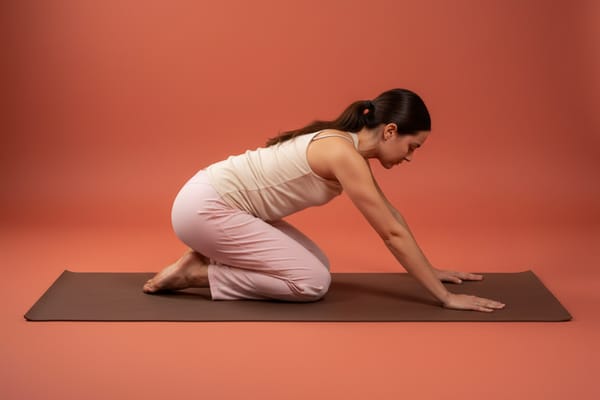
1. Toe Stretch (Plantar Fascia-Specific)
What it targets: The plantar fascia directly, along with the intrinsic foot muscles and toe flexors
Why it works: This is the stretch studied in the Journal of Bone and Joint Surgery trial that outperformed standard calf stretching. Extending the toes back creates a direct stretch along the plantar fascia, and research shows this position also increases the windlass mechanism, which helps restore normal arch function.
How to do it:
- Start in a kneeling position (tabletop) with the tops of your feet on the floor
- Tuck your toes under so the balls of your feet press into the ground
- Slowly lean back toward your heels, using your hands to control the pressure
- Hold for 15-30 seconds, breathing steadily
Key point: This stretch can feel intense. Start gently and increase the lean gradually. If you have acute pain, keep the hold time short and build up over days.
Find this in: Our Foot and Ankle Wake-Up routine includes this as a core stretch.
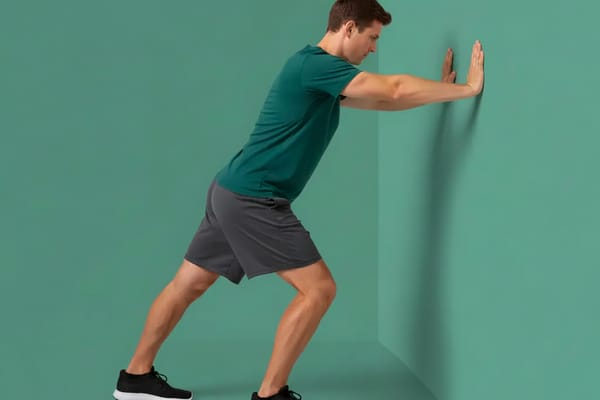
2. Leaning Calf Stretch (Gastrocnemius)
What it targets: The gastrocnemius (upper calf muscle), Achilles tendon
Why it works: The gastrocnemius is the larger of the two main calf muscles and crosses both the knee and ankle joints. Tightness here limits ankle dorsiflexion, which forces the plantar fascia to absorb more strain during walking. A wall-based calf stretch with the back knee straight targets this muscle specifically.
How to do it:
- Stand facing a wall with one foot forward, one foot back
- Keep the back leg straight and the heel pressed into the ground
- Lean into the wall, bending the front knee, until you feel a stretch in the upper calf
- Hold for 30-45 seconds per side
Key point: The back heel must stay on the floor. If it lifts, you have stepped too far back.
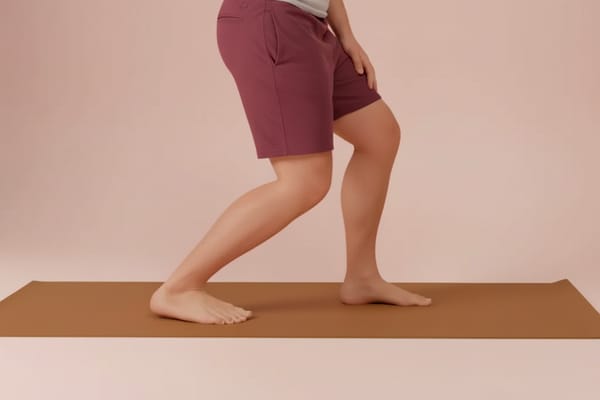
3. Soleus Stretch
What it targets: The soleus (lower calf muscle), lower Achilles tendon
Why it works: The soleus lies beneath the gastrocnemius and is active during walking and standing. Because it only crosses the ankle joint (not the knee), you need to bend the knee to isolate it. Many people stretch their gastrocnemius regularly but neglect the soleus, leaving a significant source of calf tightness unaddressed.
How to do it:
- Stand in a staggered stance, both knees slightly bent
- Drop your hips and lean forward, keeping both heels grounded
- You should feel the stretch lower in the calf, closer to the Achilles tendon
- Hold for 30-45 seconds per side
When to do it: Include this after every gastrocnemius stretch. Both muscles matter, and stretching only one leaves the job half done.
4. Bent Over Calf Stretch
What it targets: Full calf complex, ankle dorsiflexion, foot muscles
Why it works: This variation adds a forward hinge component that increases the stretch through the entire posterior chain of the lower leg. By pulling back on the toes, you also engage the plantar fascia, making it a combination stretch.
How to do it:
- Step one foot forward, keeping that leg straight
- Bend the back knee and sit your hips back
- Lift the front toes so you balance on the heel
- Hinge forward from the hips and reach for the front foot
- Hold for 20-30 seconds per side
Find this in: The Foot and Ankle Builder routine uses this stretch as a foundational exercise.
5. Heel-to-Toe Rocks
What it targets: Ankle mobility, calf muscles, plantar fascia, foot proprioception
Why it works: This dynamic exercise moves the ankle through its full range of motion while gently loading and unloading the plantar fascia. The rocking motion promotes blood flow to the area and helps restore normal movement patterns. Dynamic movements like this are particularly useful as warmups before static stretching.
How to do it:
- Stand with feet hip-width apart
- Rock forward onto the balls of your feet, lifting the heels
- Then rock back onto the heels, lifting the toes
- Move smoothly between positions for 10-15 repetitions
When to do it: Use this as a warmup before deeper calf and foot stretches, or as a standalone exercise throughout the day.
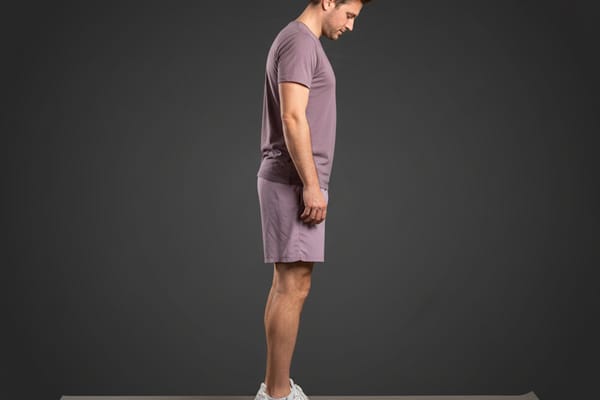
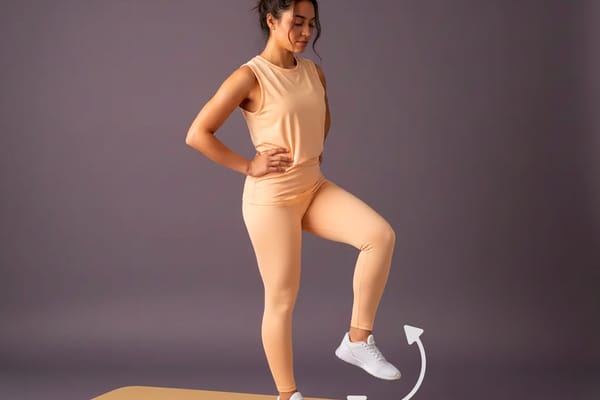
6. Ankle Circles
What it targets: Ankle joint mobility, lower leg muscles, foot and ankle proprioception
Why it works: Restricted ankle mobility forces compensatory movement patterns that increase stress on the plantar fascia. Ankle circles address joint stiffness and improve the range of motion that allows for proper gait mechanics. They also help maintain the health of the joint capsule and surrounding tissues.
How to do it:
- Sit or stand on one leg (hold a wall for balance if needed)
- Lift one foot off the ground
- Draw slow, controlled circles with your toes, moving through the full range at the ankle
- Complete 10 circles in each direction, then switch feet
Key point: Make the circles as large as you can control. Small, hurried circles miss the point.
7. Forward Fold
What it targets: Hamstrings, calves, plantar fascia, entire posterior chain
Why it works: The posterior chain (hamstrings, calves, Achilles tendon, plantar fascia) functions as a connected system. Tightness anywhere along this chain can increase tension on the plantar fascia. A standing forward fold stretches the entire chain simultaneously. Research on the anatomy trains concept supports the idea that myofascial continuity connects these structures.
How to do it:
- Stand with feet hip-width apart
- Hinge at the hips and fold forward, letting your hands hang toward the floor
- Keep a slight bend in the knees if your hamstrings are tight
- Let the head hang heavy and hold for 30-45 seconds
Key point: Do not force this stretch. Let gravity do the work. Over time, you will reach further as the entire posterior chain releases.

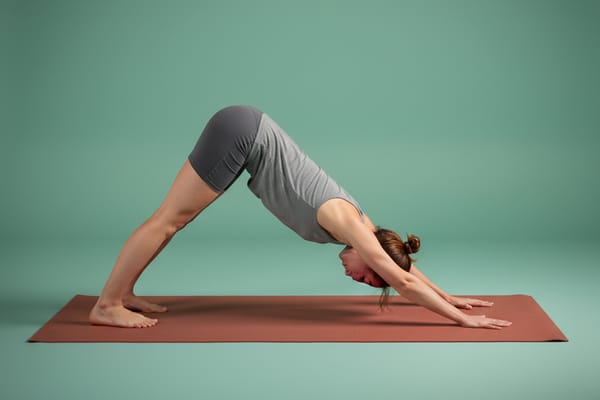
8. Downward Dog
What it targets: Calves, hamstrings, Achilles tendon, shoulders, full-body integration
Why it works: Downward dog creates a sustained stretch through the calves and Achilles tendons while bearing partial body weight through the arms. The pedaling motion (alternating heel presses) allows you to work each calf independently. It also provides a decompression effect through the spine that many people find relieving.
How to do it:
- Start on hands and knees, then lift your hips up and back
- Press your hands firmly into the floor and straighten your arms
- Work toward pressing your heels toward the ground (they do not need to touch)
- Hold for 30-45 seconds, or alternate pressing one heel down at a time
Find this in: Our Foot and Ankle Mastery routine includes this as part of a progressive sequence.
The Morning Routine
If you have plantar fasciitis, mornings are often the worst. The pain with those first steps out of bed can be severe. This happens because the plantar fascia shortens and tightens while you sleep, and the sudden loading when you stand creates a sharp stretch on damaged tissue.
The solution: stretch before you stand up.
5-Minute Before-You-Get-Up Sequence
Do these while still in bed, before your feet touch the floor:
Toe pulls (1 minute): Sit up in bed and cross one ankle over the opposite knee. Pull your toes back gently toward your shin until you feel a stretch along the bottom of your foot. Hold for 30 seconds per side.
Towel calf stretch (1 minute): Loop a towel or belt around the ball of one foot. With your leg extended, gently pull the towel toward you, stretching the calf and plantar fascia. Hold 30 seconds per side.
Ankle circles (1 minute): With your legs extended, draw 10 slow circles in each direction with each foot. This warms up the ankle joints and gets blood flowing.
Foot flexion and extension (1 minute): Point your toes away from you, then pull them back toward your shin. Repeat 15 times on each side. This pumps blood into the calf and foot tissues.
Gentle weight bearing (1 minute): Sit on the edge of the bed and place your feet flat on the floor. Slowly rock forward to load your feet partially, then rock back. Do this 10 times before standing fully.
This sequence takes the plantar fascia through a gradual stretch and warms the surrounding tissues before you place full weight on your feet. Many people find this routine alone produces a significant reduction in morning pain within the first week.
Our Foot and Ankle Wake-Up routine provides a structured follow-up once you are on your feet.
Achilles Tendon and Calf Connection
The relationship between calf tightness and plantar fasciitis is one of the clearest biomechanical connections in foot health. Understanding it helps explain why calf stretching is so important for recovery.
The Anatomy
The gastrocnemius and soleus muscles merge into the Achilles tendon, which inserts into the back of the heel bone. The plantar fascia originates from the bottom of that same heel bone. While they are separate structures, they share a mechanical relationship: when the calf is tight and the Achilles tendon is under tension, the heel bone is effectively being pulled in two directions. The plantar fascia takes the brunt of this tug-of-war.
Limited Dorsiflexion
When calf muscles are tight, they restrict ankle dorsiflexion (the ability to pull your toes toward your shin). During walking, your ankle needs about 10-15 degrees of dorsiflexion during the toe-off phase. If this motion is restricted, the foot compensates by pronating excessively or by placing more strain on the plantar fascia.
Research has consistently identified limited ankle dorsiflexion as a risk factor for developing plantar fasciitis.7 This means that addressing calf tightness is not just about treating current symptoms; it is about removing a root cause.
A Two-Pronged Approach
For lasting relief, address both the gastrocnemius and the soleus:
- Gastrocnemius: Stretched with the knee straight (wall stretch, downward dog)
- Soleus: Stretched with the knee bent (soleus stretch, bent-knee wall lean)
Both muscles contribute to Achilles tendon tension, and both need regular attention. Stretching only one leaves the other as a source of ongoing restriction.
Building a Plantar Fasciitis Recovery Practice
Plantar fasciitis recovery is not linear, and pushing too hard too early can set you back. Here is a phased approach that respects the healing timeline.
Acute Phase (First 2 Weeks)
During this phase, pain is typically high and the tissue is irritated. The goals are reducing pain and maintaining gentle mobility.
What to do:
- Perform the morning bed sequence daily (before standing)
- Do gentle toe pulls and ankle circles 3-4 times throughout the day
- Add the towel calf stretch (gentle, 20-second holds)
- Ice the heel for 10-15 minutes after periods of standing or walking
What to avoid:
- Aggressive stretching that increases pain
- Long periods of barefoot walking on hard surfaces
- High-impact exercise (running, jumping)
- Pushing through sharp pain during stretches
Recovery Phase (Weeks 2-6)
As pain begins to subside, gradually introduce more stretching and begin building tissue tolerance.
What to do:
- Continue the morning routine daily
- Add wall-based calf stretches (gastrocnemius and soleus), 2-3 sets of 30-45 seconds per side
- Introduce the toe stretch (plantar fascia-specific), starting with 15-second holds
- Add heel-to-toe rocks as a dynamic warmup
- Begin gentle eccentric calf raises (lowering the heel below a step, 2 sets of 10)
- Try our Foot and Ankle Builder routine 2-3 times per week
How to progress: If pain decreases or stays the same day to day, you are on the right track. If a new stretch or exercise increases your pain the following morning, back off and try again at a lower intensity the next week.
Prevention Phase (Ongoing)
Once symptoms have resolved, maintenance stretching prevents recurrence.
What to do:
- Continue calf stretches (gastrocnemius and soleus) at least 3 times per week
- Include plantar fascia stretches 2-3 times per week
- Maintain ankle mobility work (circles, heel-to-toe rocks)
- Progress to the Foot and Ankle Mastery routine for ongoing maintenance
- Keep eccentric calf raises in your routine, 2-3 sets of 12 twice per week
- Address footwear (supportive shoes during recovery, gradual transition if moving toward minimalist options)
The long game: Research shows that people who maintain a regular stretching practice after recovery have lower recurrence rates. Think of it as maintenance for your feet, similar to how you might continue core exercises after recovering from back pain.
Common Mistakes That Delay Recovery
1. Stretching Too Aggressively Too Early
The “no pain, no gain” approach backfires with plantar fasciitis. Forcing deep stretches on inflamed tissue can create micro-tears and restart the inflammatory cycle. During the acute phase, stretches should feel gentle and relieving, not sharp or painful.
2. Ignoring the Calves
Focusing exclusively on the foot while neglecting calf tightness is like mopping the floor while the faucet is still running. Calf tightness is both a cause and a perpetuator of plantar fasciitis. Every recovery plan should include gastrocnemius and soleus stretching.
3. Only Stretching in the Morning
While the morning routine is important, a single stretching session is rarely enough. The plantar fascia tightens throughout the day, especially after periods of sitting or inactivity. Stretching after prolonged sitting and after exercise produces better outcomes than morning stretching alone.
4. Stopping Too Soon
Symptoms often improve before the tissue has fully healed. Many people stop stretching once pain subsides, only to see it return within weeks or months. The prevention phase is not optional. Continue maintenance stretching for at least three months after symptoms resolve.
5. Neglecting the Whole Chain
The plantar fascia does not operate in isolation. Tight hamstrings, restricted hip mobility, and weak foot intrinsic muscles all contribute to how much stress lands on the plantar fascia. A comprehensive approach addresses the entire lower body, not just the heel.
When to See a Professional
While most cases of plantar fasciitis respond to conservative treatment within 6-12 months, some situations call for professional evaluation:
- Pain that does not improve after 4-6 weeks of consistent stretching and self-care
- Severe pain that prevents normal walking
- Numbness or tingling in the foot (this may indicate a different condition)
- Pain in both heels that develops suddenly
- Swelling or discoloration around the heel
- Pain that worsens despite appropriate rest and stretching
- History of stress fractures or bone conditions
A podiatrist, sports medicine physician, or physical therapist can provide imaging if needed, rule out other conditions (stress fractures, nerve entrapment, fat pad atrophy), and develop a targeted treatment plan that may include custom orthotics, night splints, or other interventions.
Frequently Asked Questions
How long does it take for stretching to help plantar fasciitis?
Most people notice some improvement within 2-4 weeks of consistent stretching, particularly with the morning routine. Significant improvement typically takes 6-8 weeks. Full resolution can take 3-12 months depending on severity. The key is consistency: daily stretching produces meaningfully better outcomes than occasional stretching.
Should I stretch through the pain?
Gentle stretching should feel like a comfortable pull, not a sharp or stabbing pain. Mild discomfort during stretching is normal and expected. However, if a stretch causes sharp pain at the heel, reduce the intensity or try a gentler variation. Pain that persists or worsens after stretching is a signal to back off.
Is it better to stretch or rest with plantar fasciitis?
Complete rest tends to be counterproductive. The plantar fascia stiffens with inactivity, which is why pain is often worst in the morning. Gentle movement and stretching keep the tissue mobile and promote blood flow for healing. That said, high-impact activities (running, jumping) should be reduced during the acute phase while you continue gentle stretching.
Can I run with plantar fasciitis?
This depends on severity. If pain is mild and does not worsen during or after running, you may be able to continue at reduced volume. If running causes sharp pain or increased symptoms the following day, it is best to substitute low-impact activities (cycling, swimming, elliptical) until you have progressed through the recovery phase. Always stretch calves and feet thoroughly before and after running.
Are there stretches I should avoid?
Avoid any stretch that causes sharp, stabbing pain at the heel. During the acute phase, skip aggressive toe stretches and deep forward folds. Walking barefoot on hard surfaces, while not a stretch, is also worth avoiding early in recovery. As symptoms improve, gradually reintroduce these activities.
Do night splints help alongside stretching?
Night splints hold the ankle in a dorsiflexed position while you sleep, preventing the plantar fascia from shortening overnight. Research shows they can be helpful, particularly for people who have had symptoms for more than six months. They work well as a complement to a stretching program, not as a replacement for one.
Related Articles
- The Complete Calf Stretches and Ankle Mobility Guide
- Lower Back Pain and Stretching: The Complete Guide
- Complete Beginner’s Guide to Stretching
References
Riddle DL, Schappert SM. (2004). Volume of ambulatory care visits and patterns of care for patients diagnosed with plantar fasciitis: a national study of medical doctors. Foot and Ankle International, 25(5), 303-310. PubMed ↩︎
DiGiovanni BF, Nawoczenski DA, Lintal ME, et al. (2003). Tissue-specific plantar fascia-stretching exercise enhances outcomes in patients with chronic heel pain: a randomized, controlled trial. Journal of Bone and Joint Surgery, 85(7), 1270-1277. PubMed ↩︎
Schwartz EN, Su J. (2014). Plantar Fasciitis: A Concise Review. The Permanente Journal, 18(1), e105-e107. PubMed ↩︎
Babatunde OO, Legha A, Littlewood C, et al. (2019). Comparative effectiveness of treatment options for plantar heel pain: a systematic review with network meta-analysis. British Journal of Sports Medicine, 53(3), 182-194. PubMed ↩︎
Rathleff MS, Molgaard CM, Fredberg U, et al. (2015). High-load strength training improves outcome in patients with plantar fasciitis: A randomized controlled trial with 12-month follow-up. Scandinavian Journal of Medicine and Science in Sports, 25(3), e292-e300. PubMed ↩︎
Rathleff MS, Thorborg K. (2015). Load management of plantar fasciopathy. Journal of Foot and Ankle Research, 8(Suppl 2), O46. ↩︎
Riddle DL, Pulisic M, Pidcoe P, Johnson RE. (2003). Risk factors for plantar fasciitis: a matched case-control study. Journal of Bone and Joint Surgery, 85(5), 872-877. PubMed ↩︎
