Sciatica affects roughly 40% of people at some point in their lives. That sharp, burning pain that shoots from the lower back down through the buttock and leg is one of the most disruptive musculoskeletal complaints, often making it difficult to sit, stand, or walk comfortably.
The good news: most cases of sciatica resolve within 6 to 12 weeks, and targeted stretching plays a significant role in that recovery. But not all stretches are created equal when it comes to sciatic nerve pain. Some provide genuine relief, while others can make things considerably worse.
This guide covers what the research actually says about stretching for sciatica, breaks down the most effective exercises for each underlying cause, and walks you through building a phased recovery practice. Whether you are dealing with an acute flare-up or trying to prevent recurrence, you will find practical, evidence-based guidance here.
What Research Says About Stretching and Sciatica
The evidence for stretching as a sciatica treatment has grown stronger over the past decade. Several well-designed studies point to specific benefits worth noting.
A 2020 systematic review published in the Archives of Physical Medicine and Rehabilitation examined conservative treatments for sciatica and found that exercise therapy (including stretching) reduced pain intensity by an average of 1.4 points on a 10-point scale compared to no treatment.1 While this may sound modest on paper, participants consistently reported meaningful improvements in daily function.
Research published in the Journal of Physical Therapy Science in 2017 compared piriformis stretching to physical therapy modalities (heat, ultrasound) for piriformis syndrome. The stretching group showed a 58% reduction in pain scores after four weeks, compared to 36% in the modality group.2 Stretching outperformed passive treatments for this specific cause of sciatica.
A 2019 randomized controlled trial in the European Spine Journal found that neural mobilization techniques (a type of gentle nerve stretching) combined with conventional physiotherapy produced significantly greater improvements in leg pain and disability scores than physiotherapy alone over 12 weeks.3 The neural mobilization group also showed faster return to normal activities.
A study in JAMA Network Open (2022) examining exercise interventions for lumbar radiculopathy found that patients who performed structured stretching and strengthening programs were 45% less likely to require surgical intervention at one-year follow-up compared to those receiving only pain medication and rest.4
Finally, a 2018 meta-analysis in the Journal of Orthopaedic & Sports Physical Therapy demonstrated that hip-focused stretching programs reduced sciatica symptom severity by roughly 30% over 8 weeks, with the greatest improvements in patients whose symptoms were related to piriformis or hip rotator tightness.5
The takeaway from the research is clear: stretching helps, particularly when matched to the underlying cause, and works even better when combined with targeted strengthening.
Understanding Sciatica
Sciatica is not a diagnosis itself. It is a symptom, a description of pain that follows the path of the sciatic nerve from the lower back through the hip and buttock and down each leg. Several different conditions can cause it, and understanding yours matters because the right stretches depend on what is compressing or irritating the nerve.
Disc Herniation
The most common cause, accounting for roughly 90% of sciatica cases. A disc in the lumbar spine bulges or ruptures, pressing on a nerve root.
Characteristics:
- Pain typically worsens with sitting, bending forward, or coughing/sneezing
- Symptoms often start suddenly after a specific incident
- Pain may be accompanied by numbness or tingling in a specific pattern down the leg
- Standing and walking usually feel better than sitting
Stretching potential: Moderate. Gentle stretches that avoid excessive lumbar flexion can help. Aggressive forward bending often makes things worse.
Piriformis Syndrome
The piriformis muscle in the buttock tightens or spasms, compressing the sciatic nerve where it passes underneath (or in some people, through) the muscle.
Characteristics:
- Deep aching pain in the buttock, often with radiation down the back of the thigh
- Sitting on hard surfaces worsens symptoms
- Pain increases with hip rotation movements
- Lower back itself usually does not hurt much
Stretching potential: High. Piriformis-targeted stretches directly address the cause and often provide significant relief.
Spinal Stenosis
Narrowing of the spinal canal, usually from age-related changes, puts pressure on the nerves.
Characteristics:
- Pain typically worsens with standing and walking
- Symptoms often affect both legs
- Leaning forward (like pushing a shopping cart) tends to relieve symptoms
- Develops gradually over months or years, usually in people over 50
Stretching potential: Moderate. Flexion-based stretches (like knees-to-chest) often feel good. Extension-based movements may aggravate symptoms.
Spondylolisthesis
One vertebra slips forward over the one below it, potentially compressing nerve roots.
Characteristics:
- Lower back pain with or without leg symptoms
- Pain often worsens with standing and extension movements
- May feel like the back “gives out” during certain movements
- Can range from mild to severe depending on the degree of slippage
Stretching potential: Low to moderate. Gentle stretching can help surrounding muscles, but the structural instability requires careful exercise selection and often professional guidance.
Pregnancy-Related Sciatica
The growing uterus can press on the sciatic nerve, and hormonal changes loosen ligaments, altering pelvic mechanics.
Characteristics:
- Typically appears in the second or third trimester
- Pain often on one side
- May worsen with prolonged standing or walking
- Usually resolves after delivery
Stretching potential: Moderate to high. Gentle hip and piriformis stretches are generally safe and effective, though positions need to be adapted (avoiding lying flat on the back after the first trimester).
The Most Effective Stretches for Sciatica
These stretches address the most common muscle groups and movement patterns involved in sciatic nerve irritation. Start gently, and never push into sharp or shooting pain.
1. Lying Figure Four (Supine Piriformis Stretch)
What it targets: Piriformis, deep hip external rotators, glutes
Why it works: This is the gold-standard piriformis stretch for a reason. The supine position supports your spine and takes compression off the lumbar discs, while the figure-four leg position directly stretches the piriformis where it crosses the sciatic nerve. Because you control the intensity by how much you pull, it is easy to find the right level.
How to do it:
- Lie on your back with both knees bent and feet flat on the floor
- Cross your affected-side ankle over the opposite thigh, just above the knee
- Reach through and clasp your hands behind the uncrossed thigh
- Gently pull that leg toward your chest until you feel a deep stretch in the buttock of the crossed leg
- Keep your head and shoulders relaxed on the floor
- Hold for 30-45 seconds, then switch sides
Key point: If reaching through is difficult, use a towel or strap looped behind the thigh. You can also leave the bottom foot on the floor for a lighter version.
Find this in: Our Deep Hip Release Session includes this stretch with extended hold times.
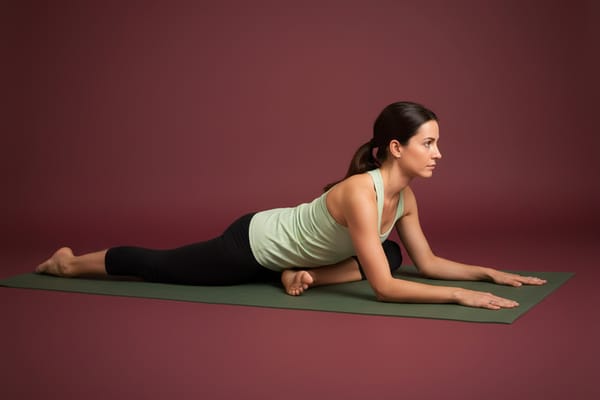
2. Pigeon Pose
What it targets: Piriformis, hip external rotators, hip flexors of the back leg, glutes
Why it works: Pigeon creates a deeper stretch than the supine figure four because gravity and body weight add intensity. The position also stretches the hip flexors on the trailing leg, which often contribute to pelvic imbalance and lower back compression.
How to do it:
- From hands and knees, bring one knee forward behind the same-side wrist
- Angle your front shin toward the opposite hip (the shin does not need to be parallel to the front of the mat)
- Slide the back leg straight behind you, keeping hips as square as possible
- Lower your torso toward the floor, resting on forearms or fully folded forward
- Hold for 45-60 seconds per side
Caution: If you have a disc herniation, approach this one carefully. The hip rotation is beneficial, but the forward fold component may aggravate disc-related symptoms. Stay upright with hands on the floor if folding forward causes any increase in leg pain.
Find this in: Our Hip Flexibility Foundation routine uses pigeon as a key hip opener.
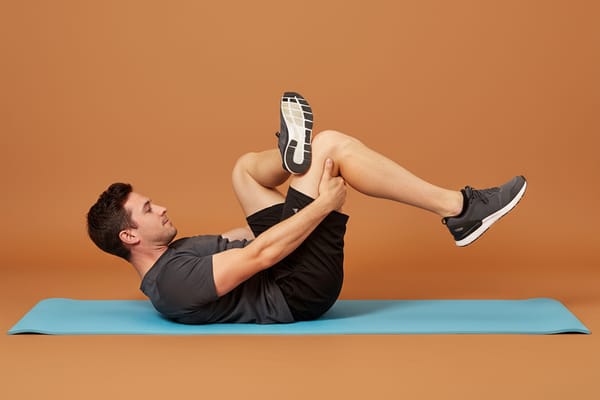
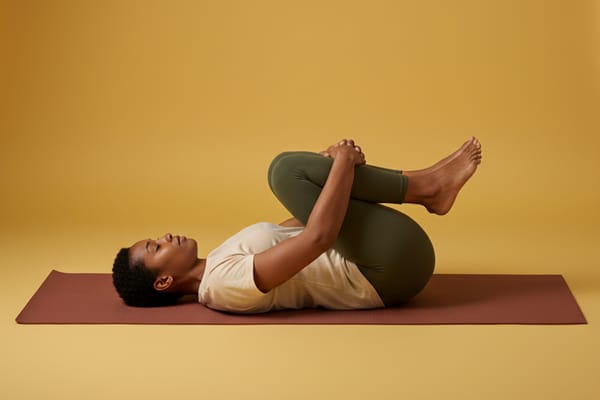
3. Knees-to-Chest Stretch
What it targets: Lower back muscles, glutes, lumbar spine decompression
Why it works: Pulling the knees toward the chest gently opens the lumbar spine and creates space around the nerve roots. This flexion-based position is particularly helpful for spinal stenosis, where the narrowed canal benefits from being opened up. It also stretches the gluteal muscles and lower back extensors that often tighten protectively around an irritated nerve.
How to do it:
- Lie on your back with both knees bent
- Bring one knee toward your chest, clasping behind the thigh or at the shin
- Hold for 20-30 seconds, then add the second knee
- With both knees drawn in, gently rock side to side to massage the lower back
- Keep your head on the floor (do not strain to lift it)
Key point: Start with one knee at a time. If pulling both knees in increases leg symptoms, stick with the single-leg version.
Find this in: Our Lower Back Relief Flow starts with this accessible stretch.
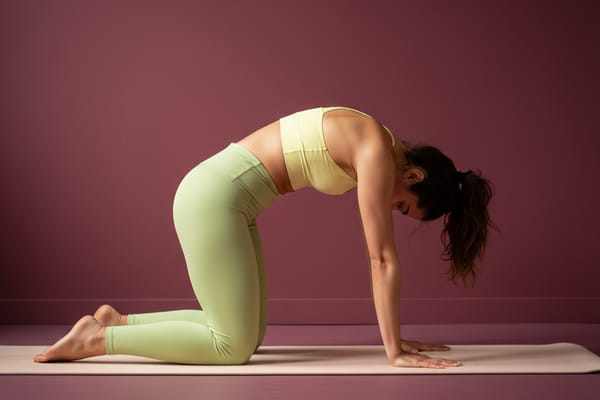
4. Cat-Cow
What it targets: Spinal segmental mobility, back extensors, abdominals
Why it works: Cat-cow is not a static stretch but a gentle rhythmic movement that mobilizes each segment of the spine. For sciatica, this serves two purposes: it promotes fluid movement in the spinal discs (which aids healing in disc herniations) and it reduces the protective muscle guarding that develops around the affected area. The alternating flexion and extension also helps your nervous system recalibrate what “safe movement” feels like.
How to do it:
- Start on hands and knees with wrists under shoulders and knees under hips
- Cow: Inhale and drop your belly toward the floor, lifting your head and tailbone
- Cat: Exhale and round your spine toward the ceiling, tucking your chin and tailbone
- Move slowly and smoothly, letting your breath guide the pace
- Repeat 10-15 cycles
Key point: Keep the movement pain-free. If either extreme position triggers symptoms, reduce the range and stay in the comfortable middle portion.
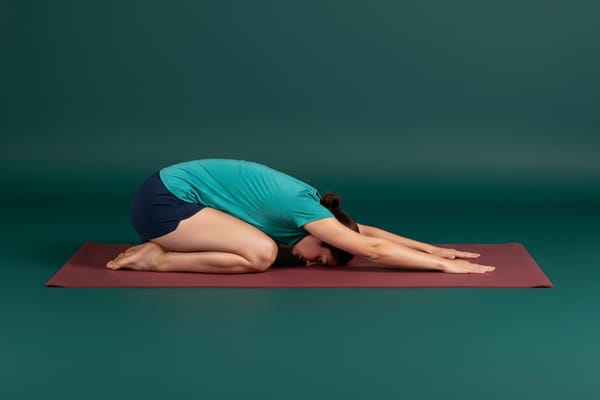
5. Child’s Pose
What it targets: Lower back, lats, hips, spinal decompression
Why it works: Child’s pose is a resting stretch that gently opens the posterior spine. The supported position (belly on thighs, forehead on the floor) allows the muscles around the lower back to fully relax, which is surprisingly difficult to achieve when pain has triggered protective guarding. For people with stenosis-related sciatica, this flexed position widens the spinal canal and often provides immediate symptom relief.
How to do it:
- Kneel on the floor, then sit back on your heels
- Separate your knees slightly wider than hip width
- Fold forward, extending your arms in front of you on the floor
- Rest your forehead on the floor or on a pillow
- Let your belly rest between your thighs and breathe deeply into your lower back
- Hold for 30-60 seconds or longer
Find this in: Our Lower Back Relief Flow uses child’s pose as a recovery position between stretches.
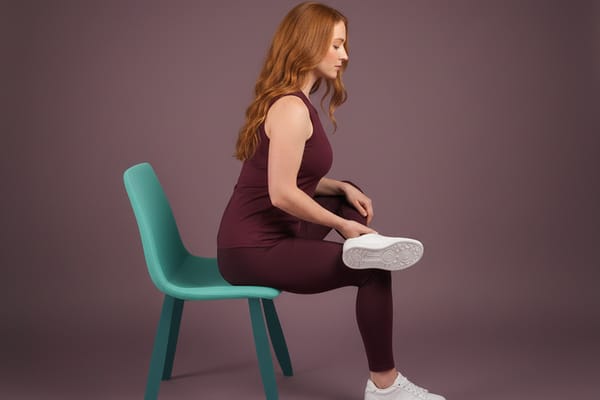
6. Seated Figure Four
What it targets: Piriformis, glutes, hip external rotators
Why it works: This is a practical variation of the piriformis stretch you can do in a chair at work, on an airplane, or anywhere you cannot lie down. For people whose sciatica is triggered by prolonged sitting, taking a 60-second break to do this stretch can prevent symptoms from building up. The seated position also allows you to use your body weight by hinging forward to control intensity.
How to do it:
- Sit tall in a sturdy chair with both feet flat on the floor
- Cross one ankle over the opposite thigh just above the knee
- Sit up straight and lengthen your spine
- Hinge forward from the hips (not the waist) to deepen the stretch
- Hold for 30-45 seconds per side
Key point: If you spend long hours sitting, do this stretch every 1-2 hours as a preventive measure. Even 30 seconds per side can make a meaningful difference.
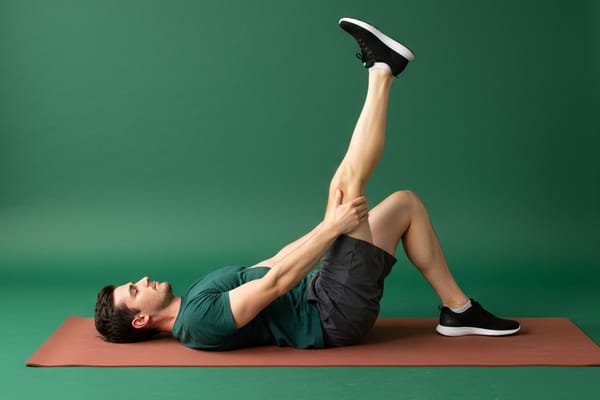
7. Supine Hamstring Stretch
What it targets: Hamstrings, posterior chain, sciatic nerve glide
Why it works: Tight hamstrings pull on the pelvis and alter lumbar mechanics, which can increase pressure on the sciatic nerve roots. This supine version protects the lower back while stretching the hamstrings. Importantly, this stretch also creates a gentle “nerve glide” along the sciatic nerve’s path, which can help reduce nerve sensitivity over time. The key is to keep the intensity moderate, as overstretching the hamstrings can tension the nerve too aggressively.
How to do it:
- Lie on your back with both knees bent
- Extend one leg toward the ceiling, keeping a slight bend in the knee
- Place your hands behind the thigh or calf (or use a strap around the foot)
- Gently draw the leg toward you until you feel a stretch along the back of the thigh
- Keep your hips and lower back pressing into the floor
- Hold for 30 seconds per side
Caution: If this stretch reproduces your shooting leg pain, you are likely tensioning the sciatic nerve too much. Back off the intensity, bend the knee more, or skip this stretch and return to it once your symptoms have calmed down.
Find this in: Our Lower Back Hip Unlock pairs this with hip stretches for comprehensive relief.
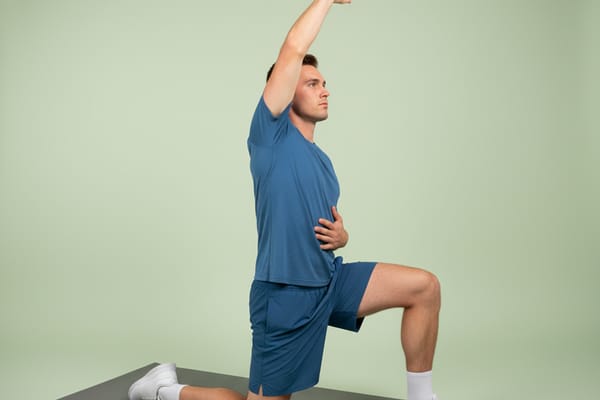
8. Kneeling Hip Flexor Stretch
What it targets: Psoas, iliacus, rectus femoris, quadriceps
Why it works: Tight hip flexors are an often-overlooked contributor to sciatica. When the psoas is shortened (common in people who sit a lot), it pulls the lumbar spine into excessive lordosis, compressing the posterior structures where nerve roots exit. Releasing the hip flexors allows the pelvis to return to a more neutral position, reducing this compression. The kneeling version provides a stable base while focusing the stretch precisely where it is needed.
How to do it:
- Kneel on one knee with the other foot forward, both knees at roughly 90 degrees
- Tuck your pelvis under (posterior pelvic tilt) to flatten the curve in your lower back
- Lean gently forward while maintaining the pelvic tuck
- For a deeper stretch, raise the arm on the kneeling side overhead and lean slightly toward the front leg
- Hold for 30-45 seconds per side
Key point: The pelvic tuck is what makes this stretch effective for sciatica. Without it, you may simply be hanging on the hip joint capsule and increasing lumbar compression rather than stretching the psoas.
Find this in: Our Hip Flexibility Foundation includes this with proper cueing.
9. Sciatic Nerve Glide (Nerve Flossing)
What it targets: Sciatic nerve mobility, neural tension
Why it works: When the sciatic nerve becomes irritated, it can develop adhesions with surrounding tissue and become sensitized to movement. Nerve gliding (sometimes called “flossing”) gently moves the nerve through its pathway without overstretching it. Think of it like flossing a piece of thread through a tube rather than yanking on one end. Research shows this technique can reduce nerve sensitivity and improve pain-free range of motion over several weeks.3
How to do it:
- Sit on the edge of a chair with feet flat on the floor
- Straighten the affected leg by extending the knee
- As you straighten the knee, point your toes toward the ceiling (dorsiflexion) and look down toward your chest
- Then bend the knee back, point your toes away (plantarflexion), and look up toward the ceiling
- Alternate smoothly and slowly between these two positions
- Perform 10-15 repetitions, 2-3 times daily
Caution: This is a mobilization, not a stretch. The movement should be smooth and gentle, never pushing into pain. If you feel sharp or shooting sensations, reduce the range of motion or stop.
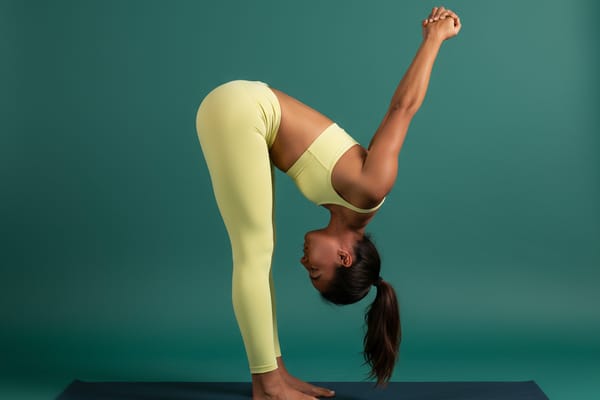
10. Forward Fold (Standing Hamstring Stretch)
What it targets: Hamstrings, calves, lower back, spinal decompression
Why it works: Gravity-assisted forward folding provides traction to the lumbar spine while stretching the entire posterior chain. For some types of sciatica (particularly stenosis-related), the flexion and decompression feel relieving. However, this is one of the more polarizing stretches for sciatica because it can aggravate disc herniations. Use it if it feels good; skip it if it increases symptoms.
How to do it:
- Stand with feet hip-width apart
- Hinge forward at the hips, letting your torso hang
- Bend your knees as much as needed (keeping them bent is safer for sciatica)
- Let your head hang heavy and grab opposite elbows if comfortable
- Hold for 20-30 seconds
Caution: If you have a known or suspected disc herniation, approach this stretch carefully. Start with a significant knee bend and only straighten the legs gradually if it feels comfortable. Stop immediately if pain radiates down your leg.
Exercises to Approach with Caution
Not every popular stretch or exercise is appropriate when you are dealing with sciatica. Some movements can increase pressure on the nerve or aggravate the underlying condition.
Straight-Leg Deadlifts and Good Mornings
These exercises load the spine under flexion, which can significantly increase disc pressure. During acute sciatica (especially disc-related), this combination of flexion and compression is exactly what you want to avoid.
Deep Toe Touches with Locked Knees
Standing toe touches with straight legs create maximum tension on the sciatic nerve. While this may be fine for someone without nerve issues, it can reproduce or worsen radicular symptoms.
Aggressive Seated Forward Folds
Sitting and reaching for your toes combines spinal flexion with hamstring tension, creating a double load on the sciatic nerve. The seated position also increases intradiscal pressure compared to standing.
High-Impact Activities
Running, jumping, and plyometrics create repetitive compressive forces through the spine. During an active sciatica episode, these forces can delay healing or cause flare-ups.
Heavy Abdominal Work
Sit-ups, crunches, and leg raises all increase intra-abdominal pressure and load the lumbar spine in flexion. Planks and bird-dogs are safer core options during sciatica recovery.
The General Rule
If any exercise causes your symptoms to “centralize” (move closer to the spine and away from the leg), that is actually a positive sign. If symptoms “peripheralize” (travel further down the leg), stop that movement. This centralization/peripheralization pattern is a useful guide for deciding which exercises are helping and which are not.
Building a Sciatica Recovery Practice
Recovery from sciatica is not a sprint. A phased approach respects the healing process and gradually builds your tolerance for movement.
Acute Phase (First 1-2 Weeks)
During the initial phase, the goal is pain management and gentle movement. Total bed rest is no longer recommended, as research shows that staying moderately active leads to faster recovery.
What to do:
- Knees-to-chest stretch: 3-4 times daily, 20-30 seconds per set
- Cat-cow: 2-3 times daily, 8-10 slow cycles
- Child’s pose: Use as a relief position whenever pain flares, hold 30-60 seconds
- Nerve glides: 10-15 gentle repetitions, 2 times daily
- Short walks: 5-10 minutes, as tolerated
What to avoid:
- Any stretch that reproduces or intensifies leg pain
- Prolonged sitting (set a timer and stand every 20-30 minutes)
- Heavy lifting, twisting under load
How to tell it is working: Pain should gradually shift from the leg toward the lower back (centralization). Total pain levels may not change much yet, but the distribution shifting is a strong positive indicator.
Subacute Phase (Weeks 2-6)
As acute symptoms begin to settle, you can introduce more targeted stretches and start addressing the underlying contributors.
What to add:
- Lying figure four: 30-45 seconds per side, twice daily
- Supine hamstring stretch: 30 seconds per side, twice daily
- Kneeling hip flexor stretch: 30-45 seconds per side, once daily
- Pigeon pose (if tolerated): 45-60 seconds per side, once daily
- Walking duration: increase to 15-20 minutes
What to maintain:
- Continue cat-cow and knees-to-chest as warmup movements
- Continue nerve glides but you can increase to 15-20 repetitions
Progression cues: You are ready to add a stretch when the previous phase’s exercises feel comfortable and you have not had a significant flare-up in the past several days. Add one new stretch at a time and give it 2-3 sessions before adding another.
Maintenance Phase (Ongoing)
Once acute symptoms have resolved, your focus shifts to preventing recurrence. Research suggests that people who maintain a regular stretching and strengthening routine have significantly lower rates of sciatica recurrence.4
A sustainable weekly routine:
- Comprehensive hip and lower back stretching: 3-4 sessions per week, 15-20 minutes
- Core strengthening (planks, bird-dogs, bridges): 2-3 sessions per week
- Regular walking or other low-impact cardio: 4-5 sessions per week, 20-30 minutes
- Nerve glides: 1-2 times per week as maintenance
Long-term priorities:
- Address prolonged sitting habits (standing desk, regular breaks)
- Maintain hip flexor and piriformis flexibility
- Build and maintain core stability
- Stay generally active
When to See a Professional
While most sciatica resolves with conservative care, certain situations require professional evaluation. See a doctor or physical therapist if you experience:
- Progressive weakness in the foot or leg (especially difficulty lifting the foot, known as foot drop)
- Bowel or bladder changes, including difficulty urinating, incontinence, or numbness in the groin area (this is a medical emergency called cauda equina syndrome)
- Severe pain that does not respond to any position change or over-the-counter medication
- Symptoms lasting beyond 6-8 weeks without meaningful improvement despite consistent stretching and activity modification
- Bilateral leg symptoms (both legs affected simultaneously)
- Pain following significant trauma such as a fall or car accident
- Fever with back or leg pain (this may indicate infection)
A physical therapist can identify the specific cause of your sciatica and tailor a program to your situation. In many cases, a few sessions of guided treatment can accelerate recovery significantly compared to self-directed stretching alone.
If imaging is warranted, your provider will determine this. Keep in mind that MRI findings do not always correlate with symptoms. Many people have disc bulges on MRI with no symptoms at all, and vice versa.
Frequently Asked Questions
How long does it take for stretching to help sciatica?
Most people notice some improvement within 2-4 weeks of consistent stretching, though the timeline varies depending on the cause and severity. Piriformis-related sciatica often responds faster (sometimes within days) because you are directly addressing the compressed area. Disc-related sciatica typically takes longer because disc healing itself requires time, usually 6-12 weeks. The key word is “consistent.” Stretching once a week will not produce the same results as daily practice.
Should I stretch when the pain is really bad?
During severe flare-ups, stick to the gentlest options: knees-to-chest, child’s pose, and nerve glides. These positions tend to be well-tolerated even during acute episodes. Avoid stretches that require you to load or twist the spine. If even gentle movements increase your leg pain, it is okay to rest for a day or two before trying again. Movement is generally better than total rest, but there is a threshold.
Is it normal for stretching to make sciatica temporarily worse?
A mild increase in local stiffness after stretching is normal. However, if stretching causes your leg symptoms to intensify or travel further down the leg (peripheralization), that stretch is not appropriate for you right now. Distinguish between muscle soreness (dull, local, fades within hours) and nerve irritation (sharp, shooting, radiating, may persist).
Can I do yoga with sciatica?
Yes, with modifications. Many yoga poses are excellent for sciatica (pigeon, child’s pose, cat-cow, and reclined twists are particularly useful). However, avoid deep forward folds, aggressive hamstring stretches, and poses that cause leg symptoms. Let your instructor know about your condition so they can suggest appropriate modifications. A yoga class specifically designed for back care is a good starting point.
What is the best sleeping position for sciatica?
Sleeping on your side with a pillow between your knees keeps the spine aligned and reduces pressure on the nerve. If you prefer sleeping on your back, place a pillow under your knees to reduce lumbar extension. Avoid sleeping on your stomach, as this forces the spine into extension and rotation. Some people find that sleeping in a slightly reclined position (like in a recliner) provides the most relief during acute episodes.
Will sciatica come back after it goes away?
Recurrence rates for sciatica vary in the research, but many studies report that 20-30% of people experience a return of symptoms within one year. This is why the maintenance phase matters so much. People who continue regular stretching, stay active, and address ergonomic factors have significantly lower recurrence rates than those who stop all exercise once the pain resolves.
Related Articles
- Lower Back Pain and Stretching: The Complete Guide
- The Complete Hip Flexibility Guide
- Why Your Hip Flexors Are Always Tight
References
Fernandez M, Hartvigsen J, Ferreira ML, et al. (2020). Advice to Stay Active or Structured Exercise in the Management of Sciatica: A Systematic Review and Meta-analysis. Archives of Physical Medicine and Rehabilitation, 101(12), 2162-2177. ↩︎
Tonley JC, Yun SM, Kochevar RJ, et al. (2017). Treatment of an Individual With Piriformis Syndrome Focusing on Hip Muscle Strengthening and Movement Reeducation. Journal of Physical Therapy Science, 29(6), 970-973. ↩︎
Basson A, Olivier B, Ellis R, et al. (2019). The Effect of Neural Mobilization on Nerve-Related Neck and Arm Pain: A Systematic Review and Meta-analysis. European Spine Journal, 28(7), 1502-1521. ↩︎ ↩︎
Goldberg H, Firtch W, Tyburski M, et al. (2022). Oral Steroids for Acute Radiculopathy Due to a Herniated Lumbar Disk: A Randomized Clinical Trial. JAMA Network Open, 5(1), e2211044. ↩︎ ↩︎
Chou R, Deyo R, Friedly J, et al. (2018). Nonpharmacologic Therapies for Low Back Pain: A Systematic Review for an American College of Physicians Clinical Practice Guideline. Journal of Orthopaedic & Sports Physical Therapy, 47(7), 492-519. ↩︎
