Good stretches after running are the straight-knee calf stretch, bent-knee soleus stretch, standing quad stretch, kneeling hip flexor stretch, lying figure four, crossed-leg fold and butterfly. Walk for a few minutes first, then hold each stretch for 30 to 60 seconds per side at a mild pull, without bouncing.
You finish a run, stop your watch, and the last thing you want is another ten minutes of exercise. That is why most runners skip stretching or do one quick quad pull at the front door. Yet the muscles that do most of the work in running are the ones that feel stiff the next morning: calves, quads, hip flexors and glutes.
This guide covers the eight stretches that matter most after a run, how to do each one well, and how to fit them into the few minutes you have. It focuses on the lower legs and hips. Hamstrings get their own guide, hamstring stretches for runners, so we only touch on them briefly here.
What Post-Run Stretching Can and Cannot Do
What it does not do: A systematic review of randomized trials found no effect of post-exercise stretching on muscle soreness at 24, 48 or 72 hours, and no effect on strength recovery, compared with simply resting.1 Stretching also does not appear to prevent sports injuries on its own. A meta-analysis of 25 trials with more than 26,000 participants found no benefit from stretching programs for injury prevention, while strength training reduced sports injuries to less than one third.2
What it does well: Stretching is a reliable way to keep or improve your range of motion. The American College of Sports Medicine recommends flexibility exercises for each major muscle group on at least two days per week, with about 60 seconds in total per exercise.3 After a run your muscles are warm and the habit is easy to keep.
So treat post-run stretching as flexibility maintenance and a short wind-down, not as a cure for soreness. For the general physiology of cooling down, see our guide to cool down stretches.
Before You Stretch: Walk First
Do not go straight from running pace into a deep stretch. Walk for 3 to 5 minutes until your breathing settles. This brings your heart rate down gradually, and you will balance better on one leg during the standing stretches.
Then follow these rules for every stretch below:
- Hold, do not bounce. Bouncing on tired muscles adds strain without adding much range.
- Stay at a mild pull. About 5 out of 10. After a hard run, muscles feel tighter than usual, so go easier than you would on a rest day.
- Breathe slowly. Long breaths out help you relax into each position.
- Stretch both sides. Even if only one side feels tight.
The 8 Best Stretches After Running
Standing stretches come first, then the floor.
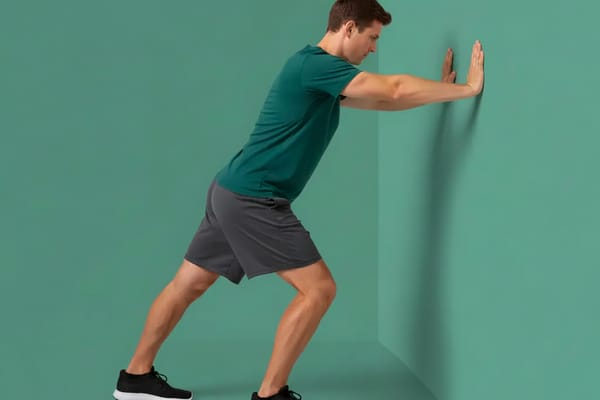
1. Straight-Knee Calf Stretch
What it targets: Gastrocnemius, the large upper calf muscle that pushes you off the ground with every step
How to do it:
- Stand an arm’s length from a wall, tree or lamp post and place your hands on it at shoulder height
- Step your right foot back, toes pointing straight forward
- Keep the right knee straight and the right heel on the ground
- Bend your front knee and lean your hips toward the wall until you feel a stretch in the upper calf
- Hold for 30 to 45 seconds per side
Common mistake: Turning the back foot outward. Point the toes straight ahead.
Easier: Take a shorter step back. Harder: Place the ball of your back foot on a curb or step and let the heel drop.
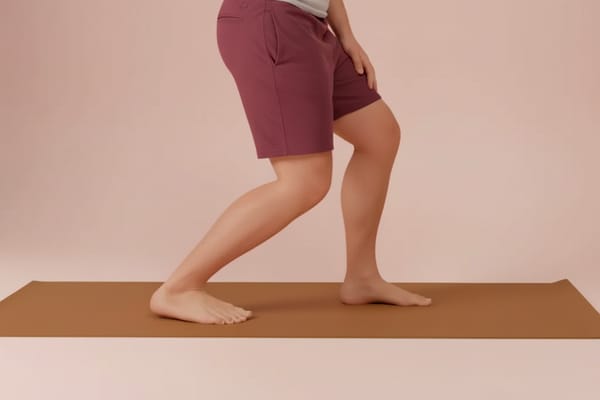
2. Bent-Knee Soleus Stretch
What it targets: Soleus, the deeper calf muscle that sits below the gastrocnemius and absorbs much of the load in distance running
How to do it:
- Stand with one foot slightly in front of the other, both heels on the ground
- Bend both knees and lower your hips straight down
- Shift your weight slightly forward over the back foot
- You should feel the stretch low in the back calf, close to the Achilles tendon
- Hold for 30 to 45 seconds per side
Common mistake: Keeping the back knee straight. The soleus only stretches well when the knee is bent, which is why it gets missed in most post-run routines.
Easier: Hold a wall for balance and make the bend smaller. Harder: Do it with the back foot on a step, knee bent, and lower the heel slowly. For more on the lower leg, see our guide to calf stretches and ankle mobility.
3. Standing Quad Stretch
What it targets: Quadriceps, which control your landing on every stride, especially on downhills
How to do it:
- Stand on your left leg and hold a wall or a partner for balance
- Bend your right knee and hold your right ankle behind you
- Pull your heel toward your glute with your knees side by side
- Tuck your tailbone slightly under until you feel the stretch reach the top of the thigh
- Hold for 30 to 45 seconds per side
Common mistake: Arching the lower back and letting the knee drift forward. This turns a quad stretch into a back bend.
Easier: Loop a towel or your running jacket around your ankle. Harder: Squeeze the glute on the stretching side to stretch further into the front of the hip.
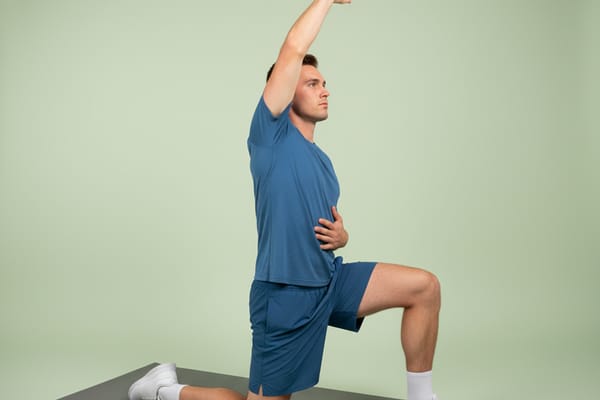
4. Kneeling Hip Flexor Stretch
What it targets: Psoas and the other hip flexors, which swing your leg forward thousands of times during a run
How to do it:
- Kneel on your right knee with your left foot flat in front of you, both knees at about 90 degrees
- Tuck your tailbone under and gently tighten your stomach
- Shift your hips forward until you feel a stretch at the front of the right hip
- Raise your right arm overhead and reach slightly to the left
- Hold for 45 to 60 seconds per side
Common mistake: Lunging deep while the lower back arches. A small shift with the pelvis tucked works better.
Easier: Put a folded jacket or towel under the back knee. Harder: Raise the back foot onto a bench or sofa to add a quad stretch. If the front of your hip is always tight, read why your hip flexors are always tight.
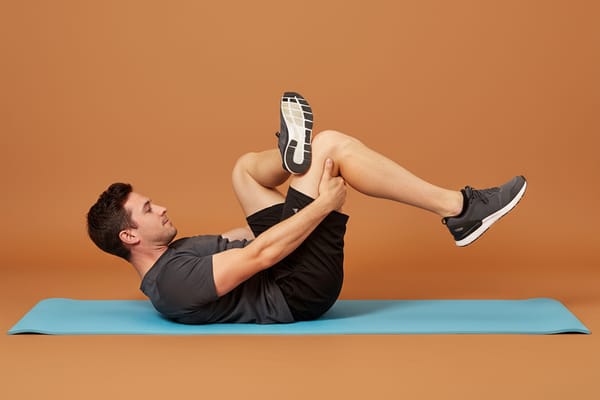
5. Lying Figure Four
What it targets: Glutes and the deep hip rotators that keep your pelvis level when you land on one leg
How to do it:
- Lie on your back with knees bent and feet flat
- Cross your right ankle over your left thigh, just above the knee
- Lift your left foot off the floor and hold behind your left thigh
- Gently pull both legs toward your chest
- Let your right knee open away from you
- Hold for 45 to 60 seconds per side
Common mistake: Lifting the head and shoulders off the floor to reach the thigh. Use a towel around the thigh so your upper body can stay relaxed.
Easier: Keep the bottom foot on the floor or against a wall. Harder: Use pigeon pose instead, with the front shin angled across the mat.
6. Crossed-Leg Forward Fold
What it targets: The outer hip and the side of the thigh, along with the hamstrings
How to do it:
- Stand tall and cross your right foot in front of your left
- Bend your knees slightly
- Hinge forward from the hips and let your upper body hang toward the floor
- You should feel the stretch along the outer side of the back leg
- Hold for 30 seconds, then change the crossed leg
Common mistake: Locking both knees. Soft knees keep the stretch in the hip and thigh instead of the back of the knee.
Easier: Rest your hands on your thighs. Harder: Walk your hands toward the side of the back foot to increase the stretch on the outer hip. You cannot stretch the IT band itself very much, but this position eases the muscles around it. Our IT band stretches guide explains why.
7. Butterfly Stretch
What it targets: Adductors, the inner thigh muscles that stabilize your legs side to side
How to do it:
- Sit on the floor and bring the soles of your feet together
- Hold your feet and let your knees fall open
- Sit tall, then hinge forward slightly from the hips
- Let gravity lower the knees, without pressing them down
- Hold for 45 to 60 seconds
Common mistake: Rounding the back to bring the head down. A tall spine with a small forward lean is more effective.
Easier: Move your feet further away from your body. Harder: Bring your heels closer to your hips.
8. Gentle Hamstring Stretch
What it targets: Hamstrings
How to do it:
- Lie on your back with both knees bent
- Loop a towel around the ball of your right foot
- Straighten the right leg toward the ceiling until you feel a mild stretch
- Keep your hips on the floor
- Hold for 30 to 45 seconds per side
Keep this one light after hard or fast runs. Our hamstring stretches for runners guide covers more hamstring options and when to use them.
Post-Run Routines by Run Type
After an Easy Run (5 minutes)
- Straight-knee calf stretch: 30 seconds per side
- Standing quad stretch: 30 seconds per side
- Kneeling hip flexor stretch: 45 seconds per side
- Lying figure four: 45 seconds per side
The Post-Run Reset is a guided five-minute version with a timer.
After a Tempo Run or Intervals (8 minutes)
Walk for 5 minutes first. Then:
- Straight-knee calf stretch: 30 seconds per side
- Bent-knee soleus stretch: 30 seconds per side
- Standing quad stretch: 30 seconds per side
- Kneeling hip flexor stretch: 45 seconds per side
- Lying figure four: 45 seconds per side
- Gentle hamstring stretch: 30 seconds per side
Keep the intensity low. The Post-Run Builder follows a similar order.
After a Long Run (12 minutes)
Long runs put the most load on the calves and hips, so give them more time.
- Straight-knee calf stretch: 45 seconds per side
- Bent-knee soleus stretch: 45 seconds per side
- Standing quad stretch: 45 seconds per side
- Crossed-leg forward fold: 30 seconds per side
- Kneeling hip flexor stretch: 60 seconds per side
- Lying figure four: 60 seconds per side
- Butterfly stretch: 60 seconds
Follow along with the Post-Run Immersion, an 11-minute guided routine built for long runs.
Common Mistakes Runners Make
Stretching cold after a long break: If you stood around chatting for 20 minutes after the run, walk again for a few minutes before you stretch.
Stretching hard on sore muscles: Deep soreness the day after a race or long run is a reason to go gentler, not harder. Light walking or easy cycling often feels better than intense stretching on those days.
Only stretching the quads: The calves and hip flexors are often tighter than the quads in runners but get less attention.
Using stretching instead of strength work: Since strength training has much stronger evidence for injury prevention than stretching, add calf raises, single-leg squats and glute bridges two or three times per week.2
Who Should Be Careful
- Runners with Achilles pain: Avoid aggressive calf stretches over a step, especially the heel-drop versions. They can irritate a sensitive tendon. Gentle stretches on flat ground are usually better tolerated
- Runners with a recent muscle strain: Do not stretch a freshly strained calf, hamstring or groin. Let it settle first and follow a guided rehab plan
- Runners with hip or groin pain at rest: Deep hip flexor and butterfly stretches can aggravate some hip joint problems
When to See a Professional
- Pain that makes you limp or changes your running stride
- Sharp pain in a specific spot on a bone, such as the shin or foot, which can point to a stress injury
- Swelling, bruising or a sudden pulling sensation during a run
- Pain in the Achilles tendon that is worse in the morning and does not improve over two weeks
- Numbness or tingling in the leg or foot
A sports physiotherapist can assess the problem and adjust your training load.
Key Takeaways
- Walk first, then stretch: Give your heart rate a few minutes to settle
- Calves need two stretches: One with a straight knee, one with a bent knee for the soleus
- Hip flexors and glutes matter as much as quads: They do a large share of the work in running
- Hold 30 to 60 seconds at a mild pull: Go easier after hard sessions
- Stretching maintains range, strength prevents injury: Do both
Frequently Asked Questions
How long should I stretch after a run?
Five minutes covers the essentials after an easy run: calves, quads, hip flexors and glutes, with one hold of 30 to 45 seconds each. After long runs, ten to twelve minutes lets you hold each stretch longer and add the soleus, outer hip and inner thigh stretches.
Is it bad to skip stretching after running?
Skipping it now and then will not harm you. Research shows post-run stretching does not reduce soreness or prevent injuries on its own. However, if you want to keep or improve your flexibility, stretching after runs is a convenient time to do it, because your muscles are warm and the habit is easy to keep.
Should I stretch right after running or later?
Stretch within about 30 minutes of finishing, after a short walk, while your muscles are still warm. If you cannot stretch right away, a separate session later in the day also works. Before stretching later, walk or move for a few minutes so your muscles are not completely cold.
Can I stretch after a race or a very hard run?
Yes, but keep it gentle. After a race your muscles are tired and may have small amounts of damage. Choose easy positions such as the lying figure four and a light calf stretch, hold them at a mild pull, and save deeper flexibility work for a few days later when the soreness has faded.
Related Articles
- Hamstring Stretches for Runners
- The Best Cool Down Stretches After a Workout
- Calf Stretches and Ankle Mobility
- IT Band Stretches
References
Afonso J, Clemente FM, Nakamura FY, et al. (2021). The Effectiveness of Post-exercise Stretching in Short-Term and Delayed Recovery of Strength, Range of Motion and Delayed Onset Muscle Soreness: A Systematic Review and Meta-Analysis of Randomized Controlled Trials. Frontiers in Physiology, 12, 677581. PubMed ↩︎
Lauersen JB, Bertelsen DM, Andersen LB. (2014). The effectiveness of exercise interventions to prevent sports injuries: a systematic review and meta-analysis of randomised controlled trials. British Journal of Sports Medicine, 48(11), 871-877. PubMed ↩︎ ↩︎
Garber CE, Blissmer B, Deschenes MR, et al. (2011). American College of Sports Medicine position stand. Quantity and quality of exercise for developing and maintaining cardiorespiratory, musculoskeletal, and neuromotor fitness in apparently healthy adults: guidance for prescribing exercise. Medicine and Science in Sports and Exercise, 43(7), 1334-1359. PubMed ↩︎
