Sleep quality affects nearly every aspect of health and well-being. Yet millions struggle to fall asleep, stay asleep, or wake feeling rested. While many factors influence sleep, one often-overlooked intervention is remarkably effective: evening stretching.
Gentle stretching before bed can reduce the time it takes to fall asleep, improve sleep quality, and leave you more refreshed upon waking. This guide explores the science behind sleep and stretching, explains why this connection exists, and provides a complete bedtime stretching routine.
The Science of Sleep and Stretching
Understanding how stretching affects the body explains its sleep benefits.
Parasympathetic Activation
The autonomic nervous system has two branches: sympathetic (fight-or-flight) and parasympathetic (rest-and-digest). Modern life often keeps us in a sympathetic-dominant state, making it difficult to transition to the relaxed state necessary for sleep.
Gentle stretching activates the parasympathetic nervous system. Research published in the Journal of Physiological Anthropology demonstrated that stretching reduces cortisol levels and heart rate while increasing parasympathetic activity markers.
This shift prepares the body for sleep at a physiological level, not just a mental one.
Muscle Tension Release
Physical tension interferes with sleep. Tight muscles create discomfort when lying down, leading to position-shifting, difficulty relaxing, and reduced sleep quality.
A 2016 study in the Journal of Sport Rehabilitation found that stretching before bed reduces muscle tension and improves subjective relaxation. Participants who stretched reported falling asleep more easily and waking less during the night.
Blood Flow and Temperature Regulation
Stretching increases blood flow to muscles, which paradoxically helps the body cool down afterward. This post-stretching cooling aligns with the natural drop in core temperature that signals sleep onset.
Research shows that a slight decrease in core body temperature is essential for falling asleep. The warming and subsequent cooling from evening stretching supports this natural process.
Pain Reduction
Chronic pain is a major sleep disruptor. While stretching cannot eliminate all pain, regular practice reduces many types of musculoskeletal discomfort.
A study in the International Journal of Sports Physical Therapy found that consistent stretching reduces pain perception and improves function. When pain decreases, sleep quality improves.
Mental Transition
Beyond physical effects, evening stretching creates a psychological transition from daily stress to rest. This ritual signals to the brain that the active part of the day is ending.
Research on sleep hygiene consistently emphasizes the importance of pre-sleep routines. Stretching provides a structured, calming activity that bridges wakefulness and sleep.
Research on Stretching and Sleep Quality
Multiple studies support the stretching-sleep connection.
A 2019 randomized controlled trial published in the Journal of the American Geriatrics Society studied older adults with chronic insomnia. The group that performed stretching exercises before bed showed significant improvements in sleep quality compared to controls. They fell asleep faster, slept longer, and reported better rest upon waking.
Research in the Brazilian Journal of Physical Therapy examined the effects of a 4-month stretching program on sleep quality. Participants showed improvements in sleep efficiency, reduced nighttime awakenings, and decreased daytime sleepiness.
A study in Complementary Therapies in Medicine found that a brief stretching routine performed 30 minutes before bed improved sleep quality metrics by 15-25% compared to non-stretching nights in the same individuals. A randomized controlled trial confirmed that exercise training including stretching improves both sleep quality and autonomic nervous system markers in adults with poor sleep.1
Optimal Timing and Duration
When and how long to stretch for sleep benefits.
Timing
30-60 minutes before bed: This allows time for the parasympathetic activation to fully develop and for body temperature to drop after the initial warming from stretching.
Avoid immediately before bed: Getting up from stretching and immediately trying to sleep may feel jarring. Allow a brief transition period.
Consistency matters: Performing stretching at the same time each night strengthens its role as a sleep cue.
Duration
10-20 minutes: Research suggests this duration is sufficient to achieve the physiological and psychological benefits without being so long that it feels burdensome.
Shorter is better than skipped: Even 5 minutes of stretching before bed provides some benefit. Do not skip stretching entirely because you lack time for a full routine.
Intensity
Gentle to moderate: Evening stretching should be relaxing, not challenging. Save intense stretching for earlier in the day.
No pain: Pain activates the sympathetic nervous system, counteracting sleep benefits. Stay in comfortable ranges.
Slow movements: Rushed stretching feels more activating than relaxing. Move slowly and deliberately.
The Complete Bedtime Stretching Routine
This 15-minute routine promotes relaxation and prepares the body for sleep. Perform on a yoga mat, carpet, or bed.
Opening Breathing (2 minutes)
Diaphragmatic Breathing
- Lie on back with knees bent
- Place one hand on chest, one on belly
- Breathe deeply, expanding belly while chest stays still
- Inhale for 4 counts, exhale for 6 counts
- Continue for 2 minutes
Why it works: This breathing pattern directly activates the parasympathetic nervous system, beginning the relaxation process.
Lower Body Stretches (5 minutes)
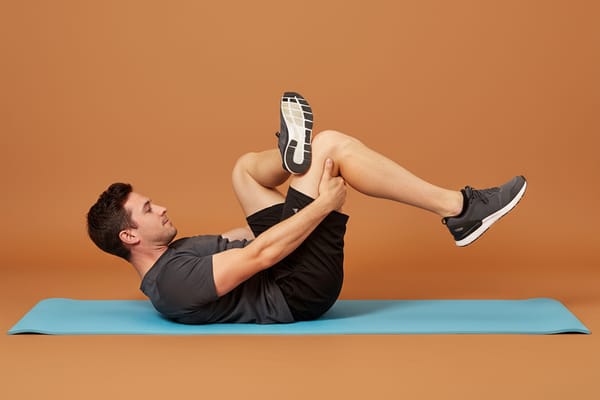
Reclined Figure Four
- Lie on back
- Cross right ankle over left knee
- Draw left knee toward chest
- Hold 45-60 seconds
- Repeat on other side
Supine Hamstring Stretch
- Lie on back
- Extend right leg toward ceiling
- Use strap, towel, or hands behind thigh
- Hold 45-60 seconds
- Repeat on other side
Happy Baby
- Lie on back
- Draw knees toward armpits
- Hold feet from outside
- Gently rock side to side
- Hold 60 seconds
Why these work: Lower body stretches release tension from sitting and walking while allowing the spine to rest in a neutral position.
Spinal Mobility (3 minutes)
Knees-to-Chest Rock
- Hug both knees to chest
- Gently rock side to side
- 30 seconds
Supine Twist
- Extend arms to sides
- Drop both knees to right
- Turn head left
- Hold 60 seconds
- Repeat on other side
Why these work: Spinal movement releases back tension accumulated during the day while the reclined positions prepare for lying down to sleep.
Upper Body Stretches (3 minutes)
Reclined Chest Opener
- Roll up a towel or blanket
- Lie with roll along spine from head to tailbone
- Let arms fall to sides, palms up
- Hold 60-90 seconds
Neck Release
- Lie flat (remove roll)
- Gently turn head to right
- Hold 30 seconds
- Repeat to left
- Tilt right ear toward right shoulder
- Hold 30 seconds
- Repeat on left
Why these work: Chest opening reverses the forward posture of daily activities, while neck releases address tension from phone and computer use.
Closing Relaxation (2 minutes)
Legs Up the Wall
- Sit sideways next to wall
- Swing legs up wall as you lie back
- Arms rest at sides or on belly
- Stay 2 minutes or longer
Alternative: If wall is not accessible, simply lie on back with knees bent or supported on pillows.
Why it works: This gentle inversion promotes venous return, reduces leg tension, and creates deep relaxation.
Our Bedtime Release Flow and Deep Relaxation Retreat routines provide guided versions of similar sequences.
Stretches to Avoid Before Bed
Not all stretching promotes sleep. Avoid these before bed:
Intense or Painful Stretches
Deep, challenging stretches that push your limits create stress responses, not relaxation. Save aggressive stretching for earlier in the day.
Dynamic or Bouncing Movements
Ballistic stretching and active movements are energizing, not calming. Keep pre-sleep stretches static and slow.
Poses Requiring Significant Effort
Holding positions that require muscular work (like planks or challenging balances) are activating. Choose supported, relaxed positions.
Stretches That Cause Frustration
If a particular stretch frustrates you because you are not as flexible as you want to be, skip it at night. Negative emotions counteract relaxation benefits.
Enhancing Your Evening Stretching Practice
These additions amplify the sleep-promoting effects.
Dim the Lights
Perform stretching in low light to support natural melatonin production. Avoid screens for 30 minutes before and after your stretching routine.
Control Temperature
A slightly cool room (65-68°F) is ideal for sleep. After stretching warms you slightly, the cool environment promotes the temperature drop that signals sleep onset.
Play Calming Music or Sounds
Slow-tempo music (60-80 beats per minute) or nature sounds complement the relaxation response. Research shows that music in this tempo range promotes parasympathetic activity.
Use Aromatherapy
Lavender essential oil has documented sleep-promoting effects. Research in Complementary Therapies in Medicine found that lavender aromatherapy improves sleep quality. Use a diffuser or apply diluted oil before stretching.
Practice Gratitude or Reflection
While holding stretches, mentally review positive moments from the day. This cognitive practice enhances the relaxation response and prepares the mind for rest.
Keep It Device-Free
Electronic devices emit blue light that disrupts melatonin production and keep the mind engaged. Stretch without phones, tablets, or screens.
Troubleshooting Common Issues
Mind Racing During Stretching
Solution: Focus on physical sensations. Notice the stretch, the floor beneath you, your breath. When thoughts arise, gently return attention to your body.
Falling Asleep During Stretching
Solution: This is not a problem if you are on your bed. If on the floor, keep the routine shorter or do it on your bed to avoid disruption when moving to bed.
Still Having Trouble Sleeping
Consider: Evening stretching is one component of sleep hygiene. Also ensure you:
- Maintain consistent sleep/wake times
- Avoid caffeine after 2 PM
- Limit alcohol before bed
- Keep the bedroom dark and cool
- Avoid screens for 1 hour before bed
- Exercise earlier in the day, not before bed
Stretching Feels Energizing, Not Calming
Solution: Reduce intensity significantly. Use supported, reclined positions only. Focus more on breathing and less on achieving stretches. Consider moving your routine earlier (90 minutes before bed).
Special Considerations
For Chronic Pain
If you have chronic pain, focus on gentle movements that reduce your specific symptoms. Avoid positions that aggravate pain. Work with a physical therapist for individualized recommendations.
For Anxiety or Insomnia
Consider extending the breathing portion of the routine. Research shows that extended exhales (longer out-breath than in-breath) particularly activate the parasympathetic system and reduce anxiety.
For Restless Leg Syndrome
Gentle leg stretching may help RLS symptoms, but avoid intense stretches that could worsen the restless feeling. Experiment to find what works for your body.
For Shift Workers
Evening stretching helps even when “evening” is not at night. Perform the routine before whatever sleep period you have, regardless of the time.
Building the Habit
Consistency is essential for stretching to become a reliable sleep intervention.
Start Small
Begin with just 5 minutes. A shorter routine you actually do is more valuable than a longer one you skip.
Same Time, Same Place
Perform stretching at the same time in the same location each night. This consistency strengthens the association between stretching and sleep.
Remove Friction
Keep your stretching mat or designated space always ready. Lay out comfortable clothes if you change before stretching.
Track Your Progress
Note your bedtime stretching and sleep quality in a simple journal. Seeing the correlation reinforces the habit.
Be Patient
Sleep improvements may take 1-2 weeks of consistent practice to manifest. Continue the routine even if immediate results are not obvious.
Key Takeaways
- Stretching promotes sleep physiologically: Parasympathetic activation, tension release, and temperature regulation all support sleep
- Research confirms benefits: Multiple studies show improved sleep quality with evening stretching
- Timing matters: 30-60 minutes before bed is optimal
- Gentle intensity is key: Relaxing stretches promote sleep; intense stretches may interfere
- Consistency builds the habit: Same time, same place, even if brief
- Combine with other sleep hygiene practices: Stretching is one part of a comprehensive approach
Related Articles
- Morning Stretching: Benefits and Best Practices
- The Complete Beginner’s Guide to Stretching
- Why Stretching Actually Works
