Eight hours of sitting. Shoulders hunched toward a screen. Head craned forward. Hips locked at 90 degrees. This is the daily reality for millions of desk workers, and the body keeps score.
Neck tension. Shoulder tightness. Lower back aches. Hip stiffness. These are not just discomforts; they are predictable consequences of a posture the human body was never designed to hold for extended periods.
Research confirms what your body already knows: prolonged sitting is associated with musculoskeletal pain and reduced range of motion. A 2020 study found that Americans sit an average of 9.5 hours per day, and this sedentary behavior contributes to “limited hip extension” and various musculoskeletal issues.
The good news: targeted stretching can counteract many of these effects. A 2022 systematic review in BMJ Open found that “workplace exercise interventions were effective in reducing musculoskeletal disorders and pain” in office workers. The key is consistency and addressing the specific areas that sitting compromises.
This guide provides a complete stretching strategy for desk workers: what to stretch, when to stretch, and how to build sustainable habits that protect your body from the demands of sedentary work.
What Sitting Does to Your Body
Understanding the problem helps you address it effectively. Here is what happens during prolonged sitting:
Hip Flexors Shorten
When you sit, your hip flexors (the muscles at the front of your hip) remain in a shortened position. Over hours, days, and years, this sustained shortening reduces their length and increases their resting tension.
Tight hip flexors pull the pelvis into anterior tilt, increasing the curve of the lower back and contributing to back pain.
Glutes Deactivate
Sitting puts no demand on your gluteal muscles. Over time, they can become weak and inhibited, a pattern sometimes called “gluteal amnesia.” When the glutes do not fire properly, other muscles (like the lower back and hamstrings) compensate.
Hamstrings Tighten
Sitting involves constant hip flexion with knees bent. The hamstrings remain in a relatively shortened position. Combined with reduced blood flow, this contributes to tightness.
Thoracic Spine Rounds
The natural tendency when sitting, especially when fatigued, is to round the upper back. Over time, this flexed thoracic spine becomes the default position, limiting extension and rotation.
Shoulders Roll Forward
Reaching toward a keyboard pulls the shoulders into internal rotation. Combined with chest muscle shortening, this creates the classic “desk posture” with rounded shoulders and forward head position. For a full corrective program, see our posture exercises guide.
Neck Strains Forward
Looking at a screen, especially one positioned too low, pushes the head forward of the spine. For every inch of forward head posture, the neck muscles must work significantly harder to support the head’s weight.
The Cumulative Effect
Individually, each of these changes is manageable. Combined over years of desk work, they create chronic pain patterns that affect quality of life, sleep, and even mood.
The Desk Worker Stretching Strategy
Effective stretching for desk workers is not about one long session at the end of the day. It is about strategic interventions throughout the day that counteract the effects of sitting as they accumulate.
Three-Part Daily Approach
- Morning Activation: Wake up the body and set a movement baseline before sitting begins
- Microbreaks: Brief stretches throughout the workday to reset posture and prevent accumulation
- Evening Recovery: Longer holds to address the day’s accumulated tension
This approach is more effective than a single daily session because it interrupts the sitting pattern rather than just trying to undo it afterward.
Morning Activation Routine (5-7 Minutes)
Start the day before desk work begins. These dynamic movements wake up the body and counteract overnight stiffness.
1. Neck Circles and Tilts (1 minute)
- Gently roll your head in circles, 5 times each direction
- Tilt ear toward shoulder, hold 10 seconds per side
- Gently turn head to look over each shoulder, hold 10 seconds per side
2. Shoulder Rolls and Arm Circles (1 minute)
- Roll shoulders backward in large circles, 10 times
- Roll shoulders forward, 10 times
- Extend arms and make large arm circles, 10 forward, 10 backward
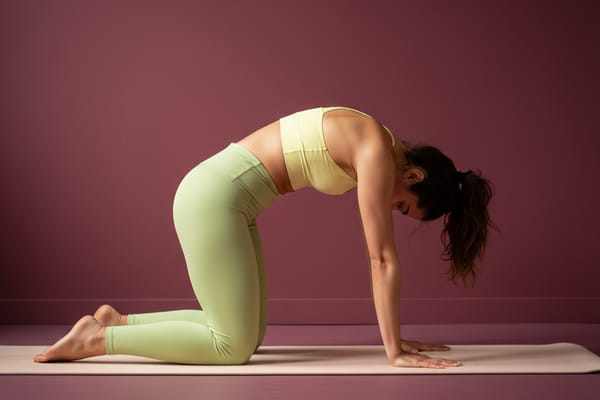
3. Cat-Cow (1 minute)
- On hands and knees (or standing with hands on desk)
- Alternate between arching and rounding the spine
- 10-15 slow repetitions, coordinating with breath
4. Standing Hip Circles (1 minute)
- Stand on one leg (hold something for balance)
- Make large circles with the other leg, 10 each direction
- Switch legs and repeat
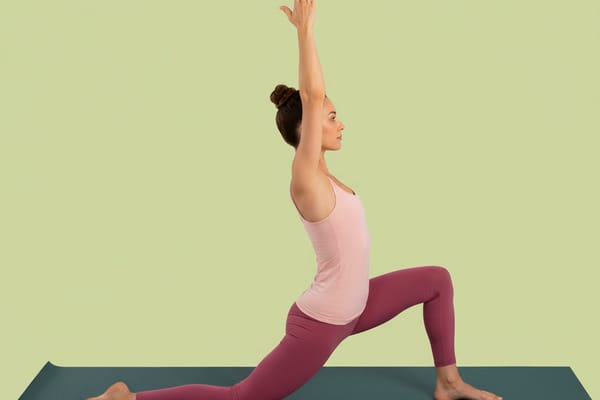
5. Hip Flexor Activation Stretch (2 minutes)
- Low lunge position, back knee on floor
- Tuck pelvis under and lean forward gently
- Hold 30-45 seconds per side
- Squeeze the glute of the back leg for added benefit
Find this in: Our Morning Shake Primer provides a structured version of this activation routine.
Workday Microbreaks (1-3 Minutes Each)
The research is clear: movement breaks throughout the day are essential. Aim for a brief break every 30-60 minutes of sitting.
Quick Neck Release (1 minute)
Do this: Every 30-60 minutes
- Gently tilt head side to side, holding 10 seconds each
- Slowly turn to look over each shoulder
- Tuck chin toward chest, then gently look up
- Repeat as needed
Desk Shoulder Stretch (1 minute)
Do this: After every 1-2 hours of computer work
- Clasp hands behind your back
- Straighten arms and lift them gently
- Open chest and squeeze shoulder blades together
- Hold for 20-30 seconds
- Then bring one arm across the chest, hold 15 seconds, switch
Standing Hip Flexor Stretch (2 minutes)
Do this: 2-3 times during the workday
- Stand and step one foot back into a staggered stance
- Tuck pelvis under and lean forward slightly
- You should feel a stretch in the front of the back leg’s hip
- Hold 30-45 seconds per side
Seated Twist (1 minute)
Do this: Every 1-2 hours
- Sit tall in your chair
- Cross one leg over the other
- Twist toward the crossed leg, using the chair arm or your knee for leverage
- Hold 15-20 seconds, then switch sides
Chest Doorway Stretch (1 minute)
Do this: 2-3 times during the workday, when near a doorway
- Place forearm against a door frame, elbow at 90 degrees
- Step through the doorway until you feel a stretch in the chest
- Hold 20-30 seconds per side
Wrist and Forearm Stretches (1 minute)
Do this: After extended typing sessions
- Extend one arm with palm facing down
- Use the other hand to gently pull fingers back toward you
- Hold 15 seconds, then rotate palm up and repeat
- Switch arms
For a complete wrist routine including carpal tunnel prevention exercises, see our Wrist and Forearm Stretches Guide.
Find this in: Our Desk Break Refresh routine is designed for exactly these microbreak moments.
Evening Recovery Routine (15-20 Minutes)
After the workday, longer stretches address accumulated tension. This is where flexibility development happens.
1. Neck and Upper Trap Release (2 minutes)
- Sit or stand tall
- Tilt ear toward shoulder, gently pressing with the same-side hand
- Hold 30-45 seconds per side
- For added intensity, extend the opposite arm toward the floor
2. Thread the Needle (2 minutes)
- Start on hands and knees
- Reach one arm under your body, threading it through and rotating your torso
- Let your shoulder and head rest on the floor
- Hold 45-60 seconds per side
- This releases the thoracic spine and shoulders
3. Child’s Pose with Side Stretch (2 minutes)
- Kneel, sit back on heels, fold forward with arms extended
- Hold center position for 30 seconds
- Walk hands to the right, stretching the left side, hold 30 seconds
- Walk hands to the left, stretching the right side, hold 30 seconds
4. Hip Flexor Stretch with Reach (3 minutes)
- Half-kneeling position, back knee on cushion
- Tuck pelvis under
- Raise the arm on the same side as the back knee
- Lean gently away from the raised arm for added hip flexor and lat stretch
- Hold 45-60 seconds per side
Find this in: Our Hip Flexibility Foundation includes this enhanced hip flexor stretch.
5. Pigeon Pose (3 minutes)
- From hands and knees, bring one knee forward and out
- Extend the back leg behind you
- Lower your torso toward the floor
- Hold 60-90 seconds per side
- This addresses the deep hip rotators and glutes
6. Supine Hamstring Stretch (2 minutes)
- Lie on your back
- Raise one leg, keeping it straight (or slightly bent)
- Use a strap or towel to hold the position
- Hold 45-60 seconds per side
7. Supine Twist (2 minutes)
- Lie on your back with arms extended to sides
- Bend both knees, then let them fall to one side
- Turn head in the opposite direction
- Hold 45-60 seconds per side
8. Chest Opener on Floor (2 minutes)
- Lie face down with one arm extended to the side at 90 degrees
- Roll onto that side, using your other hand for support
- Let the stretch open the front of the shoulder and chest
- Hold 45-60 seconds per side
Find this in: Our Posture Reset Stretches provides a structured evening routine for desk workers.
Making It Sustainable
The biggest challenge is not learning the stretches; it is maintaining consistency. Here are strategies that work:
Set Reminders
Use phone alarms or computer prompts to remind you to take microbreaks. Without reminders, hours can pass before you realize you have not moved.
Attach to Existing Habits
- Stretch your neck every time you get water or coffee
- Do hip flexor stretches during the bathroom break
- Practice evening stretches while watching television
Start Small
A 5-minute evening routine you do daily is better than a 30-minute routine you do occasionally. Build the habit first, then expand.
Use Your Environment
- Keep a yoga mat visible at home as a reminder
- Position your desk near a wall or doorway that works for stretches
- Have a timer app readily accessible
Track Your Practice
A simple calendar check-mark provides visual motivation. Seeing a streak of consistent days reinforces the habit.
Workplace Ergonomics: Prevention, Not Just Treatment
Stretching addresses the symptoms, but workplace setup can prevent some problems from developing:
Monitor Position: Top of the screen should be at or slightly below eye level. This prevents chronic neck flexion from looking down.
Keyboard and Mouse: Position so that elbows are at about 90 degrees with shoulders relaxed. This reduces strain on neck and shoulders.
Chair Height: Thighs should be parallel to the floor or slightly downward. This reduces hip flexor compression.
Standing Desk Option: Alternating between sitting and standing distributes the demands differently. Even brief standing periods help.
Movement Breaks: Beyond stretching, simply walking for 2-3 minutes every hour significantly reduces the negative effects of sitting.
Addressing Specific Problem Areas
For Severe Neck Tension
Add more frequent neck stretches, up to once every 30 minutes if needed. Consider our Tech Neck Reset routine which specifically addresses forward head posture and neck strain.
For Chronic Lower Back Pain
Prioritize hip flexor stretches and core strengthening. The lower back often suffers because tight hip flexors and weak glutes force it to overwork.
See our Lower Back Relief Flow for a targeted approach.
For Shoulder and Posture Issues
Focus on chest openers and thoracic rotation. The rounded shoulder posture is primarily driven by shortened chest muscles and stiff upper back.
For Hip Tightness
Extend evening hip flexor and pigeon holds. Consider adding 90/90 stretches and frog pose for comprehensive hip coverage.
Common Questions
How often should I take movement breaks?
Ideally every 30-60 minutes. Even a 1-minute break makes a difference. Research on office workers shows that frequent short breaks are more effective than infrequent long ones.
Can stretching undo the damage of sitting?
Stretching significantly mitigates the effects of prolonged sitting, but it cannot completely undo them. Combining stretching with movement breaks, good ergonomics, and regular exercise provides the most protection.
What if I cannot stretch at my desk?
Many stretches can be done discreetly: neck tilts, shoulder rolls, seated twists. Save more obvious stretches for private moments (restroom, empty conference room) or before and after work.
Should I stretch even if nothing hurts?
Yes. Stretching is most effective as prevention. Once pain develops, you are already dealing with tissue changes that take longer to resolve.
Is a standing desk enough?
Standing desks help by changing the position, but they are not a complete solution. You can develop different problems from prolonged standing (foot and lower back fatigue). The key is variety: sitting, standing, and moving throughout the day.
The Long-Term View
Desk work is not going away. For most people, some amount of seated computer work is a permanent feature of professional life. The question is not whether to sit, but how to minimize its negative effects.
Consistent stretching, combined with movement breaks and reasonable ergonomics, can preserve your mobility and comfort through a career of desk work. The investment is modest (15-20 minutes of focused stretching daily plus brief microbreaks), and the return (reduced pain, maintained mobility, better quality of life) is substantial.
Start today with one microbreak routine. Add the morning and evening components as the habit builds. Your future self will thank you.
Key Takeaways
- Sitting creates predictable tension patterns: Hip flexors, chest, and neck tighten; upper back rounds; glutes deactivate
- Strategic timing matters: Multiple short interventions throughout the day work better than one long session
- Microbreaks are essential: Brief stretches every 30-60 minutes interrupt the accumulation of tension
- Evening stretching develops flexibility: Longer holds after work address the day’s accumulated effects
- Consistency beats intensity: Small daily efforts produce better results than occasional intensive sessions
Related Articles
- Posture Exercises: Fix Rounded Shoulders and Forward Head
- Back Stretches: Exercises for Upper, Mid, and Lower Back
- Wrist and Forearm Stretches for Computer Users
- Tech Neck: Causes, Symptoms, and Stretches
- The Complete Hip Flexibility Guide
- Lower Back Pain and Stretching
- Chest Stretches: How to Open Up Tight Pecs
