You stretch your hip flexors regularly. You have tried every lunge variation, every psoas release technique, every foam rolling protocol. Yet the tightness persists, returning hours or days after each session.
This frustrating pattern is extraordinarily common. Hip flexor tightness has become almost universal among those who sit for work, and it stubbornly resists many conventional approaches.
The problem may be that we are thinking about hip flexor tightness incorrectly. Research suggests the issue is often more complex than simply “short muscles that need stretching.” Understanding the actual mechanisms behind the tightness points toward more effective solutions.
Why Hip Flexors Get Tight
The Sitting Problem
The iliopsoas (the primary hip flexor) originates from the lumbar spine and attaches to the femur. When you sit, this muscle remains in a shortened position. The hip is flexed, bringing origin and insertion closer together.
A 2020 study confirmed that “prolonged sitting and physical inactivity are associated with limited hip extension.”1 Americans sit an average of 9.5 hours per day, keeping hip flexors shortened for the majority of waking hours.
But here is where it gets interesting: the muscle may not actually be “short” in the structural sense. Research on stretching mechanisms suggests that most flexibility restrictions are neurological rather than physical.2 Your nervous system has learned that the shortened position is “normal” and resists departure from it.
Weak Glutes Compound the Issue
The gluteus maximus is the primary hip extensor, the antagonist to the hip flexors. When glutes are weak or inhibited (common in sedentary individuals), the hip flexors may increase their tone to provide stability the glutes are not providing.
This creates a cycle: sitting weakens glutes, weak glutes increase hip flexor tension, increased tension feels like tightness, which leads to more stretching without addressing the underlying weakness.
Anterior Pelvic Tilt
When the pelvis tilts forward (anterior pelvic tilt), the hip flexors are placed in a shortened position even when standing. This postural pattern often develops alongside sitting-related tightness and perpetuates it.
Someone with significant anterior pelvic tilt may feel chronically tight hip flexors because the muscles are always in a semi-shortened state.
Stress and Guarding
The psoas has been called the “muscle of the soul” (somewhat fancifully) due to its connection to stress responses. The muscle does seem to hold tension related to psychological stress, creating a tightness sensation that stretching alone may not resolve.
It Might Not Be What You Think
Sometimes what feels like hip flexor tightness is actually something else:
- Nerve irritation: The femoral nerve runs near the hip flexors and can create similar sensations
- Hip joint restriction: Joint capsule tightness limits the same movements
- Referred tension: Lower back issues can manifest as anterior hip tightness
- Quad dominance: Rectus femoris (which crosses both hip and knee) may be the actual tight structure. See our Quad Stretches Guide for targeted exercises
What Actually Works
Stretching (But With Proper Technique)
Hip flexor stretching does work, but technique matters enormously:
The Critical Element: Pelvic Position
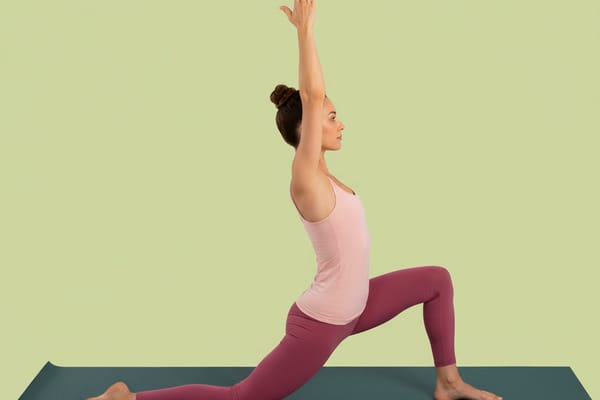
Many people arch their lower back during hip flexor stretches, which actually reduces the stretch on the target muscles. The pelvis must be tucked under (posterior pelvic tilt) for the stretch to effectively reach the iliopsoas.
How to stretch correctly:
- Half-kneeling position, back knee on cushion
- Tuck tailbone under by engaging abs and glutes
- Maintain this pelvic position while leaning forward slightly
- The stretch should be felt in the front of the back leg’s hip, NOT in the lower back
If you feel the stretch in your lower back, you are hyperextending instead of stretching the hip flexor.
Duration: Hold for 45-60 seconds per side. Research suggests longer holds (up to 120 seconds) for hip flexors may be beneficial without the performance impairments seen with other muscle groups.3
Strengthen the Glutes
Addressing hip flexor tightness without strengthening glutes is like mopping the floor while the faucet runs. The underlying cause remains.
Effective glute exercises:
- Glute bridges (bilateral and single-leg)
- Hip thrusts
- Clamshells
- Monster walks with band
- Romanian deadlifts
Focus on actually feeling the glutes work. Many people perform these exercises using hamstrings and lower back instead of glutes.
Address Pelvic Position
If anterior pelvic tilt is part of your pattern, stretching alone will not fix it. The tilt needs to be addressed through:
- Awareness training (learning to feel neutral pelvis)
- Core strengthening (particularly lower abdominals)
- Glute activation
- Conscious postural correction throughout the day
Move More, Sit Less
The most direct intervention for sitting-related hip flexor tightness is to sit less. Options include:
- Standing desk (even part-time)
- Movement breaks every 30-60 minutes
- Walking meetings
- Reducing total sitting time where possible
No amount of stretching can fully compensate for 9+ hours of daily sitting.
Contract-Relax Techniques
PNF stretching (contracting the hip flexor before stretching it) often produces greater results than static stretching alone. The contraction appears to trigger neurological mechanisms that allow greater subsequent relaxation.
How to apply:
- Get into hip flexor stretch position
- Press the back knee into the floor (isometric hip flexor contraction) for 5-6 seconds
- Relax and move deeper into the stretch
- Repeat 2-3 times
A Comprehensive Approach
For persistent hip flexor tightness, address all contributing factors:
Daily:
- Hip flexor stretches (2-3 minutes per side, with proper technique)
- Movement breaks from sitting (every 30-60 minutes)
- Postural awareness
3-4 times weekly:
- Glute strengthening exercises
- Core work (particularly anti-extension exercises like planks)
- Comprehensive hip mobility routine
Our Hip Flexibility Foundation and Hip Flexibility Builder routines provide structured approaches to hip flexor mobility.
Ongoing:
- Reduce total sitting time where possible
- Address stress (the psoas responds to relaxation practices)
- Be patient (chronic tightness takes time to resolve)
When to Seek Help
If hip flexor tightness:
- Is accompanied by pain (especially radiating pain)
- Does not improve after 4-6 weeks of consistent, proper stretching
- Is significantly worse on one side
- Is accompanied by weakness or numbness
Consider evaluation by a physical therapist who can assess whether the issue is truly muscular or involves other structures.
Key Takeaways
- Sitting is the primary cause: Prolonged sitting keeps hip flexors shortened, but the restriction is often neurological, not structural
- Technique matters enormously: Pelvic tuck is essential for effective hip flexor stretching
- Strengthening complements stretching: Weak glutes perpetuate hip flexor tightness
- Address the whole pattern: Postural habits, movement frequency, and stress all contribute
- Be patient: Chronic tightness developed over years takes months to resolve
Related Articles
- Quad Stretches: The Complete Guide
- The Complete Hip Flexibility Guide
- Lower Back Pain and Stretching
- Stretching for Desk Workers
- Groin Stretches: The Complete Guide
References
Roach SM, San Juan JG, Suprak DN, Lyda M. (2020). Prolonged sitting and physical inactivity are associated with limited hip extension. Musculoskeletal Science and Practice, 51, 102282. PubMed ↩︎
Hayes BT, Harter RA, Widrick JJ, et al. (2012). Lack of neuromuscular origins of adaptation after a long-term stretching program. Journal of Sport Rehabilitation, 21(2), 99-106. PubMed ↩︎
Konrad A, Alizadeh S, Daneshjoo A, et al. (2023). Chronic effects of stretching on range of motion with consideration of potential moderating variables: A systematic review with meta-analysis. Journal of Sport and Health Science, 13(2), 186-194. PubMed ↩︎
