Good upper body stretches include the cross-body shoulder stretch, overhead triceps stretch, cow face arms, wall biceps stretch, seated side bend, ear-to-shoulder neck stretch and reverse prayer. Hold each for 30 to 60 seconds per side, breathe slowly, and stretch most days of the week for steady gains in range of motion.
Your upper body has a lot of moving parts. The shoulder alone has more range than any other joint in the body, and it shares that work with the arms, the neck, the shoulder blades and the long muscles of the side body. When one of those areas gets stiff, the others take on extra load. A tight back of the shoulder can make an overhead reach feel blocked. Tight triceps and lats can pull your ribs forward when you lift your arms. A stiff neck makes every shoulder stretch feel worse.
This guide covers seven upper body stretches that work on the shoulders, arms, side body, neck and forearms. It does not repeat the chest and upper back. Those areas have their own detailed guides: see chest stretches for the pecs and upper back stretches for the thoracic spine. Use this page to fill in the gaps around them.
What Counts as the Upper Body
For stretching purposes, it helps to split the upper body into a few zones. Each zone gets tight for different reasons and needs a different position.
- Back of the shoulder: the posterior deltoid and the back of the shoulder capsule. It gets tight from throwing, pressing and long periods with your arms in front of you.
- Arms: the triceps on the back of the upper arm and the biceps on the front. The long head of each crosses the shoulder, so arm stretches also stretch the shoulder.
- Side body: the latissimus dorsi (lats) and the obliques. Tight lats limit how high you can lift your arms without arching your back.
- Neck: the upper trapezius and the muscles on the side of the neck. These often feel tight when the shoulders are tense.
- Forearms and wrists: the muscles that grip, type and hold a phone.
- Chest and upper back: covered in separate guides, linked above.
How to Stretch the Upper Body Safely
A few rules apply to every stretch below.
Warm up first. Ten slow arm circles in each direction and a few shoulder rolls raise tissue temperature and make the first stretch less uncomfortable.
Stretch to mild tension, not pain. On a scale of 1 to 10, aim for about 5 or 6. You should be able to breathe slowly through the nose. Sharp, pinching or electric sensations mean you should back off.
Keep the shoulder down. In almost every upper body stretch, the shoulder wants to rise toward the ear. That shifts the stretch into the neck. Think “long neck, heavy shoulders” before each hold.
Hold for 30 to 60 seconds. A review of long-term stretching studies found that static stretching improved range of motion, and that total weekly time and weekly frequency mattered more than the time spent in a single session. Stretching at least five days a week was associated with better results.1 Short daily sessions beat one long session on the weekend.
The Best Upper Body Stretches
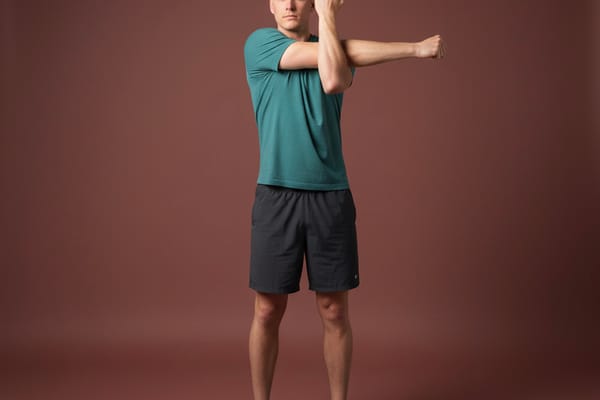
1. Cross-Body Shoulder Stretch
What it targets: Back of the shoulder, posterior deltoid, upper back
In a small randomized trial of people with limited shoulder internal rotation, a daily cross-body stretch (five repetitions of 30 seconds) improved internal rotation over four weeks compared with a control group.2
How to do it:
- Stand or sit tall
- Reach one arm straight across your chest at shoulder height
- Hook the other forearm just above the elbow, not on the elbow joint itself
- Draw the arm closer to your chest until you feel a stretch at the back of the shoulder
- Hold for 30 to 45 seconds, then switch sides
Key cues: Keep the stretching arm relaxed. Let the shoulder blade stay flat on your back rather than sliding forward around your ribs.
Common mistake: Twisting the torso toward the arm. This turns the whole body instead of stretching the shoulder. Keep your chest facing forward.
Easier: Lower the arm toward your stomach for a lighter stretch.
Harder: Lie on the side of the stretching arm and do the same movement. Your body weight holds the shoulder blade in place.
2. Overhead Triceps Stretch
What it targets: Triceps, lats, side body
The long head of the triceps attaches to the shoulder blade, so this stretch also works on overhead range.
How to do it:
- Raise one arm overhead
- Bend the elbow so the hand drops behind your head toward the opposite shoulder blade
- Place the other hand on the bent elbow
- Gently guide the elbow back and toward the midline
- Hold for 30 to 45 seconds per side
Key cues: Tighten your abdominal muscles lightly so the ribs do not flare forward. Keep your head upright rather than pushing it forward under the arm.
Common mistake: Arching the lower back to reach further. The stretch then moves out of the arm and into the spine.
Easier: Hold a towel or strap in the top hand and pull it down gently with the bottom hand.
Harder: Add a slow side bend away from the lifted arm to bring in the lats.
3. Cow Face Arms
What it targets: Triceps, front and back of the shoulders
Cow face arms stretch both shoulders at once, but in opposite directions. The top arm reaches up and back. The bottom arm reaches behind and up the spine. Most people find one side much harder than the other.

How to do it:
- Sit or stand tall
- Raise your right arm, bend the elbow, and let the hand drop between your shoulder blades
- Bend your left arm behind your back, palm facing out, and slide the hand up your spine
- Reach the hands toward each other and clasp the fingers if they meet
- Hold for 30 to 60 seconds, then switch arms
Key cues: Keep the top elbow pointing up, not forward. Draw the bottom shoulder back so the front of that shoulder opens.
Common mistake: Forcing the hands together while the back arches and the head drops forward. If the hands do not meet, that is normal. Use a strap.
Easier: Hold a strap or towel between the hands and walk the hands closer over several breaths.
Harder: Clasp the fingers and slowly fold forward a little while keeping the chest lifted.
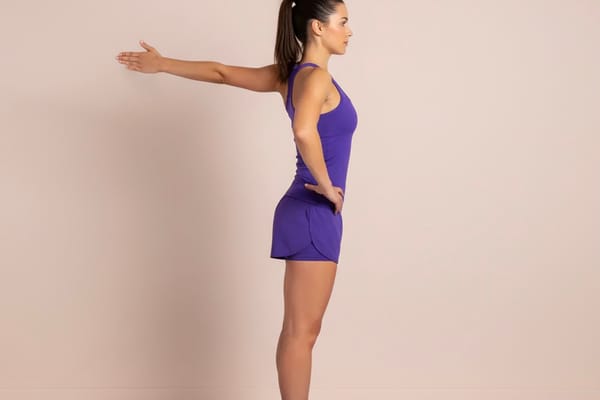
4. Wall Biceps and Front Shoulder Stretch
What it targets: Biceps, front of the shoulder, forearm
How to do it:
- Stand side-on to a wall, about a hand’s width away
- Place the palm of the arm closest to the wall on the wall at shoulder height, fingers pointing back
- Keep the arm straight
- Slowly turn your feet, hips and chest away from the wall
- Stop when you feel a stretch along the front of the arm and shoulder
- Hold for 45 to 60 seconds per side
Key cues: Turn the whole body together, from the feet up. Keep the shoulder down and back.
Common mistake: Letting the front of the shoulder roll forward as you turn. If you feel pressure deep in the front of the shoulder joint, place the hand lower.
Easier: Step slightly away from the wall and turn less.
Harder: Place the hand a little higher than shoulder height, or turn the fingers toward the floor to add the forearm.
5. Seated Side Bend
What it targets: Lats, obliques, side of the ribcage
The lats run from the lower back to the upper arm. When they are tight, you cannot lift your arms fully overhead without arching your back.
How to do it:
- Sit tall on the floor or a chair with both sitting bones down
- Raise your right arm overhead and rest your left hand on your hip or the floor
- Lean to the left, reaching the right arm up and over
- Keep your chest facing forward, as if you were between two panes of glass
- Hold for 30 to 45 seconds per side
Key cues: Press the right sitting bone down to lengthen the right side. Breathe into the right ribs.
Common mistake: Leaning forward or rotating the chest down. Stay in one flat plane.
Easier: Place the top hand on the side of your head instead of reaching overhead.
Harder: Hold the wrist of the top arm with the other hand and gently pull it further over.
6. Ear-to-Shoulder Neck Stretch
What it targets: Upper trapezius, side of the neck
How to do it:
- Sit tall and let both shoulders relax down
- Slowly tilt your right ear toward your right shoulder
- Stop as soon as you feel a stretch on the left side of the neck
- Hold for 30 seconds, return to center slowly, and switch sides
Key cues: Move the ear toward the shoulder, not the shoulder toward the ear. Keep your nose pointing forward.
Common mistake: Pulling hard on the head with the hand. The neck responds poorly to force.
Easier: Skip the hand entirely and let the weight of the head do the work.
Harder: Reach the left hand down toward the floor, or hold the seat of your chair, to anchor the shoulder.
For a full set of neck positions, see the neck pain stretching guide.
7. Reverse Prayer
What it targets: Forearms, wrists, front of the shoulders
Reverse prayer combines a wrist stretch with internal rotation of the shoulders. It is an advanced position, so start with the easier version.
How to do it:
- Stand or sit tall
- Bring your hands behind your back and touch the fingertips together, pointing down
- Turn the fingertips in and then up so they point toward your head
- Press the palms together as far as is comfortable
- Hold for 20 to 30 seconds
Key cues: Draw the elbows slightly back. Keep the chest lifted and the neck relaxed.
Common mistake: Forcing the palms together while the shoulders round forward. Pressure in the wrists should be mild.
Easier: Hold opposite elbows behind your back, or press only the fingertips together.
Harder: Slide the hands higher up the spine while keeping the palms flat.
Wrists and forearms have more options than this one stretch. The wrist and forearm guide covers them in detail.
A Six-Minute Upper Body Routine
This sequence covers every zone above. Do it after work, after training, or as a break during a long day.
- Arm circles: 30 seconds in each direction
- Cross-body shoulder stretch: 30 seconds per side
- Overhead triceps stretch: 30 seconds per side
- Wall biceps stretch: 45 seconds per side
- Seated side bend: 30 seconds per side
- Ear-to-shoulder neck stretch: 30 seconds per side
- Cow face arms: 30 seconds per side
If you prefer a guided version with a timer, the Upper Body Flexibility Starter takes five minutes and focuses on the shoulders and neck. When that feels easy, the Upper Body Flexibility Builder adds dynamic swings and wall work, and the Upper Body Flexibility Immersion adds bound positions such as eagle arms and cow face.
How Long Until You Notice a Difference
Most people feel looser right after a session, but lasting change comes from repeating the stretches over several weeks. In the shoulder trial mentioned above, participants stretched once a day for four weeks and gained measurable range of motion.2 Track one simple marker, such as how close your hands get in cow face arms, and check it every two weeks.
Pair Stretching With Strength
Stretching is not the only way to improve range of motion. A meta-analysis of randomized trials found no clear difference between strength training and stretching for range of motion gains, although the studies varied a lot in design.3 For the upper body, that means full-range strength work also helps. Slow push-ups, rows, overhead presses with light weight, and band pull-aparts all move the shoulders through a large range under control.
If you want a deeper look at shoulder mechanics and assessment tests, read the shoulder mobility guide.
Who Should Be Careful
Upper body stretches are low risk for most people, but some situations need extra care.
- Recent shoulder dislocation or instability: Avoid end-range positions such as cow face arms and reverse prayer until a clinician clears you.
- Rotator cuff injury or recent shoulder surgery: Follow your rehabilitation plan. Some positions in this guide may be too much in the early stages.
- Neck pain that spreads into the arm: Pain, numbness or tingling down the arm can come from a nerve in the neck. Stretching the neck harder will not fix it.
- Pinching at the top or front of the shoulder: This can be a sign of impingement. Reduce the range and avoid positions that bring the pinch back.
- Hypermobility: If your joints already move far beyond the normal range, focus on strength and control rather than more stretching.
See a physiotherapist or doctor if pain lasts longer than two weeks, gets worse with stretching, wakes you at night, or comes with weakness, numbness or swelling. Seek urgent care for chest pain, or for arm pain combined with shortness of breath.
Frequently Asked Questions
How often should I do upper body stretches?
Most people do well with five or more sessions per week. Each session can be short, about five to ten minutes. Research on long-term stretching suggests that frequency and total weekly time matter more than the length of a single session, so daily short sessions are a good default.
Should I stretch my upper body before lifting weights?
Before lifting, use dynamic moves such as arm circles, arm swings and light warm-up sets. Long static holds right before heavy lifting can slightly reduce strength for a short time. Save the longer holds in this guide for after training or for a separate session later in the day.
Why is one shoulder tighter than the other?
Most people use one arm more for carrying, throwing, reaching for a mouse or sleeping on one side. Over time, that arm adapts differently. Spend an extra set on the tighter side, but keep stretching both. If the difference is large or painful, have a professional assess the shoulder.
Can upper body stretches help with neck and shoulder tension from desk work?
Yes, they often help. Shoulder, neck and side body stretches reduce the feeling of tension for many desk workers. For best results, combine them with regular breaks from sitting, a well set up workstation, and some strength work for the upper back and shoulders.
Related Articles
References
Thomas E, Bianco A, Paoli A, Palma A. (2018). The Relation Between Stretching Typology and Stretching Duration: The Effects on Range of Motion. International Journal of Sports Medicine, 39(4), 243-254. PubMed ↩︎
McClure P, Balaicuis J, Heiland D, Broersma ME, Thorndike CK, Wood A. (2007). A randomized controlled comparison of stretching procedures for posterior shoulder tightness. Journal of Orthopaedic & Sports Physical Therapy, 37(3), 108-114. PubMed ↩︎ ↩︎
Afonso J, Ramirez-Campillo R, Moscão J, et al. (2021). Strength Training versus Stretching for Improving Range of Motion: A Systematic Review and Meta-Analysis. Healthcare, 9(4), 427. PubMed ↩︎
