

About This Core Mobility Routine
Your core is more than just abs. It includes the muscles surrounding your entire trunk, connecting your hips to your ribcage. Research demonstrates that core stability exercises can effectively decrease pain and improve function, particularly for those with low back issues.1 This gentle core mobility routine focuses on freeing up movement through your lower back and hips, creating the foundation for a healthy, functional core.
What This Routine Targets
Tight lower backs and stiff hips limit how well your core can function. This routine addresses both through a combination of spinal movements like cat-cow, hip openers like lying figure four, and twists that encourage rotation through your trunk. The result is a core that moves freely.
What’s Included
This six-minute routine includes eight exercises that flow from standing through floor-based positions. You’ll start with reaches and folds that warm up your spine, move through gentle backbends and core-friendly positions, and finish with twists that encourage spinal rotation.
Who Should Try This
This routine is perfect for anyone new to core work or dealing with lower back stiffness. It’s also ideal as a morning routine or pre-workout preparation. If you want to maintain core health without intense exercises, this is a good option.
Tips for Best Results
Move slowly and coordinate your breathing with your movements. Exhale as you fold or twist, inhale as you extend. This breathing pattern enhances the mobility work and helps your nervous system relax into each position.
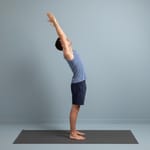
Upward Salute
Duration: 0:30
Sweep your arms skyward in upward salute to lengthen your spine and awaken your upper body.
Difficulty: Beginner
Instructions
- Stand with feet hip-width apart and arms at your sides.
- Sweep your arms out and up overhead, keeping hands shoulder-width apart.
- Reach toward the ceiling while relaxing your shoulders and gazing slightly upward.
Tips
- Ground evenly through both feet.
- Engage your core to avoid arching your lower back.
Adjustments
- Place your hands behind your head or on your hips if raising them overhead feels intense.
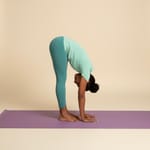
Toe Touch
Duration: 0:30
Fold forward from standing to stretch your hamstrings and lower back with a calming release.
Difficulty: Beginner
Instructions
- Stand with feet hip-width apart and arms relaxed by your sides.
- Hinge at your hips to fold forward, lowering your torso toward your legs.
- Relax your head, neck, and arms, aiming to place your palms on the floor.
Tips
- Lengthen through your spine as you fold.
- Keep legs straight but avoid locking your knees.
Adjustments
- Rest your hands on shins or thighs if the floor feels out of reach.
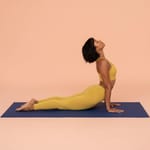
Upward Dog
Duration: 0:30
Press into upward dog to open your chest and stretch the front of your body with strength.
Difficulty: Beginner
Instructions
- Lie on your stomach with legs extended and hands under your shoulders.
- Press into your palms, straighten your arms, and lift your chest and thighs off the floor.
- Relax your shoulders away from your ears and gaze slightly upward.
Tips
- Only your palms and the tops of your feet should touch the floor.
- Keep arms straight without locking your elbows.
Adjustments
- Keep thighs on the floor for a gentler version if needed.
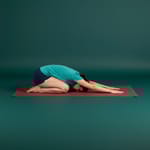
Child's Pose
Duration: 0:30
Melt into child's pose to reset your breath and relax the back with a calming stretch.
Difficulty: Beginner
Instructions
- Start on hands and knees, then widen your knees while keeping big toes touching.
- Sit your hips back toward your heels and reach your hands forward.
- Lower your chest between your thighs and rest your forehead on the floor or a support.
Tips
- Crawl your fingertips forward to deepen the stretch through the sides of your body.
- Let your chest sink toward the ground with each exhale.
Adjustments
- Keep knees closer together if that feels better for your hips.
- Rest your forehead on a block, pillow, or folded blanket if it does not reach the floor.

Cat Cow
Duration: 0:30
Flow through cat and cow to mobilize your spine and melt away stiffness one breath at a time.
Difficulty: Beginner
Instructions
- Begin on hands and knees with wrists under shoulders and knees under hips.
- Inhale as you drop your belly, lift your chest, and gaze forward or slightly up.
- Exhale as you round your spine, draw the belly toward the ceiling, and tuck your chin.
- Continue gliding between the two shapes in rhythm with your breath.
Tips
- Move slowly enough that each vertebra gets a moment of attention.
Adjustments
- Keep your head more neutral if your neck prefers less movement.
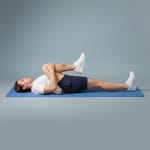
Single Knee-to-Chest
Duration: 1:00
Hug one knee at a time toward your chest to ease tension in your lower back and hips.
Difficulty: Beginner
Instructions
- Lie on your back with legs extended and arms by your sides.
- Bend one knee and draw it toward your chest, clasping your shin with both hands.
- Gently pull the knee closer while keeping the opposite leg long and relaxed.
Tips
- Relax your head and neck on the floor.
- Keep hips square and lower back grounded.
Adjustments
- Hold behind your thigh or use a towel around your knee if reaching your shin is difficult.

Lying Figure Four
Duration: 1:00
Ease into a lying figure four to release tight glutes and soothe your lower back.
Difficulty: Beginner
Instructions
- Lie on your back with knees bent and feet flat on the floor.
- Cross one ankle over the opposite thigh just above the knee.
- Lift the bottom leg and clasp hands behind the thigh, gently pulling the legs toward your chest.
Tips
- Relax your head and shoulders on the floor.
- Keep your lower back pressing gently into the mat.
Adjustments
- Loop a strap behind your thigh if reach is an issue.
- Leave the bottom foot on the floor for a lighter stretch.
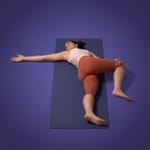
Spinal Twist
Duration: 1:00
Twist gently on your back to stretch your spine, chest, and glutes all at once.
Difficulty: Beginner
Instructions
- Lie on your back with legs extended and arms by your sides.
- Bend one knee and place the foot on the floor.
- Lower the bent knee across your body toward the opposite side while your torso and hips twist.
- Place your opposite hand on the outside of the bent knee and extend the other arm out to the side.
Tips
- Keep both shoulders grounded on the floor.
Adjustments
- Support the bent knee with a cushion or block if needed.
Supporting Core Health
Stand up slowly, notice the extra freedom through your trunk, and keep your breathing steady as you move on. Mobility work supports everything your core does.
Use this routine daily or as needed when your lower back feels restricted. A mobile core is a functional core, and the few minutes you spend here pay off in how your body moves throughout the day.


