

About This Intermediate Hamstring Routine
Once basic forward folds become comfortable, your hamstrings need new challenges to continue improving. This intermediate hamstring routine progresses beyond simple stretches into deeper positions, sustained holds, and variety that addresses your hamstrings from multiple angles.
What This Routine Targets
Your hamstrings respond to different stretch positions in different ways. Standing forward folds emphasize the upper attachment, seated stretches target the lower portion, and side-to-side movements address the inner and outer sections. This routine includes all of these approaches for complete hamstring development.
What’s Included
This eleven-minute routine includes thirteen exercises. You’ll progress from standing stretches through hip-opening positions, then move to the floor for deeper work. The routine finishes with inversions like plow pose that use gravity to enhance your stretch.
Who Should Try This
This routine suits anyone who has built a foundation of hamstring flexibility and wants to continue progressing. It’s also appropriate for runners, cyclists, and athletes in sports that demand hamstring flexibility.
Tips for Best Results
Warm up before this routine with a few minutes of movement. Cold hamstrings don’t stretch as effectively and are more prone to strain. Keep a slight bend in your knees during forward folds if straight legs create strain behind your knees rather than in your hamstrings.
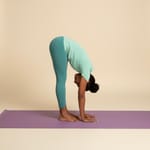
Toe Touch
Duration: 0:30
Fold forward from standing to stretch your hamstrings and lower back with a calming release.
Difficulty: Beginner
Instructions
- Stand with feet hip-width apart and arms relaxed by your sides.
- Hinge at your hips to fold forward, lowering your torso toward your legs.
- Relax your head, neck, and arms, aiming to place your palms on the floor.
Tips
- Lengthen through your spine as you fold.
- Keep legs straight but avoid locking your knees.
Adjustments
- Rest your hands on shins or thighs if the floor feels out of reach.
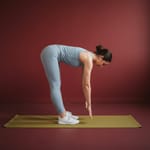
Cross Leg Fold
Duration: 1:00
Fold over crossed legs to release your hamstrings and low back with a sweet twist of the hips.
Difficulty: Beginner
Instructions
- Stand tall and cross one foot over the other.
- Hinge forward from your hips and allow your torso to drape over your legs.
- Let your arms hang toward the floor or rest hands on the front leg as you breathe.
Tips
- Keep weight balanced between both feet despite the cross.
- Think about lengthening your spine rather than rounding it.
- Relax your neck so your head hangs heavy.
Adjustments
- Place hands on shins, ankles, or yoga blocks if the floor feels far away.
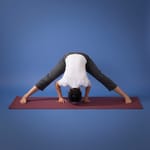
Wide Leg Bend
Duration: 0:30
Fold forward with legs wide to stretch your hamstrings, hips, and lower back.
Difficulty: Beginner
Instructions
- Stand with feet wide and toes pointing forward.
- Hinge at your hips to fold forward, lowering your torso toward your legs.
- Relax your head, neck, and arms, aiming to place your palms on the floor.
Tips
- Lengthen through your spine as you fold.
- Keep legs straight but avoid locking your knees.
- Hold ankles and draw your head closer if you want more stretch.
Adjustments
- Rest hands on shins or blocks if the floor feels far away.
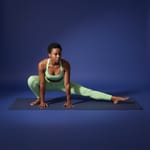
Side Lunge
Duration: 1:00
Sink into a side lunge to stretch your groin and hamstrings while building strength.
Difficulty: Beginner
Instructions
- Stand with feet wide apart.
- Shift your weight to one side, bending that knee and keeping the opposite leg straight.
- Place hands on the floor for balance and lower your hips until you feel a stretch in the inner thigh, rotating the straight-leg foot so the heel grounds and toes point up.
Tips
- Lift your chest and keep your back long.
Adjustments
- Stay higher if the stretch feels intense.
- Hold a chair or wall for extra balance support.
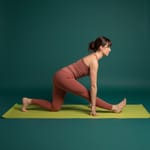
Reverse Lunge
Duration: 1:00
From a kneeling stance, extend one leg forward to stretch the backside while keeping your balance dialed in.
Difficulty: Beginner
Instructions
- Begin kneeling with knees hip-width apart and tops of your feet on the floor.
- Extend one leg forward, pressing the heel into the ground and keeping the leg straight.
- Hinge at your hips to lower the torso toward the floor, placing hands down for balance.
- Hold the stretch briefly, then switch legs.
Tips
- Keep your chest lifted and back long even as you hinge forward.
Adjustments
- Place a folded blanket under your kneeling knee for comfort.
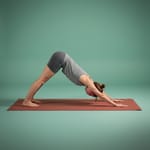
Downward Dog
Duration: 0:30
Press back into downward dog to lengthen your spine, open the shoulders, and stretch the entire backside.
Difficulty: Beginner
Instructions
- Start in tabletop, tuck your toes, and press through your hands to lift hips up and back.
- Straighten your legs as much as feels good while keeping a soft bend in the knees.
- Reach your chest toward your thighs and lengthen through your spine as your heels reach toward the floor.
Tips
- Let your head hang between your arms so your neck relaxes.
- Spread weight evenly between hands and feet.
- Keep knees slightly bent if hamstrings feel tight.
Adjustments
- Bend the knees more deeply or elevate hands on a chair for a lighter option.
- Come onto your forearms or place a block under your hands if wrists need relief.
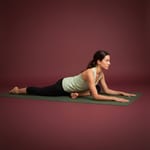
Pigeon
Duration: 1:00
Settle into pigeon pose to melt tension in your hips, glutes, and lower back.
Difficulty: Intermediate
Instructions
- From tabletop, bring one knee forward behind the same-side wrist and angle the shin toward the opposite hip.
- Slide the back leg straight behind you as you square your hips toward the floor.
- Lower your torso over the front leg and rest on your forearms or hands while breathing deeply.
Tips
- Keep hips level rather than collapsing to one side.
Adjustments
- Place a folded blanket or block under the bent-leg hip for support.
- Stay upright with hands on the floor if folding forward feels too intense.
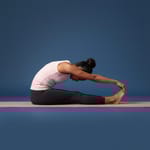
Seated Fold
Duration: 0:30
Reach forward from a tall seat to stretch your hamstrings and back with a calming fold.
Difficulty: Beginner
Instructions
- Sit with legs extended and reach your arms overhead to lengthen your spine.
- Hinge at the hips and fold forward, reaching for your toes, shins, or ankles.
- Hold the stretch while breathing slowly, keeping your spine long.
Tips
- Focus on hinging from the hips instead of rounding your back.
Adjustments
- Use a strap around your feet or keep hands on your shins if your toes feel far away.
- Keep a slight bend in the knees if your hamstrings are tight.
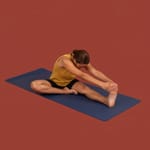
Hurdler
Duration: 1:00
Set up like a hurdler and fold forward to stretch your hamstrings, calves, and hips with precision.
Difficulty: Beginner
Instructions
- Sit tall with legs extended, then bend one leg and place the sole against the inner thigh of the other leg.
- Reach through the spine and hinge forward from the hips toward the extended foot.
- Hold the foot, ankle, or shin while breathing into the stretch, then switch sides.
Tips
- Lead with your chest rather than rounding your back.
- Keep the extended leg engaged and the foot flexed without locking the knee.
Adjustments
- Use a strap or towel around your foot if your hands do not reach comfortably.
- Soften the knee of the extended leg if you need less intensity.
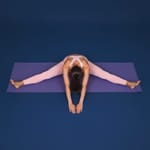
Seated Straddle
Duration: 0:30
Slide into a wide-legged seat and fold forward to stretch your inner thighs and hamstrings with intention.
Difficulty: Intermediate
Instructions
- Sit with legs extended, then open them wide into a straddle.
- Place your hands on the floor in front of you and lengthen your spine.
- Hinge at the hips to reach forward, lowering your torso toward the floor while breathing steadily.
Tips
- Keep your back long and avoid rounding as you fold.
- Flex your feet and point toes upward to keep legs active.
Adjustments
- Rest hands on blocks or a chair if reaching forward feels challenging.
- Sit on a folded blanket to elevate your hips and create more comfort.
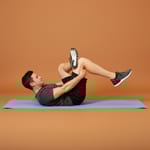
Lying Figure Four
Duration: 1:00
Ease into a lying figure four to release tight glutes and soothe your lower back.
Difficulty: Beginner
Instructions
- Lie on your back with knees bent and feet flat on the floor.
- Cross one ankle over the opposite thigh just above the knee.
- Lift the bottom leg and clasp hands behind the thigh, gently pulling the legs toward your chest.
Tips
- Relax your head and shoulders on the floor.
- Keep your lower back pressing gently into the mat.
Adjustments
- Loop a strap behind your thigh if reach is an issue.
- Leave the bottom foot on the floor for a lighter stretch.
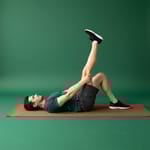
Lying Hamstring
Duration: 1:00
Stretch your hamstring from the floor to keep your posterior chain supple without straining your back.
Difficulty: Beginner
Instructions
- Lie on your back with knees bent and feet planted.
- Extend one leg toward the ceiling while the other foot stays on the floor.
- Place hands behind the thigh or calf of the raised leg and gently draw it toward your chest.
Tips
- Keep your hips and lower back pressing into the floor.
- Maintain a soft bend in the lifted knee to avoid hyperextension.
Adjustments
- Loop a strap or towel around your foot if you cannot reach comfortably.
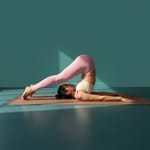
Plow
Duration: 0:30
Roll into plow pose to stretch your spine and hamstrings while giving your nervous system a calming reset.
Difficulty: Advanced
Instructions
- Lie on your back with legs extended and arms by your sides.
- Engage your core to lift your legs overhead, supporting your lower back with your hands.
- Lower your feet toward the floor behind your head and, if they touch, extend your arms along the mat with palms down.
Tips
- Keep legs straight and toes reaching toward the floor.
- Relax your neck and avoid turning your head while in the pose.
Adjustments
- Hold your hips with your hands if your feet do not reach the floor.
- Bend your knees slightly if straight legs feel too intense.
Continuing Your Hamstring Progress
Journal a quick note on any asymmetries you felt so you can keep working them evenly. Tracking differences between sides helps you focus your efforts effectively.
Practice this routine two to three times per week to continue building hamstring flexibility. Progressive overload works for flexibility just like strength training, so gradually increasing your range of motion leads to lasting improvements.


