

About This Core Stability Routine
A strong core is the best protection your back can have. But “core” doesn’t mean crunches — it means the deep stabilizing muscles that hold your spine in place while you move. This routine trains those muscles through controlled, anti-movement exercises that teach your body to keep your spine stable under load.
Dead bugs and bird-dogs challenge your core to resist rotation and extension. Pelvic tilts build awareness of your lumbar position. Bridges activate your glutes, which are a critical part of the core system that most people neglect. The elbow plank ties it all together, and cat-cow at the end releases any residual tension.
None of these exercises put your back in a compromised position. Every movement here is designed to strengthen without creating the spinal compression that traditional core exercises can cause.
What This Routine Targets
- Deep core stabilizers (transverse abdominis, multifidus)
- Glute activation for pelvic support
- Anti-rotation and anti-extension strength
- Pelvic awareness and lumbar control
What’s Included
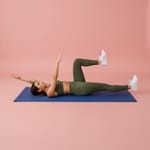
Dead Bug
Duration: 0:45
Stabilize your core with controlled dead bug holds that challenge coordination and focus.
Difficulty: Beginner
Instructions
- Lie on your back with arms reaching toward the ceiling and legs extended.
- Brace your core, lift one knee above the hip, and raise the opposite arm toward the ceiling.
- Hover the other arm and leg just off the floor and hold the position with steady breathing.
- Switch sides halfway through the set with the same control.
Tips
- Press your lower back into the mat to keep your spine safe.
- Keep hips square and avoid letting one side drop toward the floor.
Adjustments
- Work through a smaller range of motion if needed, lifting limbs only partway.

Bird Dog
Duration: 1:00
Pair opposite arm and leg reaches to build a rock-solid core and graceful balance.
Difficulty: Beginner
Instructions
- Set up on all fours with shoulders stacked over wrists and hips over knees.
- Brace your core, then extend one arm forward while the opposite leg reaches straight back.
- Hold the long line parallel to the floor and breathe steadily before returning to tabletop.
- Alternate sides with the same calm control.
Tips
- Keep your hips level by pressing the supporting hand and knee firmly into the floor.
- Think about length from fingertips through the heel rather than height.
Adjustments
- Practice lifting just the arm or just the leg until the full variation feels steady.

Pelvic Tilt Press
Duration: 0:30
Use a gentle pelvic tilt to teach your lower back how to relax and your core how to engage.
Difficulty: Beginner
Instructions
- Lie on your back with knees bent and feet flat on the floor.
- Engage your core to tilt your pelvis upward and press your lower back into the mat.
- Keep arms relaxed by your sides and hold the position for a breath before releasing.
Tips
- Draw your navel toward your spine to initiate the movement.
- Let your glutes stay soft so the action comes from your core.
Adjustments
- Perform the same motion standing with your back against a wall if the floor feels uncomfortable.

Bridge
Duration: 0:45
Lift into a grounded bridge to awaken glutes and hamstrings while giving your spine a friendly stretch.
Difficulty: Beginner
Instructions
- Lie on your back with knees bent, feet hip-width, and arms relaxed by your sides.
- Press through both heels to raise your hips, creating a straight line from knees to shoulders.
- Hold the lift with glutes fired up and breathe into your ribs before lowering with control.
Tips
- Squeeze the glutes at the top so the work stays in the backside instead of the low back.
- Keep ribs down and core engaged to prevent excessive arching.
Adjustments
- Lift the hips to a halfway point if you want a lighter option.
- Rest your head on a folded towel when the neck needs extra support.
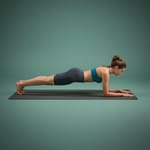
Elbow Plank
Duration: 0:30
Hold a solid forearm plank to build core strength and full-body tension from shoulders to toes.
Difficulty: Beginner
Instructions
- Start on all fours, then lower forearms to the floor and step both feet back.
- Engage your core to create a straight line from head to heels.
- Distribute weight evenly between forearms and feet and hold with steady breathing.
Tips
- Stack elbows under shoulders for stability.
- Avoid letting your hips sag or lift too high.
Adjustments
- Drop to your knees while keeping a straight line from knees to head if you want a lighter option.

Cat Cow
Duration: 0:30
Flow through cat and cow to mobilize your spine and melt away stiffness one breath at a time.
Difficulty: Beginner
Instructions
- Begin on hands and knees with wrists under shoulders and knees under hips.
- Inhale as you drop your belly, lift your chest, and gaze forward or slightly up.
- Exhale as you round your spine, draw the belly toward the ceiling, and tuck your chin.
- Continue gliding between the two shapes in rhythm with your breath.
Tips
- Move slowly enough that each vertebra gets a moment of attention.
Adjustments
- Keep your head more neutral if your neck prefers less movement.
Who Should Try This
Anyone with recurring back pain who’s been told to “strengthen your core.” This routine gives you the right exercises in the right order, with none of the risky movements that can make back pain worse. It’s also great for people returning to exercise after a back injury.
Tips for Best Results
- During dead bugs, press your lower back into the floor throughout
- In bird-dog, move slowly and keep your hips level — no rocking side to side
- Squeeze your glutes at the top of each bridge rep
- Hold the plank only as long as you can maintain a flat back
The Foundation That Lasts
Core strength isn’t something you build once and forget about. These exercises work best when done regularly — three to four times per week is enough to build meaningful stability. As your core gets stronger, you’ll notice your back feels more supported during everything from walking to lifting.


