

About This Hip Flexor Routine
Your hip flexors are on the front line of the sitting problem. Every hour in a chair keeps them shortened, and over months and years they adapt to that shortened position. The result is a constant pull on your pelvis that tips it forward, loads your lower back, and makes it harder to stand up straight. This routine goes after those muscles specifically.
The lunge and kneeling psoas stretch target the iliopsoas — the deep hip flexor that connects your spine to your femur. Lizard pose takes it further by adding a lateral component. Downward dog and cat-cow create space through the entire front body, and child’s pose lets everything settle at the end. It’s a focused sequence that addresses the number one mobility issue for anyone with a desk job.
What This Routine Targets
- Iliopsoas through deep kneeling stretches
- Rectus femoris (the quad that crosses the hip joint) via lunge positions
- Anterior hip capsule through lizard pose
- Spinal decompression with downward dog and cat-cow
What’s Included
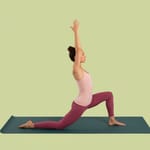
Lunge
Duration: 1:00
Sink into a kneeling lunge to stretch your hip flexors and lengthen the front of your body.
Difficulty: Beginner
Instructions
- Start kneeling and step one foot forward, planting it flat in front of you.
- Press your hips forward as you raise both arms overhead.
- Lift through your chest and reach toward the ceiling while breathing deeply.
Tips
- Keep the front knee stacked over the ankle for stability.
- Press the top of your back foot into the floor to engage the rear leg.
- Stay tall through your torso to avoid dumping into the lower back.
Adjustments
- Rest your hands on your front thigh if reaching overhead feels intense.
- Place a towel or cushion under your back knee for comfort.
- Hold onto a wall or chair for balance when needed.
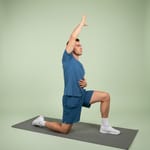
Kneeling Psoas
Duration: 1:00
Lengthen your hip flexors and side body with a kneeling psoas stretch that feels incredible after long sitting sessions.
Difficulty: Beginner
Instructions
- Kneel with knees hip-width apart, then step one foot forward so both knees are bent at ninety degrees.
- Raise the arm opposite your front leg overhead while the other hand rests on your hip.
- Press your hips forward and reach up and slightly over with the lifted arm to open through the front of the hip and side body.
- Hold for a few breaths, then switch sides.
Tips
- Stack your front knee over the ankle for stability.
- Keep the core engaged so the stretch stays supportive, not saggy.
Adjustments
- Cushion your back knee with a folded mat or pillow if it feels sensitive.
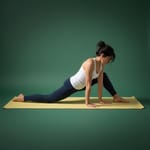
Lizard Pose
Duration: 1:00
Slide into lizard pose to deeply stretch your hips, groin, and hamstrings.
Difficulty: Intermediate
Instructions
- Start in tabletop, then step one foot outside the same-side hand.
- Lower your hips toward the floor and extend the back leg straight behind you, knee and top of the foot resting on the mat.
- Keep your chest lifted as you breathe into the stretch.
Tips
- Let your hips relax and sink toward the floor.
- Lift the back knee and come onto forearms for more intensity when you are ready.
Adjustments
- Use yoga blocks under your hands if the floor feels far away.
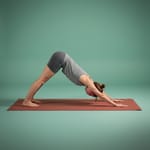
Downward Dog
Duration: 0:30
Press back into downward dog to lengthen your spine, open the shoulders, and stretch the entire backside.
Difficulty: Beginner
Instructions
- Start in tabletop, tuck your toes, and press through your hands to lift hips up and back.
- Straighten your legs as much as feels good while keeping a soft bend in the knees.
- Reach your chest toward your thighs and lengthen through your spine as your heels reach toward the floor.
Tips
- Let your head hang between your arms so your neck relaxes.
- Spread weight evenly between hands and feet.
- Keep knees slightly bent if hamstrings feel tight.
Adjustments
- Bend the knees more deeply or elevate hands on a chair for a lighter option.
- Come onto your forearms or place a block under your hands if wrists need relief.
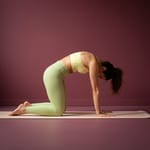
Cat Cow
Duration: 0:30
Flow through cat and cow to mobilize your spine and melt away stiffness one breath at a time.
Difficulty: Beginner
Instructions
- Begin on hands and knees with wrists under shoulders and knees under hips.
- Inhale as you drop your belly, lift your chest, and gaze forward or slightly up.
- Exhale as you round your spine, draw the belly toward the ceiling, and tuck your chin.
- Continue gliding between the two shapes in rhythm with your breath.
Tips
- Move slowly enough that each vertebra gets a moment of attention.
Adjustments
- Keep your head more neutral if your neck prefers less movement.
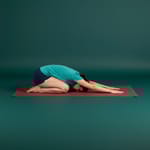
Child's Pose
Duration: 0:45
Melt into child's pose to reset your breath and relax the back with a calming stretch.
Difficulty: Beginner
Instructions
- Start on hands and knees, then widen your knees while keeping big toes touching.
- Sit your hips back toward your heels and reach your hands forward.
- Lower your chest between your thighs and rest your forehead on the floor or a support.
Tips
- Crawl your fingertips forward to deepen the stretch through the sides of your body.
- Let your chest sink toward the ground with each exhale.
Adjustments
- Keep knees closer together if that feels better for your hips.
- Rest your forehead on a block, pillow, or folded blanket if it does not reach the floor.
Who Should Try This
Desk workers, drivers, and anyone who spends more than six hours a day sitting. Also useful for runners and cyclists whose hip flexors tighten from repetitive forward motion. If you feel a pinch in the front of your hip when you try to extend your leg behind you, these are the stretches you need.
Tips for Best Results
- Keep your back knee padded with a towel or mat during kneeling stretches
- Squeeze your glute on the stretching side to deepen the hip flexor release
- In lizard pose, keep your front foot flat and let your hips sink rather than forcing them down
- Do this routine after your workday or after sitting for extended periods
Standing Taller
Within a few sessions, you’ll likely notice that standing feels different. When your hip flexors release their grip on your pelvis, your posture corrects itself without any conscious effort. That’s not a stretch myth — it’s basic anatomy. Release the front, and your body finds a better alignment on its own.


