

About This Hip Stability Routine
Flexibility without stability creates unstable joints. This hip stability routine combines mobility work with light activation exercises that build the strength your hips need to support healthy movement patterns.
What This Routine Targets
Your hips need both range of motion and the muscular control to use that range safely. This routine opens your hip flexors through lunges, activates your stabilizers through bird dog, and stretches the muscles surrounding your hip joint while building awareness of proper hip mechanics.
What’s Included
This seven-minute routine includes seven exercises that balance stretching with activation. You’ll work through lunges for mobility, bird dog for stability, and floor stretches that release tension while maintaining the neural connection to your hip muscles.
Who Should Try This
This routine is ideal for beginners, people recovering from hip issues, or anyone who notices their hips feel loose but unstable. It’s also useful for building a foundation before more intense hip flexibility work.
Tips for Best Results
Focus on controlled movement rather than maximum range. During bird dog, keep your hips level and avoid rotation. The goal is developing hips that are both mobile and stable, not just flexible.
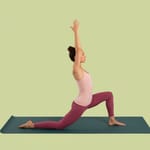
Lunge
Duration: 1:00
Sink into a kneeling lunge to stretch your hip flexors and lengthen the front of your body.
Difficulty: Beginner
Instructions
- Start kneeling and step one foot forward, planting it flat in front of you.
- Press your hips forward as you raise both arms overhead.
- Lift through your chest and reach toward the ceiling while breathing deeply.
Tips
- Keep the front knee stacked over the ankle for stability.
- Press the top of your back foot into the floor to engage the rear leg.
- Stay tall through your torso to avoid dumping into the lower back.
Adjustments
- Rest your hands on your front thigh if reaching overhead feels intense.
- Place a towel or cushion under your back knee for comfort.
- Hold onto a wall or chair for balance when needed.
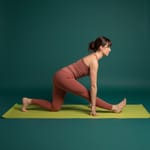
Reverse Lunge
Duration: 1:00
From a kneeling stance, extend one leg forward to stretch the backside while keeping your balance dialed in.
Difficulty: Beginner
Instructions
- Begin kneeling with knees hip-width apart and tops of your feet on the floor.
- Extend one leg forward, pressing the heel into the ground and keeping the leg straight.
- Hinge at your hips to lower the torso toward the floor, placing hands down for balance.
- Hold the stretch briefly, then switch legs.
Tips
- Keep your chest lifted and back long even as you hinge forward.
Adjustments
- Place a folded blanket under your kneeling knee for comfort.
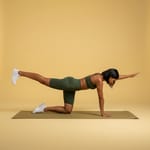
Bird Dog
Duration: 0:30
Pair opposite arm and leg reaches to build a rock-solid core and graceful balance.
Difficulty: Beginner
Instructions
- Set up on all fours with shoulders stacked over wrists and hips over knees.
- Brace your core, then extend one arm forward while the opposite leg reaches straight back.
- Hold the long line parallel to the floor and breathe steadily before returning to tabletop.
- Alternate sides with the same calm control.
Tips
- Keep your hips level by pressing the supporting hand and knee firmly into the floor.
- Think about length from fingertips through the heel rather than height.
Adjustments
- Practice lifting just the arm or just the leg until the full variation feels steady.

Butterfly
Duration: 0:30
Drop into butterfly pose to open the hips and groin while you breathe space into tight muscles.
Difficulty: Beginner
Instructions
- Sit tall with legs extended, then bend your knees and bring the soles of your feet together.
- Hold your feet or ankles and let your knees fall out to the sides.
- Press the knees gently toward the floor while keeping the spine long.
Tips
- Use your elbows to nudge the thighs downward only if it feels comfortable.
- Lift through the chest and avoid rounding your back.
Adjustments
- Place cushions under your thighs when the hips need extra support.
- Sit on a folded blanket to elevate your seat and create more ease.
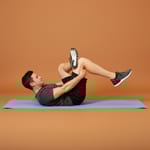
Lying Figure Four
Duration: 1:00
Ease into a lying figure four to release tight glutes and soothe your lower back.
Difficulty: Beginner
Instructions
- Lie on your back with knees bent and feet flat on the floor.
- Cross one ankle over the opposite thigh just above the knee.
- Lift the bottom leg and clasp hands behind the thigh, gently pulling the legs toward your chest.
Tips
- Relax your head and shoulders on the floor.
- Keep your lower back pressing gently into the mat.
Adjustments
- Loop a strap behind your thigh if reach is an issue.
- Leave the bottom foot on the floor for a lighter stretch.
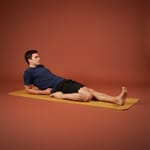
Quad Stretch
Duration: 1:00
Stretch your quads by tucking one foot beside you and leaning back into a deep, satisfying release.
Difficulty: Beginner
Instructions
- Sit with legs extended, then bend one knee and draw the heel back toward your glute.
- Hold the ankle and tuck the foot directly under your hip.
- Lean back onto your elbows or as far as comfortable while breathing into the stretch.
Tips
- Keep your hips, knees, and ankles in one line.
- Make sure the foot stays tucked under your glute rather than flaring out to the side.
Adjustments
- Loop a strap around your foot if reaching the ankle feels tough.
- Lie on your side and pull the foot toward you for a softer variation if your knees are sensitive.
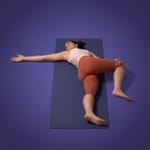
Spinal Twist
Duration: 1:00
Twist gently on your back to stretch your spine, chest, and glutes all at once.
Difficulty: Beginner
Instructions
- Lie on your back with legs extended and arms by your sides.
- Bend one knee and place the foot on the floor.
- Lower the bent knee across your body toward the opposite side while your torso and hips twist.
- Place your opposite hand on the outside of the bent knee and extend the other arm out to the side.
Tips
- Keep both shoulders grounded on the floor.
Adjustments
- Support the bent knee with a cushion or block if needed.
Building Stable Hips
Stand up, test your balance on one leg, and note how much steadier it feels. Stability work creates hips that support you through all kinds of movement.
Practice this routine regularly as part of your hip health practice. Stable hips prevent injuries, improve athletic performance, and keep you moving well for years to come.


