

About This Knee Stability Routine
Flexibility without strength leaves your knee vulnerable. This routine builds the muscular control that keeps your knee stable during walking, stairs, squatting, and sports. Every exercise here targets the muscles that support and protect the knee joint.
Wall sit trains your quads to hold your knee in a stable position under load. Single-leg stand challenges your balance and proprioception — your body’s awareness of where the joint is in space. Bridge and single-leg glute bridges build the glute strength that controls knee alignment from above. Calf raises strengthen the muscles below the knee. Squat hold ties everything together in a functional position.
These are isometric and slow-tempo exercises, not explosive movements. The goal is controlled strength that your knee can rely on throughout the day.
What This Routine Targets
- Quadriceps strength for joint stability
- Glute and hamstring activation for knee alignment
- Calf strength and ankle stability
- Proprioception and balance
What’s Included
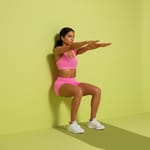
Wall Sit
Duration: 0:30
Slide down a wall and hold to torch your quads, hamstrings, and glutes without moving.
Difficulty: Beginner
Instructions
- Stand with your back against a wall and feet shoulder-width apart.
- Walk your feet forward, then slide down until thighs are parallel to the floor.
- Extend your arms forward and hold the wall sit while breathing steadily.
Tips
- Press your head and back flat against the wall and keep knees in line with toes.
- Keep weight in your heels instead of your toes.
Adjustments
- Stay higher on the wall if the full squat feels intense.
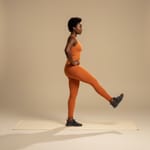
Single Leg Stand
Duration: 0:30
Test your balance by standing on one leg with calm, focused strength.
Difficulty: Beginner
Instructions
- Stand with feet hip-width apart and hands on your hips.
- Engage your core, lift one foot off the floor, and extend it slightly in front of you.
- Balance on the standing leg and hold while breathing steadily.
Tips
- Keep a soft bend in the standing knee to stay stable.
Adjustments
- Lightly touch a wall or chair for support if needed.
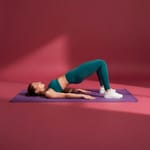
Bridge
Duration: 0:45
Lift into a grounded bridge to awaken glutes and hamstrings while giving your spine a friendly stretch.
Difficulty: Beginner
Instructions
- Lie on your back with knees bent, feet hip-width, and arms relaxed by your sides.
- Press through both heels to raise your hips, creating a straight line from knees to shoulders.
- Hold the lift with glutes fired up and breathe into your ribs before lowering with control.
Tips
- Squeeze the glutes at the top so the work stays in the backside instead of the low back.
- Keep ribs down and core engaged to prevent excessive arching.
Adjustments
- Lift the hips to a halfway point if you want a lighter option.
- Rest your head on a folded towel when the neck needs extra support.
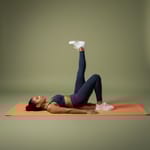
Single Leg Glute Bridges
Duration: 1:00
Drive through one heel at a time to strengthen your glutes and hamstrings with serious control.
Difficulty: Intermediate
Instructions
- Lie on your back with one knee bent, foot planted, and the other leg extended toward the ceiling.
- Squeeze your glutes and lift your hips until your body forms a diagonal line from shoulders to knees.
- Lower your hips with control and repeat before switching sides at halfway.
Tips
- Focus on glute engagement at the top of each rep.
- Move smoothly without arching your lower back.
Adjustments
- Keep both feet on the floor if single-leg balance feels challenging.
- Use a smaller range of motion if needed.

Calf Raises
Duration: 0:30
Rise up onto your toes to power up the calves and bulletproof your ankles.
Difficulty: Beginner
Instructions
- Stand facing a wall with feet hip-width apart and palms resting lightly on the surface.
- Press through the balls of your feet to lift both heels as high as possible.
- Hold the top position for a beat, then lower the heels back down with control.
Tips
- Keep your torso upright instead of leaning into the wall.
- Aim both feet straight ahead and avoid rolling the ankles outward.
Adjustments
- Use a sturdy chair or countertop for balance if a wall is not handy.
- Lift one heel at a time for a gentler option or to focus on single-leg strength.
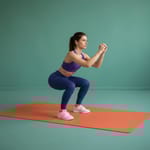
Squat Hold
Duration: 0:30
Sit low in a squat and hold to build endurance in your legs and glutes.
Difficulty: Beginner
Instructions
- Stand with feet shoulder-width apart and toes slightly turned out.
- Lower your hips back and down as if sitting into a chair while keeping weight in your heels.
- Lift your chest, keep your back straight, and hold the squat with steady breathing.
Tips
- Work toward thighs parallel to the floor.
- Track knees in line with toes to protect your joints.
Adjustments
- Stay a bit higher if you want a lighter option.
Who Should Try This
Anyone whose knees feel unstable, wobbly, or like they might “give way.” This routine is also valuable for people returning to activity after a knee injury, or those who want to build the strength that prevents knee problems before they start.
Tips for Best Results
- In wall sit, keep your knees behind your toes and your back flat against the wall
- During single-leg glute bridges, lower slowly — the eccentric phase builds the most control
- For calf raises, rise all the way up and lower all the way down; full range matters
- If squat hold bothers your knees, don’t go as deep — find a comfortable angle
Stability Is Prevention
Strong muscles around the knee don’t just feel better today — they protect you from injuries tomorrow. The exercises in this routine are the same ones physical therapists prescribe for knee rehabilitation, done here proactively. Build this strength now and your knees will handle whatever you ask of them.


