

About This Lower Back Relief Routine
Your lower back often hurts because of what’s happening in your hips. Tight hip flexors, restricted glutes, and weak lateral muscles all pull on your lumbar spine. Research demonstrates that exercises targeting the hip-spine connection can effectively reduce low back pain and improve function.1 This routine addresses those root causes by unlocking your hips while building the lateral core strength that supports your spine.
What This Routine Targets
This routine targets the hip structures that affect your lower back. You’ll release the hip flexors through psoas stretches, open the glutes and piriformis through figure four variations, stretch the quads that connect to your pelvis, and build lateral stability through side plank work.
What’s Included
This six-minute routine includes seven exercises that blend stretching with stability. The hip-focused stretches take priority, with brief plank work providing the supporting strength. The combination addresses both flexibility restrictions and muscular weaknesses.
Who Should Try This
This routine helps anyone whose lower back discomfort relates to hip tightness. It’s particularly effective after long periods of sitting, when hip flexors shorten and glutes tighten. Use it whenever your back feels compressed or restricted.
Tips for Best Results
Pay attention to how your back responds during each hip stretch. The relief you feel indicates which areas most need the work. The side plank element should feel like support, not strain. Modify by dropping your knee if needed.
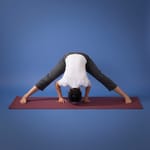
Wide Leg Bend
Duration: 0:30
Fold forward with legs wide to stretch your hamstrings, hips, and lower back.
Difficulty: Beginner
Instructions
- Stand with feet wide and toes pointing forward.
- Hinge at your hips to fold forward, lowering your torso toward your legs.
- Relax your head, neck, and arms, aiming to place your palms on the floor.
Tips
- Lengthen through your spine as you fold.
- Keep legs straight but avoid locking your knees.
- Hold ankles and draw your head closer if you want more stretch.
Adjustments
- Rest hands on shins or blocks if the floor feels far away.
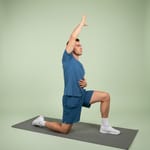
Kneeling Psoas
Duration: 1:00
Lengthen your hip flexors and side body with a kneeling psoas stretch that feels incredible after long sitting sessions.
Difficulty: Beginner
Instructions
- Kneel with knees hip-width apart, then step one foot forward so both knees are bent at ninety degrees.
- Raise the arm opposite your front leg overhead while the other hand rests on your hip.
- Press your hips forward and reach up and slightly over with the lifted arm to open through the front of the hip and side body.
- Hold for a few breaths, then switch sides.
Tips
- Stack your front knee over the ankle for stability.
- Keep the core engaged so the stretch stays supportive, not saggy.
Adjustments
- Cushion your back knee with a folded mat or pillow if it feels sensitive.
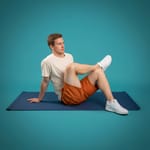
Leaning Figure Four
Duration: 1:00
Lean back in a figure four seat to stretch your glutes and lower back while staying supported.
Difficulty: Beginner
Instructions
- Sit with legs extended and hands planted behind you for support.
- Cross one ankle over the opposite thigh just above the knee.
- Slide the bottom foot toward you until the knee is bent and the foot is flat, keeping your chest lifted.
- Hold the stretch while breathing steadily, then switch sides.
Tips
- Keep your arms long and chest open to intensify the stretch.
Adjustments
- Scoot your supporting foot farther away for a lighter stretch, or closer for more sensation.
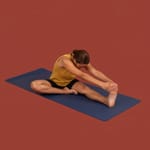
Hurdler
Duration: 0:45
Set up like a hurdler and fold forward to stretch your hamstrings, calves, and hips with precision.
Difficulty: Beginner
Instructions
- Sit tall with legs extended, then bend one leg and place the sole against the inner thigh of the other leg.
- Reach through the spine and hinge forward from the hips toward the extended foot.
- Hold the foot, ankle, or shin while breathing into the stretch, then switch sides.
Tips
- Lead with your chest rather than rounding your back.
- Keep the extended leg engaged and the foot flexed without locking the knee.
Adjustments
- Use a strap or towel around your foot if your hands do not reach comfortably.
- Soften the knee of the extended leg if you need less intensity.
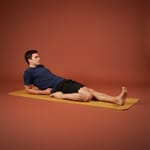
Quad Stretch
Duration: 0:45
Stretch your quads by tucking one foot beside you and leaning back into a deep, satisfying release.
Difficulty: Beginner
Instructions
- Sit with legs extended, then bend one knee and draw the heel back toward your glute.
- Hold the ankle and tuck the foot directly under your hip.
- Lean back onto your elbows or as far as comfortable while breathing into the stretch.
Tips
- Keep your hips, knees, and ankles in one line.
- Make sure the foot stays tucked under your glute rather than flaring out to the side.
Adjustments
- Loop a strap around your foot if reaching the ankle feels tough.
- Lie on your side and pull the foot toward you for a softer variation if your knees are sensitive.
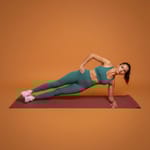
Elbow Side Plank
Duration: 0:30
Hold a powerful side plank on your forearm to challenge your obliques and shoulder stability.
Difficulty: Beginner
Instructions
- Lie on one side with legs extended and feet stacked.
- Place your bottom elbow under your shoulder, forearm flat on the floor.
- Engage your core and lift your hips to form a straight line from head to heels while the top hand rests on your hip.
- Hold with steady breathing, then switch sides halfway through.
Tips
- Keep hips high and stacked so your body stays aligned.
Adjustments
- Drop your bottom knee to the floor if you want extra support.
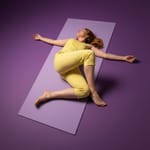
Figure Four Twist
Duration: 1:00
Melt into a figure four twist to open your hips and give your spine a refreshing rotation.
Difficulty: Beginner
Instructions
- Lie on your back with knees bent and feet on the floor.
- Cross one ankle over the opposite thigh just above the knee.
- Allow both legs to drop toward one side until your top foot and bottom knee settle toward the floor.
- Keep shoulders grounded and breathe into the twist before switching sides.
Tips
- Let gravity do the work; no need to force the rotation.
- Keep both shoulders pressing into the mat for a juicy spinal release.
Adjustments
- Slide a pillow under your top foot or bottom knee if the floor feels far away.
Back Relief Through Hip Freedom
Stand and notice how much more space your lower back has. When your hips are free, your spine doesn’t have to compensate.
Return to this unlock routine whenever your lower back feels compressed. The hip connection is real, and addressing it creates lasting relief that stretching your back directly often cannot.


