

About This Lower Back Stability Circuit
A healthy lower back needs both mobility and stability. This circuit combines hip-opening stretches with core work to create a comprehensive approach to back support. The mix ensures your spine stays both flexible and protected.
What This Routine Targets
This circuit addresses the complete system around your lower back. You’ll stretch the hip flexors through lunges, release the external rotators through pigeon, mobilize your spine through cat-cow and twists, and build core stability through plank work that supports healthy spinal alignment.
What’s Included
This six-minute routine includes seven exercises that alternate between mobility and stability work. Deep hip stretches prepare your body for the stabilization elements, and the sequence finishes with restorative positioning that lets your back settle.
Who Should Try This
This circuit works well for anyone wanting to maintain or improve lower back health. It’s appropriate after workouts, as a morning routine, or anytime your back needs attention. The balanced approach suits most people regardless of flexibility level.
Tips for Best Results
Move mindfully between the stretching and stability elements. The plank should feel supportive rather than straining. Let the twists happen gently rather than forcing rotation. The goal is a back that feels both free and secure.
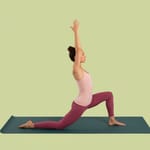
Lunge
Duration: 1:00
Sink into a kneeling lunge to stretch your hip flexors and lengthen the front of your body.
Difficulty: Beginner
Instructions
- Start kneeling and step one foot forward, planting it flat in front of you.
- Press your hips forward as you raise both arms overhead.
- Lift through your chest and reach toward the ceiling while breathing deeply.
Tips
- Keep the front knee stacked over the ankle for stability.
- Press the top of your back foot into the floor to engage the rear leg.
- Stay tall through your torso to avoid dumping into the lower back.
Adjustments
- Rest your hands on your front thigh if reaching overhead feels intense.
- Place a towel or cushion under your back knee for comfort.
- Hold onto a wall or chair for balance when needed.
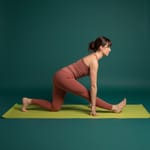
Reverse Lunge
Duration: 1:00
From a kneeling stance, extend one leg forward to stretch the backside while keeping your balance dialed in.
Difficulty: Beginner
Instructions
- Begin kneeling with knees hip-width apart and tops of your feet on the floor.
- Extend one leg forward, pressing the heel into the ground and keeping the leg straight.
- Hinge at your hips to lower the torso toward the floor, placing hands down for balance.
- Hold the stretch briefly, then switch legs.
Tips
- Keep your chest lifted and back long even as you hinge forward.
Adjustments
- Place a folded blanket under your kneeling knee for comfort.
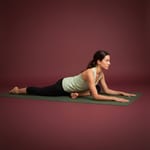
Pigeon
Duration: 1:00
Settle into pigeon pose to melt tension in your hips, glutes, and lower back.
Difficulty: Intermediate
Instructions
- From tabletop, bring one knee forward behind the same-side wrist and angle the shin toward the opposite hip.
- Slide the back leg straight behind you as you square your hips toward the floor.
- Lower your torso over the front leg and rest on your forearms or hands while breathing deeply.
Tips
- Keep hips level rather than collapsing to one side.
Adjustments
- Place a folded blanket or block under the bent-leg hip for support.
- Stay upright with hands on the floor if folding forward feels too intense.
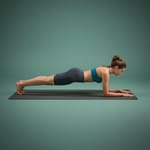
Elbow Plank
Duration: 0:30
Hold a solid forearm plank to build core strength and full-body tension from shoulders to toes.
Difficulty: Beginner
Instructions
- Start on all fours, then lower forearms to the floor and step both feet back.
- Engage your core to create a straight line from head to heels.
- Distribute weight evenly between forearms and feet and hold with steady breathing.
Tips
- Stack elbows under shoulders for stability.
- Avoid letting your hips sag or lift too high.
Adjustments
- Drop to your knees while keeping a straight line from knees to head if you want a lighter option.
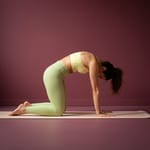
Cat Cow
Duration: 0:30
Flow through cat and cow to mobilize your spine and melt away stiffness one breath at a time.
Difficulty: Beginner
Instructions
- Begin on hands and knees with wrists under shoulders and knees under hips.
- Inhale as you drop your belly, lift your chest, and gaze forward or slightly up.
- Exhale as you round your spine, draw the belly toward the ceiling, and tuck your chin.
- Continue gliding between the two shapes in rhythm with your breath.
Tips
- Move slowly enough that each vertebra gets a moment of attention.
Adjustments
- Keep your head more neutral if your neck prefers less movement.

Seated Twist
Duration: 1:00
Twist from a seated position to wring out your spine and open your chest.
Difficulty: Beginner
Instructions
- Sit with legs extended, then cross one foot over the opposite thigh and plant it on the floor.
- Lengthen through your spine and place the opposite elbow outside the lifted knee while the other hand grounds behind you.
- Twist your torso and turn your gaze over the back shoulder as you breathe deeply.
Tips
- Grow tall through the crown of your head before deepening the twist.
Adjustments
- Keep the bottom leg extended or bend it underneath you based on comfort.
- Hug the knee with your arm instead of using the elbow for a gentler variation.
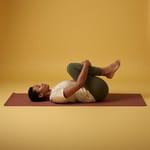
Knees-to-Chest
Duration: 0:30
Hug your knees to your chest to release the lower back and gently stretch the hips.
Difficulty: Beginner
Instructions
- Lie on your back with legs extended and arms by your sides.
- Bend both knees and draw them toward your chest.
- Wrap your arms around your shins and hug the knees in, breathing deeply.
Tips
- Let your head and neck relax on the floor.
- Keep your lower back gently pressing into the mat.
Adjustments
- Hold behind your thighs instead of the shins if that feels better for your body.
Supported for Daily Life
Rest in knees to chest and feel how balanced your lower back feels. The combination of opening and strengthening creates protection that carries through your day.
Use this circuit regularly as part of your back care routine. The dual approach of mobility and stability provides more complete support than either alone.


