

About This Morning Stretching Routine
Starting your day with movement can transform how you feel for the next several hours. After a night of sleep, your body tends to be stiff, your circulation is sluggish, and your joints might feel creaky. This quick morning stretching routine uses dynamic movements to wake up your entire body and prepare you mentally for whatever the day brings.
Why Dynamic Stretching Works Best in the Morning
Unlike static stretching where you hold positions for extended periods, this routine focuses on movement. Research supports that dynamic stretching is preferred for warming up, as it can improve performance and prepare muscles for activity.1 Dynamic stretches involve controlled motions that gently take your joints through their range of motion while gradually increasing intensity. This approach is ideal for mornings because it warms up your body without requiring a prior warmup.
What’s Included
The routine takes about four minutes and covers your major movement areas. You’ll start with dynamic side bends to wake up your spine, move through arm circles and swings to loosen your shoulders, and work down to hip circles and trunk twists. The sequence flows naturally from one movement to the next so you can establish a rhythm.
Benefits Beyond Physical
Moving your body first thing in the morning can improve your mood, increase alertness, and help you feel more prepared to handle stress. Many people find that a short movement routine helps them transition from sleep mode to a productive mindset faster than coffee alone.
Who Should Try This
This routine is perfect for anyone who wants a quick way to shake off morning stiffness. It works well for early risers, people who feel sluggish before their first cup of coffee, or anyone who sits at a desk all day and wants to start with better posture.
Tips for Making It a Habit
You don’t need any equipment, and you can do it anywhere with enough space to extend your arms. Try linking this routine to an existing habit like brushing your teeth or making breakfast. When morning stretching becomes automatic, you won’t have to rely on motivation to make it happen.

Dynamic Side Bends
Duration: 0:30
Sway side to side with dynamic bends to loosen your obliques and wake up your core.
Difficulty: Beginner
Instructions
- Stand with feet hip-width apart and arms relaxed.
- Reach one arm overhead while you lean your torso to the opposite side.
- Return to center and flow to the other side, alternating in a smooth rhythm.
Tips
- Engage your core so the lower back stays supported.
- Move with control and focus on lengthening through the side body.
Adjustments
- Keep the bend shallower if flexibility is limited.
- Slow down the pace to stay balanced and precise.

Arm Circles
Duration: 0:30
Spin your arms through smooth circles to flood the shoulders with warmth before bigger efforts.
Difficulty: Beginner
Instructions
- Stand tall with feet hip-width apart and stretch your arms straight out to the sides.
- Draw small forward circles with both arms, gradually letting the circles get bigger as the joints loosen.
- At the halfway point, reverse the direction and spin the circles backward with the same control.
Tips
- Keep shoulders relaxed away from your ears while you move.
- Move at a steady tempo so the rotator cuff muscles have time to engage.
Adjustments
- Bend your elbows slightly and keep the circles smaller if the shoulders feel tight.

Arm Swings
Duration: 0:30
Loosen the chest and back with rhythmic arm swings that feel almost like a hug every single rep.
Difficulty: Beginner
Instructions
- Stand tall with feet hip-width apart and arms stretched out to the sides.
- Swing both arms forward to cross in front of your chest, alternating which arm lands on top.
- Open the arms back out wide and keep the movement flowing in a relaxed rhythm.
Tips
- Start slow to feel the stretch, then let the pace build as your shoulders warm up.
- Keep shoulders low and breathe steadily so the motion stays smooth.
Adjustments
- Shorten the swing if any tightness shows up in the chest or upper back.

Good Mornings
Duration: 0:30
Hinge through your hips with hands behind your head to stretch hamstrings and wake up your posterior chain.
Difficulty: Beginner
Instructions
- Stand tall with feet hip-width apart and lace your fingers behind your head.
- Hinge forward at the hips, sending your seat back while keeping your spine long.
- Rise back to standing with control and repeat for your set.
Tips
- Maintain a neutral spine instead of rounding your back.
- Engage your core and keep a soft bend in the knees to protect your joints.
Adjustments
- Limit the depth of the hinge if your hamstrings feel tight.
- Rest hands on thighs for support when you need it.

Trunk Twist
Duration: 0:30
Stand tall and twist through your trunk to warm up your spine and core.
Difficulty: Beginner
Instructions
- Stand with feet hip-width apart and arms extended at shoulder height.
- Engage your core and gently twist your upper body to one side, looking over your shoulder.
- Return to center and repeat on the other side in a smooth rhythm.
Tips
- Keep knees softly bent and hips facing forward.
Adjustments
- Keep your arms bent with hands on hips for a lighter option.

Neck Roll
Duration: 0:30
Roll your head gently side to side to release tension through your neck and shoulders.
Difficulty: Beginner
Instructions
- Sit tall with shoulders relaxed.
- Lower your chin toward your chest, then roll your head toward one shoulder so the ear hovers over it.
- Return through center and repeat toward the other shoulder, continuing in a slow rhythm.
Tips
- Move slowly to avoid strain or dizziness.
- Stop short of full circles to keep the neck happy.
Adjustments
- Keep the range of motion smaller if you experience discomfort.

Hip Circles
Duration: 0:30
Draw smooth circles with your hips to mobilize the pelvis and lower back before deeper work.
Difficulty: Beginner
Instructions
- Stand with feet hip-width apart and hands resting on your hips.
- Slowly rotate your hips in a circular motion, tracing a wide circle in one direction.
- After several reps, switch directions to balance the movement.
Tips
- Keep your core engaged to support the lower back.
- Maintain soft knees rather than locking them out.
Adjustments
- Shrink the circle if your range of motion feels limited today.
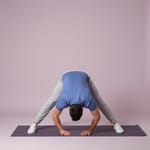
Dynamic Wide Leg Forward Fold
Duration: 0:30
Flow in and out of a wide-leg fold to lengthen hamstrings and decompress your lower back.
Difficulty: Beginner
Instructions
- Stand with a wide stance and hands on your hips.
- Hinge forward from your hips, lowering your torso toward the floor while keeping your spine long.
- Rise back up to standing and repeat in a smooth, controlled rhythm.
Tips
- Keep knees soft but active so the legs stay strong.
- Engage your core to protect the lower back.
- Let your neck stay in line with your spine as you fold.
Adjustments
- Limit the depth of the fold if hamstrings feel tight.
- Rest hands on blocks, a chair, or thighs for extra support.
- Add a slight knee bend if you need more space in the hamstrings.
Making Morning Movement a Habit
Take a deep breath, smile, and step into your day energized. Try linking this routine to an existing habit like brushing your teeth or making breakfast. When morning stretching becomes automatic, you won’t have to rely on motivation to make it happen.
After a few weeks of consistent practice, you’ll likely notice that your body feels less stiff in the mornings and more ready for whatever the day brings.
For a posture-focused morning routine with chin tucks and chest stretches, try this 5-minute morning posture routine.


