

About This Intermediate Neck Routine
Basic neck stretches help, but sometimes you need more. Research shows that comprehensive neck exercise programs that include upper back work can significantly improve neck disability and quality of life.1 This intermediate neck routine builds on foundational movements by adding wall-supported stretches, longer holds, and upper back work that addresses the full network of muscles affecting your neck.
What This Routine Targets
Your neck doesn’t exist in isolation. The muscles connecting to your shoulder blades, chest, and upper back all influence how your neck feels and moves. This routine addresses the neck directly through rotations, flexions, and targeted stretches while also opening the chest and releasing the upper back muscles that contribute to neck tension.
What’s Included
This eight-minute routine includes fourteen exercises. You’ll work through classic neck movements, progress to wall-supported stretches that create deeper release, and finish with upper back releases that ensure the entire area feels loose and balanced.
Who Should Try This
This routine fits anyone who has moved beyond basic neck stretches and wants more thorough relief. It’s especially helpful for chronic neck tension that doesn’t fully respond to simpler routines.
Tips for Best Results
Take your time with wall-supported stretches. The leverage they provide is powerful, so ease into positions gradually. Keep your breathing slow and steady throughout, especially during neck movements where tension often makes people hold their breath.
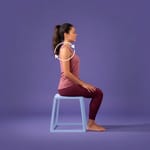
Shoulder Rolls
Duration: 0:30
Roll your shoulders to release tension and bring warmth into your upper back and neck.
Difficulty: Beginner
Instructions
- Sit or stand tall with shoulders relaxed.
- Lift your shoulders up toward your ears, then roll them back and down in a circular motion.
- Repeat for several reps, then reverse the direction.
Tips
- Keep the motion smooth and fluid to avoid neck strain.
- Relax your neck and look forward while you move.
Adjustments
- Make smaller circles or simply lift and lower the shoulders if that feels better.

Neck Roll
Duration: 0:30
Roll your head gently side to side to release tension through your neck and shoulders.
Difficulty: Beginner
Instructions
- Sit tall with shoulders relaxed.
- Lower your chin toward your chest, then roll your head toward one shoulder so the ear hovers over it.
- Return through center and repeat toward the other shoulder, continuing in a slow rhythm.
Tips
- Move slowly to avoid strain or dizziness.
- Stop short of full circles to keep the neck happy.
Adjustments
- Keep the range of motion smaller if you experience discomfort.
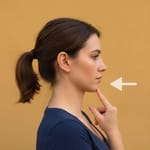
Chin Retractions
Duration: 0:30
Glide your head straight back like you are making a double chin to strengthen the deep neck flexors.
Difficulty: Beginner
Instructions
- Sit or stand tall with shoulders relaxed.
- Gently draw your chin straight back as if sliding your head along a wall, keeping the head level.
- Use a fingertip on your chin to guide the motion and hold for a slow breath.
- Release and repeat for controlled reps.
Tips
- Avoid tipping the chin up or down; think purely backward.
- Relax your shoulders so the neck muscles can do the work.
Adjustments
- Lie on your back and perform the same glide if you need help keeping the motion aligned.

Diver
Duration: 0:30
Dive forward with rounded shoulders to stretch the upper back and give your spine a gentle release.
Difficulty: Beginner
Instructions
- Sit tall with arms resting by your sides and feet grounded.
- Reach both arms forward, stacking one hand on top of the other.
- Tuck your head between your arms, round through the upper back, and reach forward like a diver slicing into water.
Tips
- Keep your core lightly engaged so the stretch stays controlled.
- Let the shoulders spread wide to feel the stretch across your upper back.
Adjustments
- Rest your forearms on your thighs if you need extra support during the fold.

Cactus Arms
Duration: 0:30
Open your chest with strong cactus arms to counter all that desk time and wake up your upper back.
Difficulty: Beginner
Instructions
- Sit or stand tall with arms relaxed by your sides.
- Lift your arms to shoulder height, bend elbows to ninety degrees, and turn palms forward.
- Keep elbows level with shoulders while squeezing shoulder blades together to open the chest.
Tips
- Draw shoulders away from your ears so the neck stays long.
- Gaze straight ahead and breathe into the stretch across your chest.
Adjustments
- Lower the elbows slightly if the shoulders feel cranky.
- Stand against a wall to help you maintain alignment.

Neck Extension
Duration: 0:30
Gently lean your head back to stretch the front of your neck and counter forward posture.
Difficulty: Beginner
Instructions
- Sit or stand tall with shoulders relaxed.
- Slowly tilt your head back, lifting your chin toward the ceiling.
- Place fingertips under your chin for a light assist and hold for a slow breath.
Tips
- Keep your jaw soft and shoulders down.
- Maintain an upright spine rather than leaning backward.
Adjustments
- Skip using your hands if the natural range already feels like plenty.

Neck Flexion
Duration: 0:30
Bow your head forward to stretch the back of your neck and upper traps gently.
Difficulty: Beginner
Instructions
- Sit or stand tall with arms relaxed.
- Slowly lower your chin toward your chest, feeling the stretch along the back of your neck.
- Interlace your fingers behind your head for a light assist if you want more sensation.
Tips
- Keep shoulders relaxed and avoid rounding through your upper back.
Adjustments
- Skip using your hands if the bodyweight stretch is enough for you.

Ear-to-Shoulder
Duration: 0:30
Melt tightness in your neck by gently drawing one ear toward your shoulder while you breathe.
Difficulty: Beginner
Instructions
- Sit or stand tall with arms relaxed.
- Tilt your head toward one shoulder, reaching that ear closer without lifting the shoulder.
- Place the opposite hand behind your back and rest the other hand lightly on top of your head for a subtle assist.
- Hold for a few breaths, then switch sides.
Tips
- Keep the chin neutral instead of tipping up or down.
- Let both shoulders stay soft and heavy.
Adjustments
- Skip the hand assist if the stretch feels intense enough with gravity alone.

Scalene Stretch
Duration: 0:30
Stretch the scalenes to relieve neck tension and open the front of your chest.
Difficulty: Beginner
Instructions
- Sit or stand tall and cross your hands, placing them on your upper chest just below your neck.
- Lower one ear toward the same-side shoulder.
- Rotate your chin upward toward the ceiling to feel the stretch along the front and side of your neck, then switch sides.
Tips
- Keep your spine long and shoulders relaxed.
Adjustments
- Soften the range of motion if you experience any discomfort or dizziness.

Scapula Stretch
Duration: 0:30
Angle your head toward your armpit to stretch the muscles around your shoulder blade and neck.
Difficulty: Beginner
Instructions
- Sit or stand tall with shoulders relaxed.
- Turn your head to one side, then tilt downward as if looking into your armpit.
- Place your hand on top of your head and gently guide it deeper into the stretch, then switch sides.
Tips
- Keep your spine long and shoulders soft while you stretch.
Adjustments
- Skip the hand assist if the stretch already feels strong enough.

Neck Rotation
Duration: 0:30
Turn your head gently from side to side to maintain neck mobility and ease stiffness.
Difficulty: Beginner
Instructions
- Sit or stand tall with arms relaxed.
- Slowly rotate your head to look over one shoulder.
- Place fingertips lightly on your chin for a gentle assist, then return to center and repeat to the other side.
Tips
- Keep your head level; avoid tipping up or down.
- Stay relaxed through your shoulders and upper back.
Adjustments
- Skip using your hand and work within a smaller range if your neck feels tender.

Wall Arms
Duration: 1:00
Rotate away from a wall-bound arm to open your chest and shoulder with control.
Difficulty: Beginner
Instructions
- Stand with feet hip-width apart and the side of your shoulder touching a wall.
- Rotate your torso to reach back and place your palm on the wall at shoulder height.
- Keep your hand planted as you square your hips and chest forward, feeling the stretch.
Tips
- Align knees, hips, and shoulders when you finish the rotation.
Adjustments
- Step slightly away from the wall if the stretch feels too intense.
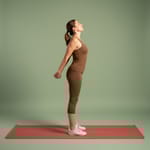
Reverse Shoulder
Duration: 0:30
Interlace your hands behind you to stretch the front of your shoulders and chest.
Difficulty: Beginner
Instructions
- Stand with feet hip-width apart and clasp your hands behind your back, thumbs pointing down.
- Straighten your arms and gently lift your hands away from your back.
- Draw shoulders back and down, lift your chest, and tuck your chin slightly while holding the stretch.
Tips
- Engage your core so your lower back stays supported.
- Avoid overarching through your spine as you lift your hands.
Adjustments
- Lift your hands only a little if the stretch feels intense today.

Bear Hug
Duration: 0:30
Wrap yourself up to stretch the upper back and give tense shoulders a quick reset.
Difficulty: Beginner
Instructions
- Stand or sit tall with arms extended out to the sides.
- Cross your arms in front and place your hands on opposite shoulder blades like you are giving yourself a hug.
- Squeeze the embrace, gently round through the upper back, and tuck your chin toward your chest while breathing deeply.
Tips
- Let a long exhale help you sink into the stretch.
- Imagine pulling the shoulder blades wide apart to create space across the upper back.
Adjustments
- Keep the arms simply crossed at the forearms if going deeper feels uncomfortable.
Complete Neck and Upper Back Care
Finish with a deep breath and enjoy the sense of space across your shoulders. Thorough routines like this address neck tension at its source.
Practice this routine two to three times per week for best results. The combination of neck work and upper back release creates lasting improvements that simpler routines can’t match.


