

About This Shoulder Melt Routine
A lot of neck pain does not actually start in the neck. It starts in the shoulders. Tight traps, locked-up scapulae, and stiff deltoids all pull on the muscles that connect to your neck. If you only stretch your neck and never address the shoulders, the tension keeps coming back.
This routine focuses entirely on the shoulder girdle. You will loosen up with rolls and arm circles, then work through cross-body holds, scapula stretches, and eagle arms that open the area between your shoulder blades. The reverse prayer pose at the end ties everything together by stretching the front of the shoulders and chest simultaneously.
What This Routine Targets
- Upper trapezius and shoulder tension
- Scapula mobility and the muscles between your shoulder blades
- Front of the shoulders with reverse prayer pose
- Rotator cuff area through eagle arm positioning
What’s Included
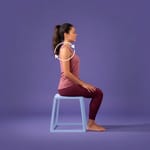
Shoulder Rolls
Duration: 0:30
Roll your shoulders to release tension and bring warmth into your upper back and neck.
Difficulty: Beginner
Instructions
- Sit or stand tall with shoulders relaxed.
- Lift your shoulders up toward your ears, then roll them back and down in a circular motion.
- Repeat for several reps, then reverse the direction.
Tips
- Keep the motion smooth and fluid to avoid neck strain.
- Relax your neck and look forward while you move.
Adjustments
- Make smaller circles or simply lift and lower the shoulders if that feels better.
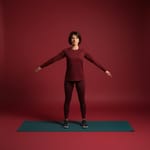
Arm Circles
Duration: 0:30
Spin your arms through smooth circles to flood the shoulders with warmth before bigger efforts.
Difficulty: Beginner
Instructions
- Stand tall with feet hip-width apart and stretch your arms straight out to the sides.
- Draw small forward circles with both arms, gradually letting the circles get bigger as the joints loosen.
- At the halfway point, reverse the direction and spin the circles backward with the same control.
Tips
- Keep shoulders relaxed away from your ears while you move.
- Move at a steady tempo so the rotator cuff muscles have time to engage.
Adjustments
- Bend your elbows slightly and keep the circles smaller if the shoulders feel tight.
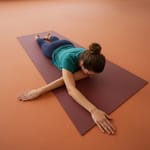
Shoulder Cross
Duration: 1:00
Stretch the front of your shoulder by crossing one arm under your body and rolling into a gentle twist.
Difficulty: Beginner
Instructions
- Lie on one side with legs straight and bottom arm extended in front of you on the floor.
- Roll onto your stomach while keeping that bottom arm stretched across your chest.
- Reach the top arm overhead and place the hand on the floor for support, feeling the front of the shoulder open.
Tips
- Let the bottom arm stay relaxed against the floor so the stretch targets the shoulder.
Adjustments
- Limit how far you roll onto your stomach if the stretch feels intense.

Scapula Stretch
Duration: 0:45
Angle your head toward your armpit to stretch the muscles around your shoulder blade and neck.
Difficulty: Beginner
Instructions
- Sit or stand tall with shoulders relaxed.
- Turn your head to one side, then tilt downward as if looking into your armpit.
- Place your hand on top of your head and gently guide it deeper into the stretch, then switch sides.
Tips
- Keep your spine long and shoulders soft while you stretch.
Adjustments
- Skip the hand assist if the stretch already feels strong enough.

Eagle Arm
Duration: 1:00
Wrap your arms into eagle pose to stretch the upper back and feel delicious space between the shoulder blades.
Difficulty: Beginner
Instructions
- Sit or stand tall with arms extended forward at shoulder height.
- Cross one arm over the other at the elbows and bend the elbows so forearms point upward.
- Wrap the forearms around each other and press palms together or as close as they reach.
Tips
- Relax the shoulders down and away from your ears.
- Lift the elbows slightly and reach the hands forward to feel the stretch across your upper back.
Adjustments
- Press the backs of your hands together if your palms do not meet.
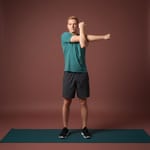
One Arm Hug
Duration: 0:45
Cross one arm over your chest for a sweet stretch through the shoulder and lats.
Difficulty: Beginner
Instructions
- Stand tall and reach one arm straight across your body toward the opposite shoulder.
- Use the other arm to hook the elbow or forearm and pull it closer to your chest.
- Hold for a few breaths, then switch sides.
Tips
- Keep your torso upright instead of leaning.
- Relax the extended arm so the shoulder can stretch.
Adjustments
- Lower the extended arm toward your abdomen for a lighter stretch if needed.
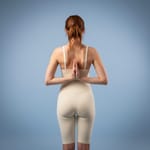
Reverse Prayer Pose
Duration: 0:45
Press your palms behind your back in reverse prayer to stretch your forearms, chest, and shoulders.
Difficulty: Intermediate
Instructions
- Sit or stand tall with arms at your sides.
- Bend both arms and bring your hands behind your back, pressing palms together with fingers pointing up.
- Lift through your chest and slide your hands up along your spine while breathing steadily.
Tips
- Relax your shoulders away from your ears.
- Avoid arching your lower back; let the stretch come from the shoulders and wrists.
Adjustments
- Hold opposite elbows behind your back if palms together is not accessible yet.
Who Should Try This
Anyone whose neck tension seems connected to their shoulders. If you notice that your shoulders creep up toward your ears during the day, or you carry stress in your traps, this routine addresses the root cause rather than the symptom.
Tips for Best Results
- During eagle arms, focus on pulling your elbows down and away from your face. The stretch should light up the space between your shoulder blades.
- If reverse prayer pose is too intense, start by pressing the backs of your hands together behind your back instead of your palms.
- Drop your shoulders before every exercise. Most people start with their shoulders already hiked up without realizing it.
- Pair this with the desk rescue routine on alternate days for complete neck and shoulder coverage.
Melt the Tension Away
Your shoulders do not need to live next to your ears. A few minutes of targeted work teaches them to drop back down where they belong. When the shoulders release, the neck follows. That is how lasting relief works.


