

About This Pelvic Floor Routine
The pelvic floor often holds tension without you realizing it. Stress, poor posture, and prolonged sitting can all create tightness in these deep muscles. Research indicates that relaxation-focused approaches can be beneficial for pelvic floor health, particularly when tension is a contributing factor.1 This gentle pelvic floor routine uses calming positions and breath work to release that tension and restore healthy function.
What This Routine Targets
Your pelvic floor sits at the base of your pelvis and connects to your hips, lower back, and core. This routine addresses the pelvic floor through positions that encourage relaxation, hip stretches that release connected muscles, and breath work that helps you tune into this often-neglected area.
What’s Included
This five-minute routine includes nine gentle exercises. You’ll move through cat-cow for pelvic awareness, hip openers that release muscles connecting to your pelvic floor, and restorative positions that encourage full relaxation. A pelvic tilt press helps you feel the connection between your breath and pelvic floor.
Who Should Try This
This routine benefits anyone interested in pelvic health, including those dealing with tension, postpartum recovery, or simply wanting to maintain healthy function. It’s gentle enough for beginners and sensitive enough for those with pelvic floor concerns.
Tips for Best Results
Focus on relaxation rather than strengthening. Many pelvic floor issues come from too much tension rather than weakness. Breathe deeply into your belly and allow your pelvic floor to soften with each exhale.
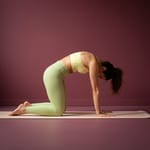
Cat Cow
Duration: 0:30
Flow through cat and cow to mobilize your spine and melt away stiffness one breath at a time.
Difficulty: Beginner
Instructions
- Begin on hands and knees with wrists under shoulders and knees under hips.
- Inhale as you drop your belly, lift your chest, and gaze forward or slightly up.
- Exhale as you round your spine, draw the belly toward the ceiling, and tuck your chin.
- Continue gliding between the two shapes in rhythm with your breath.
Tips
- Move slowly enough that each vertebra gets a moment of attention.
Adjustments
- Keep your head more neutral if your neck prefers less movement.
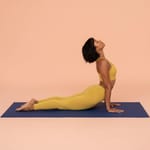
Upward Dog
Duration: 0:30
Press into upward dog to open your chest and stretch the front of your body with strength.
Difficulty: Beginner
Instructions
- Lie on your stomach with legs extended and hands under your shoulders.
- Press into your palms, straighten your arms, and lift your chest and thighs off the floor.
- Relax your shoulders away from your ears and gaze slightly upward.
Tips
- Only your palms and the tops of your feet should touch the floor.
- Keep arms straight without locking your elbows.
Adjustments
- Keep thighs on the floor for a gentler version if needed.
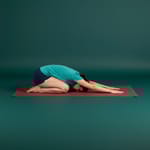
Child's Pose
Duration: 0:30
Melt into child's pose to reset your breath and relax the back with a calming stretch.
Difficulty: Beginner
Instructions
- Start on hands and knees, then widen your knees while keeping big toes touching.
- Sit your hips back toward your heels and reach your hands forward.
- Lower your chest between your thighs and rest your forehead on the floor or a support.
Tips
- Crawl your fingertips forward to deepen the stretch through the sides of your body.
- Let your chest sink toward the ground with each exhale.
Adjustments
- Keep knees closer together if that feels better for your hips.
- Rest your forehead on a block, pillow, or folded blanket if it does not reach the floor.
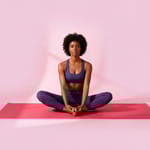
Butterfly
Duration: 0:30
Drop into butterfly pose to open the hips and groin while you breathe space into tight muscles.
Difficulty: Beginner
Instructions
- Sit tall with legs extended, then bend your knees and bring the soles of your feet together.
- Hold your feet or ankles and let your knees fall out to the sides.
- Press the knees gently toward the floor while keeping the spine long.
Tips
- Use your elbows to nudge the thighs downward only if it feels comfortable.
- Lift through the chest and avoid rounding your back.
Adjustments
- Place cushions under your thighs when the hips need extra support.
- Sit on a folded blanket to elevate your seat and create more ease.
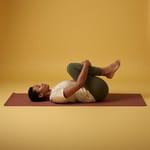
Knees-to-Chest
Duration: 0:30
Hug your knees to your chest to release the lower back and gently stretch the hips.
Difficulty: Beginner
Instructions
- Lie on your back with legs extended and arms by your sides.
- Bend both knees and draw them toward your chest.
- Wrap your arms around your shins and hug the knees in, breathing deeply.
Tips
- Let your head and neck relax on the floor.
- Keep your lower back gently pressing into the mat.
Adjustments
- Hold behind your thighs instead of the shins if that feels better for your body.
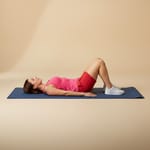
Pelvic Tilt Press
Duration: 0:30
Use a gentle pelvic tilt to teach your lower back how to relax and your core how to engage.
Difficulty: Beginner
Instructions
- Lie on your back with knees bent and feet flat on the floor.
- Engage your core to tilt your pelvis upward and press your lower back into the mat.
- Keep arms relaxed by your sides and hold the position for a breath before releasing.
Tips
- Draw your navel toward your spine to initiate the movement.
- Let your glutes stay soft so the action comes from your core.
Adjustments
- Perform the same motion standing with your back against a wall if the floor feels uncomfortable.
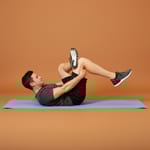
Lying Figure Four
Duration: 1:00
Ease into a lying figure four to release tight glutes and soothe your lower back.
Difficulty: Beginner
Instructions
- Lie on your back with knees bent and feet flat on the floor.
- Cross one ankle over the opposite thigh just above the knee.
- Lift the bottom leg and clasp hands behind the thigh, gently pulling the legs toward your chest.
Tips
- Relax your head and shoulders on the floor.
- Keep your lower back pressing gently into the mat.
Adjustments
- Loop a strap behind your thigh if reach is an issue.
- Leave the bottom foot on the floor for a lighter stretch.

Reclined Butterfly
Duration: 0:30
Lie back and let your knees fall wide to gently open your hips and ease your spine.
Difficulty: Beginner
Instructions
- Lie on your back with knees bent and feet flat.
- Bring the soles of your feet together and allow knees to fall out to the sides.
- Rest your arms by your sides with palms facing up and breathe into the stretch.
Tips
- Let gravity open your hips without forcing them.
Adjustments
- Place cushions or blocks under your thighs for support if needed.
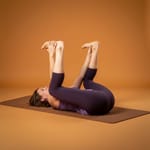
Happy Baby
Duration: 0:30
Rock into happy baby to soothe your lower back and open your hips with a playful stretch.
Difficulty: Beginner
Instructions
- Lie on your back with knees bent and feet flat.
- Lift your feet and draw knees toward your armpits.
- Grab the outer edges of your feet and gently pull your knees toward the floor while keeping your low back grounded.
Tips
- Press your tailbone toward the floor to keep the lower back happy.
- Relax your shoulders and jaw while you breathe.
Adjustments
- Hold your ankles or calves if reaching your feet is a stretch today.
Caring for Your Pelvic Floor
Close with a slow inhale through your nose and a long exhale through your mouth. This final breath helps seal the relaxation you’ve cultivated.
Practice this routine regularly as part of your overall wellness routine. Pelvic floor health often improves gradually with consistent attention, so gentle regular practice yields better results than intense occasional sessions.


