

About This Extended Post-Run Routine
After longer runs, your muscles need more than a quick stretch. Research indicates that post-exercise stretching while muscles are warm may help reduce musculotendinous injuries and support recovery.1 This extended post-run routine gives your legs the thorough attention they deserve, targeting the quads, calves, hamstrings, and hips that running works hardest.
What This Routine Targets
Running creates specific tightness patterns. Your quads and hip flexors shorten from the repetitive motion, your calves fatigue from pushing off, and your hamstrings and glutes work overtime on hills. This routine addresses all of these areas with stretches designed for runner recovery.
What’s Included
This eight-minute routine includes seven stretches focused entirely on the lower body. You’ll work through standing positions while your balance is still good, then move to the floor for deeper hip and hamstring release. The progression follows what runners need most.
Who Should Try This
This routine is ideal after mid-distance and long runs, tempo workouts, or any running session that leaves your legs feeling worked. If you’re training for races or running frequently, this extended routine supports better recovery between sessions.
Tips for Best Results
Do this routine immediately after running while your muscles are still warm. The elevated tissue temperature makes stretching more effective and helps prevent the stiffness that can develop if you skip post-run care.
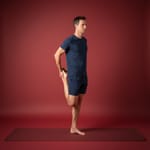
Standing Quad
Duration: 1:00
Stand tall and pull your heel toward your glute to stretch the front of your thigh and hip flexors.
Difficulty: Beginner
Instructions
- Stand with feet hip-width apart.
- Bend one knee, bringing your heel toward your glute, and grasp the ankle with both hands.
- Pull the heel gently closer while keeping knees together and hips aligned.
Tips
- Engage your core to help you balance.
- Keep the standing leg slightly bent and avoid arching your back.
Adjustments
- Hold a wall or chair if you need balance support.
- Loop a strap or towel around your foot if reaching your ankle is tricky.
- Extend your free arm to the side for extra stability.
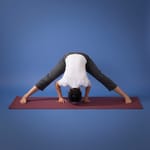
Wide Leg Bend
Duration: 0:30
Fold forward with legs wide to stretch your hamstrings, hips, and lower back.
Difficulty: Beginner
Instructions
- Stand with feet wide and toes pointing forward.
- Hinge at your hips to fold forward, lowering your torso toward your legs.
- Relax your head, neck, and arms, aiming to place your palms on the floor.
Tips
- Lengthen through your spine as you fold.
- Keep legs straight but avoid locking your knees.
- Hold ankles and draw your head closer if you want more stretch.
Adjustments
- Rest hands on shins or blocks if the floor feels far away.
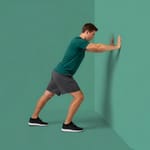
Leaning Calf
Duration: 1:00
Lean into the wall to stretch your calves and ankles with a grounded, athletic feel.
Difficulty: Beginner
Instructions
- Stand facing a wall about an arm's length away and place your hands on it at shoulder height.
- Step one foot back with toes forward and heel planted.
- Bend your front knee while keeping the back leg straight and lean into the wall to feel the calf stretch.
Tips
- Keep your back heel anchored for the best stretch.
- Maintain a long spine and relaxed shoulders as you lean.
Adjustments
- Walk the back foot closer to the wall if the stretch feels too intense.

Side Lunge
Duration: 1:00
Sink into a side lunge to stretch your groin and hamstrings while building strength.
Difficulty: Beginner
Instructions
- Stand with feet wide apart.
- Shift your weight to one side, bending that knee and keeping the opposite leg straight.
- Place hands on the floor for balance and lower your hips until you feel a stretch in the inner thigh, rotating the straight-leg foot so the heel grounds and toes point up.
Tips
- Lift your chest and keep your back long.
Adjustments
- Stay higher if the stretch feels intense.
- Hold a chair or wall for extra balance support.
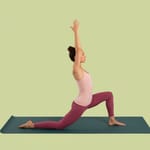
Lunge
Duration: 1:00
Sink into a kneeling lunge to stretch your hip flexors and lengthen the front of your body.
Difficulty: Beginner
Instructions
- Start kneeling and step one foot forward, planting it flat in front of you.
- Press your hips forward as you raise both arms overhead.
- Lift through your chest and reach toward the ceiling while breathing deeply.
Tips
- Keep the front knee stacked over the ankle for stability.
- Press the top of your back foot into the floor to engage the rear leg.
- Stay tall through your torso to avoid dumping into the lower back.
Adjustments
- Rest your hands on your front thigh if reaching overhead feels intense.
- Place a towel or cushion under your back knee for comfort.
- Hold onto a wall or chair for balance when needed.
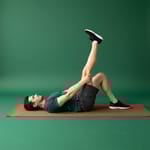
Lying Hamstring
Duration: 1:00
Stretch your hamstring from the floor to keep your posterior chain supple without straining your back.
Difficulty: Beginner
Instructions
- Lie on your back with knees bent and feet planted.
- Extend one leg toward the ceiling while the other foot stays on the floor.
- Place hands behind the thigh or calf of the raised leg and gently draw it toward your chest.
Tips
- Keep your hips and lower back pressing into the floor.
- Maintain a soft bend in the lifted knee to avoid hyperextension.
Adjustments
- Loop a strap or towel around your foot if you cannot reach comfortably.
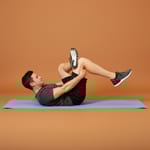
Lying Figure Four
Duration: 1:00
Ease into a lying figure four to release tight glutes and soothe your lower back.
Difficulty: Beginner
Instructions
- Lie on your back with knees bent and feet flat on the floor.
- Cross one ankle over the opposite thigh just above the knee.
- Lift the bottom leg and clasp hands behind the thigh, gently pulling the legs toward your chest.
Tips
- Relax your head and shoulders on the floor.
- Keep your lower back pressing gently into the mat.
Adjustments
- Loop a strap behind your thigh if reach is an issue.
- Leave the bottom foot on the floor for a lighter stretch.
Supporting Your Running Recovery
Finish with easy walking and deep breaths to lock in the recovery benefits. Thorough post-run stretching reduces soreness and prepares your body for your next run.
Make this routine part of your longer run days. The extra time you invest in recovery pays off in fresher legs, fewer injuries, and better performance over time.


