

About This Post-Run Stretching Routine
What you do after a run matters almost as much as the run itself. Research suggests that post-exercise stretching may help reduce musculotendinous injuries and support recovery.1 Your muscles are warm and pliable, making this the ideal time to stretch and help your body begin the recovery process. This quick routine targets the areas that take the biggest beating during running so you can reduce soreness and keep your legs feeling fresh.
What This Routine Targets
Running primarily works your quads, hip flexors, hamstrings, and glutes. When these muscles tighten up after a run, they can pull on your joints and create imbalances that affect your next workout. This routine hits all of these areas with focused stretches that take advantage of your elevated body temperature.
What’s Included
The routine takes about five minutes and includes five targeted stretches. You’ll start with a standing quad stretch while your balance is still good, move into a cross-leg fold for your IT band and outer hip, then work through lunges and floor-based positions for a complete lower body release.
Who Should Try This
This routine is designed for runners of all levels. It works after easy jogs, tempo runs, long runs, or any running workout. Even if you only have a few minutes before you need to shower and get on with your day, this sequence covers the essentials.
Why Post-Run Stretching Helps
Stretching after running helps maintain the flexibility you need for a healthy stride. Tight hip flexors can shorten your stride length. Stiff hamstrings can affect your foot strike. Taking a few minutes to stretch while your muscles are still warm helps prevent these issues from building up over time.
Tips for Best Results
Do this routine immediately after your run while your muscles are still warm. Hold each position and breathe deeply rather than rushing through. If you’re very tired, focus on the hip flexor and quad stretches since these tend to tighten the most from running.
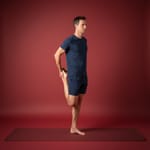
Standing Quad
Duration: 1:00
Stand tall and pull your heel toward your glute to stretch the front of your thigh and hip flexors.
Difficulty: Beginner
Instructions
- Stand with feet hip-width apart.
- Bend one knee, bringing your heel toward your glute, and grasp the ankle with both hands.
- Pull the heel gently closer while keeping knees together and hips aligned.
Tips
- Engage your core to help you balance.
- Keep the standing leg slightly bent and avoid arching your back.
Adjustments
- Hold a wall or chair if you need balance support.
- Loop a strap or towel around your foot if reaching your ankle is tricky.
- Extend your free arm to the side for extra stability.
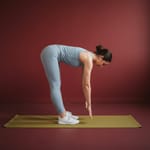
Cross Leg Fold
Duration: 1:00
Fold over crossed legs to release your hamstrings and low back with a sweet twist of the hips.
Difficulty: Beginner
Instructions
- Stand tall and cross one foot over the other.
- Hinge forward from your hips and allow your torso to drape over your legs.
- Let your arms hang toward the floor or rest hands on the front leg as you breathe.
Tips
- Keep weight balanced between both feet despite the cross.
- Think about lengthening your spine rather than rounding it.
- Relax your neck so your head hangs heavy.
Adjustments
- Place hands on shins, ankles, or yoga blocks if the floor feels far away.
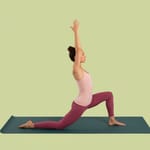
Lunge
Duration: 1:00
Sink into a kneeling lunge to stretch your hip flexors and lengthen the front of your body.
Difficulty: Beginner
Instructions
- Start kneeling and step one foot forward, planting it flat in front of you.
- Press your hips forward as you raise both arms overhead.
- Lift through your chest and reach toward the ceiling while breathing deeply.
Tips
- Keep the front knee stacked over the ankle for stability.
- Press the top of your back foot into the floor to engage the rear leg.
- Stay tall through your torso to avoid dumping into the lower back.
Adjustments
- Rest your hands on your front thigh if reaching overhead feels intense.
- Place a towel or cushion under your back knee for comfort.
- Hold onto a wall or chair for balance when needed.
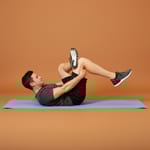
Lying Figure Four
Duration: 1:00
Ease into a lying figure four to release tight glutes and soothe your lower back.
Difficulty: Beginner
Instructions
- Lie on your back with knees bent and feet flat on the floor.
- Cross one ankle over the opposite thigh just above the knee.
- Lift the bottom leg and clasp hands behind the thigh, gently pulling the legs toward your chest.
Tips
- Relax your head and shoulders on the floor.
- Keep your lower back pressing gently into the mat.
Adjustments
- Loop a strap behind your thigh if reach is an issue.
- Leave the bottom foot on the floor for a lighter stretch.
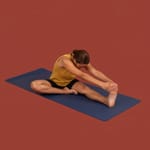
Hurdler
Duration: 1:00
Set up like a hurdler and fold forward to stretch your hamstrings, calves, and hips with precision.
Difficulty: Beginner
Instructions
- Sit tall with legs extended, then bend one leg and place the sole against the inner thigh of the other leg.
- Reach through the spine and hinge forward from the hips toward the extended foot.
- Hold the foot, ankle, or shin while breathing into the stretch, then switch sides.
Tips
- Lead with your chest rather than rounding your back.
- Keep the extended leg engaged and the foot flexed without locking the knee.
Adjustments
- Use a strap or towel around your foot if your hands do not reach comfortably.
- Soften the knee of the extended leg if you need less intensity.
Recovery After Your Run
Grab some water and enjoy the post-run buzz with muscles already recovering. The stretches you just did help prevent the tightness that can build up over multiple runs.
If you’re training for a race or running frequently, doing this routine after every run can reduce soreness and help maintain the stride length and mobility you need for better performance.


