

About This Deep Stretch Routine
Short holds maintain flexibility. Long holds change it. This routine uses extended hold times to reach the deeper layers of connective tissue that quick stretches never touch. When these deeper structures release, the changes tend to be more lasting.
You will work through the areas that matter most for posture: scalene stretches for the deep neck, doorway openers for the chest, wall arm work for the shoulders, thread-the-needle and spinal twists for the thoracic spine. Child’s pose at the end gives your body time to integrate. Every exercise gets extra time to let your tissues soften and lengthen.
What This Routine Targets
- Deep neck muscles with extended scalene and ear-to-shoulder holds
- Chest and anterior shoulders through longer doorway and wall stretches
- Thoracic spine rotation with thread-the-needle and spinal twist
- Overall decompression with child’s pose
What’s Included

Ear-to-Shoulder
Duration: 1:00
Melt tightness in your neck by gently drawing one ear toward your shoulder while you breathe.
Difficulty: Beginner
Instructions
- Sit or stand tall with arms relaxed.
- Tilt your head toward one shoulder, reaching that ear closer without lifting the shoulder.
- Place the opposite hand behind your back and rest the other hand lightly on top of your head for a subtle assist.
- Hold for a few breaths, then switch sides.
Tips
- Keep the chin neutral instead of tipping up or down.
- Let both shoulders stay soft and heavy.
Adjustments
- Skip the hand assist if the stretch feels intense enough with gravity alone.

Scalene Stretch
Duration: 1:00
Stretch the scalenes to relieve neck tension and open the front of your chest.
Difficulty: Beginner
Instructions
- Sit or stand tall and cross your hands, placing them on your upper chest just below your neck.
- Lower one ear toward the same-side shoulder.
- Rotate your chin upward toward the ceiling to feel the stretch along the front and side of your neck, then switch sides.
Tips
- Keep your spine long and shoulders relaxed.
Adjustments
- Soften the range of motion if you experience any discomfort or dizziness.
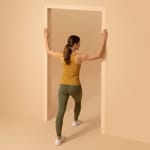
Doorway Pecs
Duration: 1:00
Stretch your chest in a doorway to counter rounded shoulders and fuel better posture.
Difficulty: Beginner
Instructions
- Stand inside a doorway and place forearms and palms on the frame at shoulder height, elbows bent to ninety degrees.
- Step one foot forward and gently lean your body through the doorway until you feel a chest stretch.
- Hold the position while breathing deeply, letting the front of the shoulders soften.
Tips
- Draw shoulder blades down and back so the stretch targets the chest, not the neck.
- Keep your spine long and avoid arching the lower back.
Adjustments
- Lean only slightly forward if you want a lighter stretch or if the shoulders feel sensitive.
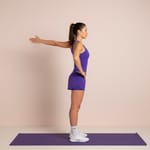
Wall Arms
Duration: 0:45
Rotate away from a wall-bound arm to open your chest and shoulder with control.
Difficulty: Beginner
Instructions
- Stand with feet hip-width apart and the side of your shoulder touching a wall.
- Rotate your torso to reach back and place your palm on the wall at shoulder height.
- Keep your hand planted as you square your hips and chest forward, feeling the stretch.
Tips
- Align knees, hips, and shoulders when you finish the rotation.
Adjustments
- Step slightly away from the wall if the stretch feels too intense.
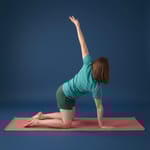
Thread the Needle
Duration: 1:00
Flow through thread the needle to stretch your shoulders, chest, and upper back with a twist.
Difficulty: Beginner
Instructions
- Start in tabletop with hands under shoulders and knees under hips.
- Lift one arm toward the ceiling to open your chest.
- Slide that arm under the opposite arm with the palm facing up, lowering your shoulder and head toward the floor.
- Unwind back to tabletop and repeat before switching sides.
Tips
- Press the supporting hand firmly into the floor for stability.
- Keep hips stacked over knees as you twist.
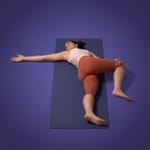
Spinal Twist
Duration: 1:00
Twist gently on your back to stretch your spine, chest, and glutes all at once.
Difficulty: Beginner
Instructions
- Lie on your back with legs extended and arms by your sides.
- Bend one knee and place the foot on the floor.
- Lower the bent knee across your body toward the opposite side while your torso and hips twist.
- Place your opposite hand on the outside of the bent knee and extend the other arm out to the side.
Tips
- Keep both shoulders grounded on the floor.
Adjustments
- Support the bent knee with a cushion or block if needed.
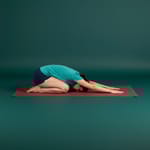
Child's Pose
Duration: 0:45
Melt into child's pose to reset your breath and relax the back with a calming stretch.
Difficulty: Beginner
Instructions
- Start on hands and knees, then widen your knees while keeping big toes touching.
- Sit your hips back toward your heels and reach your hands forward.
- Lower your chest between your thighs and rest your forehead on the floor or a support.
Tips
- Crawl your fingertips forward to deepen the stretch through the sides of your body.
- Let your chest sink toward the ground with each exhale.
Adjustments
- Keep knees closer together if that feels better for your hips.
- Rest your forehead on a block, pillow, or folded blanket if it does not reach the floor.
Who Should Try This
People who have been doing shorter routines and want to push deeper into their tight areas. Also good for anyone who responds better to long, slow stretching than to dynamic movement. If you find that regular stretches wear off quickly, extended holds may be what your body needs.
Tips for Best Results
- Resist the urge to fidget during long holds. Find a comfortable depth and stay there. The release happens in the second half of each hold.
- Breathe slowly and deliberately. Count four seconds in, six seconds out. This activates your parasympathetic nervous system and helps your muscles let go.
- If a stretch feels too intense at the start, back off slightly. You will naturally sink deeper as the tissue releases.
- Do this routine on a rest day or in the evening when your body is naturally more relaxed.
Go Deep
Surface stretching is maintenance. Deep stretching is transformation. When you give your tissues the time they need to truly release, you create changes that last between sessions. That is the difference between feeling good for an hour and actually improving your posture over time.


