

About This Neck and Shoulders Routine
The neck and shoulders are where posture problems show up first. A forward head adds strain to the muscles at the back of your neck. Rounded shoulders create chronic tension in the traps. Together, they create the kind of stiffness that makes you feel ten years older than you are.
This routine tackles both areas in one session. Shoulder rolls warm things up, then ear-to-shoulder holds and chin retractions address the neck directly. Cross-body shoulder holds and eagle arms open up the shoulder girdle. Scalene stretches go after the deep neck muscles that connect your neck to your ribs.
What This Routine Targets
- Forward head posture with chin retractions
- Side neck tension through ear-to-shoulder and lateral work
- Shoulder girdle tightness with cross-body and eagle arm holds
- Deep neck muscles with scalene stretches
What’s Included
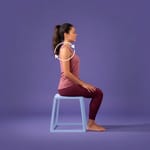
Shoulder Rolls
Duration: 0:30
Roll your shoulders to release tension and bring warmth into your upper back and neck.
Difficulty: Beginner
Instructions
- Sit or stand tall with shoulders relaxed.
- Lift your shoulders up toward your ears, then roll them back and down in a circular motion.
- Repeat for several reps, then reverse the direction.
Tips
- Keep the motion smooth and fluid to avoid neck strain.
- Relax your neck and look forward while you move.
Adjustments
- Make smaller circles or simply lift and lower the shoulders if that feels better.

Ear-to-Shoulder
Duration: 0:45
Melt tightness in your neck by gently drawing one ear toward your shoulder while you breathe.
Difficulty: Beginner
Instructions
- Sit or stand tall with arms relaxed.
- Tilt your head toward one shoulder, reaching that ear closer without lifting the shoulder.
- Place the opposite hand behind your back and rest the other hand lightly on top of your head for a subtle assist.
- Hold for a few breaths, then switch sides.
Tips
- Keep the chin neutral instead of tipping up or down.
- Let both shoulders stay soft and heavy.
Adjustments
- Skip the hand assist if the stretch feels intense enough with gravity alone.
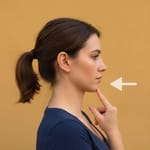
Chin Retractions
Duration: 0:30
Glide your head straight back like you are making a double chin to strengthen the deep neck flexors.
Difficulty: Beginner
Instructions
- Sit or stand tall with shoulders relaxed.
- Gently draw your chin straight back as if sliding your head along a wall, keeping the head level.
- Use a fingertip on your chin to guide the motion and hold for a slow breath.
- Release and repeat for controlled reps.
Tips
- Avoid tipping the chin up or down; think purely backward.
- Relax your shoulders so the neck muscles can do the work.
Adjustments
- Lie on your back and perform the same glide if you need help keeping the motion aligned.

Neck Laterals
Duration: 0:30
Tilt your head side to side to release tightness along your neck and upper traps.
Difficulty: Beginner
Instructions
- Sit tall with shoulders relaxed and one hand resting on your chair or thigh for support.
- Tilt your head toward one shoulder, lowering your ear toward it.
- Place the opposite hand on the side of your head for a light assist, then switch sides halfway through.
Tips
- Keep both shoulders soft and away from your ears.
Adjustments
- Skip using your hand if the weight of your head provides enough stretch.
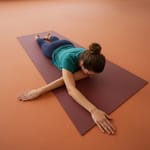
Shoulder Cross
Duration: 0:45
Stretch the front of your shoulder by crossing one arm under your body and rolling into a gentle twist.
Difficulty: Beginner
Instructions
- Lie on one side with legs straight and bottom arm extended in front of you on the floor.
- Roll onto your stomach while keeping that bottom arm stretched across your chest.
- Reach the top arm overhead and place the hand on the floor for support, feeling the front of the shoulder open.
Tips
- Let the bottom arm stay relaxed against the floor so the stretch targets the shoulder.
Adjustments
- Limit how far you roll onto your stomach if the stretch feels intense.

Eagle Arm
Duration: 0:45
Wrap your arms into eagle pose to stretch the upper back and feel delicious space between the shoulder blades.
Difficulty: Beginner
Instructions
- Sit or stand tall with arms extended forward at shoulder height.
- Cross one arm over the other at the elbows and bend the elbows so forearms point upward.
- Wrap the forearms around each other and press palms together or as close as they reach.
Tips
- Relax the shoulders down and away from your ears.
- Lift the elbows slightly and reach the hands forward to feel the stretch across your upper back.
Adjustments
- Press the backs of your hands together if your palms do not meet.

Scalene Stretch
Duration: 0:45
Stretch the scalenes to relieve neck tension and open the front of your chest.
Difficulty: Beginner
Instructions
- Sit or stand tall and cross your hands, placing them on your upper chest just below your neck.
- Lower one ear toward the same-side shoulder.
- Rotate your chin upward toward the ceiling to feel the stretch along the front and side of your neck, then switch sides.
Tips
- Keep your spine long and shoulders relaxed.
Adjustments
- Soften the range of motion if you experience any discomfort or dizziness.
Who Should Try This
People whose posture problems center on their neck and shoulders. If you catch yourself rubbing your neck or rolling your shoulders throughout the day, this routine goes after exactly those areas.
Tips for Best Results
- Chin retractions work best when you think of sliding your head straight back, not tilting it. Imagine you are pressing the back of your head into an invisible wall.
- Hold the ear-to-shoulder position without hiking the opposite shoulder up. Actively press it down for a deeper stretch.
- During eagle arms, keep your elbows at shoulder height. Letting them drop reduces the stretch through your upper back.
- This routine is short enough to do daily. Consistency will produce better results than occasional longer sessions.
Carry Yourself Better
When your neck and shoulders are free of tension, good posture stops being something you have to think about. It becomes your default. This routine chips away at the tightness that keeps pulling you out of alignment, one session at a time.


