

About This Posture Stretching Routine
Good posture doesn’t just look better. It reduces strain on your spine, helps you breathe more easily, and prevents the aches that come from sitting in misaligned positions. This quick posture reset routine can be done right at your desk whenever you feel yourself starting to slump.
What This Routine Targets
Desk posture typically involves rounded shoulders, a forward head, and a collapsed chest. Research indicates that targeted exercises can effectively reduce forward head posture and rounded shoulders in those with upper crossed syndrome.1 This routine opens all of these areas through overhead reaches, side bends, and neck movements that restore proper alignment. The stretches loosen the muscles that pull you into poor posture while activating the ones that hold you upright.
What’s Included
This four-minute routine includes eight seated-friendly stretches. You’ll start with shoulder rolls to release tension at the base of your neck, move through reaches and bends that open your torso, and finish with neck movements that address the upper portion of your spine. Every exercise can be done without leaving your chair.
Who Should Try This
This routine is ideal for anyone who works at a desk, attends long meetings, or spends extended time sitting. It’s especially useful if you catch yourself slouching throughout the day or feel tightness building in your upper back and shoulders.
Tips for Best Results
Sit toward the front of your chair with your feet flat on the floor. This position gives you more room to move and makes the stretches more effective. Breathe deeply during each movement and focus on creating length through your spine.
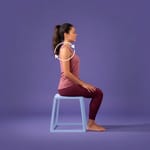
Shoulder Rolls
Duration: 0:30
Roll your shoulders to release tension and bring warmth into your upper back and neck.
Difficulty: Beginner
Instructions
- Sit or stand tall with shoulders relaxed.
- Lift your shoulders up toward your ears, then roll them back and down in a circular motion.
- Repeat for several reps, then reverse the direction.
Tips
- Keep the motion smooth and fluid to avoid neck strain.
- Relax your neck and look forward while you move.
Adjustments
- Make smaller circles or simply lift and lower the shoulders if that feels better.
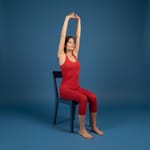
Overhead Reach
Duration: 0:30
Reach skyward to lengthen your spine and wake up the shoulders with a simple overhead stretch.
Difficulty: Beginner
Instructions
- Sit tall with arms relaxed by your sides.
- Sweep your arms out and up overhead, interlacing your fingers with palms facing up.
- Reach toward the ceiling while relaxing your shoulders downward.
Tips
- Lengthen through your spine to create extra space between vertebrae.
Adjustments
- Keep hands shoulder-width apart if interlacing feels uncomfortable.
- Gently lean side to side for an added stretch along your ribcage.

Side Bend
Duration: 0:30
Reach overhead and bend sideways to stretch your obliques and lats with control.
Difficulty: Beginner
Instructions
- Sit tall with arms relaxed at your sides.
- Raise one arm overhead while the opposite hand rests on your hip.
- Gently bend to the side, reaching over with the lifted arm and keeping your torso facing forward.
Tips
- Relax your shoulders and avoid hunching as you bend.
- Keep your seat grounded so the stretch stays in your side body.
Adjustments
- Place your hand on the side of your head instead of reaching overhead if shoulders feel tight.

Cactus Arms
Duration: 0:30
Open your chest with strong cactus arms to counter all that desk time and wake up your upper back.
Difficulty: Beginner
Instructions
- Sit or stand tall with arms relaxed by your sides.
- Lift your arms to shoulder height, bend elbows to ninety degrees, and turn palms forward.
- Keep elbows level with shoulders while squeezing shoulder blades together to open the chest.
Tips
- Draw shoulders away from your ears so the neck stays long.
- Gaze straight ahead and breathe into the stretch across your chest.
Adjustments
- Lower the elbows slightly if the shoulders feel cranky.
- Stand against a wall to help you maintain alignment.

Neck Flex
Duration: 0:30
Move your head gently between looking up and nodding down to keep your neck supple and relaxed.
Difficulty: Beginner
Instructions
- Sit or stand tall with shoulders relaxed.
- Slowly tilt your head backward to gaze toward the ceiling, pausing for a breath.
- Return to center and gently lower your chin toward your chest, feeling the stretch along the back of your neck.
- Flow between the two positions with ease for several repetitions.
Tips
- Keep shoulders heavy and relaxed throughout.
- Move slowly to avoid straining the neck muscles.
Adjustments
- Limit the range of motion if you experience any discomfort, and stop if dizziness appears.

Neck Roll
Duration: 0:30
Roll your head gently side to side to release tension through your neck and shoulders.
Difficulty: Beginner
Instructions
- Sit tall with shoulders relaxed.
- Lower your chin toward your chest, then roll your head toward one shoulder so the ear hovers over it.
- Return through center and repeat toward the other shoulder, continuing in a slow rhythm.
Tips
- Move slowly to avoid strain or dizziness.
- Stop short of full circles to keep the neck happy.
Adjustments
- Keep the range of motion smaller if you experience discomfort.

Neck Laterals
Duration: 0:30
Tilt your head side to side to release tightness along your neck and upper traps.
Difficulty: Beginner
Instructions
- Sit tall with shoulders relaxed and one hand resting on your chair or thigh for support.
- Tilt your head toward one shoulder, lowering your ear toward it.
- Place the opposite hand on the side of your head for a light assist, then switch sides halfway through.
Tips
- Keep both shoulders soft and away from your ears.
Adjustments
- Skip using your hand if the weight of your head provides enough stretch.
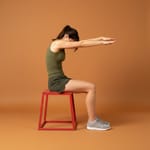
Diver
Duration: 0:30
Dive forward with rounded shoulders to stretch the upper back and give your spine a gentle release.
Difficulty: Beginner
Instructions
- Sit tall with arms resting by your sides and feet grounded.
- Reach both arms forward, stacking one hand on top of the other.
- Tuck your head between your arms, round through the upper back, and reach forward like a diver slicing into water.
Tips
- Keep your core lightly engaged so the stretch stays controlled.
- Let the shoulders spread wide to feel the stretch across your upper back.
Adjustments
- Rest your forearms on your thighs if you need extra support during the fold.
Making Better Posture Automatic
Sit tall, soften your jaw, and return to work with better alignment. These brief resets train your body to recognize good posture.
Do this routine several times throughout your workday. The more frequently you reset your posture, the more natural upright alignment becomes. Over time, you’ll catch yourself slouching less and sitting taller without conscious effort.
For a complete guide to fixing posture through exercises and daily habits, check out this How to Fix Bad Posture guide that covers the muscle imbalances behind poor posture.


