

About This Standing Desk Routine
Standing desks solve some problems but create others. While they reduce the hip flexor shortening that comes from sitting, they introduce fatigue in your lower back, calves, and feet. This standing desk stretch routine addresses the specific tension patterns that standing work creates.
What This Routine Targets
Standing for long periods tightens your calves and lower back while your shoulders still experience the forward pull of computer work. This routine stretches your chest and shoulders to counteract screen posture, opens your hips and quads to prevent stiffness, and releases your calves which work overtime when you stand.
What’s Included
This six-minute routine includes nine stretches you can do right at your standing desk. The sequence moves from overhead reaches through chest openers, then addresses your lower body with quad and calf stretches. You’ll finish with a rag doll fold that releases your entire back.
Who Should Try This
Anyone who uses a standing desk will benefit from this routine. It’s especially helpful if you notice lower back fatigue, tight calves, or shoulder tension building up throughout your workday.
Tips for Best Results
Take brief stretch breaks every hour or two rather than waiting until you’re uncomfortable. These stretches are designed to be quick and workspace-appropriate, so there’s no reason to skip them.
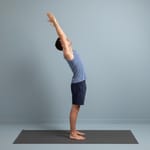
Upward Salute
Duration: 0:30
Sweep your arms skyward in upward salute to lengthen your spine and awaken your upper body.
Difficulty: Beginner
Instructions
- Stand with feet hip-width apart and arms at your sides.
- Sweep your arms out and up overhead, keeping hands shoulder-width apart.
- Reach toward the ceiling while relaxing your shoulders and gazing slightly upward.
Tips
- Ground evenly through both feet.
- Engage your core to avoid arching your lower back.
Adjustments
- Place your hands behind your head or on your hips if raising them overhead feels intense.
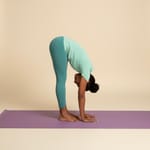
Toe Touch
Duration: 0:30
Fold forward from standing to stretch your hamstrings and lower back with a calming release.
Difficulty: Beginner
Instructions
- Stand with feet hip-width apart and arms relaxed by your sides.
- Hinge at your hips to fold forward, lowering your torso toward your legs.
- Relax your head, neck, and arms, aiming to place your palms on the floor.
Tips
- Lengthen through your spine as you fold.
- Keep legs straight but avoid locking your knees.
Adjustments
- Rest your hands on shins or thighs if the floor feels out of reach.

Chest Opener
Duration: 0:30
Open your heart space and stretch the front body with a simple yet powerful chest opener.
Difficulty: Beginner
Instructions
- Stand tall with feet hip-width apart.
- Clasp your hands behind your head and widen your elbows out to the sides.
- Gently squeeze shoulder blades together and lift your chest as you breathe in.
Tips
- Keep shoulders soft and away from your ears.
- Maintain a long spine rather than arching through the lower back.
Adjustments
- Hold a strap or towel behind your head if your hands do not quite meet comfortably.
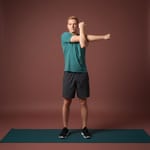
One Arm Hug
Duration: 0:30
Cross one arm over your chest for a sweet stretch through the shoulder and lats.
Difficulty: Beginner
Instructions
- Stand tall and reach one arm straight across your body toward the opposite shoulder.
- Use the other arm to hook the elbow or forearm and pull it closer to your chest.
- Hold for a few breaths, then switch sides.
Tips
- Keep your torso upright instead of leaning.
- Relax the extended arm so the shoulder can stretch.
Adjustments
- Lower the extended arm toward your abdomen for a lighter stretch if needed.
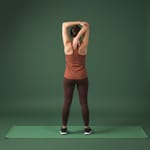
Overhead Tricep
Duration: 0:30
Lift and bend your arm overhead to stretch your triceps and open your side body.
Difficulty: Beginner
Instructions
- Stand or sit tall and raise one arm overhead.
- Bend the elbow, bringing your hand toward the opposite shoulder blade.
- Use the other hand to gently guide the elbow toward the midline of your back while breathing deeply.
Tips
- Keep your torso upright and core engaged so your lower back stays supported.
- Relax the lifted shoulder away from your ear.
Adjustments
- Hold a strap between your hands if reaching the elbow feels challenging.
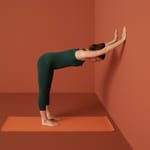
Wall Dog
Duration: 0:30
Use a wall to mimic downward dog and stretch your shoulders, hamstrings, and spine.
Difficulty: Beginner
Instructions
- Stand facing a wall about an arm's length away and place your hands on it at shoulder height.
- Step your feet back and keep arms and legs straight as you lower your torso toward the floor.
- Let your head hang between your arms and breathe into the stretch.
Tips
- Relax your neck and keep your spine long.
Adjustments
- Bend your knees or walk feet closer to the wall for a gentler stretch.
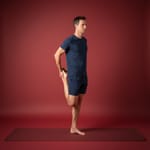
Standing Quad
Duration: 1:00
Stand tall and pull your heel toward your glute to stretch the front of your thigh and hip flexors.
Difficulty: Beginner
Instructions
- Stand with feet hip-width apart.
- Bend one knee, bringing your heel toward your glute, and grasp the ankle with both hands.
- Pull the heel gently closer while keeping knees together and hips aligned.
Tips
- Engage your core to help you balance.
- Keep the standing leg slightly bent and avoid arching your back.
Adjustments
- Hold a wall or chair if you need balance support.
- Loop a strap or towel around your foot if reaching your ankle is tricky.
- Extend your free arm to the side for extra stability.
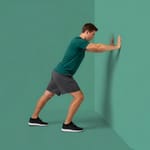
Leaning Calf
Duration: 1:00
Lean into the wall to stretch your calves and ankles with a grounded, athletic feel.
Difficulty: Beginner
Instructions
- Stand facing a wall about an arm's length away and place your hands on it at shoulder height.
- Step one foot back with toes forward and heel planted.
- Bend your front knee while keeping the back leg straight and lean into the wall to feel the calf stretch.
Tips
- Keep your back heel anchored for the best stretch.
- Maintain a long spine and relaxed shoulders as you lean.
Adjustments
- Walk the back foot closer to the wall if the stretch feels too intense.
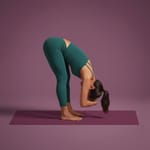
Rag Doll
Duration: 0:30
Fold like a rag doll to let your spine decompress and your hamstrings stretch gently.
Difficulty: Beginner
Instructions
- Stand with feet hip-width apart and knees softly bent.
- Inhale to reach arms overhead and lengthen your spine.
- Exhale to hinge at the hips, letting your torso drape forward.
- Grab opposite elbows and allow head and arms to hang heavy.
Tips
- Distribute weight evenly between heels and balls of the feet.
- Focus on lengthening your spine instead of trying to touch the floor.
Adjustments
- Bend your knees more deeply if your back feels tight.
- Rest elbows on a block or chair for extra support.
Making Standing Work Sustainable
Return to your tasks feeling taller and more energized. Regular stretch breaks make standing desk work sustainable for the long term.
Do this routine multiple times throughout your workday. The combination of standing work and brief stretch sessions is far healthier than either sitting all day or standing without movement.
For guidance on proper standing posture and common mistakes to avoid, read this standing desk posture guide.


