

About This Tech Neck Routine
Tech neck is the modern epidemic of forward head posture caused by looking down at phones and computers. Studies show that adults with neck pain demonstrate increased forward head posture compared to asymptomatic adults.1 When your head shifts forward of your shoulders, the muscles at the back of your neck work overtime while the front becomes tight and shortened. This routine specifically targets the postural imbalances that screens create.
What This Routine Targets
Tech neck involves more than just your neck. Your chest muscles tighten, your upper back rounds, and your shoulders roll forward as part of the same pattern. This routine addresses all of these areas through chin retractions that restore proper head position, chest openers that counteract the forward hunch, and shoulder stretches that release accumulated tension. A systematic review found that therapeutic exercises can result in significant improvements in head posture and moderate reductions in neck pain.2
What’s Included
This five-minute routine includes ten exercises with chin retractions appearing multiple times throughout. The repetition reinforces the proper head position that tech neck erodes. Wall and doorway stretches open your chest effectively, while shoulder releases address the muscles connecting your neck to your upper back.
Who Should Try This
If you spend more than a few hours daily looking at screens, this routine is for you. It’s especially helpful for remote workers, gamers, and anyone who notices their head drifting forward throughout the day.
Tips for Best Results
During chin retractions, imagine making a double chin by pulling your head straight back, not tilting it. Keep your gaze level and your shoulders relaxed. These small details make the difference between an effective reset and just going through the motions.
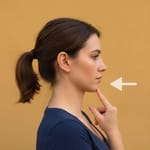
Chin Retractions
Duration: 0:15
Glide your head straight back like you are making a double chin to strengthen the deep neck flexors.
Difficulty: Beginner
Instructions
- Sit or stand tall with shoulders relaxed.
- Gently draw your chin straight back as if sliding your head along a wall, keeping the head level.
- Use a fingertip on your chin to guide the motion and hold for a slow breath.
- Release and repeat for controlled reps.
Tips
- Avoid tipping the chin up or down; think purely backward.
- Relax your shoulders so the neck muscles can do the work.
Adjustments
- Lie on your back and perform the same glide if you need help keeping the motion aligned.

Wall Pecs
Duration: 1:00
Use a wall or doorway to stretch your chest and shoulders with a controlled lean.
Difficulty: Beginner
Instructions
- Stand in a doorway or at a wall corner and place your palm and forearm against the surface at shoulder height, elbow bent to ninety degrees.
- Step forward with one leg and lean into the stretch until you feel your chest open.
Tips
- Draw your shoulder blade down and back to avoid shrugging.
- Keep your torso upright without twisting.
Adjustments
- Lean less if you prefer a gentler stretch.
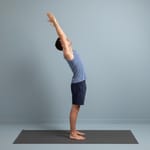
Upward Salute
Duration: 0:30
Sweep your arms skyward in upward salute to lengthen your spine and awaken your upper body.
Difficulty: Beginner
Instructions
- Stand with feet hip-width apart and arms at your sides.
- Sweep your arms out and up overhead, keeping hands shoulder-width apart.
- Reach toward the ceiling while relaxing your shoulders and gazing slightly upward.
Tips
- Ground evenly through both feet.
- Engage your core to avoid arching your lower back.
Adjustments
- Place your hands behind your head or on your hips if raising them overhead feels intense.
Chin Retractions
Duration: 0:15
Glide your head straight back like you are making a double chin to strengthen the deep neck flexors.
Difficulty: Beginner
Instructions
- Sit or stand tall with shoulders relaxed.
- Gently draw your chin straight back as if sliding your head along a wall, keeping the head level.
- Use a fingertip on your chin to guide the motion and hold for a slow breath.
- Release and repeat for controlled reps.
Tips
- Avoid tipping the chin up or down; think purely backward.
- Relax your shoulders so the neck muscles can do the work.
Adjustments
- Lie on your back and perform the same glide if you need help keeping the motion aligned.

Wall Dog
Duration: 0:30
Use a wall to mimic downward dog and stretch your shoulders, hamstrings, and spine.
Difficulty: Beginner
Instructions
- Stand facing a wall about an arm's length away and place your hands on it at shoulder height.
- Step your feet back and keep arms and legs straight as you lower your torso toward the floor.
- Let your head hang between your arms and breathe into the stretch.
Tips
- Relax your neck and keep your spine long.
Adjustments
- Bend your knees or walk feet closer to the wall for a gentler stretch.

Doorway Pecs
Duration: 0:30
Stretch your chest in a doorway to counter rounded shoulders and fuel better posture.
Difficulty: Beginner
Instructions
- Stand inside a doorway and place forearms and palms on the frame at shoulder height, elbows bent to ninety degrees.
- Step one foot forward and gently lean your body through the doorway until you feel a chest stretch.
- Hold the position while breathing deeply, letting the front of the shoulders soften.
Tips
- Draw shoulder blades down and back so the stretch targets the chest, not the neck.
- Keep your spine long and avoid arching the lower back.
Adjustments
- Lean only slightly forward if you want a lighter stretch or if the shoulders feel sensitive.

One Arm Hug
Duration: 0:30
Cross one arm over your chest for a sweet stretch through the shoulder and lats.
Difficulty: Beginner
Instructions
- Stand tall and reach one arm straight across your body toward the opposite shoulder.
- Use the other arm to hook the elbow or forearm and pull it closer to your chest.
- Hold for a few breaths, then switch sides.
Tips
- Keep your torso upright instead of leaning.
- Relax the extended arm so the shoulder can stretch.
Adjustments
- Lower the extended arm toward your abdomen for a lighter stretch if needed.
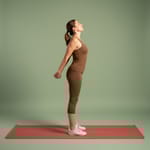
Reverse Shoulder
Duration: 0:30
Interlace your hands behind you to stretch the front of your shoulders and chest.
Difficulty: Beginner
Instructions
- Stand with feet hip-width apart and clasp your hands behind your back, thumbs pointing down.
- Straighten your arms and gently lift your hands away from your back.
- Draw shoulders back and down, lift your chest, and tuck your chin slightly while holding the stretch.
Tips
- Engage your core so your lower back stays supported.
- Avoid overarching through your spine as you lift your hands.
Adjustments
- Lift your hands only a little if the stretch feels intense today.

Neck Laterals
Duration: 0:30
Tilt your head side to side to release tightness along your neck and upper traps.
Difficulty: Beginner
Instructions
- Sit tall with shoulders relaxed and one hand resting on your chair or thigh for support.
- Tilt your head toward one shoulder, lowering your ear toward it.
- Place the opposite hand on the side of your head for a light assist, then switch sides halfway through.
Tips
- Keep both shoulders soft and away from your ears.
Adjustments
- Skip using your hand if the weight of your head provides enough stretch.
Chin Retractions
Duration: 0:15
Glide your head straight back like you are making a double chin to strengthen the deep neck flexors.
Difficulty: Beginner
Instructions
- Sit or stand tall with shoulders relaxed.
- Gently draw your chin straight back as if sliding your head along a wall, keeping the head level.
- Use a fingertip on your chin to guide the motion and hold for a slow breath.
- Release and repeat for controlled reps.
Tips
- Avoid tipping the chin up or down; think purely backward.
- Relax your shoulders so the neck muscles can do the work.
Adjustments
- Lie on your back and perform the same glide if you need help keeping the motion aligned.
Breaking the Tech Neck Cycle
Stand tall afterward and keep screens at eye level whenever you can. The stretches help, but prevention matters even more.
Do this routine at least once daily if you work at a computer. Raising your monitor, taking regular screen breaks, and being mindful of your phone posture all support the flexibility work you’re doing here.
Want to understand the root causes and exercises that fix tech neck long-term? Read this complete guide to tech neck covering the biomechanics, symptoms, and strengthening exercises.
References
Mahmoud NF, Hassan KA, Abdelmajeed SF, Moustafa IM, Silva AG. The Relationship Between Forward Head Posture and Neck Pain: a Systematic Review and Meta-Analysis. Curr Rev Musculoskelet Med. 2019;12(4):562-577. PubMed ↩︎
Sheikhhoseini R, Shahrbanian S, Sayyadi P, O’Sullivan K. Effectiveness of Therapeutic Exercise on Forward Head Posture: A Systematic Review and Meta-analysis. J Manipulative Physiol Ther. 2018;41(6):530-539. PubMed ↩︎


