Exercise Validation Tool

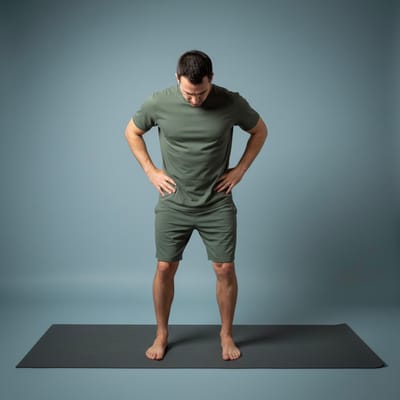
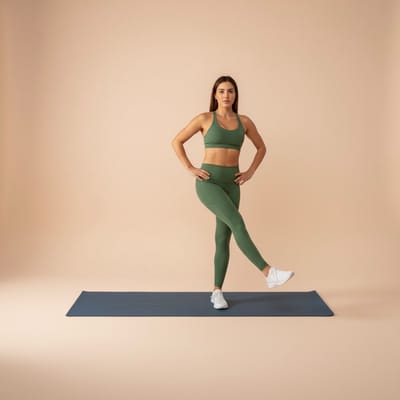
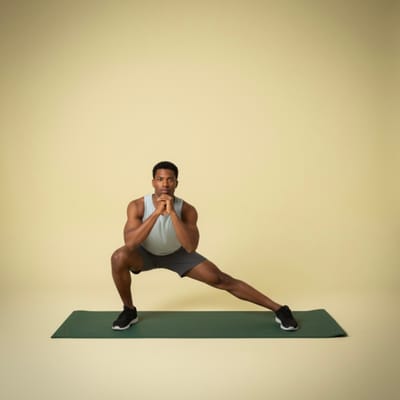
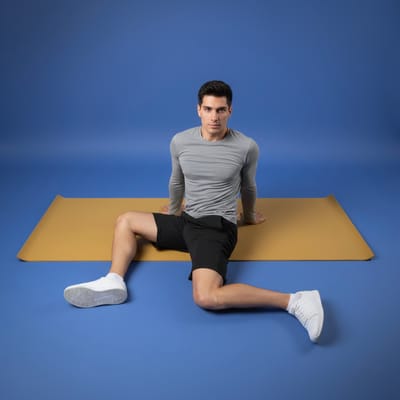
90/90

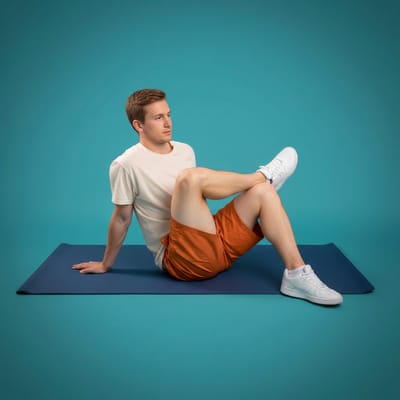
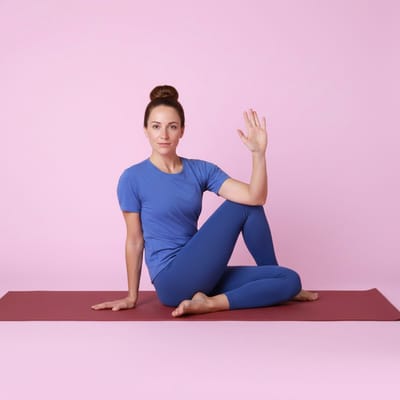
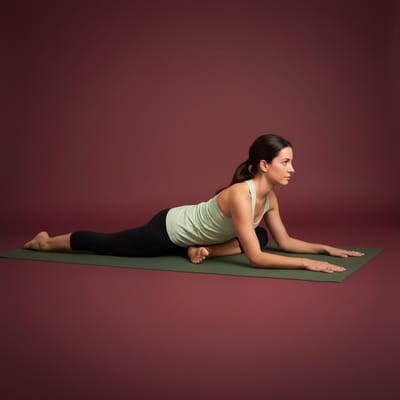
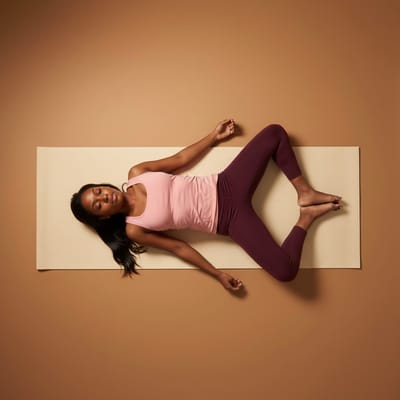
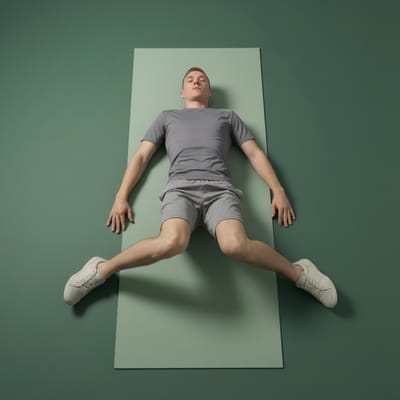
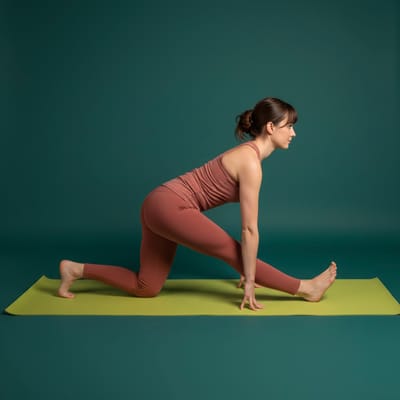
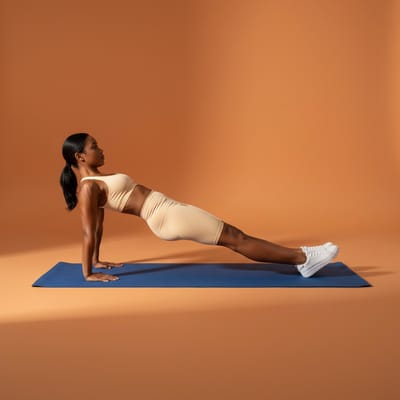
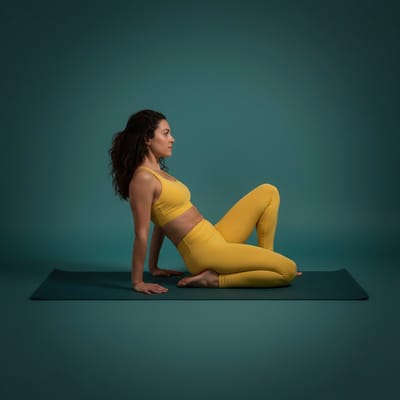
90-90 Beginner both sides
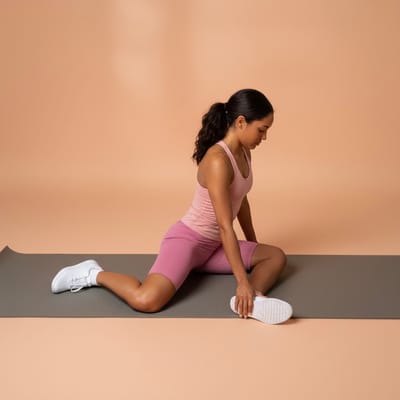
90/90
Settle into the classic 90/90 and breathe your way toward deeper hip rotation without forcing the stretch.
Position: Floor
Types: Static Stretching
Benefits: KneesGroinHipsGlutes
Voice instruction
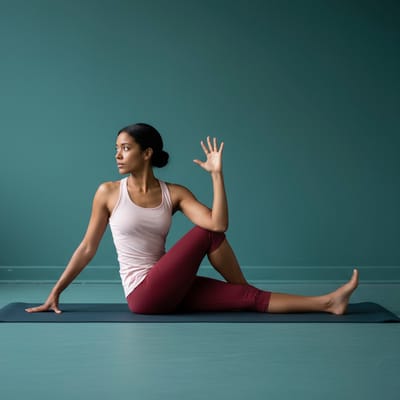
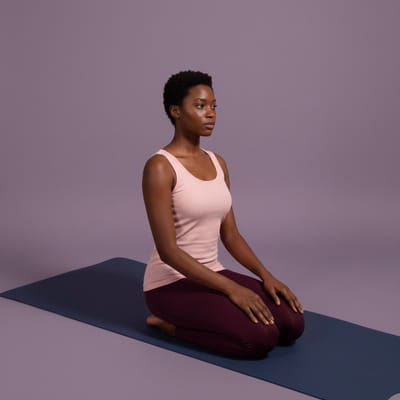
Sit with your knees bent, then line up the front shin in front of your torso and allow the back leg to open behind you.
Voice tip
Think of your spine reaching long.
Instructions:
  • Sit on the floor with your knees bent and feet planted, then let both legs fall to one side.
  • Line up the front shin in front of your torso and allow the back leg to open behind you so each knee makes a right angle.
  • Rotate your chest toward the front thigh, plant your fingertips on the ground, and lengthen through the spine.
  • Hinge forward from the hips, easing into the stretch while keeping your breath calm and steady.
Tips:
  • Think of your spine reaching long rather than diving your head toward the floor.
Adjustments:
  • Sit on a cushion, yoga block, or folded blanket if your hips need a little elevation to relax into the setup.

90/90 Hip Switch

90-90-hip-switch Beginner
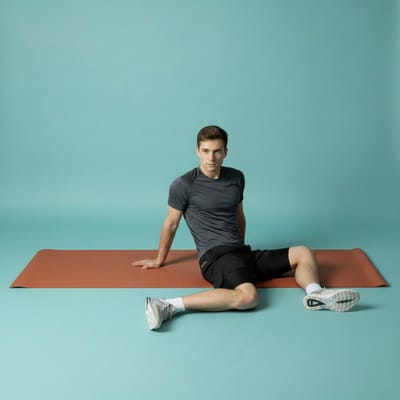
90/90 Hip Switch
Rock your hips side to side through the classic 90/90 flow to open capsule space and teach smooth rotation.
Position: Floor
Types: Mobility
Benefits: HipsCoreGlutes
Voice instruction
Sit with knees bent, then let both knees fall to one side.
Voice tip
Glide through the switch slowly enough that you feel each hip glide in its socket.
Instructions:
  • Sit on the floor with knees bent, heels planted, and spine tall.
  • Let both knees fall to one side so the front shin lines up with your mat and the back thigh forms another right angle.
  • Lift your knees through center, rotate to the other side, and keep the rhythm going with a controlled breath.
Tips:
  • Glide through the switch slowly enough that you feel each hip glide in its socket.
  • Keep your chest proud and ribs stacked so the movement stays in your hips, not your lower back.
Adjustments:
  • Prop your hands behind you whenever you need extra balance.

90/90 Hip Switch Extension

90-90-hip-switch-extension Intermediate
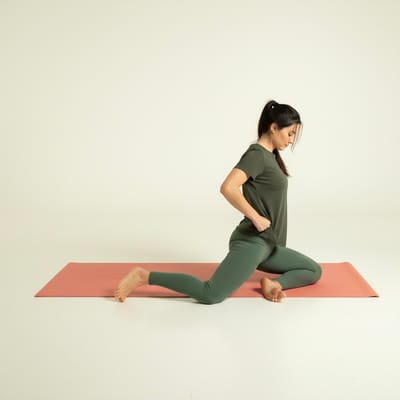
90/90 Hip Switch Extension
Flow between 90/90 positions and squeeze your glutes off the floor to unlock rotation and strength at the same time.
Position: Floor
Types: Mobility
Benefits: HipsCoreGlutes
Voice instruction
Sit tall with knees bent a little wider than hip-width, then hold your hands in front of your chest, then drop both knees to one.
Voice tip
Keep your core braced.
Instructions:
  • Sit tall with knees bent a little wider than hip-width and both heels grounded for stability.
  • Hold your hands in front of your chest, then drop both knees to one side so each leg bends near ninety degrees.
  • Drive through the front shin and glute to lift your hips off the floor, keeping your ribs stacked over your pelvis.
  • Lower back down with control, sweep the knees through center, and repeat the hip lift on the new side.
Tips:
  • Keep your core braced so the lift comes from the hips rather than momentum.
  • Reach the crown of your head toward the ceiling to stay upright as you rotate.
  • Treat the tempo like a mindful flow, lingering long enough to feel the glute activation on every rep.
Adjustments:
  • Limit the hip height if your mobility feels tight and explore a comfortable range first.
  • Place fingertips on the floor behind you when you need a little spotter-style support.
  • Sit on a cushion or folded mat to lift the hips and make the rotation easier on cranky knees.

90/90 Hip Switch (No Hands)

90-90-hip-switch-no-hands Intermediate
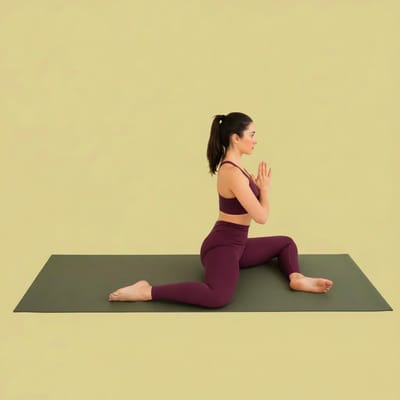
90/90 Hip Switch (No Hands)
Glide your hips through a smooth rotation while keeping your hands free, waking up deep stabilizers that make every stride and squat feel better.
Position: Floor
Types: Mobility
Benefits: HipsCoreGlutes
Voice instruction
Sit tall, then bring your arms in front of your chest for balance, then lower both knees to one side.
Voice tip
Brace your core as if someone is going to poke your ribs.
Instructions:
  • Sit tall on the floor, knees bent slightly wider than hip-width, and plant your heels so you have a steady base.
  • Bring your arms in front of your chest for balance, then lower both knees to one side so the front leg and back leg each bend near ninety degrees.
  • Press through your outer hip to lift the knees, rotate through center, and settle them on the opposite side without letting your torso collapse.
  • Continue gliding side to side for controlled reps, keeping the movement smooth rather than rushed.
Tips:
  • Brace your core as if someone is going to poke your ribs; that tension keeps you upright without relying on your hands.
  • Keep your chest proud and eyes forward so your spine stacks over your hips.
  • Treat the rotation like a gentle massage for the hip joint, breathing steadily with every switch.
Adjustments:
  • Reduce the range of motion if your hips feel tight today, keeping every rep smooth and pain-free.
  • Lightly tap your fingertips to the floor behind you for a spotter-style assist until balance improves.
  • Sit on a folded towel or yoga block to elevate the pelvis if your lower back rounds on the floor.

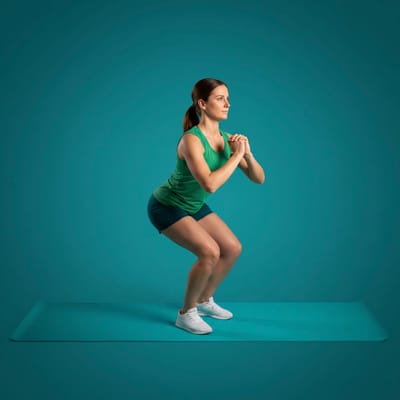
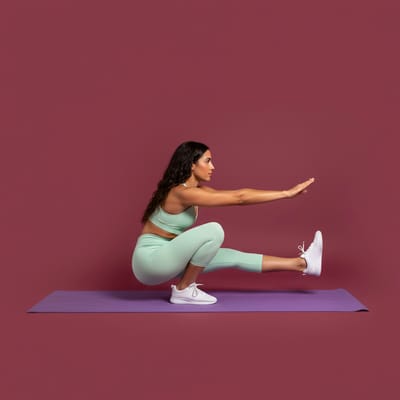
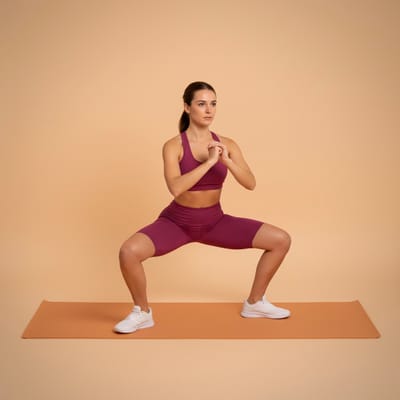
Air Squats

air-squats Beginner
Air Squats
Drop into bodyweight squats to wake up hips, legs, and core before heavier work or a mobility session.
Position: Standing
Types: Calisthenics
Benefits: GroinCalvesHipsHamstringsQuadricepsLower BackGlutes
Voice instruction
Stand with feet shoulder-width apart, then bring your hands behind your head or reach them forward for balance.
Voice tip
Aim to bring your thighs parallel to the floor without letting your heels pop up.
Instructions:
  • Stand with feet about shoulder-width apart and toes slightly turned out.
  • Bring your hands behind your head or reach them forward for balance.
  • Sit your hips back and down as if lowering into a chair while keeping your chest lifted.
  • Drive through your heels to stand tall again and keep the rhythm going.
Tips:
  • Aim to bring your thighs parallel to the floor without letting your heels pop up.
  • Track knees in line with toes so the movement feels strong and supported.
Adjustments:
  • Work within a smaller squat depth if mobility or strength is still building.

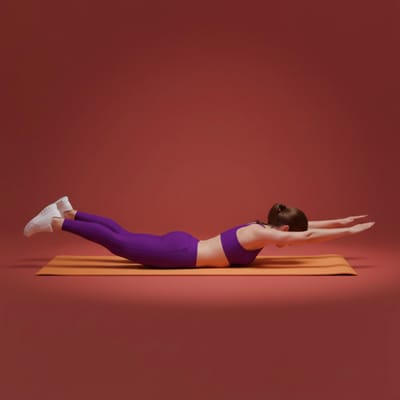
Airplane

airplane Beginner
Airplane
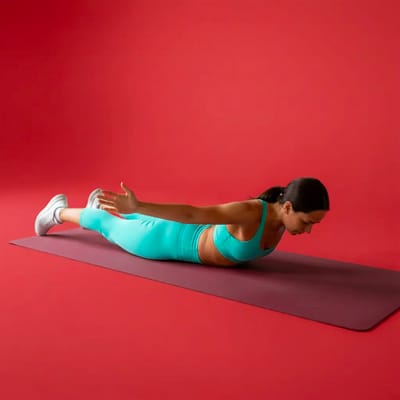
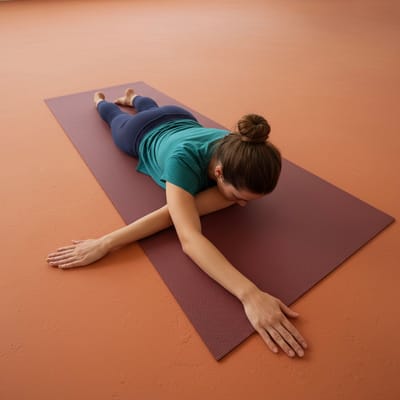
Float your chest and arms off the mat to fire up the entire backside and remind your posture muscles who is in charge.
Position: Floor
Types: Isometrics
Benefits: Upper BackShouldersHamstringsLower BackGlutes
Voice instruction
Lie face down with arms stretched out at shoulder height like wings, then engage glutes and lower back to peel your chest and arms off.
Voice tip
Reach fingertips sideways and squeeze shoulder blades toward each other to light up the upper.
Instructions:
  • Lie face down with arms stretched out at shoulder height like wings and legs long behind you.
  • Engage glutes and lower back to peel your chest and arms off the floor.
  • Keep your gaze slightly forward so the neck stays long and hold the lift while breathing steadily.
Tips:
  • Reach fingertips sideways and squeeze shoulder blades toward each other to light up the upper back.
  • Think about length as much as height to avoid crunching through the low back.
Adjustments:
  • Lift just an inch or two if you are easing in, focusing on control over height.

Ankle Circles

ankle-circles Beginner both sides
Ankle Circles
Mobilize each ankle with slow, juicy circles that wake up balance and prep your feet for movement.
Position: Standing
Types: Dynamic Stretching
Benefits: CalvesFeetShinsAnkles
Voice instruction
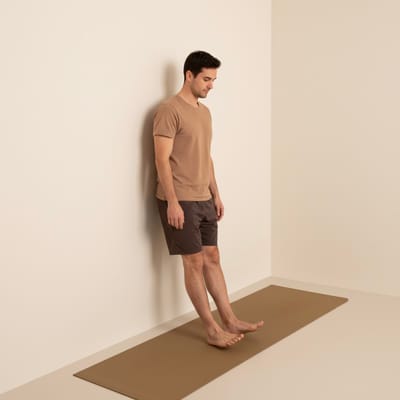
Stand tall with feet hip-width apart, then lift one foot just off the floor, pointing your toes gently downward.
Voice tip
Engage your core so your torso stays steady while the ankle moves.
Instructions:
  • Stand tall with feet hip-width apart and hands resting by your sides or on your hips.
  • Lift one foot just off the floor, pointing your toes gently downward.
  • Draw slow circles with the lifted foot, letting the motion come from the ankle joint.
  • After several reps, reverse the direction to balance the work.
Tips:
  • Engage your core so your torso stays steady while the ankle moves.
  • Keep a soft bend in the standing knee to stay grounded.
  • Move at a tempo that lets you feel every angle of the joint.
Adjustments:
  • Lightly touch a wall or chair if balance needs backup.
  • Make smaller circles when the ankle feels stiff.
  • Perform the same motion from a seated position if standing is not accessible today.

Aquaman

aquaman Beginner both sides
Aquaman
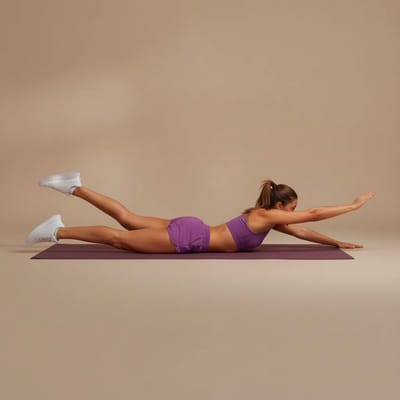
Alternate opposite arm and leg lifts to build a strong posterior chain and superhero-worthy posture.
Position: Floor
Types: Isometrics
Benefits: Upper BackShouldersHamstringsLower BackGlutes
Voice instruction
Lie face down with arms stretched overhead, then brace your core, then lift one arm and the opposite leg just off the floor.
Voice tip
Reach through fingertips and toes to create length as you lift.
Instructions:
  • Lie face down with arms stretched overhead and legs long.
  • Brace your core, then lift one arm and the opposite leg just off the floor while keeping the neck neutral.
  • Hold for a calm breath, lower with control, and switch sides to keep alternating.
Tips:
  • Reach through fingertips and toes to create length as you lift.
  • Focus on the back body doing the work rather than flinging the limbs up.
  • Keep eyes on the mat so the neck stays relaxed.
Adjustments:
  • Lift just a couple of inches if you are building strength or managing sensitivity.

Arm Circles

arm-circles Beginner both sides
Arm Circles
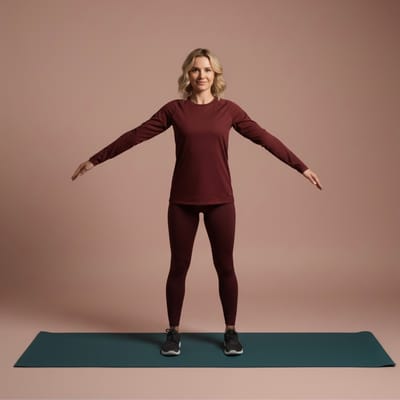
Spin your arms through smooth circles to flood the shoulders with warmth before bigger efforts.
Position: Standing
Types: Dynamic Stretching
Benefits: NeckUpper BackShouldersChest
Voice instruction
Stand tall with feet hip-width apart, then draw small forward circles with both arms, gradually letting the circles get bigger.
Voice tip
Keep shoulders relaxed away from your ears.
Instructions:
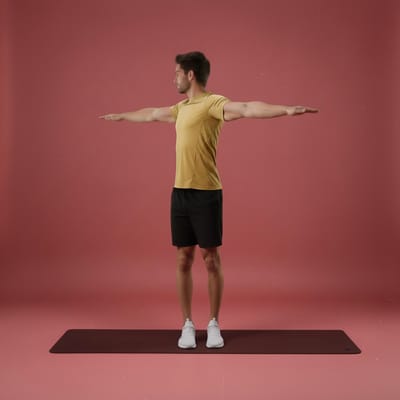
  • Stand tall with feet hip-width apart and stretch your arms straight out to the sides.
  • Draw small forward circles with both arms, gradually letting the circles get bigger as the joints loosen.
  • At the halfway point, reverse the direction and spin the circles backward with the same control.
Tips:
  • Keep shoulders relaxed away from your ears while you move.
  • Move at a steady tempo so the rotator cuff muscles have time to engage.
Adjustments:
  • Bend your elbows slightly and keep the circles smaller if the shoulders feel tight.

Arm Swings

arm-swings Beginner
Arm Swings
Loosen the chest and back with rhythmic arm swings that feel almost like a hug every single rep.
Position: Standing
Types: Dynamic Stretching
Benefits: TricepsUpper BackShouldersChestBiceps
Voice instruction
Stand tall with feet hip-width apart, then swing both arms forward to cross in front of your chest, alternating which arm lands on top.
Voice tip
Start slow to feel the stretch, then let the pace build as your shoulders warm.
Instructions:
  • Stand tall with feet hip-width apart and arms stretched out to the sides.
  • Swing both arms forward to cross in front of your chest, alternating which arm lands on top.
  • Open the arms back out wide and keep the movement flowing in a relaxed rhythm.
Tips:
  • Start slow to feel the stretch, then let the pace build as your shoulders warm up.
  • Keep shoulders low and breathe steadily so the motion stays smooth.
Adjustments:
  • Shorten the swing if any tightness shows up in the chest or upper back.

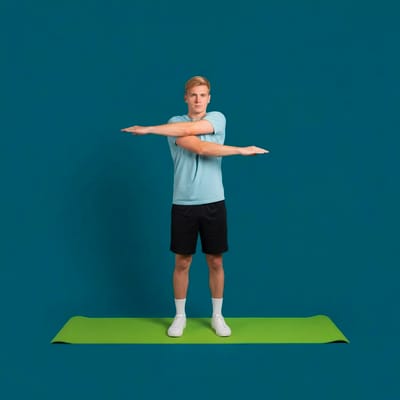
Bear Hug

bear-hug Beginner both sides
Bear Hug
Wrap yourself up to stretch the upper back and give tense shoulders a quick reset.
Position: Seated, Standing
Types: Static Stretching
Benefits: SpineNeckUpper BackShoulders
Voice instruction
Stand or sit tall with arms extended out to the sides, then cross your arms in front and place your hands on opposite shoulder blades.
Voice tip
Let a long exhale help you sink into the stretch.
Instructions:
  • Stand or sit tall with arms extended out to the sides.
  • Cross your arms in front and place your hands on opposite shoulder blades like you are giving yourself a hug.
  • Squeeze the embrace, gently round through the upper back, and tuck your chin toward your chest while breathing deeply.
Tips:
  • Let a long exhale help you sink into the stretch.
  • Imagine pulling the shoulder blades wide apart to create space across the upper back.
Adjustments:
  • Keep the arms simply crossed at the forearms if going deeper feels uncomfortable.

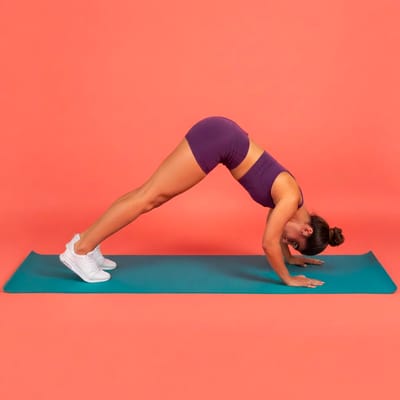
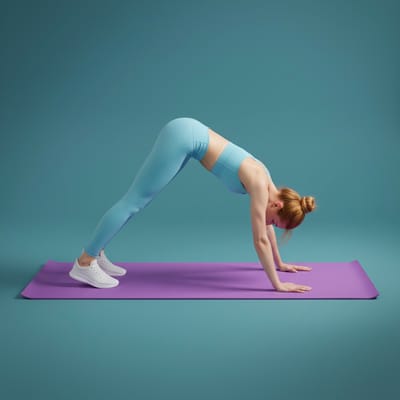
Bent Arm Pike

bent-arm-pike Intermediate
Bent Arm Pike
Set up in an inverted V and bend the elbows to load the shoulders, triceps, and core with delicious tension.
Position: Floor
Types: Isometrics
Benefits: TricepsShouldersChestAbdomen
Voice instruction
Start in a high plank, then lift your hips to form an upside-down V, pressing firmly through hands and toes.
Voice tip
Keep legs active and heels reaching toward the floor even if they do not touch.
Instructions:
  • Start in a high plank, hands under shoulders and legs long.
  • Lift your hips to form an upside-down V, pressing firmly through hands and toes.
  • Bend your elbows out to the sides and lower your head toward the floor while keeping hips high.
  • Hold the powerful position and breathe into the shoulders before easing out.
Tips:
  • Keep legs active and heels reaching toward the floor even if they do not touch.
  • Let the head stay between the biceps so the neck can relax.
Adjustments:
  • Soften the knees and lower the hips slightly if the full bend is too intense today.

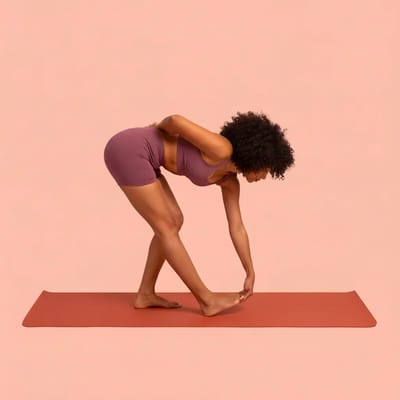
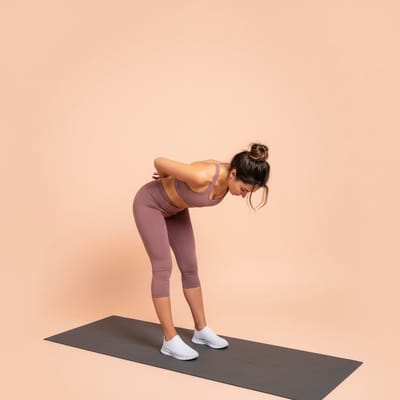
Bent Over Calf

bent-over-calf Beginner both sides
Bent Over Calf
Dial in a deep calf and ankle stretch by hinging forward and pulling gently on the toes.
Position: Standing
Types: Static Stretching
Benefits: CalvesFeetAnkles
Voice instruction
Stand tall with feet hip-width apart, then bend the back knee and sit your hips back while lifting the front toes so you balance on.
Voice tip
Keep your spine long and chest open.
Instructions:
  • Stand tall with feet hip-width apart, then step one foot forward and keep that leg straight.
  • Bend the back knee and sit your hips back while lifting the front toes so you balance on the heel.
  • Hinge forward from the hips to reach for the front foot with the opposite hand, letting the other hand rest behind your back.
  • Hold the stretch while breathing into the calf and keep the back heel grounded.
Tips:
  • Keep your spine long and chest open instead of collapsing toward the floor.
  • Aim both sets of toes straight ahead to square the stretch.
Adjustments:
  • Use a strap or towel around the front foot if reaching with your hand feels too intense.

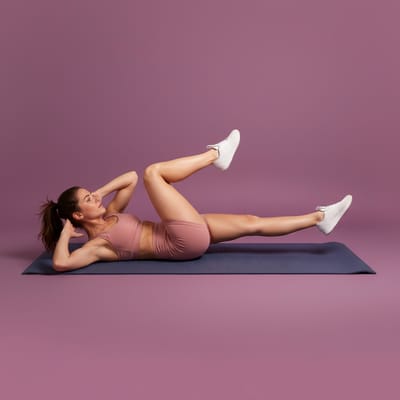
Bicycle Crunch Hold

bicycle-crunch-hold Intermediate both sides
Bicycle Crunch Hold
Lock into a bicycle crunch and feel your obliques fire while you balance between power and control.
Position: Floor
Types: Isometrics
Benefits: ObliquesAbdomen
Voice instruction
Lie face up with knees bent, then lift head, shoulders, and upper back off the mat while pressing your lower spine down.
Voice tip
Keep the core braced.
Instructions:
  • Lie on your back with knees bent and feet on the floor, then lace your fingers lightly behind your head.
  • Lift head, shoulders, and upper back off the mat while pressing your lower spine down.
  • Extend one leg long and pull the opposite knee toward your chest as you rotate to bring the opposite elbow toward that knee.
  • Hold the twist with steady breathing, then switch sides halfway through the set.
Tips:
  • Keep the core braced so the lower back stays glued to the mat.
  • Think about rotating the ribcage rather than yanking the elbow forward.
  • Support your head gently with your hands without pulling on the neck.
Adjustments:
  • Keep both knees more bent or rest the extended heel on the floor if you need to dial the intensity down.

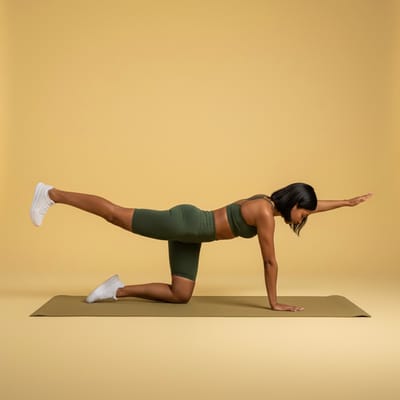
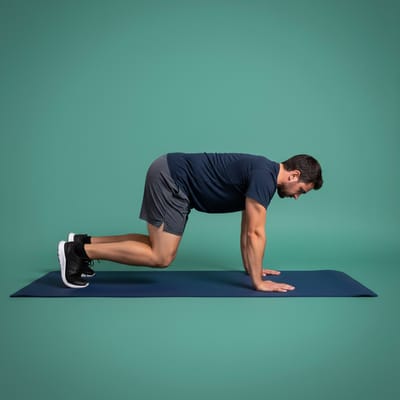
Bird Dog

bird-dog Beginner both sides
Bird Dog
Pair opposite arm and leg reaches to build a rock-solid core and graceful balance.
Position: Floor
Types: Isometrics
Benefits: ShouldersLower BackGlutes
Voice instruction
Set up on hands and knees with shoulders stacked over wrists, then brace your core, then extend one arm forward while the opposite leg reaches.
Voice tip
Keep your hips level by pressing the supporting hand and knee firmly into the floor.
Instructions:
  • Set up on all fours with shoulders stacked over wrists and hips over knees.
  • Brace your core, then extend one arm forward while the opposite leg reaches straight back.
  • Hold the long line parallel to the floor and breathe steadily before returning to tabletop.
  • Alternate sides with the same calm control.
Tips:
  • Keep your hips level by pressing the supporting hand and knee firmly into the floor.
  • Think about length from fingertips through the heel rather than height.
Adjustments:
  • Practice lifting just the arm or just the leg until the full variation feels steady.

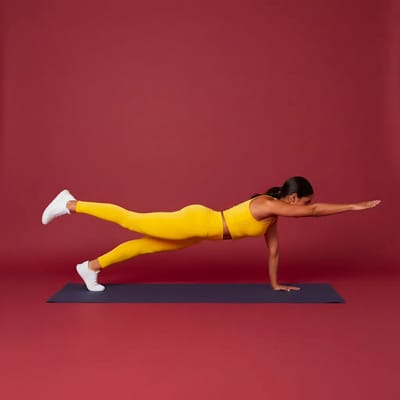
Bird Dog Plank

bird-dog-plank Intermediate both sides
Bird Dog Plank
Test your balance by hovering opposite limbs in a plank, forcing every stabilizer to wake up.
Position: Floor
Types: Isometrics
Benefits: ShouldersLower BackGlutes
Voice instruction
Set up in a strong high plank with wrists under shoulders, then brace your core, then lift one hand off the floor.
Voice tip
Squeeze your glutes and draw the belly button toward your spine to keep the lower.
Instructions:
  • Set up in a strong high plank with wrists under shoulders and feet hip-width apart.
  • Brace your core, then lift one hand off the floor as the opposite leg reaches straight back behind you.
  • Hold the diagonal line from fingertips to heel while keeping hips square to the ground.
  • Lower with control, reset in plank, and switch sides.
Tips:
  • Squeeze your glutes and draw the belly button toward your spine to keep the lower back steady.
  • Imagine balancing a glass of water on your hips to remind yourself not to twist.
Adjustments:
  • Practice lifting just the arm or just the leg until you feel solid, then combine the two.

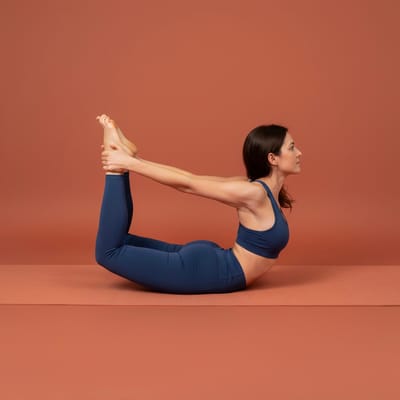
Bow Pose

bow-pose Intermediate
Bow Pose
Catch your ankles and arc your body into a bow to stretch the entire front line while energizing the back body.
Position: Floor
Types: Static Stretching, Yoga
Benefits: PsoasSpineUpper BackShouldersHipsQuadricepsChestAbdomen
Voice instruction
Lie on your belly with legs extended, then bend both knees, bringing heels toward the glutes, and reach back to grab your ankles.
Voice tip
Keep your gaze forward or slightly up to maintain length through the neck.
Instructions:
  • Lie on your belly with legs extended and arms by your sides.
  • Bend both knees, bringing heels toward the glutes, and reach back to grab your ankles.
  • Press your feet into your hands as you lift your chest, head, and thighs away from the mat.
  • Hold the arc while breathing evenly, then lower with control.
Tips:
  • Keep your gaze forward or slightly up to maintain length through the neck.
  • Squeeze the inner thighs toward each other so the legs stay hip-width apart.
Adjustments:
  • Stay lower to the floor or capture one ankle at a time if the full lift feels too intense.

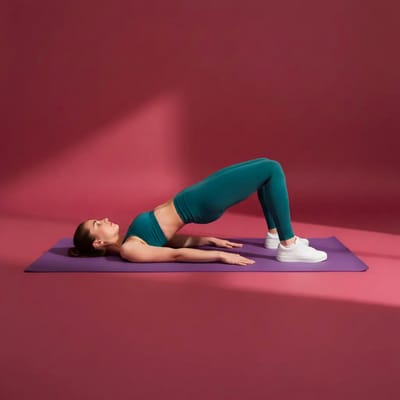
Bridge

bridge Beginner
Bridge
Lift into a grounded bridge to awaken glutes and hamstrings while giving your spine a friendly stretch.
Position: Floor
Types: Isometrics, Yoga
Benefits: HamstringsLower BackGlutes
Voice instruction
Lie face up with knees bent, then press through both heels to raise your hips, forming a straight line.
Voice tip
Squeeze the glutes at the top.
Instructions:
  • Lie on your back with knees bent, feet hip-width, and arms relaxed by your sides.
  • Press through both heels to raise your hips, creating a straight line from knees to shoulders.
  • Hold the lift with glutes fired up and breathe into your ribs before lowering with control.
Tips:
  • Squeeze the glutes at the top so the work stays in the backside instead of the low back.
  • Keep ribs down and core engaged to prevent excessive arching.
Adjustments:
  • Lift the hips to a halfway point if you want a lighter option.
  • Rest your head on a folded towel when the neck needs extra support.

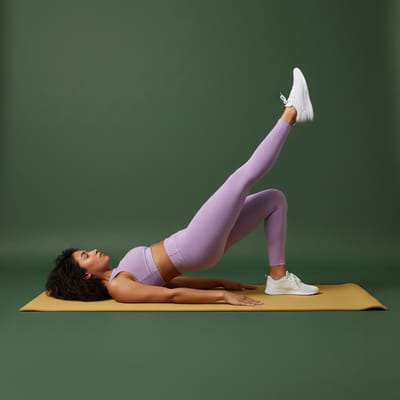
Bridge Leg Lift

bridge-leg-lift Intermediate both sides
Bridge Leg Lift
Hold a single-leg bridge to fire up your glutes, hamstrings, and core while teaching true hip stability.
Position: Floor
Types: Isometrics
Benefits: HipsHamstringsQuadricepsLower BackGlutesAbdomen
Voice instruction
Lie face up with knees bent, then press through your heels to lift hips up, forming a straight line.
Voice tip
Drive the grounded heel into the floor to keep the hips lifted.
Instructions:
  • Lie on your back with knees bent, feet hip-width apart, and arms along your sides.
  • Press through your heels to lift hips up, creating a straight line from knees to shoulders.
  • Keeping hips level, extend one leg straight out so the thighs stay parallel.
  • Hold the position while breathing steadily, then switch legs halfway through the set.
Tips:
  • Drive the grounded heel into the floor to keep the hips lifted.
  • Imagine balancing a glass of water on your pelvis to avoid dropping the lifted side.
Adjustments:
  • Lift the working foot only a few inches or keep a bend in the raised leg if needed.

Bulldog

bulldog Intermediate
Bulldog
Hover your knees just above the mat to light up shoulders, core, and glutes in one spicy hold.
Position: Floor
Types: Isometrics
Benefits: TricepsUpper BackShouldersChestGlutes
Voice instruction
Start on hands and knees with knees under hips, then tuck your toes, brace the core, and hover the knees a few inches above the.
Voice tip
Keep your back flat, imagining a tabletop resting on your spine.
Instructions:
  • Start on all fours with knees under hips and hands under shoulders.
  • Tuck your toes, brace the core, and hover the knees a few inches above the floor.
  • Spread weight evenly between hands and the balls of your feet while breathing slowly.
Tips:
  • Keep your back flat, imagining a tabletop resting on your spine.
  • Gaze at the space between your hands to keep the neck neutral.
Adjustments:
  • Tap the knees down briefly whenever you need a reset before hovering again.

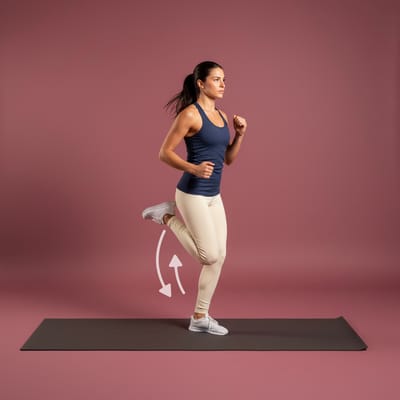
Butt Kicks

butt-kicks Beginner
Butt Kicks
Bounce through light butt kicks to ramp up circulation and prime the legs for action.
Position: Standing
Types: Cardio
Benefits: KneesCalvesFeetHipsHamstringsQuadricepsCoreAnklesToesGlutes
Voice instruction
Stand with feet hip-width apart, then bend one knee to tap your heel toward your glute, landing softly on the other foot.
Voice tip
Stay on the balls of your feet for a gentle, quiet landing.
Instructions:
  • Stand with feet hip-width apart and arms relaxed.
  • Bend one knee to tap your heel toward your glute, landing softly on the other foot.
  • Switch legs in a steady rhythm, keeping the movement light and springy.
Tips:
  • Stay on the balls of your feet for a gentle, quiet landing.
  • Let the pace build gradually instead of sprinting right away.
  • Keep your torso tall and shoulders relaxed.
Adjustments:
  • Move more slowly to work on balance and control.
  • Kick lower if the quads or knees feel tight today.

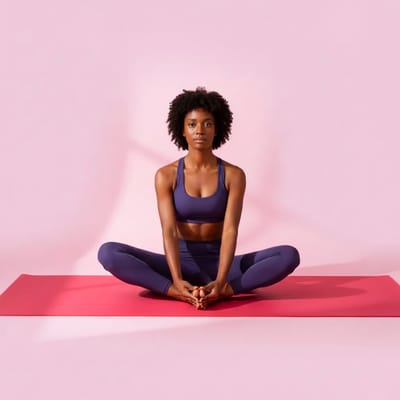
Butterfly

butterfly Beginner
Butterfly
Drop into butterfly pose to open the hips and groin while you breathe space into tight muscles.
Position: Floor
Types: Static Stretching, Yoga
Benefits: GroinHips
Voice instruction
Sit tall with legs extended, then hold your feet or ankles and let your knees fall out to the sides.
Voice tip
Use your elbows to nudge the thighs downward only if it feels comfortable.
Instructions:
  • Sit tall with legs extended, then bend your knees and bring the soles of your feet together.
  • Hold your feet or ankles and let your knees fall out to the sides.
  • Press the knees gently toward the floor while keeping the spine long.
Tips:
  • Use your elbows to nudge the thighs downward only if it feels comfortable.
  • Lift through the chest and avoid rounding your back.
Adjustments:
  • Place cushions under your thighs when the hips need extra support.
  • Sit on a folded blanket to elevate your seat and create more ease.

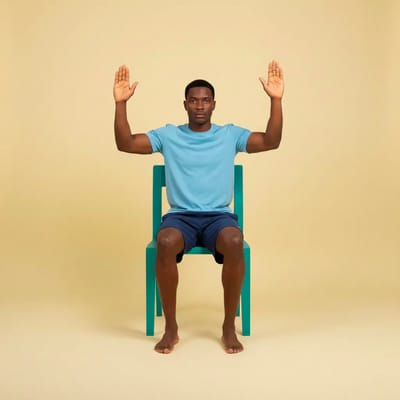
Cactus Arms

cactus-arms Beginner
Cactus Arms
Open your chest with strong cactus arms to counter all that desk time and wake up your upper back.
Position: Standing
Types: Static Stretching
Benefits: SpineNeckUpper BackShouldersChest
Voice instruction
Sit or stand tall , then lift your arms to shoulder height, bend elbows to ninety degrees, and turn palms forward.
Voice tip
Draw shoulders away from your ears.
Instructions:
  • Sit or stand tall with arms relaxed by your sides.
  • Lift your arms to shoulder height, bend elbows to ninety degrees, and turn palms forward.
  • Keep elbows level with shoulders while squeezing shoulder blades together to open the chest.
Tips:
  • Draw shoulders away from your ears so the neck stays long.
  • Gaze straight ahead and breathe into the stretch across your chest.
Adjustments:
  • Lower the elbows slightly if the shoulders feel cranky.
  • Stand against a wall to help you maintain alignment.

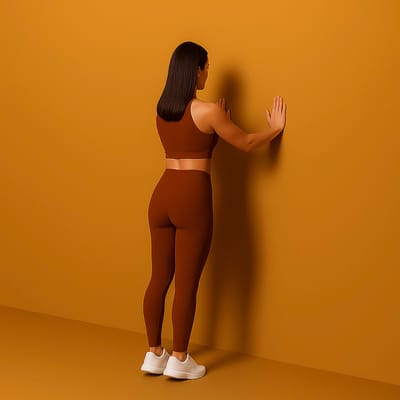
Calf Raises

calf-raises Beginner
Calf Raises
Rise up onto your toes to power up the calves and bulletproof your ankles.
Position: Standing
Types: Isometrics
Benefits: CalvesFeetAnklesToes
Voice instruction
Stand facing a wall with feet hip-width apart, then press through the balls of your feet to lift both heels as high as possible.
Voice tip
Keep your torso upright.
Instructions:
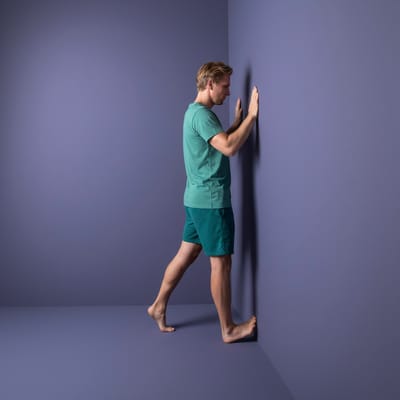
  • Stand facing a wall with feet hip-width apart and palms resting lightly on the surface.
  • Press through the balls of your feet to lift both heels as high as possible.
  • Hold the top position for a beat, then lower the heels back down with control.
Tips:
  • Keep your torso upright instead of leaning into the wall.
  • Aim both feet straight ahead and avoid rolling the ankles outward.
Adjustments:
  • Use a sturdy chair or countertop for balance if a wall is not handy.
  • Lift one heel at a time for a gentler option or to focus on single-leg strength.

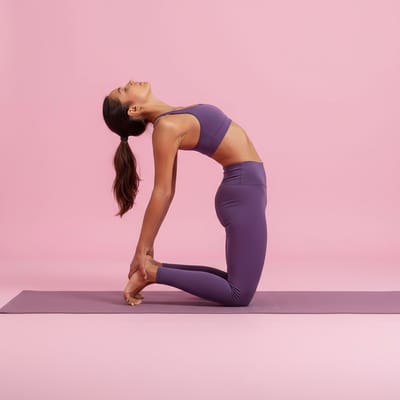
Camel Pose

camel-pose Intermediate
Camel Pose
Open the entire front body with a bold camel pose that stretches quads, hips, and heart space.
Position: Floor
Types: Static Stretching, Yoga
Benefits: PsoasSpineUpper BackShouldersQuadricepsChestAbdomen
Voice instruction
Kneel with knees hip-width apart, then engage your core and thighs, lift through your chest, and begin to lean back creating an upper back arch.
Voice tip
Press hips forward so they stay directly above your knees.
Instructions:
  • Kneel with knees hip-width apart and place hands on your lower back, fingers pointing down.
  • Engage your core and thighs, lift through your chest, and begin to lean back creating an upper back arch.
  • If it feels good, reach one hand at a time toward your heels while keeping hips stacked over knees.
  • Open the shoulders, soften the throat, and let your head relax back while you breathe.
Tips:
  • Press hips forward so they stay directly above your knees.
  • Keep the glutes active to support the lower back.
Adjustments:
  • Stay with hands on your lower back if reaching the heels feels too intense.
  • Pad the knees with a folded blanket or cushion for comfort.

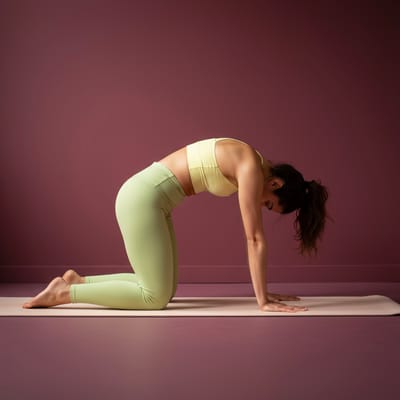
Cat Cow

cat-cow Beginner
Cat Cow
Flow through cat and cow to mobilize your spine and melt away stiffness one breath at a time.
Position: Floor
Types: Mobility, Yoga
Benefits: SpineNeckUpper BackLower BackAbdomen
Voice instruction
Begin on hands and knees with wrists under shoulders, then inhale.
Voice tip
Move slowly enough that each vertebra gets a moment of attention.
Instructions:
  • Begin on hands and knees with wrists under shoulders and knees under hips.
  • Inhale as you drop your belly, lift your chest, and gaze forward or slightly up.
  • Exhale as you round your spine, draw the belly toward the ceiling, and tuck your chin.
  • Continue gliding between the two shapes in rhythm with your breath.
Tips:
  • Move slowly enough that each vertebra gets a moment of attention.
Adjustments:
  • Keep your head more neutral if your neck prefers less movement.

Chest Opener

chest-opener Beginner
Chest Opener
Open your heart space and stretch the front body with a simple yet powerful chest opener.
Position: Standing
Types: Static Stretching
Benefits: ShouldersChestAbdomen
Voice instruction
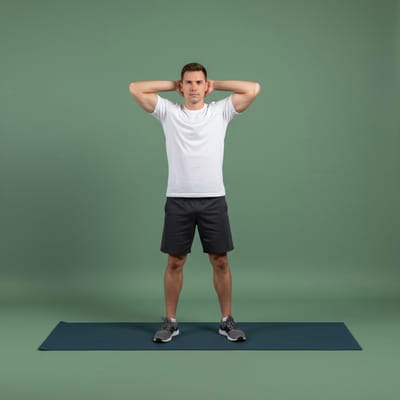
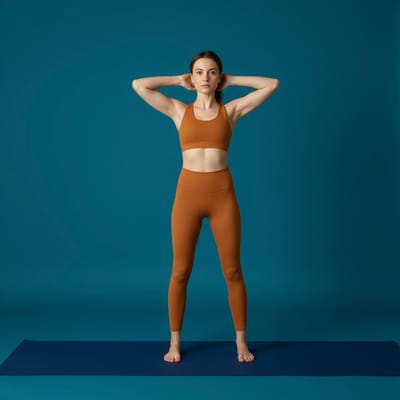
Stand tall with feet hip-width apart, then clasp your hands behind your head and widen your elbows out to the sides.
Voice tip
Keep shoulders soft and away from your ears.
Instructions:
  • Stand tall with feet hip-width apart.
  • Clasp your hands behind your head and widen your elbows out to the sides.
  • Gently squeeze shoulder blades together and lift your chest as you breathe in.
Tips:
  • Keep shoulders soft and away from your ears.
  • Maintain a long spine rather than arching through the lower back.
Adjustments:
  • Hold a strap or towel behind your head if your hands do not quite meet comfortably.

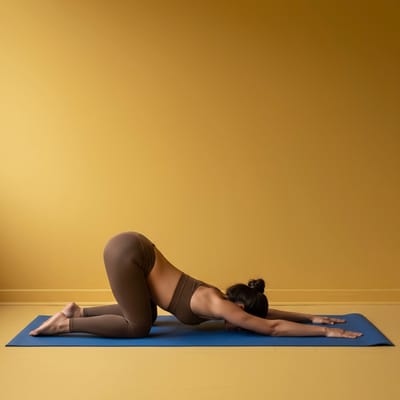
Child's Pose

childs-pose Beginner
Child's Pose
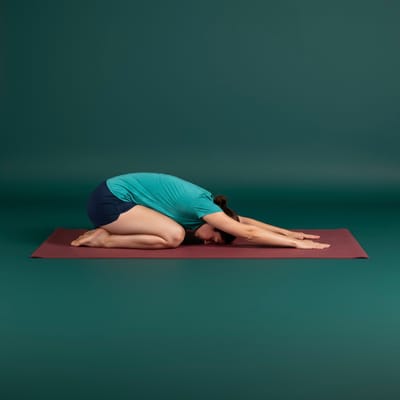
Melt into child's pose to reset your breath and relax the back with a calming stretch.
Position: Floor
Types: Static Stretching, Yoga
Benefits: FeetShinsShouldersHipsLower BackAnkles
Voice instruction
Start on hands and knees, then sit your hips back toward your heels and reach your hands forward.
Voice tip
Crawl your fingertips forward to deepen the stretch through the sides of your body.
Instructions:
  • Start on hands and knees, then widen your knees while keeping big toes touching.
  • Sit your hips back toward your heels and reach your hands forward.
  • Lower your chest between your thighs and rest your forehead on the floor or a support.
Tips:
  • Crawl your fingertips forward to deepen the stretch through the sides of your body.
  • Let your chest sink toward the ground with each exhale.
Adjustments:
  • Keep knees closer together if that feels better for your hips.
  • Rest your forehead on a block, pillow, or folded blanket if it does not reach the floor.

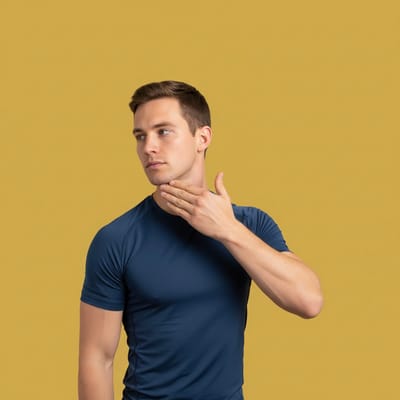
Chin Retractions

chin-retractions Beginner
Chin Retractions
Glide your head straight back like you are making a double chin to strengthen the deep neck flexors.
Position: Seated, Standing
Types: Isometrics, Static Stretching
Benefits: Neck
Voice instruction
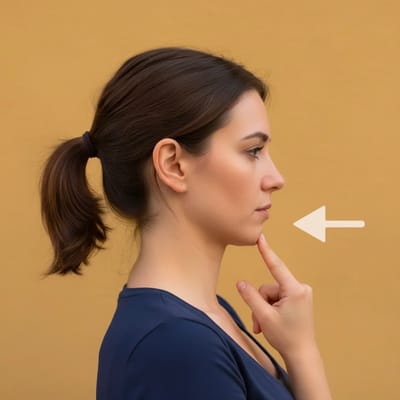
Sit or stand tall with shoulders relaxed, then gently draw your chin straight back.
Voice tip
Avoid tipping the chin up or down; think purely backward.
Instructions:
  • Sit or stand tall with shoulders relaxed.
  • Gently draw your chin straight back as if sliding your head along a wall, keeping the head level.
  • Use a fingertip on your chin to guide the motion and hold for a slow breath.
  • Release and repeat for controlled reps.
Tips:
  • Avoid tipping the chin up or down; think purely backward.
  • Relax your shoulders so the neck muscles can do the work.
Adjustments:
  • Lie on your back and perform the same glide if you need help keeping the motion aligned.

Cow Face

cow-face Intermediate both sides
Cow Face
Thread your arms into cow face to stretch shoulders and triceps while opening your chest.
Position: Seated, Standing
Types: Static Stretching, Yoga
Benefits: TricepsShoulders
Voice instruction
Sit or stand tall, then bend the lifted elbow.
Voice tip
Keep your torso upright.
Instructions:
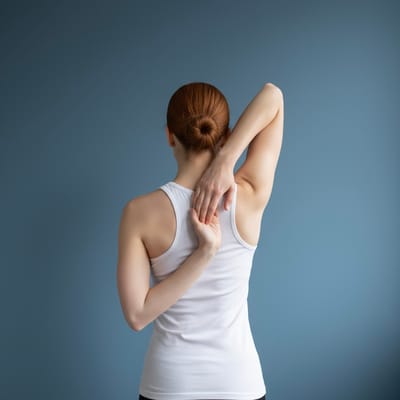
  • Sit or stand tall and raise one arm overhead.
  • Bend the lifted elbow so your hand reaches down between your shoulder blades.
  • Extend the other arm out, bend the elbow, and slide the hand up your back to meet the top hand.
  • Clasp hands if they connect, or simply reach toward each other while keeping your chest lifted.
Tips:
  • Keep your torso upright instead of leaning forward.
  • Draw the bottom shoulder back so the chest stays open.
Adjustments:
  • Hold a strap or towel between your hands if they do not meet.
  • Place one hand on the upper back and the other on the lower back for a gentler version.

Cross Leg Fold

cross-leg-fold Beginner both sides
Cross Leg Fold
Fold over crossed legs to release your hamstrings and low back with a sweet twist of the hips.
Position: Standing
Types: Static Stretching
Benefits: HipsHamstringsLower Back
Voice instruction
Stand tall and cross one foot over the other, then hinge forward from your hips and allow your torso to drape over your legs.
Voice tip
Keep weight balanced between both feet despite the cross.
Instructions:
  • Stand tall and cross one foot over the other.
  • Hinge forward from your hips and allow your torso to drape over your legs.
  • Let your arms hang toward the floor or rest hands on the front leg as you breathe.
Tips:
  • Keep weight balanced between both feet despite the cross.
  • Think about lengthening your spine rather than rounding it.
  • Relax your neck so your head hangs heavy.
Adjustments:
  • Place hands on shins, ankles, or yoga blocks if the floor feels far away.

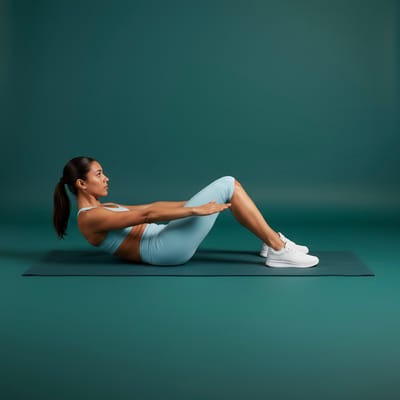
Crunch Hold

crunch-hold Beginner
Crunch Hold
Hold a fierce crunch to fire up your abs and build time under tension without any fancy equipment.
Position: Floor
Types: Isometrics
Benefits: Abdomen
Voice instruction
Lie face up with knees bent, then engage your core to lift your head, neck, and shoulders off the floor.
Voice tip
Press your lower back into the mat to protect your spine.
Instructions:
  • Lie on your back with knees bent and feet planted.
  • Engage your core to lift your head, neck, and shoulders off the floor.
  • Reach your arms forward, keeping them parallel to the ground, and hold the position while breathing steadily.
Tips:
  • Press your lower back into the mat to protect your spine.
  • Keep the arms strong and level to remind your upper body to stay lifted.
Adjustments:
  • Support your head with your hands if your neck needs a break, keeping elbows wide.

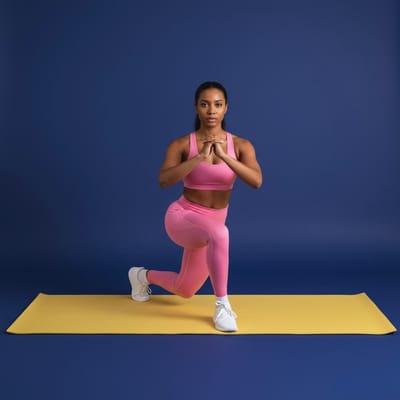
Curtsy Lunge Hold

curtsy-lunge-hold Intermediate both sides
Curtsy Lunge Hold
Sink into a curtsy lunge hold to torch your glutes and inner thighs while polishing balance.
Position: Standing
Types: Isometrics
Benefits: CalvesHipsHamstringsQuadricepsGlutes
Voice instruction
Stand with feet hip-width apart, then step one foot diagonally back behind the other, crossing at the thighs.
Voice tip
Keep your chest lifted and spine tall.
Instructions:
  • Stand with feet hip-width apart and arms relaxed.
  • Step one foot diagonally back behind the other, crossing at the thighs.
  • Bend both knees to lower your hips until the front thigh is near parallel and the back knee hovers above the floor.
  • Bring your hands in front of your chest and hold the position while breathing steadily.
Tips:
  • Keep your chest lifted and spine tall.
  • Press through the front heel and squeeze the glutes to stay steady.
Adjustments:
  • Lower only partway if you are building strength.
  • Lightly touch a wall or chair for balance support.

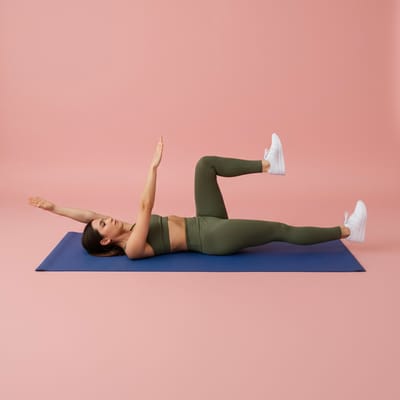
Dead Bug

dead-bug Beginner both sides
Dead Bug
Stabilize your core with controlled dead bug holds that challenge coordination and focus.
Position: Floor
Types: Isometrics
Benefits: ShouldersHipsQuadricepsAbdomen
Voice instruction
Lie face up with arms reaching toward the ceiling, then brace your core, lift one knee above the hip, and raise the opposite arm up.
Voice tip
Press your lower back into the mat to keep your spine safe.
Instructions:
  • Lie on your back with arms reaching toward the ceiling and legs extended.
  • Brace your core, lift one knee above the hip, and raise the opposite arm toward the ceiling.
  • Hover the other arm and leg just off the floor and hold the position with steady breathing.
  • Switch sides halfway through the set with the same control.
Tips:
  • Press your lower back into the mat to keep your spine safe.
  • Keep hips square and avoid letting one side drop toward the floor.
Adjustments:
  • Work through a smaller range of motion if needed, lifting limbs only partway.

Deep Split Squat

deep-split-squat Intermediate both sides
Deep Split Squat
Drop into a deep split squat to stretch your hip flexors while building leg strength and balance.
Position: Standing
Types: Static Stretching
Benefits: HipsQuadricepsAbdomen
Voice instruction
Stand tall and step one foot back into a long lunge stance, then lower your hips straight down, keeping the back leg long.
Voice tip
Ground the entire front foot to stay stable.
Instructions:
  • Stand tall and step one foot back into a long lunge stance.
  • Lower your hips straight down, keeping the back leg long as the front knee tracks over the toes.
  • Stay upright through your torso and let the front knee travel forward while the back thigh stretches.
  • Hold the bottom position, then press through the front foot to rise and repeat or switch sides.
Tips:
  • Ground the entire front foot to stay stable.
  • Keep the front knee aligned with your second toe instead of letting it cave inward.
Adjustments:
  • Stop a bit higher if you need a lighter stretch.
  • Use a wall, dowel, or chair for balance if you feel wobbly.

Dip Hold

dip-hold Beginner
Dip Hold
Hover your hips in a reverse tabletop to light up triceps and shoulders while your core keeps everything steady.
Position: Floor
Types: Isometrics
Benefits: TricepsShouldersChestAbdomen
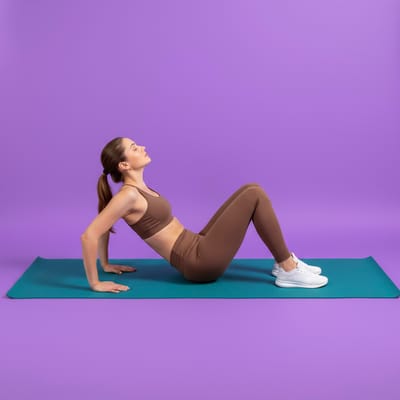
Voice instruction
Sit with knees bent, then press through your palms to lift your hips off the floor, keeping elbows slightly bent.
Voice tip
Keep wrists stacked under shoulders and elbows hugging in toward your sides.
Instructions:
  • Sit with knees bent, feet flat, and hands planted behind you with fingers pointing toward your heels.
  • Press through your palms to lift your hips off the floor, keeping elbows slightly bent.
  • Engage your core and hold the hover while focusing on long, easy breaths.
Tips:
  • Keep wrists stacked under shoulders and elbows hugging in toward your sides.
  • Squeeze shoulder blades together to keep the chest open.
Adjustments:
  • Lower closer to the floor if you need less intensity.
  • Turn your fingers slightly outward to ease pressure on the wrists.

Diver

diver Beginner
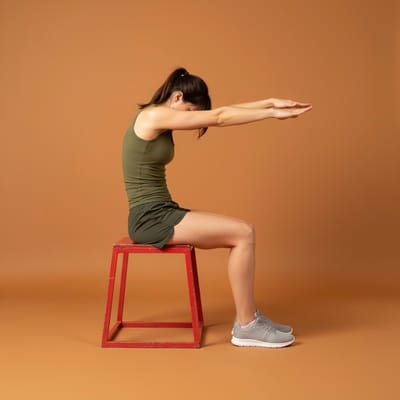
Diver
Dive forward with rounded shoulders to stretch the upper back and give your spine a gentle release.
Position: Standing
Types: Static Stretching
Benefits: SpineNeckUpper BackShouldersLower Back
Voice instruction
Sit tall with arms resting by your sides, then reach both arms forward, stacking one hand on top of the other.
Voice tip
Keep your core lightly engaged.
Instructions:
  • Sit tall with arms resting by your sides and feet grounded.
  • Reach both arms forward, stacking one hand on top of the other.
  • Tuck your head between your arms, round through the upper back, and reach forward like a diver slicing into water.
Tips:
  • Keep your core lightly engaged so the stretch stays controlled.
  • Let the shoulders spread wide to feel the stretch across your upper back.
Adjustments:
  • Rest your forearms on your thighs if you need extra support during the fold.

Doorway Pecs

doorway-pecs Beginner
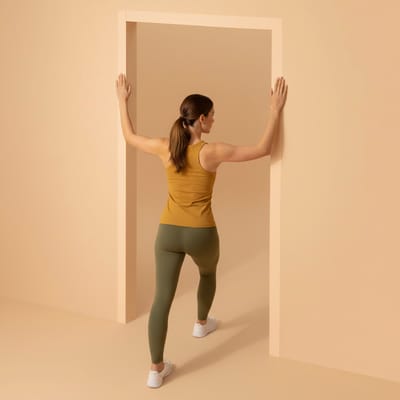
Doorway Pecs
Stretch your chest in a doorway to counter rounded shoulders and fuel better posture.
Position: Standing
Types: Static Stretching
Benefits: ShouldersChest
Voice instruction
Stand inside a doorway, then step one foot forward and gently lean your body through the doorway.
Voice tip
Draw shoulder blades down and back.
Instructions:
  • Stand inside a doorway and place forearms and palms on the frame at shoulder height, elbows bent to ninety degrees.
  • Step one foot forward and gently lean your body through the doorway until you feel a chest stretch.
  • Hold the position while breathing deeply, letting the front of the shoulders soften.
Tips:
  • Draw shoulder blades down and back so the stretch targets the chest, not the neck.
  • Keep your spine long and avoid arching the lower back.
Adjustments:
  • Lean only slightly forward if you want a lighter stretch or if the shoulders feel sensitive.

Double Pigeon

double-pigeon Intermediate both sides
Double Pigeon
Stack your shins in double pigeon to dive deep into the outer hips and glutes.
Position: Floor
Types: Static Stretching, Yoga
Benefits: GroinIT BandHipsHamstringsGlutes
Voice instruction
Sit tall with legs extended, then bend the other knee and stack that shin on top.
Voice tip
Keep both feet flexed to protect the knees.
Instructions:
  • Sit tall with legs extended, then bend one knee and bring the shin parallel to your torso.
  • Bend the other knee and stack that shin on top so the ankle rests over the bottom knee and the feet flex.
  • Lengthen through your spine and let your hands rest beside your hips or on the top shin.
  • Stay upright or hinge forward slightly if you want more sensation.
Tips:
  • Keep both feet flexed to protect the knees.
  • Sit tall and reach the crown of your head toward the ceiling to avoid collapsing.
Adjustments:
  • Extend the bottom leg forward if stacking both shins feels like too much today.

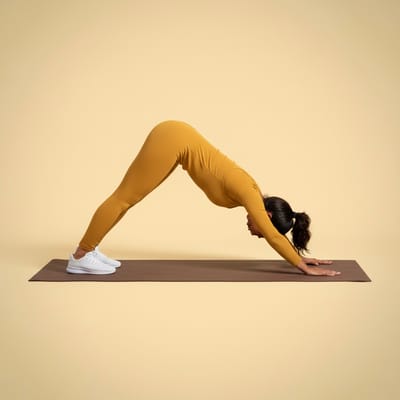
Downward Dog

downward-dog Beginner
Downward Dog
Press back into downward dog to lengthen your spine, open the shoulders, and stretch the entire backside.
Position: Floor
Types: Static Stretching, Yoga
Benefits: CalvesShouldersHamstringsLower BackGlutes
Voice instruction
Start in tabletop, then straighten your legs as much as feels good.
Voice tip
Let your head hang between your arms so your neck relaxes.
Instructions:
  • Start in tabletop, tuck your toes, and press through your hands to lift hips up and back.
  • Straighten your legs as much as feels good while keeping a soft bend in the knees.
  • Reach your chest toward your thighs and lengthen through your spine as your heels reach toward the floor.
Tips:
  • Let your head hang between your arms so your neck relaxes.
  • Spread weight evenly between hands and feet.
  • Keep knees slightly bent if hamstrings feel tight.
Adjustments:
  • Bend the knees more deeply or elevate hands on a chair for a lighter option.
  • Come onto your forearms or place a block under your hands if wrists need relief.

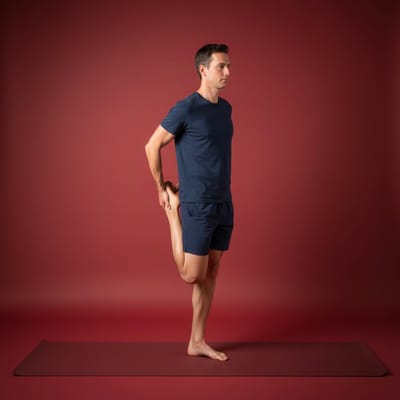
Dynamic Quad Stretch

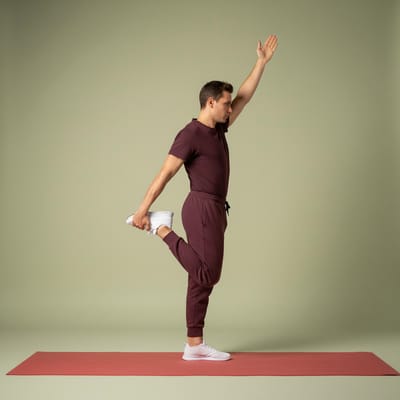
dynamic-quad-stretch Beginner both sides
Dynamic Quad Stretch
March through dynamic quad stretches to loosen the front of your thighs while dialing in balance.
Position: Standing
Types: Dynamic Stretching
Benefits: HipsQuadriceps
Voice instruction
Stand tall with feet hip-width apart, then bend one knee, grab the ankle with the same-side hand, and draw the heel toward your glute.
Voice tip
Keep knees close together to focus the stretch on the quad.
Instructions:
  • Stand tall with feet hip-width apart.
  • Bend one knee, grab the ankle with the same-side hand, and draw the heel toward your glute.
  • Release back to standing and repeat, then switch legs halfway through.
Tips:
  • Keep knees close together to focus the stretch on the quad.
  • Engage your core so you stay balanced.
  • Move with a smooth, controlled tempo rather than rushing.
Adjustments:
  • Lightly touch a wall or chair for balance backup.
  • Use a smaller range of motion if your quads feel tight.

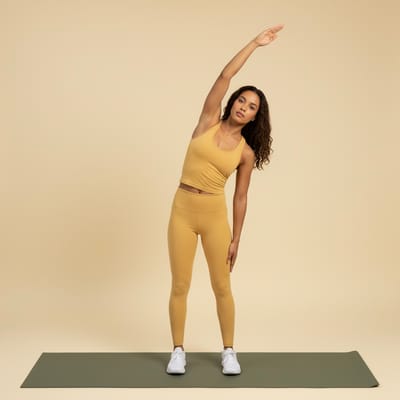
Dynamic Side Bends

dynamic-side-bends Beginner
Dynamic Side Bends
Sway side to side with dynamic bends to loosen your obliques and wake up your core.
Position: Standing
Types: Dynamic Stretching
Benefits: IT BandObliquesShouldersCoreAbdomen
Voice instruction
Stand with feet hip-width apart, then reach one arm overhead while you lean your torso to the opposite side.
Voice tip
Engage your core.
Instructions:
  • Stand with feet hip-width apart and arms relaxed.
  • Reach one arm overhead while you lean your torso to the opposite side.
  • Return to center and flow to the other side, alternating in a smooth rhythm.
Tips:
  • Engage your core so the lower back stays supported.
  • Move with control and focus on lengthening through the side body.
Adjustments:
  • Keep the bend shallower if flexibility is limited.
  • Slow down the pace to stay balanced and precise.

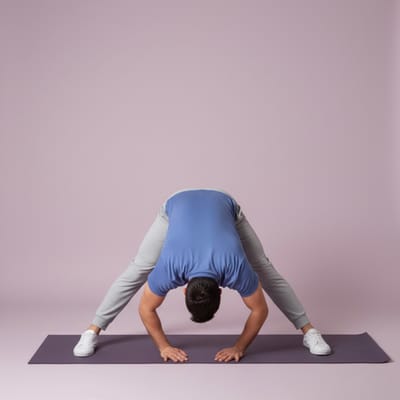
Dynamic Wide Leg Forward Fold

dynamic-wide-leg-forward-fold Beginner
Dynamic Wide Leg Forward Fold
Flow in and out of a wide-leg fold to lengthen hamstrings and decompress your lower back.
Position: Standing
Types: Dynamic Stretching
Benefits: CalvesHamstringsCoreLower Back
Voice instruction
Stand with a wide stance, then hinge forward from your hips, lowering your torso down.
Voice tip
Keep knees soft but active.
Instructions:
  • Stand with a wide stance and hands on your hips.
  • Hinge forward from your hips, lowering your torso toward the floor while keeping your spine long.
  • Rise back up to standing and repeat in a smooth, controlled rhythm.
Tips:
  • Keep knees soft but active so the legs stay strong.
  • Engage your core to protect the lower back.
  • Let your neck stay in line with your spine as you fold.
Adjustments:
  • Limit the depth of the fold if hamstrings feel tight.
  • Rest hands on blocks, a chair, or thighs for extra support.
  • Add a slight knee bend if you need more space in the hamstrings.

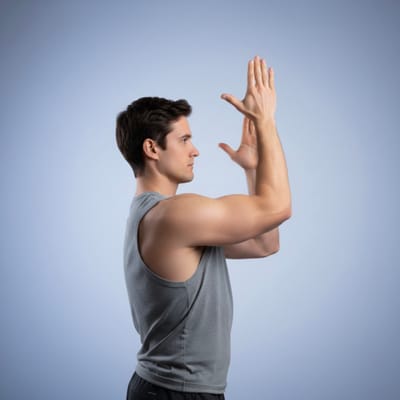
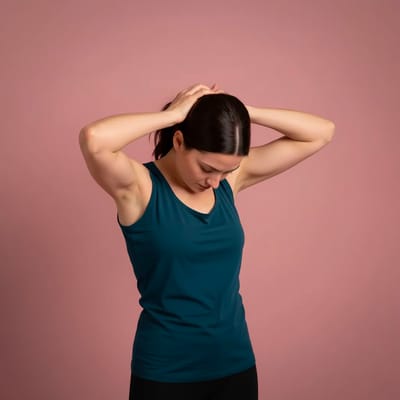
Eagle Arm

eagle-arm Beginner both sides
Eagle Arm
Wrap your arms into eagle pose to stretch the upper back and feel delicious space between the shoulder blades.
Position: Seated, Standing
Types: Static Stretching, Yoga
Benefits: TricepsUpper BackShouldersLats
Voice instruction
Sit or stand tall with arms extended forward at shoulder height, then cross one arm over the other at the elbows and bend the elbows.
Voice tip
Relax the shoulders down and away from your ears.
Instructions:
  • Sit or stand tall with arms extended forward at shoulder height.
  • Cross one arm over the other at the elbows and bend the elbows so forearms point upward.
  • Wrap the forearms around each other and press palms together or as close as they reach.
Tips:
  • Relax the shoulders down and away from your ears.
  • Lift the elbows slightly and reach the hands forward to feel the stretch across your upper back.
Adjustments:
  • Press the backs of your hands together if your palms do not meet.

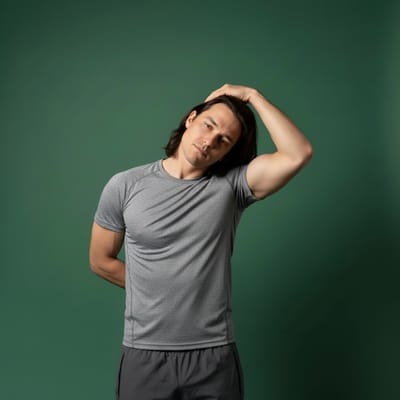
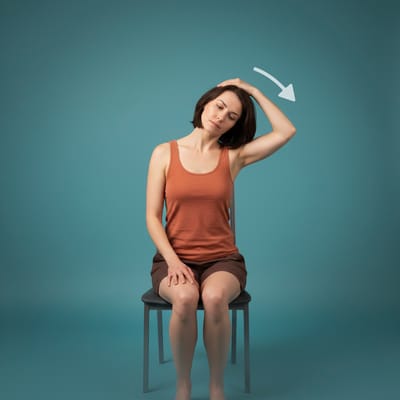
Ear-to-Shoulder

ear-to-shoulder Beginner both sides
Ear-to-Shoulder
Melt tightness in your neck by gently drawing one ear toward your shoulder while you breathe.
Position: Seated, Standing
Types: Static Stretching
Benefits: NeckShoulders
Voice instruction
Sit or stand tall with arms relaxed, then tilt your head toward one shoulder, reaching that ear closer without lifting the shoulder.
Voice tip
Keep the chin neutral.
Instructions:
  • Sit or stand tall with arms relaxed.
  • Tilt your head toward one shoulder, reaching that ear closer without lifting the shoulder.
  • Place the opposite hand behind your back and rest the other hand lightly on top of your head for a subtle assist.
  • Hold for a few breaths, then switch sides.
Tips:
  • Keep the chin neutral instead of tipping up or down.
  • Let both shoulders stay soft and heavy.
Adjustments:
  • Skip the hand assist if the stretch feels intense enough with gravity alone.

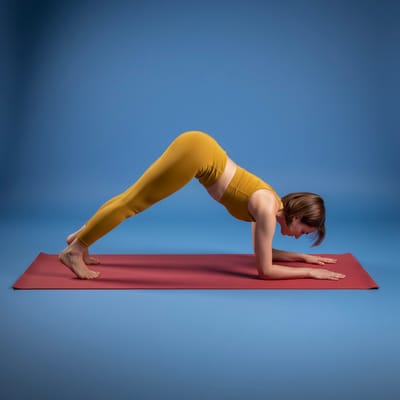
Elbow Pike

elbow-pike Intermediate
Elbow Pike
Stack into an inverted V on your forearms to challenge shoulders and core in a whole new way.
Position: Floor
Types: Isometrics
Benefits: TricepsShouldersChestAbdomen
Voice instruction
Set up in a forearm plank with elbows under shoulders, then engage your core and lift hips up to form an inverted V shape.
Voice tip
Keep legs active and heels reaching toward the floor.
Instructions:
  • Set up in a forearm plank with elbows under shoulders and legs long.
  • Engage your core and lift hips toward the ceiling to form an inverted V shape.
  • Hold the position with weight balanced between your forearms and feet while breathing steadily.
Tips:
  • Keep legs active and heels reaching toward the floor.
  • Let your head stay between your arms so your neck can relax.
Adjustments:
  • Bend your knees slightly or lower the hips if you need a lighter version.
  • Place a cushion under the forearms for extra comfort.

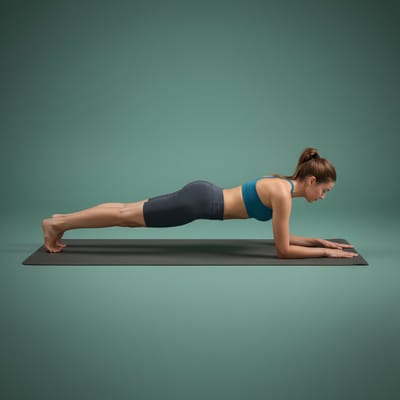
Elbow Plank

elbow-plank Beginner
Elbow Plank
Hold a solid forearm plank to build core strength and full-body tension from shoulders to toes.
Position: Floor
Types: Isometrics
Benefits: TricepsUpper BackObliquesShouldersChestLower BackGlutesAbdomen
Voice instruction
Start on hands and knees, then engage your core to form a straight line.
Voice tip
Stack elbows under shoulders for stability.
Instructions:
  • Start on all fours, then lower forearms to the floor and step both feet back.
  • Engage your core to create a straight line from head to heels.
  • Distribute weight evenly between forearms and feet and hold with steady breathing.
Tips:
  • Stack elbows under shoulders for stability.
  • Avoid letting your hips sag or lift too high.
Adjustments:
  • Drop to your knees while keeping a straight line from knees to head if you want a lighter option.

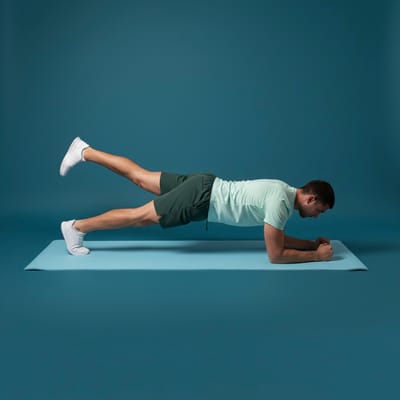
Elbow Plank Leg Lift

elbow-plank-leg-lift Intermediate both sides
Elbow Plank Leg Lift
Hover one leg in a forearm plank to challenge your core, glutes, and shoulders all at once.
Position: Floor
Types: Isometrics
Benefits: TricepsUpper BackObliquesShouldersChestLower BackGlutesAbdomen
Voice instruction
Set up on hands and knees, then engage your core to keep a straight line .
Voice tip
Stack elbows directly under shoulders.
Instructions:
  • Set up on all fours, lower your forearms to the floor, and step both feet back into a strong plank.
  • Engage your core to keep a straight line from head to heels.
  • Lift one leg to hip height without letting the hips twist and hold the position.
  • Lower the leg and switch sides with the same steady control.
Tips:
  • Stack elbows directly under shoulders.
  • Keep hips level so the work stays in your core.
  • Lift the leg only as high as you can while maintaining good form.
Adjustments:
  • Drop your bottom knee to the floor for extra support if needed.

Elbow Side Plank

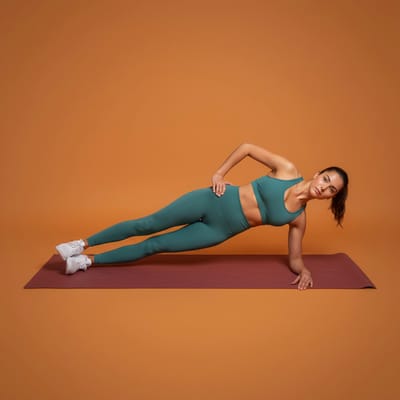
elbow-side-plank Beginner both sides
Elbow Side Plank
Hold a powerful side plank on your forearm to challenge your obliques and shoulder stability.
Position: Floor
Types: Isometrics
Benefits: TricepsObliquesShouldersAbdomen
Voice instruction
Lie on one side with legs extended, then place your bottom elbow under your shoulder, forearm flat .
Voice tip
Keep hips high and stacked so your body stays aligned.
Instructions:
  • Lie on one side with legs extended and feet stacked.
  • Place your bottom elbow under your shoulder, forearm flat on the floor.
  • Engage your core and lift your hips to form a straight line from head to heels while the top hand rests on your hip.
  • Hold with steady breathing, then switch sides halfway through.
Tips:
  • Keep hips high and stacked so your body stays aligned.
Adjustments:
  • Drop your bottom knee to the floor if you want extra support.

Elbow Side Plank Leg Lift

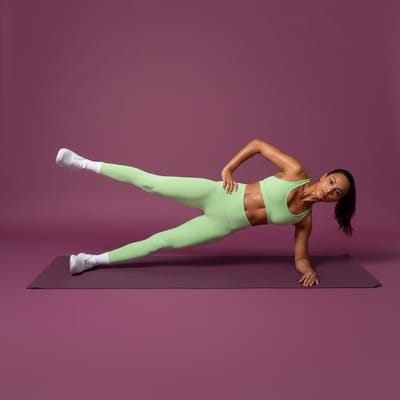
elbow-side-plank-leg-lift Intermediate both sides
Elbow Side Plank Leg Lift
Level up your side plank by lifting the top leg and lighting up your obliques and glutes.
Position: Floor
Types: Isometrics
Benefits: TricepsObliquesShouldersGlutesAbdomen
Voice instruction
Lie on one side with legs extended, then place your bottom elbow under your shoulder and forearm flat .
Voice tip
Keep your hips stacked and lifted so your body stays in one plane.
Instructions:
  • Lie on one side with legs extended and feet stacked.
  • Place your bottom elbow under your shoulder and forearm flat on the floor.
  • Engage your core, lift your hips to form a straight line from head to heels, and rest your top hand on your hip.
  • Lift the top leg toward the ceiling and hold, then switch sides halfway through.
Tips:
  • Keep your hips stacked and lifted so your body stays in one plane.
Adjustments:
  • Lower your bottom knee to the floor for extra support if you need it.

Figure Four Twist

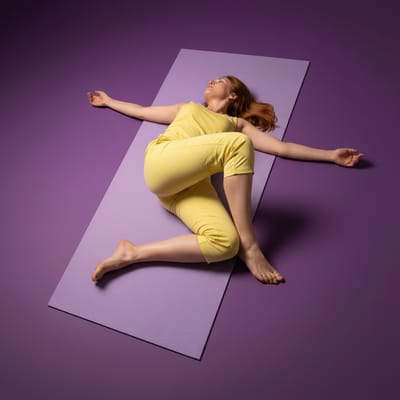
figure-four-twist Beginner both sides
Figure Four Twist
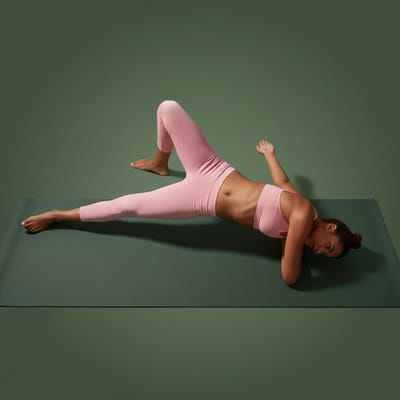
Melt into a figure four twist to open your hips and give your spine a refreshing rotation.
Position: Floor
Types: Static Stretching
Benefits: SpineIT BandHipsLower BackGlutes
Voice instruction
Lie face up with knees bent, then cross one ankle over the opposite thigh just above the knee.
Voice tip
Let gravity do the work; no need to force the rotation.
Instructions:
  • Lie on your back with knees bent and feet on the floor.
  • Cross one ankle over the opposite thigh just above the knee.
  • Allow both legs to drop toward one side until your top foot and bottom knee settle toward the floor.
  • Keep shoulders grounded and breathe into the twist before switching sides.
Tips:
  • Let gravity do the work; no need to force the rotation.
  • Keep both shoulders pressing into the mat for a juicy spinal release.
Adjustments:
  • Slide a pillow under your top foot or bottom knee if the floor feels far away.

Folded Butterfly

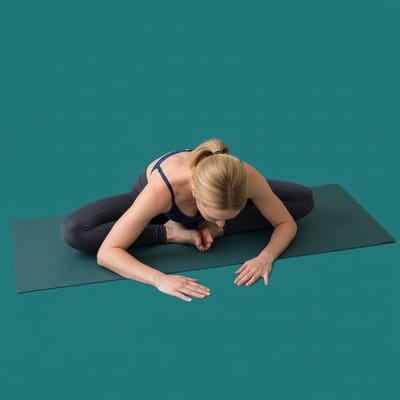
folded-butterfly Beginner
Folded Butterfly
Fold over your butterfly legs to stretch the lower back and inner thighs with a calming release.
Position: Floor
Types: Static Stretching, Yoga
Benefits: KneesGroinHipsLower Back
Voice instruction
Sit with legs extended, then place your hands in front of you and hinge forward from the hips.
Voice tip
Allow the weight of your head to deepen the stretch gently.
Instructions:
  • Sit with legs extended, then bring the soles of your feet together and let knees drop out to the sides.
  • Place your hands on the floor in front of you and hinge forward from the hips.
  • Let your head and neck relax toward your feet while you breathe into the stretch.
Tips:
  • Allow the weight of your head to deepen the stretch gently.
Adjustments:
  • Sit on a folded blanket to give your hips more space if they feel tight.
  • Stay more upright if a forward fold feels intense today.

Forearm Stretch

forearm-stretch Beginner both sides
Forearm Stretch
Give your wrists and forearms some love by gently pulling back on your fingers and breathing into the release.
Position: Seated
Types: Static Stretching
Benefits: ForearmsFingersHands
Voice instruction
Sit or stand tall, then use the opposite hand to gently pull the fingers back toward your body.
Voice tip
Keep shoulders relaxed and down away from your ears.
Instructions:
  • Sit or stand tall and extend one arm in front of you with the palm facing up.
  • Use the opposite hand to gently pull the fingers back toward your body until you feel a forearm stretch.
  • Hold for a few deep breaths, then switch sides.
Tips:
  • Keep shoulders relaxed and down away from your ears.
  • Move slowly into the stretch to avoid overstressing the wrist.
Adjustments:
  • Maintain a slight bend in the elbow if fully straightening feels uncomfortable.

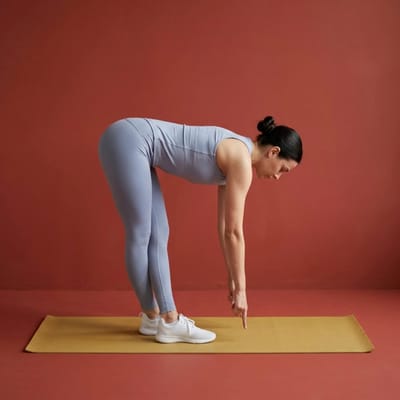
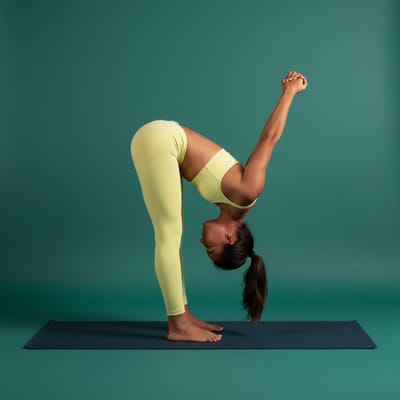
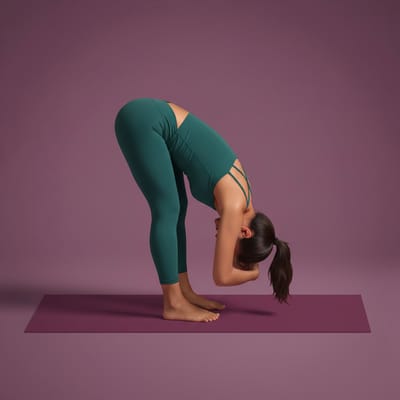
Forward Fold

forward-fold Beginner
Forward Fold
Dive into a forward fold with clasped hands to stretch your hamstrings and open your shoulders in one swoop.
Position: Standing
Types: Static Stretching, Yoga
Benefits: CalvesUpper BackShouldersHipsHamstringsChestGlutes
Voice instruction
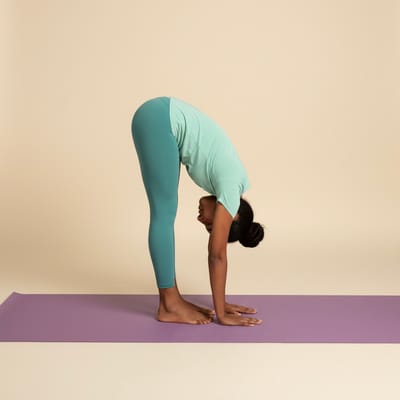
Stand with feet hip-width apart, then hinge forward from your hips, letting your torso drape down.
Voice tip
Relax your head and neck completely so gravity can help.
Instructions:
  • Stand with feet hip-width apart and interlace your fingers behind your back.
  • Hinge forward from your hips, letting your torso drape toward the floor.
  • Reach your clasped hands overhead, allowing the stretch to travel through your shoulders.
Tips:
  • Relax your head and neck completely so gravity can help.
  • Keep your legs straight yet soft at the knees.
Adjustments:
  • Hold a strap or towel between your hands if interlacing is uncomfortable.
  • Bend your knees slightly if your hamstrings need more space.

Frog Pose

frog-pose Intermediate
Frog Pose
Ease into frog pose to open your inner thighs and give your hips a deep, satisfying stretch.
Position: Floor
Types: Static Stretching, Yoga
Benefits: GroinHipsLower Back
Voice instruction
Start on hands and knees, then slide your knees out to the sides with hips in line with knees and toes turned outward.
Voice tip
Keep your chest lifted slightly so your spine stays long.
Instructions:
  • Start on hands and knees, then lower to your forearms.
  • Slide your knees out to the sides with hips in line with knees and toes turned outward.
  • Press your hips back toward your heels to deepen the stretch while breathing steadily.
Tips:
  • Keep your chest lifted slightly so your spine stays long.
Adjustments:
  • Bring knees closer together or place blankets under them for less intensity.

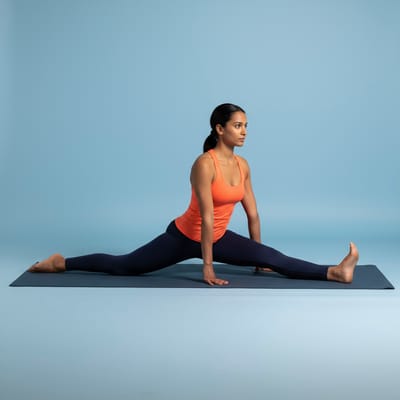
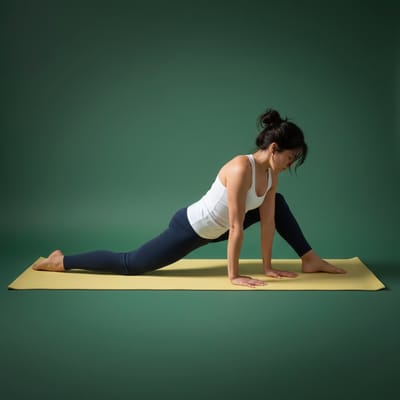
Front Split

front-split Advanced both sides
Front Split
Slide into a front split to explore your edge and lengthen both the front and back of your legs.
Position: Floor
Types: Static Stretching, Yoga
Benefits: GroinCalvesHipsHamstringsQuadricepsGlutes
Voice instruction
Begin kneeling and extend one leg forward, then lift the back knee and start to slide the back foot behind you while the front heel.
Voice tip
Keep both hip points facing forward.
Instructions:
  • Begin kneeling and extend one leg forward, resting hands on the floor for balance.
  • Lift the back knee and start to slide the back foot behind you while the front heel reaches forward.
  • Lower your hips toward the floor, keeping your torso upright and hips square.
  • Hold with steady breaths and back out slowly when finished.
Tips:
  • Keep both hip points facing forward so the stretch stays balanced.
  • Engage your legs even as you lengthen to protect the joints.
Adjustments:
  • Place yoga blocks under your hands for extra support.
  • Keep a soft bend in the front knee or use props under your thighs if you are not at the floor yet.

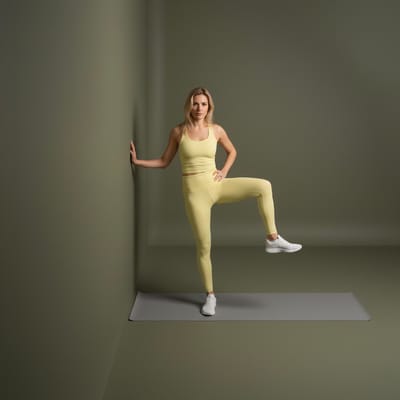
Gate Opener

gate-opener Beginner both sides
Gate Opener
Swing your hip like you are stepping over a fence to lubricate the joint and fire up glute stabilizers.
Position: Standing
Types: Dynamic Stretching, Mobility
Benefits: GroinHipsGlutes
Voice instruction
Stand beside a wall or chair, then shift weight into the leg closest to the support with a soft bend in the knee.
Voice tip
Keep the standing leg active and upright to support the movement.
Instructions:
  • Stand beside a wall or chair and place your hand on it for balance.
  • Shift weight into the leg closest to the support with a soft bend in the knee.
  • Lift the opposite leg as if stepping over a gate, opening the hip outward before placing the foot back down.
  • Reverse the motion to close the gate and continue flowing back and forth.
Tips:
  • Keep the standing leg active and upright to support the movement.
  • Let the motion stay smooth and controlled rather than swinging wildly.
  • Focus on moving from the hip joint while your torso stays steady.
Adjustments:
  • Lift the leg lower if opening wide feels challenging today.

Good Mornings

good-mornings Beginner
Good Mornings
Hinge through your hips with hands behind your head to stretch hamstrings and wake up your posterior chain.
Position: Standing
Types: Calisthenics, Dynamic Stretching
Benefits: HamstringsCoreLower BackGlutes
Voice instruction
Stand tall with feet hip-width apart, then hinge forward at the hips, sending your seat back.
Voice tip
Maintain a neutral spine.
Instructions:
  • Stand tall with feet hip-width apart and lace your fingers behind your head.
  • Hinge forward at the hips, sending your seat back while keeping your spine long.
  • Rise back to standing with control and repeat for your set.
Tips:
  • Maintain a neutral spine instead of rounding your back.
  • Engage your core and keep a soft bend in the knees to protect your joints.
Adjustments:
  • Limit the depth of the hinge if your hamstrings feel tight.
  • Rest hands on thighs for support when you need it.

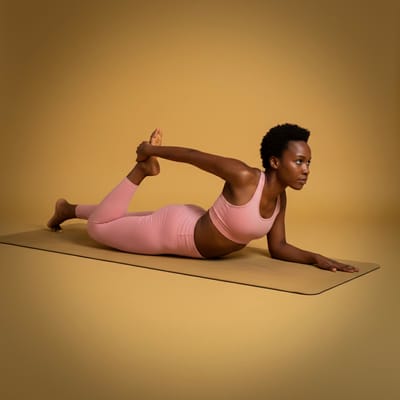
Half Bow

half-bow Intermediate both sides
Half Bow
Lift into half bow to stretch your chest, quads, and hip flexors while strengthening your back.
Position: Floor
Types: Static Stretching, Yoga
Benefits: PsoasSpineUpper BackShouldersHipsQuadricepsChestAbdomen
Voice instruction
Lie face down with legs extended, then bend one knee, bringing the heel toward the glute, and reach back with the same-side hand to grab.
Voice tip
Keep the extended leg active by pressing it into the floor.
Instructions:
  • Lie on your stomach with legs extended and forearms resting on the floor.
  • Bend one knee, bringing the heel toward the glute, and reach back with the same-side hand to grab the ankle.
  • Press your foot into your hand while lifting your chest and thigh off the mat.
  • Hold for a deep breath or two, then switch sides.
Tips:
  • Keep the extended leg active by pressing it into the floor.
  • Maintain parallel legs to protect your lower back.
Adjustments:
  • Stay lower with your chest on the floor if lifting feels too intense.

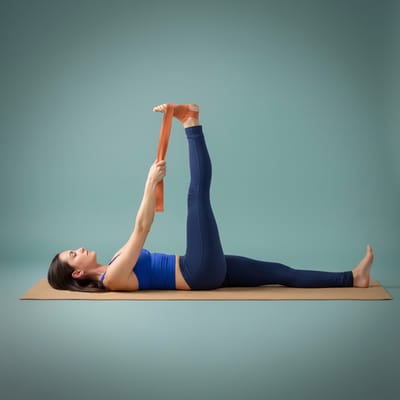
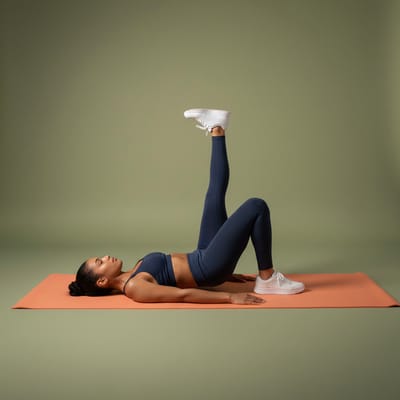
Hamstring Pulls

hamstring-pulls Beginner both sides
Hamstring Pulls
Use a strap to pull your leg toward you and give your hamstrings a delicious stretch without straining your back.
Position: Floor
Types: Static Stretching
Benefits: CalvesHipsHamstringsLower BackGlutes
Voice instruction
Lie face up with legs extended, then loop a strap or towel around the ball of one foot and extend that leg up.
Voice tip
Keep the bottom leg long and pressing into the floor.
Instructions:
  • Lie on your back with legs extended and arms relaxed by your sides.
  • Loop a strap or towel around the ball of one foot and extend that leg toward the ceiling.
  • Hold the strap ends, gently drawing the leg closer to your body while keeping hips grounded.
Tips:
  • Keep the bottom leg long and pressing into the floor.
  • Flex the lifted foot and maintain a straight leg as much as feels good.
  • Stay anchored through your lower back so the stretch targets the hamstrings.
Adjustments:
  • Leave a soft bend in the lifted knee if straightening fully feels uncomfortable.

Hamstring Scoops

hamstring-scoops Beginner both sides
Hamstring Scoops
Sweep one leg forward and scoop through a hinge to stretch your hamstrings while warming the core.
Position: Standing
Types: Dynamic Stretching
Benefits: CalvesHamstringsCoreLower BackGlutes
Voice instruction
Stand tall with hands on your hips, then step one foot forward, planting the heel and lifting the toes.
Voice tip
Maintain a long spine.
Instructions:
  • Stand tall with hands on your hips.
  • Step one foot forward, planting the heel and lifting the toes.
  • Hinge at the hips and sweep both hands down toward the front foot as if scooping up the floor.
  • Return to standing and repeat before switching legs halfway through.
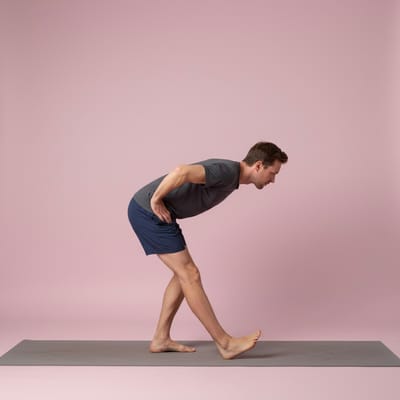
Tips:
  • Maintain a long spine instead of rounding your back.
  • Brace your core to stay balanced during the hinge.
Adjustments:
  • Keep the hinge shallow if your hamstrings feel tight.
  • Hold a wall or chair for balance support.
  • Move slowly to stay in control of the stretch.

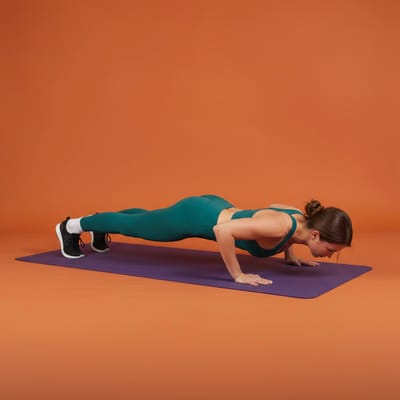
Hand Plank

hand-plank Beginner
Hand Plank
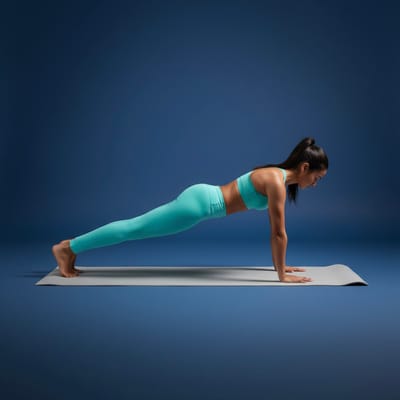
Hold a high plank to build full-body tension and sharpen your core control.
Position: Floor
Types: Isometrics, Yoga
Benefits: TricepsUpper BackObliquesShouldersChestLower BackGlutesAbdomen
Voice instruction
Start on hands and knees, then brace your core and press the floor away through your palms.
Voice tip
Gaze slightly ahead of your hands to keep the neck neutral.
Instructions:
  • Start on hands and knees, then step both feet back to form a straight line from head to heels.
  • Brace your core and press the floor away through your palms.
  • Hold the strong plank position with steady breathing.
Tips:
  • Gaze slightly ahead of your hands to keep the neck neutral.
Adjustments:
  • Drop to your knees while maintaining a long line from knees to head for a lighter version.

Hand Plank Leg Lift

hand-plank-leg-lift Intermediate both sides
Hand Plank Leg Lift
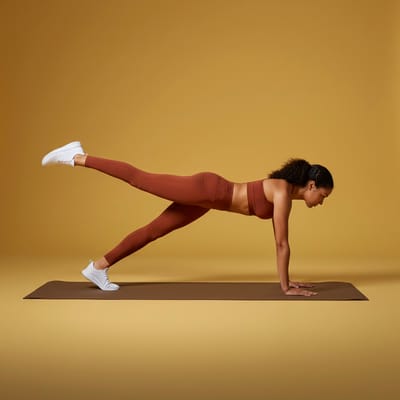
Lift one leg in a plank to spark your glutes and make your core work overtime for stability.
Position: Floor
Types: Isometrics
Benefits: TricepsUpper BackObliquesShouldersChestLower BackGlutesAbdomen
Voice instruction
Begin in tabletop, then engage your core and glutes, lifting one leg to hip height without twisting the hips.
Voice tip
Keep the lifted leg level with your hips.
Instructions:
  • Begin in tabletop, then step both feet back into a strong high plank.
  • Engage your core and glutes, lifting one leg to hip height without twisting the hips.
  • Hold for a steady breath, then lower the leg and switch sides.
Tips:
  • Keep the lifted leg level with your hips rather than hiking it up.
  • Maintain a solid plank line from head to heel.
Adjustments:
  • Drop the supporting knee to the floor if you need extra stability.

Hand Side Plank

hand-side-plank Beginner both sides
Hand Side Plank
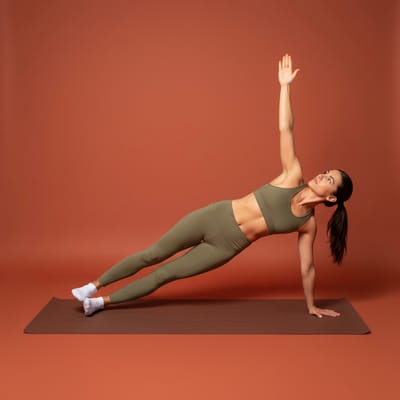
Stack your body in a hand-supported side plank to strengthen your obliques and shoulders.
Position: Floor
Types: Isometrics, Yoga
Benefits: TricepsObliquesShouldersAbdomen
Voice instruction
Lie on one side with legs extended, then place your bottom hand under your shoulder and press into it to lift your hips.
Voice tip
Keep the supporting wrist aligned under your shoulder.
Instructions:
  • Lie on one side with legs extended and feet stacked.
  • Place your bottom hand on the floor under your shoulder and press into it to lift your hips.
  • Reach the top arm toward the ceiling and hold a straight line from head to heels.
  • Switch sides halfway through the hold.
Tips:
  • Keep the supporting wrist aligned under your shoulder.
  • Lift your hips high to stay in a single plane.
Adjustments:
  • Lower your bottom knee for extra support.
  • Move to a forearm side plank if your wrist prefers it.

Hand Side Plank Leg Lift

hand-side-plank-leg-lift Intermediate both sides
Hand Side Plank Leg Lift
Challenge your balance and glutes by lifting the top leg while holding a strong side plank on your hand.
Position: Floor
Types: Isometrics
Benefits: TricepsObliquesShouldersGlutesAbdomen
Voice instruction
Lie on one side with legs extended, then press through the palm to lift hips, forming a straight line.
Voice tip
Keep your supporting wrist stacked under your shoulder for stability.
Instructions:
  • Lie on one side with legs extended and feet stacked, placing your bottom hand on the floor under your shoulder.
  • Press through the palm to lift hips, creating a straight line from head to heels.
  • Reach your top arm toward the ceiling and lift the top leg up, holding the position with steady breathing.
  • Switch sides halfway through the set.
Tips:
  • Keep your supporting wrist stacked under your shoulder for stability.
  • Lift through your hips so your body stays aligned.
Adjustments:
  • Drop the bottom knee for extra support if needed.
  • Move to a forearm side plank if your wrist needs a break.

Happy Baby

happy-baby Beginner
Happy Baby
Rock into happy baby to soothe your lower back and open your hips with a playful stretch.
Position: Floor
Types: Static Stretching, Yoga
Benefits: GroinHipsHamstringsLower BackGlutes
Voice instruction
Lie face up with knees bent, then lift your feet and draw knees toward your armpits.
Voice tip
Press your tailbone toward the floor to keep the lower back happy.
Instructions:
  • Lie on your back with knees bent and feet flat.
  • Lift your feet and draw knees toward your armpits.
  • Grab the outer edges of your feet and gently pull your knees toward the floor while keeping your low back grounded.
Tips:
  • Press your tailbone toward the floor to keep the lower back happy.
  • Relax your shoulders and jaw while you breathe.
Adjustments:
  • Hold your ankles or calves if reaching your feet is a stretch today.

Heel-to-Toe Rocks

heel-to-toe-rocks Beginner
Heel-to-Toe Rocks
Rock from heels to toes to warm up your ankles and build foot strength.
Position: Standing
Types: Dynamic Stretching
Benefits: CalvesFeetShinsAnkles
Voice instruction
Stand tall with feet hip-width apart, then shift weight forward onto your toes to lift your heels off the floor.
Voice tip
Engage your core to stay balanced.
Instructions:
  • Stand tall with feet hip-width apart and arms relaxed.
  • Shift weight forward onto your toes to lift your heels off the floor.
  • Slowly rock back onto your heels, lifting your toes.
  • Keep the motion flowing back and forth in a smooth rhythm.
Tips:
  • Engage your core to stay balanced.
  • Move steadily without abrupt shifts.
  • Maintain an upright posture throughout.
Adjustments:
  • Hold a wall or chair for support if you feel unsteady.
  • Keep the range smaller if the stretch feels intense.
  • Slow down the tempo to stay in control.

High Knee Twists

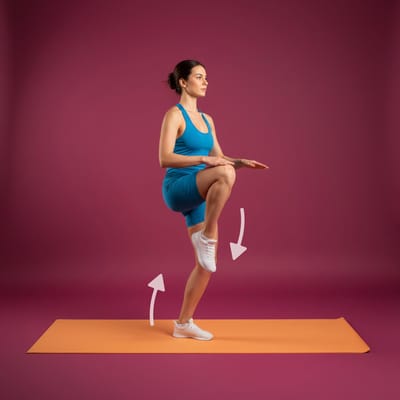
high-knee-twists Beginner
High Knee Twists
Drive your knees high and twist through your torso to wake up your core and hips at the same time.
Position: Standing
Types: Calisthenics, Dynamic Stretching
Benefits: ObliquesHipsCore
Voice instruction
Stand with feet hip-width apart, then lift one knee toward your chest while twisting your torso toward that knee.
Voice tip
Move with intention.
Instructions:
  • Stand with feet hip-width apart and hands laced behind your head.
  • Lift one knee toward your chest while twisting your torso toward that knee.
  • Lower back to start and switch sides, flowing in a controlled rhythm.
Tips:
  • Move with intention rather than rushing for speed.
  • Keep your torso tall to stay balanced.
  • Let the twist and knee drive happen together for fluid motion.
Adjustments:
  • Lift your knee lower if you are working on mobility or balance today.

High Knees

high-knees Beginner
High Knees
Pump through high knees to spark your heart rate and wake up every muscle from hips to toes.
Position: Standing
Types: Cardio
Benefits: KneesCalvesFeetHipsHamstringsQuadricepsCoreAnklesToesGlutes
Voice instruction
Stand tall with feet hip-width apart, then drive one knee up toward your hands without swinging your arms.
Voice tip
Land softly on the balls of your feet to protect your joints.
Instructions:
  • Stand tall with feet hip-width apart and elbows bent to ninety degrees, hands hovering in front of you.
  • Drive one knee up toward your hands without swinging your arms.
  • Quickly alternate legs in a running rhythm, keeping your torso upright and knees high.
Tips:
  • Land softly on the balls of your feet to protect your joints.
  • Maintain a steady cadence and crisp form.
  • Relax your shoulders even as your lower body works hard.
Adjustments:
  • Slow the pace for a lower impact variation.
  • Lower your hand targets if your knees need more time to build height.

Hip Circles

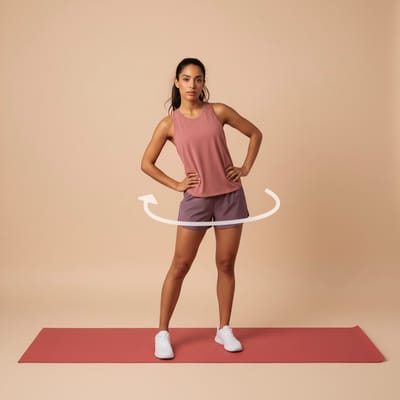
hip-circles Beginner both sides
Hip Circles
Draw smooth circles with your hips to mobilize the pelvis and lower back before deeper work.
Position: Standing
Types: Dynamic Stretching
Benefits: HipsCoreLower Back
Voice instruction
Stand with feet hip-width apart, then slowly rotate your hips in a circular motion, tracing a wide circle in one direction.
Voice tip
Keep your core engaged to support the lower back.
Instructions:
  • Stand with feet hip-width apart and hands resting on your hips.
  • Slowly rotate your hips in a circular motion, tracing a wide circle in one direction.
  • After several reps, switch directions to balance the movement.
Tips:
  • Keep your core engaged to support the lower back.
  • Maintain soft knees rather than locking them out.
Adjustments:
  • Shrink the circle if your range of motion feels limited today.

Hollow Body

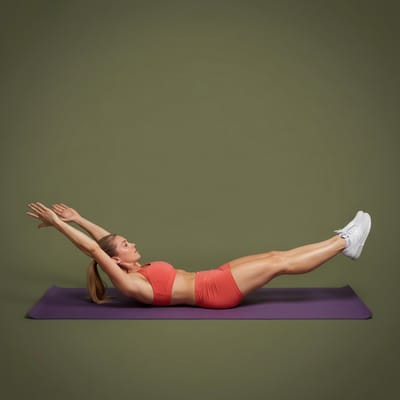
hollow-body Intermediate
Hollow Body
Lock into a hollow body hold to train rock-solid core tension for everything from handstands to pull-ups.
Position: Floor
Types: Isometrics
Benefits: ShouldersHipsQuadricepsAbdomen
Voice instruction
Lie face up with arms reaching overhead, then engage your core, lifting head, shoulders, arms, and legs off the floor to form a gentle C.
Voice tip
Press your lower back into the floor to protect your spine.
Instructions:
  • Lie on your back with arms reaching overhead and legs extended.
  • Engage your core, lifting head, shoulders, arms, and legs off the floor to form a gentle C shape.
  • Balance on your lower back and hold the position with steady breathing.
Tips:
  • Press your lower back into the floor to protect your spine.
  • Squeeze legs together and keep them straight for maximum tension.
Adjustments:
  • Bend your knees and bring arms forward if you need less intensity.

Hurdler

hurdler Beginner both sides
Hurdler
Set up like a hurdler and fold forward to stretch your hamstrings, calves, and hips with precision.
Position: Floor
Types: Static Stretching, Yoga
Benefits: GroinCalvesHamstringsLower BackGlutes
Voice instruction
Sit tall with legs extended, then reach through the spine and hinge forward from the hips toward the extended foot.
Voice tip
Lead with your chest.
Instructions:
  • Sit tall with legs extended, then bend one leg and place the sole against the inner thigh of the other leg.
  • Reach through the spine and hinge forward from the hips toward the extended foot.
  • Hold the foot, ankle, or shin while breathing into the stretch, then switch sides.
Tips:
  • Lead with your chest rather than rounding your back.
  • Keep the extended leg engaged and the foot flexed without locking the knee.
Adjustments:
  • Use a strap or towel around your foot if your hands do not reach comfortably.
  • Soften the knee of the extended leg if you need less intensity.

Jumping Jacks

jumping-jacks Beginner
Jumping Jacks
Crank up your heart rate with classic jumping jacks that loosen everything from shoulders to calves.
Position: Standing
Types: Calisthenics, Cardio
Benefits: CalvesUpper BackShouldersHipsHamstringsQuadricepsLower BackAbdomen
Voice instruction
Stand tall with feet together, then jump your feet out wider than hip-width while sweeping arms overhead.
Voice tip
Keep a soft bend in the knees and land lightly on the balls of your.
Instructions:
  • Stand tall with feet together and arms by your sides.
  • Jump your feet out wider than hip-width while sweeping arms overhead.
  • Hop back to the starting position, bringing your feet together and lowering your arms.
  • Continue the rhythmic pattern for your set.
Tips:
  • Keep a soft bend in the knees and land lightly on the balls of your feet.
Adjustments:
  • Keep your hands on your hips or march side to side if overhead work or impact feels heavy today.

Knee Circles

knee-circles Beginner both sides
Knee Circles
Lubricate your knees with gentle circles that warm the joint before you get moving.
Position: Standing
Types: Dynamic Stretching
Benefits: KneesCalvesFeetShinsAnkles
Voice instruction
Stand with feet hip-width apart, then bend your knees slightly and move both knees together in small circles.
Voice tip
Keep the motion smooth and controlled to respect the joint.
Instructions:
  • Stand with feet hip-width apart and place your hands on your knees.
  • Bend your knees slightly and move both knees together in small circles.
  • After several repetitions, reverse direction to balance the movement.
Tips:
  • Keep the motion smooth and controlled to respect the joint.
Adjustments:
  • Slow down the pace if you need extra control or confidence.

Knee-to-Wall

knee-to-wall Beginner both sides
Knee-to-Wall
Stretch your ankle and calf by driving your knee toward a wall while keeping the heel glued down.
Position: Floor
Types: Static Stretching
Benefits: CalvesFeetAnkles
Voice instruction
Kneel facing a wall with your front foot about a hand's length away, then keep the front heel grounded and drive your knee forward toward.
Voice tip
Scoot your foot farther from the wall as mobility improves to deepen the stretch.
Instructions:
  • Kneel facing a wall with your front foot about a hand's length away.
  • Keep the front heel grounded and drive your knee forward toward the wall.
  • Hold for a few steady breaths, then back off and repeat or switch sides.
Tips:
  • Scoot your foot farther from the wall as mobility improves to deepen the stretch.
Adjustments:
  • Rest your hands on your front knee or the wall for balance.
  • Move the foot closer if your knee cannot reach the wall yet.

Kneeling Hip Circles

kneeling-hip-circles Beginner both sides
Kneeling Hip Circles
Carve out hip circles on all fours to grease the joint and fire up your glutes.
Position: Floor
Types: Dynamic Stretching, Mobility
Benefits: HipsCoreGlutes
Voice instruction
Start in tabletop with hands under shoulders, then lift one knee off the floor, keeping it bent, and slowly trace a circle through your hip.
Voice tip
Move slowly to feel the entire range of motion in the hip.
Instructions:
  • Start in tabletop with hands under shoulders and knees under hips.
  • Lift one knee off the floor, keeping it bent, and slowly trace a circle through your hip range of motion.
  • After several circles, switch directions if you like, then change legs halfway through.
Tips:
  • Move slowly to feel the entire range of motion in the hip.
  • Engage your core to keep your torso steady and avoid arching your lower back.
Adjustments:
  • Make smaller circles if the full range feels challenging right now.

Kneeling Psoas

kneeling-psoas Beginner both sides
Kneeling Psoas
Lengthen your hip flexors and side body with a kneeling psoas stretch that feels incredible after long sitting sessions.
Position: Floor
Types: Static Stretching
Benefits: PsoasIT BandObliquesHipsQuadricepsLower BackLats
Voice instruction
Kneel with knees hip-width apart, then raise the arm opposite your front leg overhead while the other hand rests on your hip.
Voice tip
Stack your front knee over the ankle for stability.
Instructions:
  • Kneel with knees hip-width apart, then step one foot forward so both knees are bent at ninety degrees.
  • Raise the arm opposite your front leg overhead while the other hand rests on your hip.
  • Press your hips forward and reach up and slightly over with the lifted arm to open through the front of the hip and side body.
  • Hold for a few breaths, then switch sides.
Tips:
  • Stack your front knee over the ankle for stability.
  • Keep the core engaged so the stretch stays supportive, not saggy.
Adjustments:
  • Cushion your back knee with a folded mat or pillow if it feels sensitive.

Kneeling Quad

kneeling-quad Beginner both sides
Kneeling Quad
Open up your quads and hip flexors with a kneeling stretch that hits all the right spots after a long run.
Position: Floor
Types: Static Stretching
Benefits: PsoasHipsQuadricepsAbdomen
Voice instruction
Kneel with knees hip-width apart, then reach back with the arm on the same side.
Voice tip
Stay tall through your torso.
Instructions:
  • Kneel with knees hip-width apart, then step one foot forward into a lunge stance.
  • Reach back with the arm on the same side as your rear leg and catch your ankle, drawing the heel toward your glute.
  • Place the opposite hand on your front knee and gently press your hips forward while lifting your chest.
Tips:
  • Stay tall through your torso instead of leaning forward or back.
Adjustments:
  • Loop a strap or towel around your back foot if reaching with your hand is tough.
  • Keep the back foot on the floor if the quad stretch feels too intense.

Knees Hugs

knees-hugs Beginner
Knees Hugs
Give each knee a hug to loosen your hips and lower back while practicing balance.
Position: Standing
Types: Dynamic Stretching
Benefits: HipsHamstringsLower BackGlutes
Voice instruction
Stand tall with feet hip-width apart, then shift weight onto one foot and pull the opposite knee toward your chest with both hands.
Voice tip
Keep a soft bend in the standing leg for balance.
Instructions:
  • Stand tall with feet hip-width apart and arms relaxed.
  • Shift weight onto one foot and pull the opposite knee toward your chest with both hands.
  • Hold for a beat, lower the leg, and repeat on the other side.
Tips:
  • Keep a soft bend in the standing leg for balance.
  • Lift through your chest and stay upright as you hug the knee.
Adjustments:
  • Use a wall or chair for balance if needed.
  • Lift the knee only as high as feels comfortable today.

Knees-to-Chest

knees-to-chest Beginner
Knees-to-Chest
Hug your knees to your chest to release the lower back and gently stretch the hips.
Position: Floor
Types: Static Stretching, Yoga
Benefits: HipsHamstringsLower BackGlutes
Voice instruction
Lie face up with legs extended, then bend both knees and draw them toward your chest.
Voice tip
Let your head and neck relax on the floor.
Instructions:
  • Lie on your back with legs extended and arms by your sides.
  • Bend both knees and draw them toward your chest.
  • Wrap your arms around your shins and hug the knees in, breathing deeply.
Tips:
  • Let your head and neck relax on the floor.
  • Keep your lower back gently pressing into the mat.
Adjustments:
  • Hold behind your thighs instead of the shins if that feels better for your body.

Lateral Foot Rocks

lateral-foot-rocks Beginner
Lateral Foot Rocks
Rock side to side across your feet to strengthen ankles and wake up stabilizers.
Position: Standing
Types: Dynamic Stretching
Benefits: CalvesFeetAnkles
Voice instruction
Stand with feet hip-width apart, then shift weight onto the outer edges of your feet, lifting the inner edges.
Voice tip
Engage your core to stay balanced.
Instructions:
  • Stand with feet hip-width apart and arms relaxed.
  • Shift weight onto the outer edges of your feet, lifting the inner edges.
  • Roll through center and onto the inner edges, lifting the outer edges.
  • Continue rocking side to side with smooth control.
Tips:
  • Engage your core to stay balanced.
  • Keep knees soft and avoid jerky movements.
Adjustments:
  • Hold a wall or chair for support if needed.
  • Make the movement smaller if a full range feels intense.
  • Try the same action seated if standing is uncomfortable.

Lateral Leg Swing

lateral-leg-swing Beginner both sides
Lateral Leg Swing
Swing your leg side to side to free up your hips and prime them for deeper work.
Position: Standing
Types: Dynamic Stretching
Benefits: GroinIT BandHips
Voice instruction
Stand tall with hands on your hips, then lift the opposite leg slightly off the floor and swing it out to the side.
Voice tip
Keep a slight bend in the standing knee to stay stable.
Instructions:
  • Stand tall with hands on your hips and shift weight onto one leg.
  • Lift the opposite leg slightly off the floor and swing it out to the side, then across your body.
  • Continue the smooth swings, then switch legs halfway through.
Tips:
  • Keep a slight bend in the standing knee to stay stable.
  • Let the movement come from the hip while your torso stays steady.
  • Start with smaller swings and build range as you warm up.
Adjustments:
  • Hold onto a wall or chair for extra balance support.

Lateral Lunge

lateral-lunge Beginner
Lateral Lunge
Step into a lateral lunge to strengthen your legs and stretch your inner thighs all in one move.
Position: Standing
Types: Calisthenics
Benefits: GroinHipsHamstringsQuadricepsGlutes
Voice instruction
Stand with feet wide, then bend one knee and lower your hips toward that side while the opposite leg stays straight.
Voice tip
Keep your chest lifted and back long.
Instructions:
  • Stand with feet wide and hands together in front of your chest.
  • Bend one knee and lower your hips toward that side while the opposite leg stays straight.
  • Press through the bent leg to return to center and alternate sides.
Tips:
  • Keep your chest lifted and back long.
  • Move smoothly to stay balanced.
Adjustments:
  • Lower only partway if the full lunge feels intense.
  • Use a chair or wall for balance if you need support.

Leaning 90/90

leaning-90-90 Beginner both sides
Leaning 90/90
Lean back in a 90/90 setup to explore hip rotation while keeping the pelvis relaxed.
Position: Floor
Types: Static Stretching
Benefits: KneesGroinHipsGlutes
Voice instruction
Sit with knees bent, then place your hands behind you for support and lean back.
Voice tip
Keep your spine long.
Instructions:
  • Sit with knees bent and feet flat, then let both legs fall to one side creating two right angles.
  • Place your hands on the floor behind you for support and lean back while keeping hips and shoulders square.
  • Hold the position, breathe into the hips, then reset and switch sides when ready.
Tips:
  • Keep your spine long instead of collapsing through the chest.
Adjustments:
  • Sit on a cushion or folded blanket to make the position more accessible if your hips feel tight.

Leaning Calf

leaning-calf Beginner both sides
Leaning Calf
Lean into the wall to stretch your calves and ankles with a grounded, athletic feel.
Position: Standing
Types: Static Stretching
Benefits: CalvesFeetHamstringsAnkles
Voice instruction
Stand facing a wall about an arm's length away, then step one foot back with toes forward and heel planted.
Voice tip
Keep your back heel anchored for the best stretch.
Instructions:
  • Stand facing a wall about an arm's length away and place your hands on it at shoulder height.
  • Step one foot back with toes forward and heel planted.
  • Bend your front knee while keeping the back leg straight and lean into the wall to feel the calf stretch.
Tips:
  • Keep your back heel anchored for the best stretch.
  • Maintain a long spine and relaxed shoulders as you lean.
Adjustments:
  • Walk the back foot closer to the wall if the stretch feels too intense.

Leaning Figure Four

leaning-figure-four Beginner both sides
Leaning Figure Four
Lean back in a figure four seat to stretch your glutes and lower back while staying supported.
Position: Floor
Types: Static Stretching
Benefits: IT BandHipsLower BackGlutes
Voice instruction
Sit with legs extended, then cross one ankle over the opposite thigh just above the knee.
Voice tip
Keep your arms long and chest open to intensify the stretch.
Instructions:
  • Sit with legs extended and hands planted behind you for support.
  • Cross one ankle over the opposite thigh just above the knee.
  • Slide the bottom foot toward you until the knee is bent and the foot is flat, keeping your chest lifted.
  • Hold the stretch while breathing steadily, then switch sides.
Tips:
  • Keep your arms long and chest open to intensify the stretch.
Adjustments:
  • Scoot your supporting foot farther away for a lighter stretch, or closer for more sensation.

Leg Lift

leg-lift Intermediate
Leg Lift
Lift both legs for a static hold that fires up your core and hip flexors.
Position: Floor
Types: Isometrics
Benefits: HipsQuadricepsAbdomen
Voice instruction
Lie face up with legs extended, then engage your core and lift both legs to about a forty-five degree angle, keeping them straight and together.
Voice tip
Press your lower back into the floor for support.
Instructions:
  • Lie on your back with legs extended and arms behind your head or by your sides.
  • Engage your core and lift both legs to about a forty-five degree angle, keeping them straight and together.
  • Hold the position while breathing steadily and keeping your lower back anchored.
Tips:
  • Press your lower back into the floor for support.
  • Keep head and shoulders relaxed on the ground.
Adjustments:
  • Lift one leg at a time if both legs feel too heavy today.
  • Place hands under your hips or bend your knees slightly if your lower back needs extra care.

Leg Swings

leg-swings Beginner both sides
Leg Swings
Swing your leg front to back to warm up your hips and hamstrings before you crush your workout.
Position: Standing
Types: Dynamic Stretching
Benefits: GroinCalvesHipsHamstringsQuadricepsLower BackGlutesAbdomen
Voice instruction
Stand with feet hip-width apart, then shift weight onto one leg and lift the other slightly off the floor.
Voice tip
Keep a soft bend in the standing knee for balance.
Instructions:
  • Stand with feet hip-width apart and hands on your hips or at your sides.
  • Shift weight onto one leg and lift the other slightly off the floor.
  • Swing the lifted leg forward and backward in a smooth, controlled motion, then switch legs halfway through.
Tips:
  • Keep a soft bend in the standing knee for balance.
  • Let the movement come from the hip while your torso stays steady.
  • Start with smaller swings and build range gradually.
Adjustments:
  • Hold onto a wall or chair if you need extra support.

Legs-up-Wall

legs-up-wall Beginner
Legs-up-Wall
Kick your legs up the wall to refresh tired legs and calm your nervous system.
Position: Floor
Types: Static Stretching, Yoga
Benefits: HipsHamstringsLower BackGlutes
Voice instruction
Sit with one hip next to a wall, then scoot your hips as close to the wall as is comfortable and extend your legs straight.
Voice tip
Keep your legs relaxed and knees soft.
Instructions:
  • Sit with one hip next to a wall, then lie back and swing your legs up in one smooth motion.
  • Scoot your hips as close to the wall as is comfortable and extend your legs straight up.
  • Rest your arms by your sides with palms up and breathe deeply.
Tips:
  • Keep your legs relaxed and knees soft.
Adjustments:
  • Move your hips a little farther from the wall if your hamstrings feel tight.
  • Place a cushion or folded blanket under your hips for extra support.

Lizard Pose

lizard-pose Intermediate both sides
Lizard Pose
Slide into lizard pose to deeply stretch your hips, groin, and hamstrings.
Position: Floor
Types: Static Stretching, Yoga
Benefits: GroinHipsHamstringsQuadricepsGlutes
Voice instruction
Start in tabletop, then lower your hips down and extend the back leg straight behind you, knee and top of the foot resting on the.
Voice tip
Let your hips relax and sink toward the floor.
Instructions:
  • Start in tabletop, then step one foot outside the same-side hand.
  • Lower your hips toward the floor and extend the back leg straight behind you, knee and top of the foot resting on the mat.
  • Keep your chest lifted as you breathe into the stretch.
Tips:
  • Let your hips relax and sink toward the floor.
  • Lift the back knee and come onto forearms for more intensity when you are ready.
Adjustments:
  • Use yoga blocks under your hands if the floor feels far away.

Locust Pose

locust-pose Beginner
Locust Pose
Soar into locust pose to strengthen your back body and energize your posture.
Position: Floor
Types: Isometrics, Yoga
Benefits: NeckUpper BackLower BackGlutes
Voice instruction
Lie face down with legs extended, then engage your back, glutes, and core to lift your chest, arms, and legs off the floor.
Voice tip
Reach your fingertips toward your feet to help open your chest.
Instructions:
  • Lie on your stomach with legs extended and arms resting by your sides.
  • Engage your back, glutes, and core to lift your chest, arms, and legs off the floor.
  • Keep legs straight and together, toes pointing back, and gaze slightly forward.
Tips:
  • Reach your fingertips toward your feet to help open your chest.
  • Lengthen through the crown of your head so your neck stays in line with your spine.
Adjustments:
  • Lift only your upper body or just your legs if you need a gentler variation.

Lunge

lunge Beginner both sides
Lunge
Sink into a kneeling lunge to stretch your hip flexors and lengthen the front of your body.
Position: Floor
Types: Static Stretching, Yoga
Benefits: PsoasHipsQuadricepsLower BackAbdomen
Voice instruction
Start kneeling and step one foot forward, then press your hips forward.
Voice tip
Keep the front knee stacked over the ankle for stability.
Instructions:
  • Start kneeling and step one foot forward, planting it flat in front of you.
  • Press your hips forward as you raise both arms overhead.
  • Lift through your chest and reach toward the ceiling while breathing deeply.
Tips:
  • Keep the front knee stacked over the ankle for stability.
  • Press the top of your back foot into the floor to engage the rear leg.
  • Stay tall through your torso to avoid dumping into the lower back.
Adjustments:
  • Rest your hands on your front thigh if reaching overhead feels intense.
  • Place a towel or cushion under your back knee for comfort.
  • Hold onto a wall or chair for balance when needed.

Lying Ankle Circles

lying-ankle-circles Beginner both sides
Lying Ankle Circles
Balance on your back and draw circles with your foot to keep ankle mobility sharp.
Position: Floor
Types: Dynamic Stretching
Benefits: FeetAnkles
Voice instruction
Lie face up with legs extended, then bend one knee, pull it toward your chest, and hold the thigh with both hands.
Voice tip
Isolate the movement to the ankle while keeping hips and knees quiet.
Instructions:
  • Lie on your back with legs extended and arms relaxed by your sides.
  • Bend one knee, pull it toward your chest, and hold the thigh with both hands.
  • Draw slow circles with your foot, rotating through the ankle and changing directions every few reps.
Tips:
  • Isolate the movement to the ankle while keeping hips and knees quiet.
  • Make the circles smooth and controlled for best results.
Adjustments:
  • Rest the leg on the floor and circle the ankle if holding it up feels intense.

Lying Figure Four

lying-figure-four Beginner both sides
Lying Figure Four
Ease into a lying figure four to release tight glutes and soothe your lower back.
Position: Floor
Types: Static Stretching, Yoga
Benefits: IT BandHipsLower BackGlutes
Voice instruction
Lie face up with knees bent, then cross one ankle over the opposite thigh just above the knee.
Voice tip
Relax your head and shoulders on the floor.
Instructions:
  • Lie on your back with knees bent and feet flat on the floor.
  • Cross one ankle over the opposite thigh just above the knee.
  • Lift the bottom leg and clasp hands behind the thigh, gently pulling the legs toward your chest.
Tips:
  • Relax your head and shoulders on the floor.
  • Keep your lower back pressing gently into the mat.
Adjustments:
  • Loop a strap behind your thigh if reach is an issue.
  • Leave the bottom foot on the floor for a lighter stretch.

Lying Hamstring

lying-hamstring Beginner both sides
Lying Hamstring
Stretch your hamstring from the floor to keep your posterior chain supple without straining your back.
Position: Floor
Types: Static Stretching
Benefits: HamstringsLower BackGlutes
Voice instruction
Lie face up with knees bent, then extend one leg up while the other foot stays .
Voice tip
Keep your hips and lower back pressing into the floor.
Instructions:
  • Lie on your back with knees bent and feet planted.
  • Extend one leg toward the ceiling while the other foot stays on the floor.
  • Place hands behind the thigh or calf of the raised leg and gently draw it toward your chest.
Tips:
  • Keep your hips and lower back pressing into the floor.
  • Maintain a soft bend in the lifted knee to avoid hyperextension.
Adjustments:
  • Loop a strap or towel around your foot if you cannot reach comfortably.

Lying Quad Stretch

lying-quad-stretch Beginner both sides
Lying Quad Stretch
Stretch your quads while lying on your side so you can relax and let the muscle lengthen.
Position: Floor
Types: Static Stretching
Benefits: KneesShinsHipsQuadricepsAnkles
Voice instruction
Lie on one side with legs extended, then bend your top knee, drawing the heel toward your glute, and hold the ankle with your hand.
Voice tip
Press your hips slightly forward to deepen the stretch.
Instructions:
  • Lie on one side with legs extended and feet stacked.
  • Bend your top knee, drawing the heel toward your glute, and hold the ankle with your hand.
  • Keep thighs aligned as you gently pull the heel closer and breathe into the stretch.
Tips:
  • Press your hips slightly forward to deepen the stretch.
  • Bend the bottom leg a little for extra stability.
Adjustments:
  • Loop a strap or towel around your foot if reaching with your hand is tough.

Lying Side Leg Raise

lying-side-leg-raise Beginner both sides
Lying Side Leg Raise
Lift your top leg while lying on your side to groove hip strength and core stability.
Position: Floor
Types: Isometrics
Benefits: ObliquesLower BackGlutesAbdomen
Voice instruction
Lie on one side with legs extended, then rest your head on your lower arm and place the top hand on your hip.
Voice tip
Keep your body in a straight line and avoid letting the hips roll forward or.
Instructions:
  • Lie on one side with legs extended and feet stacked.
  • Rest your head on your lower arm and place the top hand on your hip.
  • Engage your core and lift the top leg toward the ceiling, creating about a forty-five degree angle.
  • Hold briefly, lower with control, and repeat before switching sides.
Tips:
  • Keep your body in a straight line and avoid letting the hips roll forward or back.
Adjustments:
  • Work through a smaller range of motion if lifting high feels challenging.

Modified Seated Twist

modified-seated-twist Beginner both sides
Modified Seated Twist
Twist with intention to wring out your spine and glutes while seated comfortably.
Position: Floor
Types: Static Stretching
Benefits: SpineIT BandHipsLower BackGlutes
Voice instruction
Sit with legs extended, then bend the bottom knee, bringing that foot toward the opposite hip if it feels comfortable.
Voice tip
Grow tall through your spine before deepening the twist.
Instructions:
  • Sit with legs extended, then cross one leg over the other so the foot plants outside the opposite thigh.
  • Bend the bottom knee, bringing that foot toward the opposite hip if it feels comfortable.
  • Lengthen your spine, place the opposite elbow outside the top knee, and set the other hand behind you for support.
  • Twist your torso and turn your gaze over the back shoulder while breathing steadily.
Tips:
  • Grow tall through your spine before deepening the twist.
Adjustments:
  • Keep the bottom leg extended if bending it feels uncomfortable.
  • Hug your top knee with the opposite arm instead of using the elbow for a gentler option.

Narrow Push Up Hold

narrow-push-up-hold Intermediate
Narrow Push Up Hold
Pause midway through a narrow push-up to torch your triceps and chest with isometric strength.
Position: Floor
Types: Isometrics
Benefits: TricepsShouldersChest
Voice instruction
Set up in a high plank with hands shoulder-width apart or slightly closer, then lower your body halfway down, keeping elbows tucked near your ribs.
Voice tip
Keep your core engaged so your hips do not sag or pike.
Instructions:
  • Set up in a high plank with hands shoulder-width apart or slightly closer.
  • Lower your body halfway down, keeping elbows tucked near your ribs.
  • Hold the position, distributing weight evenly between hands and feet while maintaining a solid plank line.
Tips:
  • Keep your core engaged so your hips do not sag or pike.
Adjustments:
  • Drop to your knees to reduce the load while keeping elbows narrow.

Narrow Squat Hold

narrow-squat-hold Beginner
Narrow Squat Hold
Sit low in a narrow squat to build leg strength and fire up your glutes without moving an inch.
Position: Standing
Types: Isometrics
Benefits: CalvesHamstringsQuadricepsGlutes
Voice instruction
Stand with feet together or nearly touching, then lower your hips back and down.
Voice tip
Aim to bring thighs parallel to the floor if possible.
Instructions:
  • Stand with feet together or nearly touching.
  • Lower your hips back and down as if sitting into a chair while keeping weight in your heels.
  • Lift your chest, keep your back straight, and hold the squat while breathing steadily.
Tips:
  • Aim to bring thighs parallel to the floor if possible.
  • Track your knees in line with your toes to protect your joints.
Adjustments:
  • Stay higher in the squat if you need less intensity.

Neck Extension

neck-extension Beginner
Neck Extension
Gently lean your head back to stretch the front of your neck and counter forward posture.
Position: Seated, Standing
Types: Static Stretching
Benefits: Neck
Voice instruction
Sit or stand tall with shoulders relaxed, then slowly tilt your head back, lifting your chin up.
Voice tip
Keep your jaw soft and shoulders down.
Instructions:
  • Sit or stand tall with shoulders relaxed.
  • Slowly tilt your head back, lifting your chin toward the ceiling.
  • Place fingertips under your chin for a light assist and hold for a slow breath.
Tips:
  • Keep your jaw soft and shoulders down.
  • Maintain an upright spine rather than leaning backward.
Adjustments:
  • Skip using your hands if the natural range already feels like plenty.

Neck Flex

neck-flex Beginner both sides
Neck Flex
Move your head gently between looking up and nodding down to keep your neck supple and relaxed.
Position: Seated
Types: Static Stretching
Benefits: SpineNeckUpper BackShoulders
Voice instruction
Sit or stand tall with shoulders relaxed, then slowly tilt your head backward to gaze up, pausing for a breath.
Voice tip
Keep shoulders heavy and relaxed throughout.
Instructions:
  • Sit or stand tall with shoulders relaxed.
  • Slowly tilt your head backward to gaze toward the ceiling, pausing for a breath.
  • Return to center and gently lower your chin toward your chest, feeling the stretch along the back of your neck.
  • Flow between the two positions with ease for several repetitions.
Tips:
  • Keep shoulders heavy and relaxed throughout.
  • Move slowly to avoid straining the neck muscles.
Adjustments:
  • Limit the range of motion if you experience any discomfort, and stop if dizziness appears.

Neck Flexion

neck-flexion Beginner
Neck Flexion
Bow your head forward to stretch the back of your neck and upper traps gently.
Position: Seated, Standing
Types: Static Stretching
Benefits: NeckUpper Back
Voice instruction
Sit or stand tall with arms relaxed, then slowly lower your chin toward your chest, feeling the stretch along the back of your neck.
Voice tip
Keep shoulders relaxed and avoid rounding through your upper back.
Instructions:
  • Sit or stand tall with arms relaxed.
  • Slowly lower your chin toward your chest, feeling the stretch along the back of your neck.
  • Interlace your fingers behind your head for a light assist if you want more sensation.
Tips:
  • Keep shoulders relaxed and avoid rounding through your upper back.
Adjustments:
  • Skip using your hands if the bodyweight stretch is enough for you.

Neck Laterals

neck-laterals Beginner both sides
Neck Laterals
Tilt your head side to side to release tightness along your neck and upper traps.
Position: Standing
Types: Static Stretching
Benefits: NeckUpper Back
Voice instruction
Sit tall with shoulders relaxed, then tilt your head toward one shoulder, lowering your ear toward it.
Voice tip
Keep both shoulders soft and away from your ears.
Instructions:
  • Sit tall with shoulders relaxed and one hand resting on your chair or thigh for support.
  • Tilt your head toward one shoulder, lowering your ear toward it.
  • Place the opposite hand on the side of your head for a light assist, then switch sides halfway through.
Tips:
  • Keep both shoulders soft and away from your ears.
Adjustments:
  • Skip using your hand if the weight of your head provides enough stretch.

Neck Roll

neck-roll Beginner
Neck Roll
Roll your head gently side to side to release tension through your neck and shoulders.
Position: Seated, Standing
Types: Dynamic Stretching
Benefits: SpineNeckUpper BackShoulders
Voice instruction
Sit tall with shoulders relaxed, then lower your chin toward your chest, then roll your head toward one shoulder.
Voice tip
Move slowly to avoid strain or dizziness.
Instructions:
  • Sit tall with shoulders relaxed.
  • Lower your chin toward your chest, then roll your head toward one shoulder so the ear hovers over it.
  • Return through center and repeat toward the other shoulder, continuing in a slow rhythm.
Tips:
  • Move slowly to avoid strain or dizziness.
  • Stop short of full circles to keep the neck happy.
Adjustments:
  • Keep the range of motion smaller if you experience discomfort.

Neck Rotation

neck-rotation Beginner both sides
Neck Rotation
Turn your head gently from side to side to maintain neck mobility and ease stiffness.
Position: Seated, Standing
Types: Static Stretching
Benefits: Neck
Voice instruction
Sit or stand tall with arms relaxed, then slowly rotate your head to look over one shoulder.
Voice tip
Keep your head level; avoid tipping up or down.
Instructions:
  • Sit or stand tall with arms relaxed.
  • Slowly rotate your head to look over one shoulder.
  • Place fingertips lightly on your chin for a gentle assist, then return to center and repeat to the other side.
Tips:
  • Keep your head level; avoid tipping up or down.
  • Stay relaxed through your shoulders and upper back.
Adjustments:
  • Skip using your hand and work within a smaller range if your neck feels tender.

One Arm Hug

one-arm-hug Beginner both sides
One Arm Hug
Cross one arm over your chest for a sweet stretch through the shoulder and lats.
Position: Standing
Types: Static Stretching
Benefits: TricepsShouldersLats
Voice instruction
Stand tall and reach one arm straight across your body toward the opposite shoulder, then use the other arm to hook the elbow or forearm.
Voice tip
Keep your torso upright.
Instructions:
  • Stand tall and reach one arm straight across your body toward the opposite shoulder.
  • Use the other arm to hook the elbow or forearm and pull it closer to your chest.
  • Hold for a few breaths, then switch sides.
Tips:
  • Keep your torso upright instead of leaning.
  • Relax the extended arm so the shoulder can stretch.
Adjustments:
  • Lower the extended arm toward your abdomen for a lighter stretch if needed.

Overhead Reach

overhead-reach Beginner
Overhead Reach
Reach skyward to lengthen your spine and wake up the shoulders with a simple overhead stretch.
Position: Seated
Types: Static Stretching
Benefits: SpineNeckShoulders
Voice instruction
Sit tall , then sweep your arms out and up overhead, interlacing your fingers with palms facing up.
Voice tip
Lengthen through your spine to create extra space between vertebrae.
Instructions:
  • Sit tall with arms relaxed by your sides.
  • Sweep your arms out and up overhead, interlacing your fingers with palms facing up.
  • Reach toward the ceiling while relaxing your shoulders downward.
Tips:
  • Lengthen through your spine to create extra space between vertebrae.
Adjustments:
  • Keep hands shoulder-width apart if interlacing feels uncomfortable.
  • Gently lean side to side for an added stretch along your ribcage.

Overhead Tricep

overhead-tricep Beginner both sides
Overhead Tricep
Lift and bend your arm overhead to stretch your triceps and open your side body.
Position: Standing
Types: Static Stretching
Benefits: TricepsUpper BackObliquesShouldersChestLower BackLats
Voice instruction
Stand or sit tall, then bend the elbow, bringing your hand toward the opposite shoulder blade.
Voice tip
Keep your torso upright and core engaged so your lower back stays supported.
Instructions:
  • Stand or sit tall and raise one arm overhead.
  • Bend the elbow, bringing your hand toward the opposite shoulder blade.
  • Use the other hand to gently guide the elbow toward the midline of your back while breathing deeply.
Tips:
  • Keep your torso upright and core engaged so your lower back stays supported.
  • Relax the lifted shoulder away from your ear.
Adjustments:
  • Hold a strap between your hands if reaching the elbow feels challenging.

Pelvic Tilt Press

pelvic-tilt-press Beginner
Pelvic Tilt Press
Use a gentle pelvic tilt to teach your lower back how to relax and your core how to engage.
Position: Floor
Types: Isometrics, Static Stretching
Benefits: Lower Back
Voice instruction
Lie face up with knees bent, then engage your core to tilt your pelvis upward and press your lower back into the mat.
Voice tip
Draw your navel toward your spine to initiate the movement.
Instructions:
  • Lie on your back with knees bent and feet flat on the floor.
  • Engage your core to tilt your pelvis upward and press your lower back into the mat.
  • Keep arms relaxed by your sides and hold the position for a breath before releasing.
Tips:
  • Draw your navel toward your spine to initiate the movement.
  • Let your glutes stay soft so the action comes from your core.
Adjustments:
  • Perform the same motion standing with your back against a wall if the floor feels uncomfortable.

Pigeon

pigeon Intermediate both sides
Pigeon
Settle into pigeon pose to melt tension in your hips, glutes, and lower back.
Position: Floor
Types: Static Stretching, Yoga
Benefits: GroinPsoasIT BandHipsHamstringsLower BackGlutes
Voice instruction
From hands and knees, then slide the back leg straight behind you.
Voice tip
Keep hips level.
Instructions:
  • From tabletop, bring one knee forward behind the same-side wrist and angle the shin toward the opposite hip.
  • Slide the back leg straight behind you as you square your hips toward the floor.
  • Lower your torso over the front leg and rest on your forearms or hands while breathing deeply.
Tips:
  • Keep hips level rather than collapsing to one side.
Adjustments:
  • Place a folded blanket or block under the bent-leg hip for support.
  • Stay upright with hands on the floor if folding forward feels too intense.

Pike

pike Intermediate
Pike
Lift into a high pike to build shoulder strength and core control while stretching the posterior chain.
Position: Floor
Types: Isometrics
Benefits: TricepsShouldersChestAbdomen
Voice instruction
Start in a high plank with hands under shoulders, then engage your core and lift hips up to form an inverted V.
Voice tip
Keep legs active and heels reaching toward the floor even if they do not touch.
Instructions:
  • Start in a high plank with hands under shoulders and legs extended.
  • Engage your core and lift hips toward the ceiling to form an inverted V.
  • Hold the position with weight distributed between hands and feet while breathing steadily.
Tips:
  • Keep legs active and heels reaching toward the floor even if they do not touch.
  • Let your head stay between your arms so your neck relaxes.
Adjustments:
  • Soften the knees and lower the hips slightly if the full pike feels intense.

Pistol Squat Hold

pistol-squat-hold Advanced both sides
Pistol Squat Hold
Hover in a pistol squat to build fierce single-leg strength and balance.
Position: Standing
Types: Isometrics
Benefits: CalvesHipsHamstringsQuadricepsGlutes
Voice instruction
Stand tall and lift one leg forward while engaging your core, then sit your hips back and down into a squat on the standing leg.
Voice tip
Lower until the standing thigh is parallel to the floor if mobility allows.
Instructions:
  • Stand tall and lift one leg forward while engaging your core.
  • Sit your hips back and down into a squat on the standing leg, keeping weight through the heel.
  • Reach your arms forward for balance, keep your chest lifted, and hold the position.
Tips:
  • Lower until the standing thigh is parallel to the floor if mobility allows, keeping the extended leg straight.
  • Track the standing knee in line with your toes for joint health.
Adjustments:
  • Use a smaller range of motion or hold onto a support if you are building up to the full pistol.

Plow

plow Advanced
Plow
Roll into plow pose to stretch your spine and hamstrings while giving your nervous system a calming reset.
Position: Floor
Types: Static Stretching, Yoga
Benefits: CalvesSpineNeckUpper BackShouldersHamstringsLower BackGlutes
Voice instruction
Lie face up with legs extended, then engage your core to lift your legs overhead, supporting your lower back with your hands.
Voice tip
Keep legs straight and toes reaching toward the floor.
Instructions:
  • Lie on your back with legs extended and arms by your sides.
  • Engage your core to lift your legs overhead, supporting your lower back with your hands.
  • Lower your feet toward the floor behind your head and, if they touch, extend your arms along the mat with palms down.
Tips:
  • Keep legs straight and toes reaching toward the floor.
  • Relax your neck and avoid turning your head while in the pose.
Adjustments:
  • Hold your hips with your hands if your feet do not reach the floor.
  • Bend your knees slightly if straight legs feel too intense.

Puppy Pose

puppy-pose Beginner
Puppy Pose
Reach forward in puppy pose to stretch your spine, shoulders, and chest with a soothing heart opener.
Position: Floor
Types: Static Stretching, Yoga
Benefits: SpineUpper BackShouldersChestLower BackAbdomen
Voice instruction
Start in tabletop, then lower your chest down.
Voice tip
Lengthen from hips to fingertips to create space along your spine.
Instructions:
  • Start in tabletop and walk your hands forward.
  • Lower your chest toward the floor while keeping hips stacked above knees.
  • Rest your forehead or chin on the ground and breathe into the stretch.
Tips:
  • Lengthen from hips to fingertips to create space along your spine.
Adjustments:
  • Rest your forehead on a block or blanket if it does not touch the floor.
  • Walk hands out less far for a gentler version.

Push Up Hold

push-up-hold Intermediate
Push Up Hold
Pause halfway through a push-up to build relentless tension in your chest, shoulders, and triceps.
Position: Floor
Types: Isometrics
Benefits: TricepsShouldersChest
Voice instruction
Begin in a high push-up with hands slightly wider than shoulders, then lower your chest halfway down, keeping elbows at a natural angle.
Voice tip
Keep your body in a straight line without letting hips sag or pike.
Instructions:
  • Begin in a high push-up with hands slightly wider than shoulders.
  • Lower your chest halfway toward the floor, keeping elbows at a natural angle.
  • Hold the position while spreading weight evenly between hands and feet.
Tips:
  • Keep your body in a straight line without letting hips sag or pike.
  • Aim for roughly a forty-five degree angle between your elbows and torso.
Adjustments:
  • Drop to your knees to reduce the load if needed.

Quad Stretch

quad-stretch Beginner both sides
Quad Stretch
Stretch your quads by tucking one foot beside you and leaning back into a deep, satisfying release.
Position: Floor
Types: Static Stretching
Benefits: KneesShinsHipsQuadricepsLower BackAnkles
Voice instruction
Sit with legs extended, then hold the ankle and tuck the foot directly under your hip.
Voice tip
Keep your hips, knees, and ankles in one line.
Instructions:
  • Sit with legs extended, then bend one knee and draw the heel back toward your glute.
  • Hold the ankle and tuck the foot directly under your hip.
  • Lean back onto your elbows or as far as comfortable while breathing into the stretch.
Tips:
  • Keep your hips, knees, and ankles in one line.
  • Make sure the foot stays tucked under your glute rather than flaring out to the side.
Adjustments:
  • Loop a strap around your foot if reaching the ankle feels tough.
  • Lie on your side and pull the foot toward you for a softer variation if your knees are sensitive.

Rag Doll

rag-doll Beginner
Rag Doll
Fold like a rag doll to let your spine decompress and your hamstrings stretch gently.
Position: Standing
Types: Static Stretching, Yoga
Benefits: CalvesShouldersHipsHamstringsLower BackGlutes
Voice instruction
Stand with feet hip-width apart, then inhale to reach arms overhead and lengthen your spine.
Voice tip
Distribute weight evenly between heels and balls of the feet.
Instructions:
  • Stand with feet hip-width apart and knees softly bent.
  • Inhale to reach arms overhead and lengthen your spine.
  • Exhale to hinge at the hips, letting your torso drape forward.
  • Grab opposite elbows and allow head and arms to hang heavy.
Tips:
  • Distribute weight evenly between heels and balls of the feet.
  • Focus on lengthening your spine instead of trying to touch the floor.
Adjustments:
  • Bend your knees more deeply if your back feels tight.
  • Rest elbows on a block or chair for extra support.

Reclined Butterfly

reclined-butterfly Beginner
Reclined Butterfly
Lie back and let your knees fall wide to gently open your hips and ease your spine.
Position: Floor
Types: Static Stretching, Yoga
Benefits: GroinSpineHips
Voice instruction
Lie face up with knees bent, then bring the soles of your feet together and allow knees to fall out to the sides.
Voice tip
Let gravity open your hips without forcing them.
Instructions:
  • Lie on your back with knees bent and feet flat.
  • Bring the soles of your feet together and allow knees to fall out to the sides.
  • Rest your arms by your sides with palms facing up and breathe into the stretch.
Tips:
  • Let gravity open your hips without forcing them.
Adjustments:
  • Place cushions or blocks under your thighs for support if needed.

Reverse Butterfly

reverse-butterfly Beginner
Reverse Butterfly
Let your knees fall inward while your feet stay wide to give your hips a refreshing change of pace.
Position: Floor
Types: Static Stretching
Benefits: KneesHips
Voice instruction
Lie face up with knees bent, then let both knees drop toward each other, allowing the inner thighs to relax.
Voice tip
Soften your inner thighs.
Instructions:
  • Lie on your back with knees bent and feet flat wider than shoulder-width apart.
  • Let both knees drop toward each other, allowing the inner thighs to relax.
  • Adjust the width of your feet to find a range that feels good and breathe into the stretch.
Tips:
  • Soften your inner thighs so the knees can fall inward naturally.
Adjustments:
  • Place a pillow or block between your knees if they do not touch comfortably.

Reverse Lunge

reverse-lunge Beginner both sides
Reverse Lunge
From a kneeling stance, extend one leg forward to stretch the backside while keeping your balance dialed in.
Position: Floor
Types: Static Stretching, Yoga
Benefits: CalvesHipsHamstringsLower BackGlutes
Voice instruction
Begin kneeling with knees hip-width apart, then extend one leg forward, pressing the heel into the ground and keeping the leg straight.
Voice tip
Keep your chest lifted and back long even as you hinge forward.
Instructions:
  • Begin kneeling with knees hip-width apart and tops of your feet on the floor.
  • Extend one leg forward, pressing the heel into the ground and keeping the leg straight.
  • Hinge at your hips to lower the torso toward the floor, placing hands down for balance.
  • Hold the stretch briefly, then switch legs.
Tips:
  • Keep your chest lifted and back long even as you hinge forward.
Adjustments:
  • Place a folded blanket under your kneeling knee for comfort.

Reverse Plank

reverse-plank Beginner
Reverse Plank
Hold a reverse plank to strengthen your backside and open your chest at the same time.
Position: Floor
Types: Isometrics, Yoga
Benefits: ShouldersHamstringsLower BackGlutesAbdomen
Voice instruction
Sit with legs extended, then press through palms and heels to lift your hips up.
Voice tip
Lift your chest and keep your head in a neutral position.
Instructions:
  • Sit with legs extended and hands on the floor behind your hips, fingers pointing toward your feet.
  • Press through palms and heels to lift your hips toward the ceiling.
  • Straighten arms and legs to create a long line from head to heels and hold with steady breathing.
Tips:
  • Lift your chest and keep your head in a neutral position.
  • Lock in strong arms without hyperextending the elbows.
Adjustments:
  • Bend your knees and keep feet flat if you want a lighter variation.
  • Turn fingertips outward slightly if wrists feel strained.

Reverse Plank Leg Lift

reverse-plank-leg-lift Intermediate both sides
Reverse Plank Leg Lift
Float one leg while holding a reverse plank to light up your posterior chain and core.
Position: Floor
Types: Isometrics
Benefits: ShouldersHipsHamstringsQuadricepsLower BackGlutesAbdomen
Voice instruction
Sit with legs extended, then press through palms and heels to lift your hips up, forming a straight line .
Voice tip
Straighten arms and legs to maintain a long line.
Instructions:
  • Sit with legs extended and hands planted behind your hips, fingers pointing toward your feet.
  • Press through palms and heels to lift your hips toward the ceiling, forming a straight line from head to heels.
  • Keep legs straight and lift one leg off the floor, holding the reverse plank as you breathe.
  • Lower the leg and switch sides with control.
Tips:
  • Straighten arms and legs to maintain a long line.
  • Keep your chest broad and neck neutral while you hold.
Adjustments:
  • Keep both feet on the floor for a lighter variation.
  • Turn your fingertips slightly outward if your wrists need relief.

Reverse Prayer Pose

reverse-prayer-pose Intermediate
Reverse Prayer Pose
Press your palms behind your back in reverse prayer to stretch your forearms, chest, and shoulders.
Position: Standing
Types: Static Stretching, Yoga
Benefits: ForearmsShouldersChestWrists
Voice instruction
Sit or stand tall with arms at your sides, then bend both arms and bring your hands behind your back, pressing palms together with fingers.
Voice tip
Relax your shoulders away from your ears.
Instructions:
  • Sit or stand tall with arms at your sides.
  • Bend both arms and bring your hands behind your back, pressing palms together with fingers pointing up.
  • Lift through your chest and slide your hands up along your spine while breathing steadily.
Tips:
  • Relax your shoulders away from your ears.
  • Avoid arching your lower back; let the stretch come from the shoulders and wrists.
Adjustments:
  • Hold opposite elbows behind your back if palms together is not accessible yet.

Reverse Shoulder

reverse-shoulder Beginner
Reverse Shoulder
Interlace your hands behind you to stretch the front of your shoulders and chest.
Position: Standing
Types: Static Stretching
Benefits: ShouldersChestBiceps
Voice instruction
Stand with feet hip-width apart, then straighten your arms and gently lift your hands away from your back.
Voice tip
Engage your core so your lower back stays supported.
Instructions:
  • Stand with feet hip-width apart and clasp your hands behind your back, thumbs pointing down.
  • Straighten your arms and gently lift your hands away from your back.
  • Draw shoulders back and down, lift your chest, and tuck your chin slightly while holding the stretch.
Tips:
  • Engage your core so your lower back stays supported.
  • Avoid overarching through your spine as you lift your hands.
Adjustments:
  • Lift your hands only a little if the stretch feels intense today.

Runner's Lunge Twist

runners-lunge-twist Intermediate both sides
Runner's Lunge Twist
Step into a runner's lunge and twist open to stretch your hips, chest, and core with athletic power.
Position: Floor
Types: Calisthenics, Dynamic Stretching
Benefits: ShouldersHipsChestCore
Voice instruction
Start in a plank with hands under shoulders, then step one foot outside the same-side hand to enter a runner's lunge.
Voice tip
Keep the back leg strong to support the twist.
Instructions:
  • Start in a plank with hands under shoulders and body in a straight line.
  • Step one foot outside the same-side hand to enter a runner's lunge.
  • Twist your torso and reach the opposite arm toward the ceiling while keeping hips low.
  • Return the hand to the floor, step back to plank, and switch sides.
Tips:
  • Keep the back leg strong to support the twist.
  • Open through your chest as you rotate and move smoothly through each rep.
Adjustments:
  • Lower the depth of the lunge if flexibility is limited.
  • Use yoga blocks under your hands for added support.

Saddle Pose

saddle-pose Advanced
Saddle Pose
Recline between your heels in saddle pose to stretch quads, hip flexors, and the front of your body with a deep release.
Position: Floor
Types: Static Stretching, Yoga
Benefits: KneesFeetPsoasSpineShinsHipsQuadricepsLower BackAnklesAbdomen
Voice instruction
Kneel with knees, then lean back onto your forearms first, then lower your back down if it feels comfortable.
Voice tip
Keep your knees and feet in line to protect your joints.
Instructions:
  • Kneel with knees and feet hip-width apart, then sit down between your heels.
  • Lean back onto your forearms first, then lower your back toward the floor if it feels comfortable.
  • Rest arms overhead or alongside your body and breathe deeply.
Tips:
  • Keep your knees and feet in line to protect your joints.
Adjustments:
  • Place cushions or a bolster under your back for support if the stretch feels intense.
  • Stay propped on your elbows instead of reclining fully if needed.

Scalene Stretch

scalene-stretch Beginner both sides
Scalene Stretch
Stretch the scalenes to relieve neck tension and open the front of your chest.
Position: Seated, Standing
Types: Static Stretching
Benefits: SpineNeckShouldersChest
Voice instruction
Sit or stand tall, then lower one ear toward the same-side shoulder.
Voice tip
Keep your spine long and shoulders relaxed.
Instructions:
  • Sit or stand tall and cross your hands, placing them on your upper chest just below your neck.
  • Lower one ear toward the same-side shoulder.
  • Rotate your chin upward toward the ceiling to feel the stretch along the front and side of your neck, then switch sides.
Tips:
  • Keep your spine long and shoulders relaxed.
Adjustments:
  • Soften the range of motion if you experience any discomfort or dizziness.

Scapula Stretch

scapula-stretch Beginner both sides
Scapula Stretch
Angle your head toward your armpit to stretch the muscles around your shoulder blade and neck.
Position: Seated, Standing
Types: Static Stretching
Benefits: SpineNeckUpper BackShoulders
Voice instruction
Sit or stand tall with shoulders relaxed, then turn your head to one side, then tilt downward.
Voice tip
Keep your spine long and shoulders soft.
Instructions:
  • Sit or stand tall with shoulders relaxed.
  • Turn your head to one side, then tilt downward as if looking into your armpit.
  • Place your hand on top of your head and gently guide it deeper into the stretch, then switch sides.
Tips:
  • Keep your spine long and shoulders soft while you stretch.
Adjustments:
  • Skip the hand assist if the stretch already feels strong enough.

Seated Chest

seated-chest Beginner
Seated Chest
Open your chest while seated by sliding your hands back and lifting your heart.
Position: Floor
Types: Static Stretching
Benefits: ShouldersChestBiceps
Voice instruction
Sit with knees bent, then slide your hands back slowly.
Voice tip
Keep arms straight without overextending your elbows.
Instructions:
  • Sit with knees bent and feet flat, planting your hands behind you with fingers pointing away.
  • Slide your hands back slowly until you feel a stretch across your chest.
  • Lift your chest, draw shoulders back and down, and breathe steadily.
Tips:
  • Keep arms straight without overextending your elbows.
  • Tuck your chin slightly to keep the neck long.
Adjustments:
  • Keep hands closer to your body if the stretch feels intense.

Seated Figure Four

seated-figure-four Beginner both sides
Seated Figure Four
Cross your ankle over your thigh while seated to open your hips and glutes without lying down.
Position: Seated
Types: Static Stretching
Benefits: IT BandHipsLower BackGlutes
Voice instruction
Sit tall with feet grounded, then lengthen your spine and hinge forward from your hips to deepen the stretch.
Voice tip
Press down gently on the crossed leg to open the hip further if it feels.
Instructions:
  • Sit tall with feet grounded and cross one ankle over the opposite thigh just above the knee.
  • Lengthen your spine and hinge forward from your hips to deepen the stretch.
  • Hold for several breaths, then switch sides.
Tips:
  • Press down gently on the crossed leg to open the hip further if it feels good.
Adjustments:
  • Stay upright instead of folding forward for a lighter stretch.

Seated Fold

seated-fold Beginner
Seated Fold
Reach forward from a tall seat to stretch your hamstrings and back with a calming fold.
Position: Floor
Types: Static Stretching, Yoga
Benefits: CalvesSpineUpper BackShouldersHamstringsLower Back
Voice instruction
Sit with legs extended, then hinge at the hips and fold forward, reaching for your toes, shins, or ankles.
Voice tip
Focus on hinging from the hips.
Instructions:
  • Sit with legs extended and reach your arms overhead to lengthen your spine.
  • Hinge at the hips and fold forward, reaching for your toes, shins, or ankles.
  • Hold the stretch while breathing slowly, keeping your spine long.
Tips:
  • Focus on hinging from the hips instead of rounding your back.
Adjustments:
  • Use a strap around your feet or keep hands on your shins if your toes feel far away.
  • Keep a slight bend in the knees if your hamstrings are tight.

Seated Hamstring

seated-hamstring Beginner both sides
Seated Hamstring
Stretch your hamstring right from a chair by lengthening one leg and hinging forward.
Position: Seated
Types: Static Stretching
Benefits: CalvesHamstringsLower BackGlutes
Voice instruction
Sit tall on the edge of a chair with one leg extended, then lengthen your spine and hinge forward from the hips toward the extended.
Voice tip
Avoid rounding your spine; think about reaching your chest forward.
Instructions:
  • Sit tall on the edge of a chair with one leg extended, heel on the floor and toes pointing up.
  • Lengthen your spine and hinge forward from the hips toward the extended foot.
  • Reach hands toward your foot or shin while keeping your back long, then switch legs.
Tips:
  • Avoid rounding your spine; think about reaching your chest forward.
  • Let the arms help deepen the stretch only if it feels good.
Adjustments:
  • Place hands on your shin or use a strap if your toes feel far away.

Seated Straddle

seated-straddle Intermediate
Seated Straddle
Slide into a wide-legged seat and fold forward to stretch your inner thighs and hamstrings with intention.
Position: Floor
Types: Static Stretching, Yoga
Benefits: GroinCalvesSpineUpper BackHipsHamstringsLower BackGlutes
Voice instruction
Sit with legs extended, then place your hands in front of you and lengthen your spine.
Voice tip
Keep your back long and avoid rounding as you fold.
Instructions:
  • Sit with legs extended, then open them wide into a straddle.
  • Place your hands on the floor in front of you and lengthen your spine.
  • Hinge at the hips to reach forward, lowering your torso toward the floor while breathing steadily.
Tips:
  • Keep your back long and avoid rounding as you fold.
  • Flex your feet and point toes upward to keep legs active.
Adjustments:
  • Rest hands on blocks or a chair if reaching forward feels challenging.
  • Sit on a folded blanket to elevate your hips and create more comfort.

Seated Twist

seated-twist Beginner both sides
Seated Twist
Twist from a seated position to wring out your spine and open your chest.
Position: Floor
Types: Static Stretching, Yoga
Benefits: SpineIT BandUpper BackObliquesHipsChestLower BackGlutes
Voice instruction
Sit with legs extended, then lengthen through your spine and place the opposite elbow outside the lifted knee while the other hand grounds behind you.
Voice tip
Grow tall through the crown of your head before deepening the twist.
Instructions:
  • Sit with legs extended, then cross one foot over the opposite thigh and plant it on the floor.
  • Lengthen through your spine and place the opposite elbow outside the lifted knee while the other hand grounds behind you.
  • Twist your torso and turn your gaze over the back shoulder as you breathe deeply.
Tips:
  • Grow tall through the crown of your head before deepening the twist.
Adjustments:
  • Keep the bottom leg extended or bend it underneath you based on comfort.
  • Hug the knee with your arm instead of using the elbow for a gentler variation.

Shoulder Cross

shoulder-cross Beginner both sides
Shoulder Cross
Stretch the front of your shoulder by crossing one arm under your body and rolling into a gentle twist.
Position: Floor
Types: Static Stretching
Benefits: TricepsUpper BackShoulders
Voice instruction
Lie on one side with legs straight, then roll onto your stomach.
Voice tip
Let the bottom arm stay relaxed against the floor.
Instructions:
  • Lie on one side with legs straight and bottom arm extended in front of you on the floor.
  • Roll onto your stomach while keeping that bottom arm stretched across your chest.
  • Reach the top arm overhead and place the hand on the floor for support, feeling the front of the shoulder open.
Tips:
  • Let the bottom arm stay relaxed against the floor so the stretch targets the shoulder.
Adjustments:
  • Limit how far you roll onto your stomach if the stretch feels intense.

Shoulder Opener

shoulder-opener Beginner both sides
Shoulder Opener
Roll from your belly into a cross-body stretch to open tight shoulders and chest muscles.
Position: Floor
Types: Static Stretching
Benefits: ShouldersChestBiceps
Voice instruction
Lie face down with arms extended out to the sides, then roll onto one side, bringing the opposite leg over and planting the foot behind.
Voice tip
Move slowly.
Instructions:
  • Lie face down with arms extended out to the sides.
  • Roll onto one side, bringing the opposite leg over and planting the foot behind you.
  • Keep the bottom arm extended as the top leg's weight opens your chest and shoulder.
  • Press the top hand into the floor to control the stretch.
Tips:
  • Move slowly so the shoulder has time to release.
Adjustments:
  • Limit how far you roll if the stretch feels too intense.

Shoulder Rolls

shoulder-rolls Beginner both sides
Shoulder Rolls
Roll your shoulders to release tension and bring warmth into your upper back and neck.
Position: Standing
Types: Dynamic Stretching
Benefits: NeckUpper BackShoulders
Voice instruction
Sit or stand tall with shoulders relaxed, then lift your shoulders up toward your ears, then roll them back and down in a circular motion.
Voice tip
Keep the motion smooth and fluid to avoid neck strain.
Instructions:
  • Sit or stand tall with shoulders relaxed.
  • Lift your shoulders up toward your ears, then roll them back and down in a circular motion.
  • Repeat for several reps, then reverse the direction.
Tips:
  • Keep the motion smooth and fluid to avoid neck strain.
  • Relax your neck and look forward while you move.
Adjustments:
  • Make smaller circles or simply lift and lower the shoulders if that feels better.

Shoulder Stand

shoulder-stand Advanced
Shoulder Stand
Lift into a supported shoulder stand to strengthen your core and calm your mind.
Position: Floor
Types: Isometrics, Yoga
Benefits: NeckShoulders
Voice instruction
Lie face up with legs extended, then press arms into the floor to lift legs and hips up.
Voice tip
Keep your neck relaxed and avoid turning your head.
Instructions:
  • Lie on your back with legs extended and arms by your sides.
  • Press arms into the floor to lift legs and hips toward the ceiling.
  • Support your lower back with your hands and extend legs straight up, forming a line from shoulders to feet.
Tips:
  • Keep your neck relaxed and avoid turning your head.
  • Engage your core and glutes to stay balanced.
Adjustments:
  • Keep your knees bent if straight legs feel too intense or if you are building strength for the full pose.

Side Bend

side-bend Beginner both sides
Side Bend
Reach overhead and bend sideways to stretch your obliques and lats with control.
Position: Standing
Types: Static Stretching
Benefits: SpineObliquesLower BackLatsAbdomen
Voice instruction
Sit tall with arms relaxed at your sides, then raise one arm overhead while the opposite hand rests on your hip.
Voice tip
Relax your shoulders and avoid hunching as you bend.
Instructions:
  • Sit tall with arms relaxed at your sides.
  • Raise one arm overhead while the opposite hand rests on your hip.
  • Gently bend to the side, reaching over with the lifted arm and keeping your torso facing forward.
Tips:
  • Relax your shoulders and avoid hunching as you bend.
  • Keep your seat grounded so the stretch stays in your side body.
Adjustments:
  • Place your hand on the side of your head instead of reaching overhead if shoulders feel tight.

Side Lunge

side-lunge Beginner both sides
Side Lunge
Sink into a side lunge to stretch your groin and hamstrings while building strength.
Position: Standing
Types: Static Stretching, Yoga
Benefits: GroinCalvesHipsHamstrings
Voice instruction
Stand with feet wide apart, then shift your weight to one side, bending that knee and keeping the opposite leg straight.
Voice tip
Lift your chest and keep your back long.
Instructions:
  • Stand with feet wide apart.
  • Shift your weight to one side, bending that knee and keeping the opposite leg straight.
  • Place hands on the floor for balance and lower your hips until you feel a stretch in the inner thigh, rotating the straight-leg foot so the heel grounds and toes point up.
Tips:
  • Lift your chest and keep your back long.
Adjustments:
  • Stay higher if the stretch feels intense.
  • Hold a chair or wall for extra balance support.

Side Lunge Hold

side-lunge-hold Intermediate both sides
Side Lunge Hold
Drop into a deep side lunge and hold to strengthen your legs and open your inner thighs.
Position: Standing
Types: Isometrics
Benefits: CalvesHipsHamstringsQuadricepsGlutes
Voice instruction
Stand with feet wide, then shift weight to one side, bending that knee and lowering your hips until the thigh is near parallel to the.
Voice tip
Lift your chest and keep your back long.
Instructions:
  • Stand with feet wide and toes pointing forward.
  • Shift weight to one side, bending that knee and lowering your hips until the thigh is near parallel to the floor.
  • Keep the opposite leg straight and hold the position while breathing steadily.
Tips:
  • Lift your chest and keep your back long.
  • Track the bent knee over your toes to stay aligned.
Adjustments:
  • Stay higher in the lunge if you need less intensity.

Single Arm Plank

single-arm-plank Intermediate both sides
Single Arm Plank
Hover one hand in a plank to challenge your core, shoulders, and balance all at once.
Position: Floor
Types: Isometrics
Benefits: TricepsUpper BackObliquesShouldersChestLower BackGlutesAbdomen
Voice instruction
Start in a strong high plank with hands under shoulders, then engage your core and lift one hand off the floor, extending it out to.
Voice tip
Keep your hips level and avoid letting them twist.
Instructions:
  • Start in a strong high plank with hands under shoulders.
  • Engage your core and lift one hand off the floor, extending it out to the side or forward.
  • Hold the position while keeping your body in a straight line, then switch sides.
Tips:
  • Keep your hips level and avoid letting them twist.
Adjustments:
  • Drop to your knees while keeping a long line from knees to head if needed.

Single Knee-to-Chest

single-knee-to-chest Beginner both sides
Single Knee-to-Chest
Hug one knee at a time toward your chest to ease tension in your lower back and hips.
Position: Floor
Types: Static Stretching
Benefits: HipsHamstringsLower BackGlutes
Voice instruction
Lie face up with legs extended, then bend one knee and draw it toward your chest, clasping your shin with both hands.
Voice tip
Relax your head and neck on the floor.
Instructions:
  • Lie on your back with legs extended and arms by your sides.
  • Bend one knee and draw it toward your chest, clasping your shin with both hands.
  • Gently pull the knee closer while keeping the opposite leg long and relaxed.
Tips:
  • Relax your head and neck on the floor.
  • Keep hips square and lower back grounded.
Adjustments:
  • Hold behind your thigh or use a towel around your knee if reaching your shin is difficult.

Single Leg Calf Stretch

single-leg-calf-stretch Beginner both sides
Single Leg Calf Stretch
Stack one foot over the other in a pike to zero in on a deep calf stretch.
Position: Floor
Types: Static Stretching
Benefits: CalvesFeetHamstringsAnkles
Voice instruction
Start in tabletop, then lift one foot and rest it across the heel of the opposite foot.
Voice tip
Distribute weight between hands and the grounded foot.
Instructions:
  • Start in tabletop, tuck your toes, and lift into a pike with hips high and legs straight.
  • Lift one foot and rest it across the heel of the opposite foot.
  • Press the standing heel toward the floor to feel the calf stretch and hold before switching sides.
Tips:
  • Distribute weight between hands and the grounded foot.
  • Keep the standing heel reaching toward the floor for maximum stretch.
Adjustments:
  • Bend the standing knee slightly if your calves feel extra tight.

Single Leg Deadlift

single-leg-deadlift Intermediate both sides
Single Leg Deadlift
Balance on one leg as you hinge forward to strengthen your hamstrings and glutes.
Position: Standing
Types: Static Stretching
Benefits: FeetHamstringsLower BackAnklesGlutes
Voice instruction
Stand with feet hip-width apart, then hinge at the hips, lowering your torso forward while the free leg extends behind you.
Voice tip
Aim for your torso and back leg to form a straight line parallel to the.
Instructions:
  • Stand with feet hip-width apart, then shift weight onto one foot.
  • Hinge at the hips, lowering your torso forward while the free leg extends behind you.
  • Keep a slight bend in the standing knee and let your arms hang naturally as you move.
Tips:
  • Aim for your torso and back leg to form a straight line parallel to the floor.
  • Maintain a long spine so your body stays aligned.
Adjustments:
  • Touch your back toes to the floor between reps if you need help with balance.

Single Leg Glute Bridges

single-leg-glute-bridges Intermediate both sides
Single Leg Glute Bridges
Drive through one heel at a time to strengthen your glutes and hamstrings with serious control.
Position: Floor
Types: Calisthenics
Benefits: HamstringsLower BackGlutes
Voice instruction
Lie face up with one knee bent, then squeeze your glutes and lift your hips.
Voice tip
Focus on glute engagement at the top of each rep.
Instructions:
  • Lie on your back with one knee bent, foot planted, and the other leg extended toward the ceiling.
  • Squeeze your glutes and lift your hips until your body forms a diagonal line from shoulders to knees.
  • Lower your hips with control and repeat before switching sides at halfway.
Tips:
  • Focus on glute engagement at the top of each rep.
  • Move smoothly without arching your lower back.
Adjustments:
  • Keep both feet on the floor if single-leg balance feels challenging.
  • Use a smaller range of motion if needed.

Single Leg Shin Stretch

single-leg-shin-stretch Beginner both sides
Single Leg Shin Stretch
Sit back on one heel while the other leg steps forward to stretch your shins and ankles.
Position: Floor
Types: Static Stretching
Benefits: FeetShinsAnkles
Voice instruction
Kneel with knees hip-width apart, then step one foot forward, placing it flat beside the opposite knee.
Voice tip
Keep your chest lifted and spine long as you lean.
Instructions:
  • Kneel with knees hip-width apart and arms relaxed.
  • Step one foot forward, placing it flat on the floor beside the opposite knee.
  • Sit back onto your rear heel, place hands on the floor behind you with fingers pointing toward your feet, and lean back to feel the stretch.
Tips:
  • Keep your chest lifted and spine long as you lean.
Adjustments:
  • Stay more upright if the stretch feels intense.

Single Leg Stand

single-leg-stand Beginner both sides
Single Leg Stand
Test your balance by standing on one leg with calm, focused strength.
Position: Standing
Types: Isometrics
Benefits: FeetAnkles
Voice instruction
Stand with feet hip-width apart, then engage your core, lift one foot off the floor, and extend it slightly in front of you.
Voice tip
Keep a soft bend in the standing knee to stay stable.
Instructions:
  • Stand with feet hip-width apart and hands on your hips.
  • Engage your core, lift one foot off the floor, and extend it slightly in front of you.
  • Balance on the standing leg and hold while breathing steadily.
Tips:
  • Keep a soft bend in the standing knee to stay stable.
Adjustments:
  • Lightly touch a wall or chair for support if needed.

Soleus Stretch

soleus-stretch Beginner both sides
Soleus Stretch
Bend both knees in a staggered stance to target the lower calf and ankle.
Position: Standing
Types: Static Stretching
Benefits: CalvesFeetAnkles
Voice instruction
Stand with feet hip-width apart, then bend both knees and drop your hips.
Voice tip
Press the back heel firmly into the floor.
Instructions:
  • Stand with feet hip-width apart and step one foot forward.
  • Bend both knees and drop your hips while keeping both heels grounded.
  • Lean forward slightly until you feel a stretch in the lower calf.
Tips:
  • Press the back heel firmly into the floor.
  • Keep your back straight and feet pointing forward.
Adjustments:
  • Use a wall or chair for balance support if needed.

Spiderman Push Up Hold

spiderman-push-up-hold Advanced both sides
Spiderman Push Up Hold
Hover halfway down in a push-up while bringing your knee to your elbow for a spicy Spiderman hold.
Position: Floor
Types: Isometrics
Benefits: TricepsObliquesShouldersChest
Voice instruction
Set up in a push-up with hands slightly wider than shoulders, then lower halfway down and engage your core.
Voice tip
Keep hips level to prevent rotation.
Instructions:
  • Set up in a push-up with hands slightly wider than shoulders.
  • Lower halfway toward the floor and engage your core.
  • Lift one foot, bringing the knee toward the same-side elbow, and hold.
  • Switch sides after your hold.
Tips:
  • Keep hips level to prevent rotation.
  • Aim for elbows at about a forty-five degree angle to your torso.
Adjustments:
  • Drop your back knee to the floor if you need to dial down the difficulty.

Spinal Twist

spinal-twist Beginner both sides
Spinal Twist
Twist gently on your back to stretch your spine, chest, and glutes all at once.
Position: Floor
Types: Static Stretching, Yoga
Benefits: SpineIT BandUpper BackObliquesChestLower BackGlutes
Voice instruction
Lie face up with legs extended, then bend one knee and place the foot .
Voice tip
Keep both shoulders grounded on the floor.
Instructions:
  • Lie on your back with legs extended and arms by your sides.
  • Bend one knee and place the foot on the floor.
  • Lower the bent knee across your body toward the opposite side while your torso and hips twist.
  • Place your opposite hand on the outside of the bent knee and extend the other arm out to the side.
Tips:
  • Keep both shoulders grounded on the floor.
Adjustments:
  • Support the bent knee with a cushion or block if needed.

Split Lunge Hold

split-lunge-hold Intermediate both sides
Split Lunge Hold
Hold a split lunge to build leg strength and stability while stretching your hip flexors.
Position: Standing
Types: Isometrics
Benefits: CalvesHipsHamstringsQuadricepsGlutes
Voice instruction
Stand with feet hip-width apart, then step one foot back, lowering your back knee down without touching down.
Voice tip
Lift your chest and keep your back straight.
Instructions:
  • Stand with feet hip-width apart and hands on your hips.
  • Step one foot back, lowering your back knee toward the floor without touching down.
  • Keep both knees at ninety degrees and hold the lunge while breathing steadily.
Tips:
  • Lift your chest and keep your back straight.
  • Align the front knee directly above the ankle.
Adjustments:
  • Stay a little higher if you need less intensity.
  • Hold onto a chair or wall for balance support.

Split Squats

split-squats Intermediate both sides
Split Squats
Drop into split squats to build unilateral leg strength and balance while stretching your hip flexors.
Position: Standing
Types: Calisthenics
Benefits: CalvesHamstringsQuadricepsCoreGlutes
Voice instruction
Stand with one foot forward, then bend both knees to lower your hips straight down, keeping the front knee aligned over the ankle and the.
Voice tip
Engage your core to stay balanced and upright.
Instructions:
  • Stand with one foot forward and the other stepped back into a split stance.
  • Bend both knees to lower your hips straight down, keeping the front knee aligned over the ankle and the back knee hovering just above the floor.
  • Push through your front heel to return to standing and repeat before switching sides.
Tips:
  • Engage your core to stay balanced and upright.
  • Move with controlled, steady reps for best results.
Adjustments:
  • Limit the depth if flexibility or strength is still building.
  • Hold a chair or wall for support if needed.
  • Slow the tempo to dial in your form.

Squat Hold

squat-hold Beginner
Squat Hold
Sit low in a squat and hold to build endurance in your legs and glutes.
Position: Standing
Types: Isometrics
Benefits: CalvesHamstringsQuadricepsGlutes
Voice instruction
Stand with feet shoulder-width apart, then lower your hips back and down.
Voice tip
Work toward thighs parallel to the floor.
Instructions:
  • Stand with feet shoulder-width apart and toes slightly turned out.
  • Lower your hips back and down as if sitting into a chair while keeping weight in your heels.
  • Lift your chest, keep your back straight, and hold the squat with steady breathing.
Tips:
  • Work toward thighs parallel to the floor.
  • Track knees in line with toes to protect your joints.
Adjustments:
  • Stay a bit higher if you want a lighter option.

Squat Stretch

squat-stretch Beginner
Squat Stretch
Drop into a deep squat to open your hips, ankles, and lower back with mindful pressure from your elbows.
Position: Standing
Types: Static Stretching, Yoga
Benefits: KneesGroinCalvesHipsHamstringsQuadricepsLower BackGlutes
Voice instruction
Stand with feet shoulder-width apart, then lower your hips into a deep squat.
Voice tip
Lift your chest and keep your back straight.
Instructions:
  • Stand with feet shoulder-width apart and toes slightly turned out.
  • Lower your hips into a deep squat while keeping heels grounded.
  • Place elbows inside your knees, press palms together, and hold the stretch.
Tips:
  • Lift your chest and keep your back straight.
  • Use your elbows to gently guide knees outward.
Adjustments:
  • Place a folded towel under your heels if they lift off the floor.
  • Hold onto a chair or wall for balance support.

Standing Frog

standing-frog Beginner
Standing Frog
Lower into a wide squat and press your knees open to stretch your hips and groin.
Position: Standing
Types: Static Stretching
Benefits: KneesGroinHipsGlutes
Voice instruction
Stand with feet wide, then lower your hips until thighs are roughly parallel to the floor.
Voice tip
Keep your back straight and knees tracking over toes.
Instructions:
  • Stand with feet wide and toes pointing outward.
  • Lower your hips until thighs are roughly parallel to the floor.
  • Place hands inside your knees and gently press outward while keeping your chest lifted.
Tips:
  • Keep your back straight and knees tracking over toes.
Adjustments:
  • Hold onto a chair or wall for balance if needed.

Standing Hip Openers

standing-hip-openers Beginner
Standing Hip Openers
Lift and open each hip while standing to warm up your glutes and improve balance.
Position: Standing
Types: Dynamic Stretching
Benefits: HipsGlutes
Voice instruction
Stand tall with feet hip-width apart, then lift one foot and grab it with the opposite hand, letting the knee rotate outward.
Voice tip
Keep your torso upright for balance.
Instructions:
  • Stand tall with feet hip-width apart.
  • Lift one foot and grab it with the opposite hand, letting the knee rotate outward.
  • Release back to standing and alternate sides in a smooth rhythm.
Tips:
  • Keep your torso upright for balance.
  • Move slowly to control the hip rotation.
  • Maintain a soft bend in the standing knee.
Adjustments:
  • Hold onto a wall or chair for support.
  • Use a smaller range of motion if flexibility is limited.

Standing Lunge Twist

standing-lunge-twist Intermediate both sides
Standing Lunge Twist
Combine a lunge with a juicy twist to stretch your hips, chest, and back.
Position: Standing
Types: Static Stretching
Benefits: PsoasSpineUpper BackShouldersHipsChestLower Back
Voice instruction
Begin kneeling with knees hip-width apart, then place the opposite hand inside the front foot.
Voice tip
Keep your back long and front knee stacked over the ankle.
Instructions:
  • Begin kneeling with knees hip-width apart and step one foot forward into a lunge.
  • Place the opposite hand on the floor inside the front foot.
  • Twist your torso and reach your free arm toward the ceiling while straightening the back leg off the floor.
Tips:
  • Keep your back long and front knee stacked over the ankle.
Adjustments:
  • Keep the back knee on the ground if you want less intensity.
  • Use a block under your supporting hand for extra height.

Standing Quad

standing-quad Beginner both sides
Standing Quad
Stand tall and pull your heel toward your glute to stretch the front of your thigh and hip flexors.
Position: Standing
Types: Static Stretching
Benefits: KneesFeetPsoasShinsHipsQuadricepsLower BackAnklesAbdomen
Voice instruction
Stand with feet hip-width apart, then bend one knee, bringing your heel toward your glute, and grasp the ankle with both hands.
Voice tip
Engage your core to help you balance.
Instructions:
  • Stand with feet hip-width apart.
  • Bend one knee, bringing your heel toward your glute, and grasp the ankle with both hands.
  • Pull the heel gently closer while keeping knees together and hips aligned.
Tips:
  • Engage your core to help you balance.
  • Keep the standing leg slightly bent and avoid arching your back.
Adjustments:
  • Hold a wall or chair if you need balance support.
  • Loop a strap or towel around your foot if reaching your ankle is tricky.
  • Extend your free arm to the side for extra stability.

Sumo Squat Hold

sumo-squat-hold Beginner
Sumo Squat Hold
Drop into a wide-stance squat and hold to build leg strength while opening your hips.
Position: Standing
Types: Isometrics
Benefits: CalvesHipsHamstringsQuadricepsGlutes
Voice instruction
Stand with feet wider than shoulder-width, then lower your hips back and down, keeping weight in your heels.
Voice tip
Aim for thighs parallel to the floor if possible.
Instructions:
  • Stand with feet wider than shoulder-width and toes pointing outward.
  • Lower your hips back and down, keeping weight in your heels.
  • Lift your chest, keep your back straight, and hold the wide squat with steady breathing.
Tips:
  • Aim for thighs parallel to the floor if possible.
  • Track your knees over your toes for stability.
Adjustments:
  • Stay a bit higher in the squat if you need less intensity.

Superman

superman Beginner
Superman
Lift your arms, chest, and legs off the floor to strengthen your entire posterior chain like a superhero.
Position: Floor
Types: Isometrics
Benefits: Upper BackShouldersHamstringsLower BackGlutes
Voice instruction
Lie face down with arms extended overhead, then engage your core and back muscles to lift arms, chest, and legs off the floor.
Voice tip
Reach through fingertips and toes to create length.
Instructions:
  • Lie face down with arms extended overhead and legs long behind you.
  • Engage your core and back muscles to lift arms, chest, and legs off the floor.
  • Hold the position with your head aligned with your spine while breathing steadily.
Tips:
  • Reach through fingertips and toes to create length.
  • Let your gaze stay down so your neck remains neutral.
Adjustments:
  • Lift only your arms or only your legs if you want a lighter variation.

Thread the Needle

thread-the-needle Beginner both sides
Thread the Needle
Flow through thread the needle to stretch your shoulders, chest, and upper back with a twist.
Position: Floor
Types: Mobility
Benefits: SpineUpper BackShouldersChestLats
Voice instruction
Start in tabletop with hands under shoulders, then lift one arm up to open your chest.
Voice tip
Press the supporting hand firmly into the floor for stability.
Instructions:
  • Start in tabletop with hands under shoulders and knees under hips.
  • Lift one arm toward the ceiling to open your chest.
  • Slide that arm under the opposite arm with the palm facing up, lowering your shoulder and head toward the floor.
  • Unwind back to tabletop and repeat before switching sides.
Tips:
  • Press the supporting hand firmly into the floor for stability.
  • Keep hips stacked over knees as you twist.

Thunderbolt

thunderbolt Beginner
Thunderbolt
Sit back on your heels in thunderbolt to stretch your shins and ankles while encouraging calm posture.
Position: Floor
Types: Static Stretching, Yoga
Benefits: KneesFeetShinsQuadricepsAnkles
Voice instruction
Kneel with knees together, then sit back on your heels with big toes touching and heels slightly apart.
Voice tip
Engage your core to support the lower back.
Instructions:
  • Kneel with knees together and tops of your feet on the floor.
  • Sit back on your heels with big toes touching and heels slightly apart.
  • Rest hands on thighs, palms down, and sit tall with shoulders relaxed.
Tips:
  • Engage your core to support the lower back.
Adjustments:
  • Place a cushion between your heels and hips if sitting back feels intense.
  • Slide a folded blanket under your knees for extra comfort.

Toe Raises

toe-raises Beginner
Toe Raises
Strengthen your shins and ankles by lifting your toes while leaning back against a wall.
Position: Standing
Types: Isometrics
Benefits: FeetShinsAnkles
Voice instruction
Stand with your back against a wall, then walk your feet forward.
Voice tip
Keep arms relaxed by your sides.
Instructions:
  • Stand with your back against a wall and feet hip-width apart.
  • Walk your feet forward so your heels rest on the floor about an arm's length from the wall.
  • Lift hips and head away from the wall so your shoulders support you, then raise your toes off the floor and hold.
Tips:
  • Keep arms relaxed by your sides while you work.
Adjustments:
  • Keep hips against the wall if you want added support.

Toe Squat

toe-squat Beginner
Toe Squat
Sit back on tucked toes to stretch your feet and ankles while building resilience in the lower legs.
Position: Floor
Types: Static Stretching, Yoga
Benefits: CalvesFeetAnklesToes
Voice instruction
Kneel with tops of the feet , then tuck your toes under and sit back on your heels to load the toes.
Voice tip
Distribute weight evenly across all toes.
Instructions:
  • Kneel with tops of the feet on the floor.
  • Tuck your toes under and sit back on your heels to load the toes.
  • Sit tall with shoulders relaxed and hands resting on your thighs while you breathe.
Tips:
  • Distribute weight evenly across all toes.
Adjustments:
  • Place hands on the floor in front of you to reduce intensity.

Toe Stretch

toe-stretch Beginner both sides
Toe Stretch
Tuck your toes under and lean back to stretch the bottoms of your feet and toes.
Position: Floor
Types: Static Stretching
Benefits: FeetToes
Voice instruction
Start in tabletop with tops of your feet , then tuck the toes of one foot under, then lean back to sit toward your heels.
Voice tip
Spread weight evenly between both hands to control pressure.
Instructions:
  • Start in tabletop with tops of your feet on the floor.
  • Tuck the toes of one foot under, then lean back to sit toward your heels while pressing through your hands.
  • Hold for a few breaths and switch sides.
Tips:
  • Spread weight evenly between both hands to control pressure.
Adjustments:
  • Place a folded towel under your toes if they feel tender.

Toe-to-Wall

toe-to-wall Beginner both sides
Toe-to-Wall
Stretch your calves and toes by pressing the ball of your foot against a wall and leaning in.
Position: Standing
Types: Static Stretching
Benefits: CalvesFeetAnklesToes
Voice instruction
Stand facing a wall with hands at shoulder height for support, then place one foot on the wall with toes pointing up and heel .
Voice tip
Aim both feet straight ahead to keep alignment.
Instructions:
  • Stand facing a wall with hands at shoulder height for support.
  • Place one foot on the wall with toes pointing up and heel on the floor.
  • Keep both legs straight, lean forward, and lift your back heel to deepen the stretch.
Tips:
  • Aim both feet straight ahead to keep alignment.
Adjustments:
  • Step closer to the wall if you need a gentler stretch.

Toe Touch

toe-touch Beginner
Toe Touch
Fold forward from standing to stretch your hamstrings and lower back with a calming release.
Position: Standing
Types: Static Stretching, Yoga
Benefits: CalvesHamstringsLower BackGlutes
Voice instruction
Stand with feet hip-width apart, then hinge at your hips to fold forward, lowering your torso toward your legs.
Voice tip
Lengthen through your spine as you fold.
Instructions:
  • Stand with feet hip-width apart and arms relaxed by your sides.
  • Hinge at your hips to fold forward, lowering your torso toward your legs.
  • Relax your head, neck, and arms, aiming to place your palms on the floor.
Tips:
  • Lengthen through your spine as you fold.
  • Keep legs straight but avoid locking your knees.
Adjustments:
  • Rest your hands on shins or thighs if the floor feels out of reach.

Toe Touch Hold

toe-touch-hold Intermediate
Toe Touch Hold
Reach for your toes with legs lifted to ignite your abs and build static strength.
Position: Floor
Types: Isometrics
Benefits: Abdomen
Voice instruction
Lie face up with knees bent, then extend your legs straight up and lift head, neck, and shoulders off the floor.
Voice tip
Keep your lower back pressing into the mat.
Instructions:
  • Lie on your back with knees bent and feet flat.
  • Extend your legs straight up and lift head, neck, and shoulders off the floor.
  • Reach your arms toward your toes and hold the position.
Tips:
  • Keep your lower back pressing into the mat.
Adjustments:
  • Leave a soft bend in your knees or lower the legs slightly if your hamstrings feel tight.

Toe Touch Twist

toe-touch-twist Beginner
Toe Touch Twist
Combine a forward fold and twist to wake up your hamstrings, spine, and core.
Position: Standing
Types: Dynamic Stretching
Benefits: SpineUpper BackObliquesShouldersHipsHamstringsLower BackGlutesAbdomen
Voice instruction
Stand with feet wide, then hinge forward, rotating your torso to touch one foot with the opposite hand while the other arm reaches up.
Voice tip
Keep your spine long.
Instructions:
  • Stand with feet wide and arms extended to the sides.
  • Hinge forward, rotating your torso to touch one foot with the opposite hand while the other arm reaches up.
  • Return to standing and repeat to the other side.
Tips:
  • Keep your spine long rather than rounding.
  • Engage your core and maintain a slight bend in your knees.
Adjustments:
  • Reach for your shin or knee instead of your foot if needed.

Trunk Rotation

trunk-rotation Beginner both sides
Trunk Rotation
Twist through your trunk from a seated position to mobilize your spine and hips.
Position: Seated
Types: Static Stretching
Benefits: SpineIT BandUpper BackObliquesHipsChestLower BackGlutesLats
Voice instruction
Sit tall with arms relaxed, then rotate your torso, placing the opposite hand on the outside of the top knee.
Voice tip
Lengthen your spine before deepening the twist.
Instructions:
  • Sit tall with arms relaxed, then cross one leg over the other.
  • Rotate your torso, placing the opposite hand on the outside of the top knee.
  • Place your other hand on the back of your chair and turn your head to look behind you while you breathe.
Tips:
  • Lengthen your spine before deepening the twist.
Adjustments:
  • Keep both feet flat on the floor if crossing your legs feels uncomfortable.

Trunk Twist

trunk-twist Beginner
Trunk Twist
Stand tall and twist through your trunk to warm up your spine and core.
Position: Standing
Types: Dynamic Stretching
Benefits: KneesSpineIT BandObliquesShouldersHipsLower BackLatsAbdomen
Voice instruction
Stand with feet hip-width apart, then engage your core and gently twist your upper body to one side, looking over your shoulder.
Voice tip
Keep knees softly bent and hips facing forward.
Instructions:
  • Stand with feet hip-width apart and arms extended at shoulder height.
  • Engage your core and gently twist your upper body to one side, looking over your shoulder.
  • Return to center and repeat on the other side in a smooth rhythm.
Tips:
  • Keep knees softly bent and hips facing forward.
Adjustments:
  • Keep your arms bent with hands on hips for a lighter option.

Twisted Sphinx

twisted-sphinx Beginner both sides
Twisted Sphinx
Settle into twisted sphinx to stretch your hips and lower back while relaxing your shoulders.
Position: Floor
Types: Static Stretching
Benefits: SpineIT BandHipsHamstringsLower BackGlutes
Voice instruction
Start in tabletop, then lower your hips down and come down onto your forearms.
Voice tip
Relax your neck and shoulders by keeping your gaze down.
Instructions:
  • Start in tabletop, extend one leg back, and thread the other leg under your body so the foot reaches out to the opposite side.
  • Lower your hips toward the floor and come down onto your forearms.
  • Stay in the twist, breathing into the stretch before switching sides.
Tips:
  • Relax your neck and shoulders by keeping your gaze down.
Adjustments:
  • Place a cushion or blanket under your hips if they need extra support.

Upward Dog

upward-dog Beginner
Upward Dog
Press into upward dog to open your chest and stretch the front of your body with strength.
Position: Floor
Types: Static Stretching, Yoga
Benefits: PsoasSpineChestAbdomen
Voice instruction
Lie face down with legs extended, then press into your palms, straighten your arms, and lift your chest and thighs off the floor.
Voice tip
Only your palms and the tops of your feet should touch the floor.
Instructions:
  • Lie on your stomach with legs extended and hands under your shoulders.
  • Press into your palms, straighten your arms, and lift your chest and thighs off the floor.
  • Relax your shoulders away from your ears and gaze slightly upward.
Tips:
  • Only your palms and the tops of your feet should touch the floor.
  • Keep arms straight without locking your elbows.
Adjustments:
  • Keep thighs on the floor for a gentler version if needed.

Upward Frog

upward-frog Intermediate both sides
Upward Frog
Lift into an upward frog to stretch your hips and chest while energizing your spine.
Position: Floor
Types: Static Stretching
Benefits: PsoasSpineChestAbdomen
Voice instruction
Lie face down with legs extended, then slide one knee out to the side up toward your hip.
Voice tip
Keep arms straight or with a soft bend as needed.
Instructions:
  • Lie on your stomach with legs extended and hands under shoulders.
  • Slide one knee out to the side up toward your hip.
  • Press your palms into the floor, straighten your arms, and lift your upper body.
  • Lift your chest, relax your shoulders, and gaze slightly upward.
Tips:
  • Keep arms straight or with a soft bend as needed.
Adjustments:
  • Stay on your forearms if the full extension feels intense.

Upward Salute

upward-salute Beginner
Upward Salute
Sweep your arms skyward in upward salute to lengthen your spine and awaken your upper body.
Position: Standing
Types: Static Stretching, Yoga
Benefits: SpineUpper BackObliquesShouldersChestLatsAbdomen
Voice instruction
Stand with feet hip-width apart, then sweep your arms out and up overhead, keeping hands shoulder-width apart.
Voice tip
Ground evenly through both feet.
Instructions:
  • Stand with feet hip-width apart and arms at your sides.
  • Sweep your arms out and up overhead, keeping hands shoulder-width apart.
  • Reach toward the ceiling while relaxing your shoulders and gazing slightly upward.
Tips:
  • Ground evenly through both feet.
  • Engage your core to avoid arching your lower back.
Adjustments:
  • Place your hands behind your head or on your hips if raising them overhead feels intense.

V-Sit

v-sit Intermediate
V-Sit
Lift into a V-sit to challenge your core and hip flexors with a proud, balanced hold.
Position: Floor
Types: Isometrics
Benefits: Abdomen
Voice instruction
Lie face up with legs extended, then engage your core to lift arms, chest, and legs simultaneously, forming a V shape.
Voice tip
Balance on your sit bones and keep legs as straight as you can.
Instructions:
  • Lie on your back with legs extended and arms by your sides.
  • Engage your core to lift arms, chest, and legs simultaneously, forming a V shape.
  • Reach your arms toward the ceiling and hold while keeping your back long.
Tips:
  • Balance on your sit bones and keep legs as straight as you can.
Adjustments:
  • Bend your knees or place hands on the floor for support if needed.

Wall Arms

wall-arms Beginner both sides
Wall Arms
Rotate away from a wall-bound arm to open your chest and shoulder with control.
Position: Standing
Types: Static Stretching
Benefits: ShouldersChestBiceps
Voice instruction
Stand with feet hip-width apart, then rotate your torso to reach back and place your palm on the wall at shoulder height.
Voice tip
Align knees, hips, and shoulders when you finish the rotation.
Instructions:
  • Stand with feet hip-width apart and the side of your shoulder touching a wall.
  • Rotate your torso to reach back and place your palm on the wall at shoulder height.
  • Keep your hand planted as you square your hips and chest forward, feeling the stretch.
Tips:
  • Align knees, hips, and shoulders when you finish the rotation.
Adjustments:
  • Step slightly away from the wall if the stretch feels too intense.

Wall Dog

wall-dog Beginner
Wall Dog
Use a wall to mimic downward dog and stretch your shoulders, hamstrings, and spine.
Position: Standing
Types: Static Stretching
Benefits: Upper BackShouldersHamstringsChestLower Back
Voice instruction
Stand facing a wall about an arm's length away, then step your feet back and keep arms and legs straight.
Voice tip
Relax your neck and keep your spine long.
Instructions:
  • Stand facing a wall about an arm's length away and place your hands on it at shoulder height.
  • Step your feet back and keep arms and legs straight as you lower your torso toward the floor.
  • Let your head hang between your arms and breathe into the stretch.
Tips:
  • Relax your neck and keep your spine long.
Adjustments:
  • Bend your knees or walk feet closer to the wall for a gentler stretch.

Wall Handstand

wall-handstand Advanced
Wall Handstand
Kick up into a wall-supported handstand to build overhead strength and core control.
Position: Standing
Types: Isometrics
Benefits: Upper BackShouldersChestAbdomen
Voice instruction
Stand facing a wall, then place your hands about a half-arm's length from the wall.
Voice tip
Use a fluid, continuous motion for the kick-up.
Instructions:
  • Stand facing a wall and step one foot forward.
  • Place your hands on the floor about a half-arm's length from the wall.
  • Kick your back leg up, then follow with the other leg, bringing your feet to the wall.
  • Keep arms straight and body aligned as you hold the handstand.
Tips:
  • Use a fluid, continuous motion for the kick-up.
  • Practice the kick without going all the way up until you feel confident.
Adjustments:
  • Work with a spotter for extra safety and guidance.

Wall Pecs

wall-pecs Beginner both sides
Wall Pecs
Use a wall or doorway to stretch your chest and shoulders with a controlled lean.
Position: Standing
Types: Static Stretching
Benefits: ShouldersChest
Voice instruction
Stand in a doorway or at a wall corner, then step forward with one leg and lean into the stretch.
Voice tip
Draw your shoulder blade down and back to avoid shrugging.
Instructions:
  • Stand in a doorway or at a wall corner and place your palm and forearm against the surface at shoulder height, elbow bent to ninety degrees.
  • Step forward with one leg and lean into the stretch until you feel your chest open.
Tips:
  • Draw your shoulder blade down and back to avoid shrugging.
  • Keep your torso upright without twisting.
Adjustments:
  • Lean less if you prefer a gentler stretch.

Wall Pike

wall-pike Intermediate
Wall Pike
Climb your feet up the wall into an L-shape to strengthen shoulders and core.
Position: Standing
Types: Isometrics
Benefits: Upper BackShouldersChestAbdomen
Voice instruction
Start on hands and knees with your feet near a wall, then walk your feet up the wall.
Voice tip
Spread weight evenly through your hands.
Instructions:
  • Start on hands and knees with your feet near a wall.
  • Walk your feet up the wall until your body forms an L-shape.
  • Keep arms straight, palms pressing into the floor, and hold the position.
Tips:
  • Spread weight evenly through your hands.
  • Relax your neck and position your head between your arms.
Adjustments:
  • Walk feet only partway up the wall for a lighter variation.

Wall Plank

wall-plank Intermediate
Wall Plank
Walk your feet up the wall into a horizontal plank to challenge your core and shoulders.
Position: Standing
Types: Isometrics
Benefits: Upper BackShouldersChestAbdomen
Voice instruction
Begin on hands and knees with feet near a wall, then walk your feet up the wall.
Voice tip
Engage your core to protect your lower back.
Instructions:
  • Begin on hands and knees with feet near a wall.
  • Walk your feet up the wall until your body forms a straight line parallel to the floor.
  • Keep arms straight, palms pressing into the floor, and hold the plank.
Tips:
  • Engage your core to protect your lower back.
  • Spread weight evenly between your hands.
Adjustments:
  • Walk feet lower on the wall if you want a lighter variation.

Wall Sit

wall-sit Beginner
Wall Sit
Slide down a wall and hold to torch your quads, hamstrings, and glutes without moving.
Position: Standing
Types: Isometrics
Benefits: CalvesHamstringsQuadricepsGlutes
Voice instruction
Stand with your back against a wall, then walk your feet forward, then slide down until thighs are parallel to the floor.
Voice tip
Press your head and back flat against the wall and keep knees in line with.
Instructions:
  • Stand with your back against a wall and feet shoulder-width apart.
  • Walk your feet forward, then slide down until thighs are parallel to the floor.
  • Extend your arms forward and hold the wall sit while breathing steadily.
Tips:
  • Press your head and back flat against the wall and keep knees in line with toes.
  • Keep weight in your heels instead of your toes.
Adjustments:
  • Stay higher on the wall if the full squat feels intense.

Wide Leg Bend

wide-leg-bend Beginner
Wide Leg Bend
Fold forward with legs wide to stretch your hamstrings, hips, and lower back.
Position: Standing
Types: Static Stretching, Yoga
Benefits: GroinCalvesHipsHamstringsLower Back
Voice instruction
Stand with feet wide, then hinge at your hips to fold forward, lowering your torso toward your legs.
Voice tip
Lengthen through your spine as you fold.
Instructions:
  • Stand with feet wide and toes pointing forward.
  • Hinge at your hips to fold forward, lowering your torso toward your legs.
  • Relax your head, neck, and arms, aiming to place your palms on the floor.
Tips:
  • Lengthen through your spine as you fold.
  • Keep legs straight but avoid locking your knees.
  • Hold ankles and draw your head closer if you want more stretch.
Adjustments:
  • Rest hands on shins or blocks if the floor feels far away.

Wide Leg Side Bend

wide-leg-side-bend Beginner both sides
Wide Leg Side Bend
Stand wide and reach overhead to stretch your side body and spine.
Position: Standing
Types: Static Stretching
Benefits: SpineObliquesLower BackLatsAbdomen
Voice instruction
Stand with feet wider than shoulder-width, then reach one arm overhead while the opposite hand rests on your thigh.
Voice tip
Keep your spine long and core engaged throughout.
Instructions:
  • Stand with feet wider than shoulder-width and arms at your sides.
  • Reach one arm overhead while the opposite hand rests on your thigh.
  • Bend your torso toward the supported side, extending the lifted arm overhead.
Tips:
  • Keep your spine long and core engaged throughout.
  • Breathe deeply to ease into the stretch.
Adjustments:
  • Make the bend shallower or keep your hand on your thigh for support.
  • Stand near a wall if you want extra balance assistance.

Wide Leg Toe Touches

wide-leg-toe-touches Beginner
Wide Leg Toe Touches
Alternating toe touches from a wide stance blend hamstring stretching with a core-warming twist.
Position: Standing
Types: Dynamic Stretching
Benefits: CalvesObliquesHipsHamstringsCoreLower Back
Voice instruction
Stand with a wide stance, then hinge at the waist and reach both hands toward one foot to touch your toes.
Voice tip
Engage your core to protect your back.
Instructions:
  • Stand with a wide stance and hands in front of you.
  • Hinge at the waist and reach both hands toward one foot to touch your toes.
  • Return to standing and repeat to the other side, alternating in a controlled rhythm.
Tips:
  • Engage your core to protect your back.
  • Keep knees slightly bent to avoid overextending.
Adjustments:
  • Touch your shins or knees instead of your toes if needed.

Wide Leg Torso Circles

wide-leg-torso-circles Beginner both sides
Wide Leg Torso Circles
Draw big circles with your torso while in a wide stance to mobilize your hips and lower back.
Position: Standing
Types: Dynamic Stretching
Benefits: HipsHamstringsCoreLower Back
Voice instruction
Stand with feet wide, then hinge at your hips and rotate your torso in a controlled circular pattern.
Voice tip
Engage your core to support your lower back.
Instructions:
  • Stand with feet wide and hands on your hips.
  • Hinge at your hips and rotate your torso in a controlled circular pattern.
  • Switch directions halfway through your set.
Tips:
  • Engage your core to support your lower back.
  • Maintain a slight bend in your knees to protect your joints.
Adjustments:
  • Make smaller circles if a full range feels uncomfortable.
  • Reduce how far you hinge forward if balance is a challenge.

Wrist Circles

wrist-circles Beginner
Wrist Circles
Circle your wrists to warm up the joints and improve mobility before training.
Position: Seated, Standing
Types: Dynamic Stretching
Benefits: ForearmsWristsHands
Voice instruction
Hold your hands in front of your chest, then draw slow circles with your wrists in one direction.
Voice tip
Keep the movement smooth and controlled to avoid strain.
Instructions:
  • Hold your hands in front of your chest, elbows still.
  • Draw slow circles with your wrists in one direction.
  • After several reps, reverse the direction.
Tips:
  • Keep the movement smooth and controlled to avoid strain.
Adjustments:
  • Rest forearms on a table for support.
  • Reduce range or slow down if your wrists feel tender.

Wrist Extension

wrist-extension Beginner
Wrist Extension
Flip your fingers toward your knees and lean back to stretch the tops of your wrists and forearms.
Position: Floor
Types: Static Stretching
Benefits: ForearmsWristsFingersHands
Voice instruction
Start in tabletop with palms flat , then rotate your hands so fingers point toward your knees.
Voice tip
Spread weight evenly across both hands.
Instructions:
  • Start in tabletop with palms flat on the floor.
  • Rotate your hands so fingers point toward your knees.
  • Walk your knees closer and lean back, lowering hips toward heels while keeping palms grounded.
Tips:
  • Spread weight evenly across both hands.
Adjustments:
  • Perform the stretch standing with hands on a table if kneeling is uncomfortable.

Wrist Flexion

wrist-flexion Beginner
Wrist Flexion
Flip the backs of your hands to the floor and lean back to stretch your wrists and fingers.
Position: Floor
Types: Static Stretching
Benefits: ForearmsWristsFingersHands
Voice instruction
Start in tabletop, then walk your knees closer and gently sit back toward your heels.
Voice tip
Distribute weight evenly through both hands to avoid overstressing any finger.
Instructions:
  • Start in tabletop and flip your hands so the backs rest on the floor with fingers pointing toward your knees.
  • Walk your knees closer and gently sit back toward your heels while keeping hands grounded.
Tips:
  • Distribute weight evenly through both hands to avoid overstressing any finger.
Adjustments:
  • Perform the stretch standing with hands on a table if kneeling bothers your knees.

Zombie Walks

zombie-walks Beginner
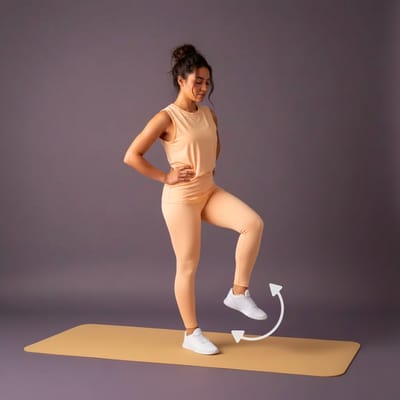
Zombie Walks
March forward with straight-leg kicks and outstretched arms to warm up your hamstrings and core.
Position: Standing
Types: Dynamic Stretching
Benefits: HipsHamstringsCore
Voice instruction
Stand with feet hip-width apart, then lift one leg straight forward.
Voice tip
Engage your leg muscles to keep the motion controlled.
Instructions:
  • Stand with feet hip-width apart and arms extended straight in front of you.
  • Lift one leg straight forward while keeping your torso upright and knee extended.
  • Lower the leg with control and alternate sides in a smooth, marching rhythm.
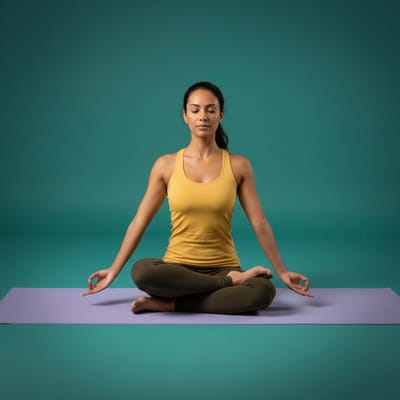
Tips:
  • Engage your leg muscles to keep the motion controlled.
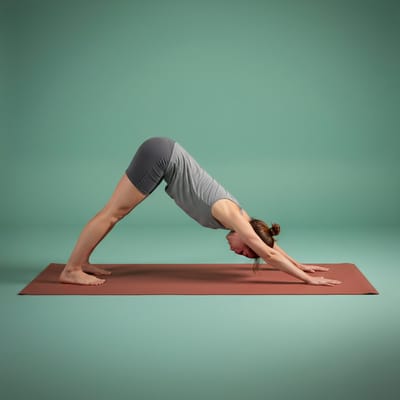
  • Keep your back straight and avoid leaning backward.
  • Lift slowly to avoid snapping your knee.
Adjustments:
  • Lift the leg lower if flexibility is limited.
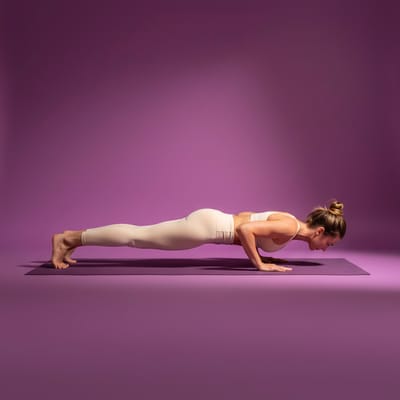
  • Place hands on hips if shoulders feel tight.
  • Hold a wall for balance if needed.